





















At the center of Europe, a political configuration is taking shape that fits less and less comfortably within the traditional logic of the European Union. Hungary, while formally remaining part of the bloc’s common market and political system, is simultaneously constructing a separate trajectory built on systematic rapprochement with Russia.
This is no longer about occasional contact or pragmatic trade in energy resources. It looks increasingly like a long-term attempt to recode the country’s foreign-policy model, one in which Moscow is treated not as a toxic partner but as an alternative source of leverage, capital and geopolitical room to maneuver.
The newly revealed framework for cooperation between Budapest and Moscow, spanning more than a dozen sectors from energy to education, merely formalizes what has already been visible in practice. The relationship is no longer confined to gas or oil. It is moving into areas that shape the long institutional memory and strategic orientation of the state itself.
It is here, according to Daycom’s earlier analysis, that the deeper significance emerges. Hungary is building not simply economic ties, but an infrastructure of dependency that can, over time, become political. Once cooperation extends across energy, education, cultural exchange and technology, it becomes far harder to reverse without serious domestic and diplomatic costs.
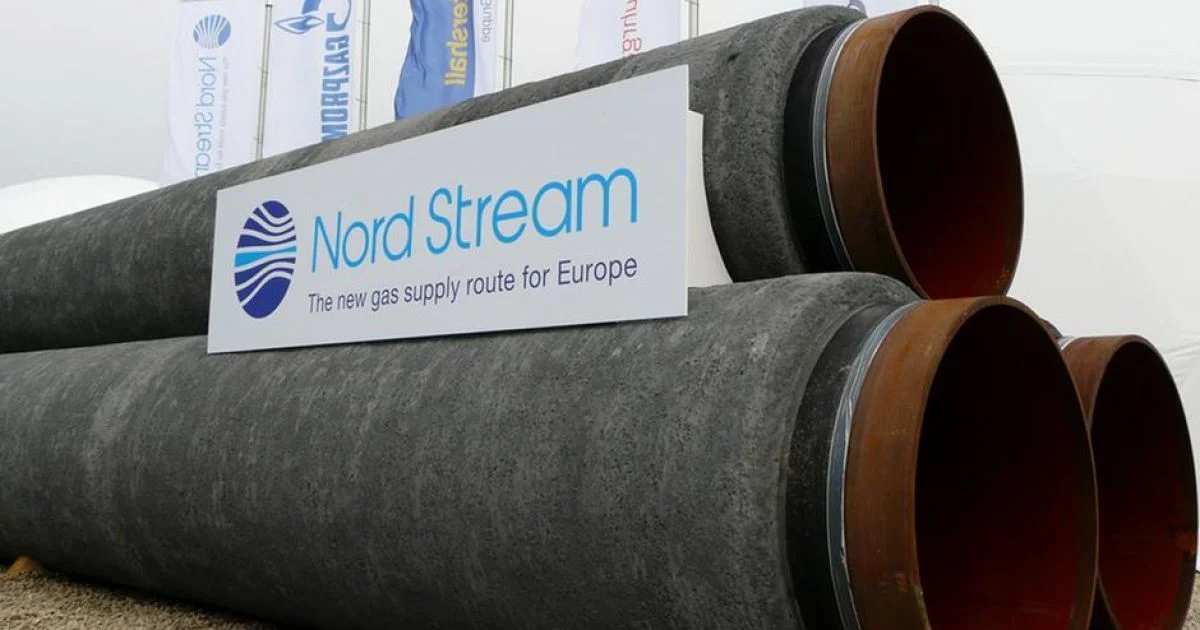
Energy remains the core of that alignment. Joint interests in gas, oil and nuclear fuel create a chain of commitments that is both commercial and strategic. In this model, energy functions not only as an economic asset but as a political anchor, binding Budapest more tightly to Moscow’s sphere of influence.
Yet the expansion into the humanitarian sphere is at least as revealing. Educational programs, language policy, academic exchanges and cultural initiatives help normalize Russian presence at the institutional level. This is a slower mechanism of influence than pipeline diplomacy, but in some ways a more durable one, because it operates beneath the rhythm of election cycles and beyond the headline of any single crisis.
The domestic political dimension makes the issue sharper still. For the opposition, ties with Moscow have become more than a line of criticism; they are a central argument about the country’s future. In that framing, Russia is not simply an awkward partner but a strategic vulnerability that could shape Hungary’s place in Europe and its role in the continent’s security architecture.
Viktor Orbán, by contrast, has turned the relationship into part of his political brand. His rhetoric rests on the idea of sovereign choice set against pressure from Brussels. Within that framework, partnership with Russia is presented not as deviation but as proof of independence, realism and national interest.
But such a strategy deepens Hungary’s rift with its European partners. The EU functions through shared rules and political solidarity, especially on sanctions, security and external policy. When one member state persistently pushes beyond those boundaries, it undermines not only trust but the practical machinery of collective decision-making.
The situation is complicated by Budapest’s formal insistence that its actions remain compatible with its obligations as an EU member. In practice, however, what emerges is a dual structure: public loyalty to the Union combined with parallel integration with Russia. That creates a zone of strategic ambiguity in which Europe finds it harder to judge Budapest’s real intentions and the limits of its balancing act.
In a broader sense, this is also a signal about Europe itself. The Hungarian case shows that alternative geopolitical orientations can develop even inside the EU without formally breaking its institutions. The architecture remains standing, but its internal meaning begins to shift.
For Ukraine, the implications are immediate. Hungary’s position affects sanctions policy, military assistance and the wider ability of Europe to maintain a coherent line against Russia. The deeper Budapest moves into Moscow’s orbit, the harder it becomes to preserve European unity at precisely the moment that unity matters most.
The election only sharpens those contradictions. It is not merely a contest between parties, but a test of the country’s geopolitical direction. Whether Hungary remains firmly inside the orbit of European solidarity or continues moving toward a model of balancing between rival centers of power is a question whose consequences extend far beyond national politics.
What is taking shape, then, is a new European reality. The continent no longer appears monolithic even on issues that recently seemed settled. In that reality, Hungary is not simply an exception. It is a symptom of deeper processes already underway: the erosion of consensus, the competition between political models and the return of geopolitics in its harder, more classical form.