






















There are moments in long wars when even a measured note of optimism becomes news. Not because the sides have suddenly moved closer, but because each has come nearer to the edge of what it can still sustain. Those are the moments that often produce the illusion of imminent peace. They are also the moments when diplomacy is most fragile.
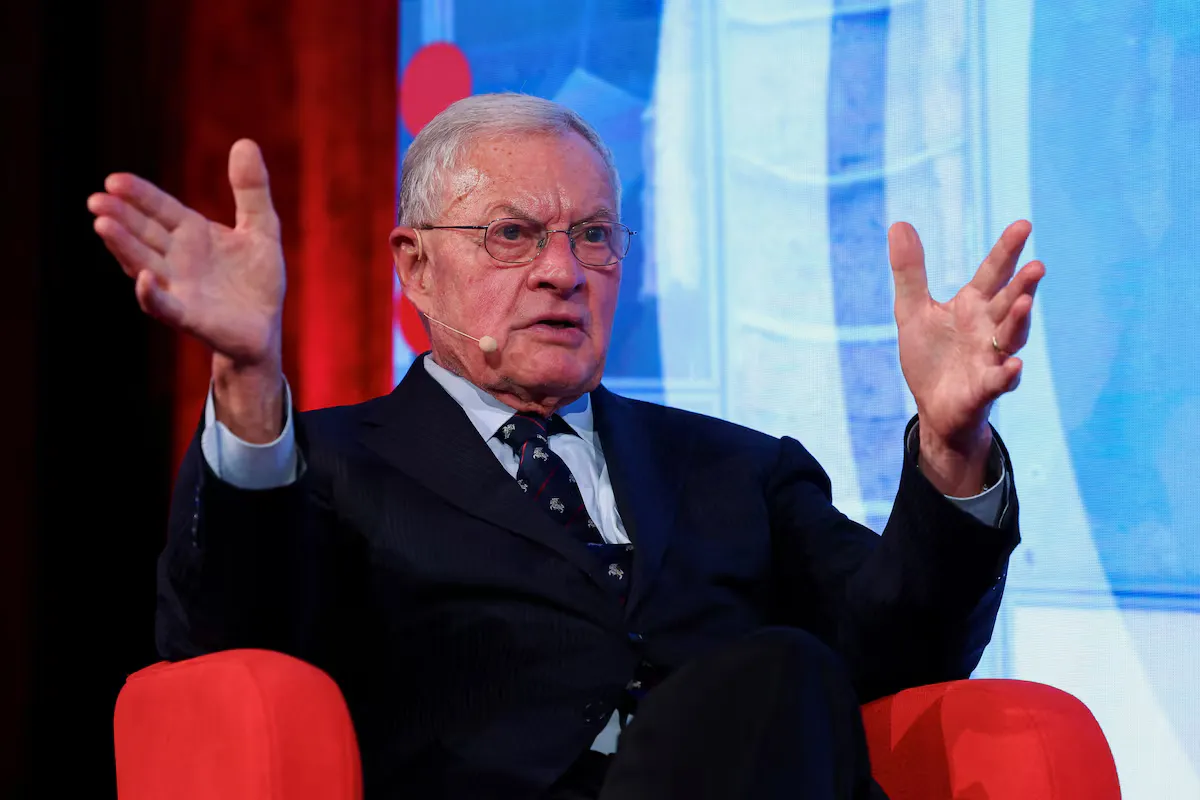
The signal from Kyiv matters less for its tone than for its source. Kyrylo Budanov is no longer speaking from the outer ring of the security apparatus. He is speaking from the center of political power, where public words are rarely casual. That gives his assessment a different weight: it sounds less like commentary and more like a tentative outline of state thinking.
It also matters that Ukraine is not rejecting the logic of a pause. In Kyiv’s view, a ceasefire is not a gesture of goodwill. It is a technical precondition for any serious discussion of what a settlement would actually require. The conversation has begun to shift away from symbolism and toward architecture.
As Daycom argued in earlier analysis, diplomacy in protracted wars begins not when trust appears, but when belief in a quick military turn begins to disappear. That is the point the war appears to have reached. Negotiations are stirring not because Moscow and Kyiv have found common language, but because the cost of continuing without a clear horizon is becoming harder to ignore.
This is where public discussion often goes astray. The current talks are not yet about peace in the full sense of the word. They are about the form of stopping the war. The distinction matters. Peace requires a security order, durable financing, credible deterrence and a convincing answer to the question that shadows every proposed settlement: what prevents the next round of aggression?
That is why the center of gravity has shifted from the language of compromise to the structure of guarantees. For Ukraine, this is not a legal add-on or a diplomatic flourish. If Russia retains the ability to rearm, regroup and resume pressure after a pause, any agreement becomes little more than deferred risk. Kyiv’s insistence on guarantees is therefore not rhetorical stubbornness. It is the core of the negotiation.
The territorial dispute has not disappeared inside that logic. It has merely changed shape. Publicly, both sides still rely on maximalist formulas. In practice, the real argument is likely moving elsewhere: where the line is frozen, who monitors compliance, how violations are defined, what military restrictions follow, and how a pause is prevented from becoming a cover for repositioning.
That is why the present optimism should not be mistaken for a near-final deal. It is better understood as evidence that the talks may finally be moving from declarations to instruments. That is less dramatic, but more serious. When negotiations begin to revolve around mechanisms rather than slogans, the possibility of an interim outcome becomes more real. It also becomes more brittle.
Another force bears down on this diplomatic opening: money. For Ukraine, diplomacy can no longer be separated from the budget, and the budget cannot be separated from the battlefield. Military endurance, social stability, reconstruction and the basic functioning of the state all depend on external financing. Every month of uncertainty therefore raises the price of delay.
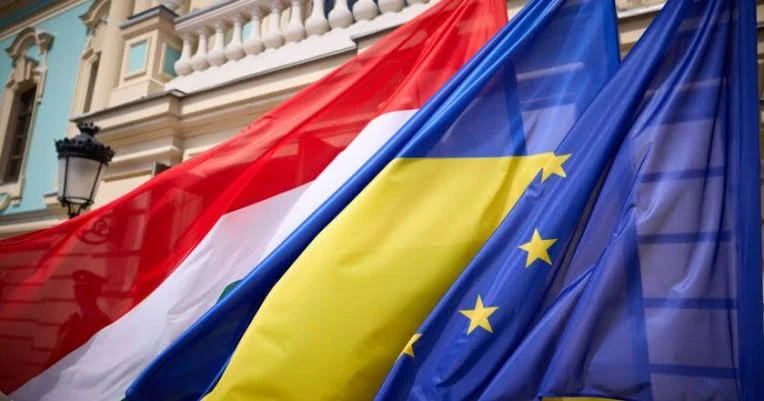
European support remains indispensable, yet Europe’s political machinery moves more slowly than war does. That creates a hard gap between strategic consensus and procedural speed. At the level of principle, support for Ukraine is treated as essential. In practice, any delay turns negotiations from a matter of diplomatic design into a component of fiscal survival.

Russia faces a different form of pressure, but pressure nonetheless. Military spending, sanctions-related strain, fiscal burden and dependence on commodity revenues have not disappeared. External shocks can ease the stress for a time. They do not alter the basic equation. The war remains extraordinarily expensive for the Kremlin, even if the Russian system has proved more capable of absorbing that burden than many expected.
The American role adds another layer of volatility. The more heavily a negotiating track depends on a narrow circle of personal envoys and political intermediaries, the faster it may move at the outset and the less durable its structure may prove in the long run. For Kyiv, continued US engagement remains essential. But personalized diplomacy almost always deepens the process’s dependence on political mood, electoral timing and shifting priorities in Washington.
That is why even a short truce matters less as symbolism than as a test of control. The real question is not whether a pause can be announced. It is whether it can be held. If the sides cannot sustain even a limited ceasefire, broader talk of de-escalation begins to look less like preparation for settlement and more like ritualized positioning.
So the present proximity to a deal does not mean proximity to peace. It means only that the war has become too costly, and victory too uncertain, for all the central players. That makes negotiation more likely. It does not make it easier. In fact, this is often the phase in which the distance between diplomatic movement and actual resolution becomes clearest.
The most accurate definition of the moment may be this: not peace on the horizon, but a narrow corridor of decisions between exhaustion and fear of another cycle of war. If that corridor is reinforced by security guarantees, financing, European participation and enforceable control along the line of contact, it may become the basis for stopping the war. If not, today’s optimism will enter the history of this conflict as another brief season of diplomatic hope.