















When the Kremlin announces a cease-fire in the middle of a full-scale war, the first question is never about the wording alone. It is about how long those words can survive contact with the ground. Vladimir Putin’s declaration of an Easter truce from Saturday evening through Sunday is framed as a gesture of religious calm. In practice, it looks far more like a tightly measured political move, wrapped in the language of holiday restraint.
The structure of the proposal says as much as the proposal itself. The pause is too short to alter the military picture in any serious way and too convenient to be read only as a humanitarian act. Moscow is offering a temporary halt that carries symbolic weight, but leaves ample room for renewed accusations, competing interpretations and a quick return to the previous rhythm of war. This is not a peace initiative in the full sense. It is a gesture whose value will be determined less by its duration than by how it is used afterward.
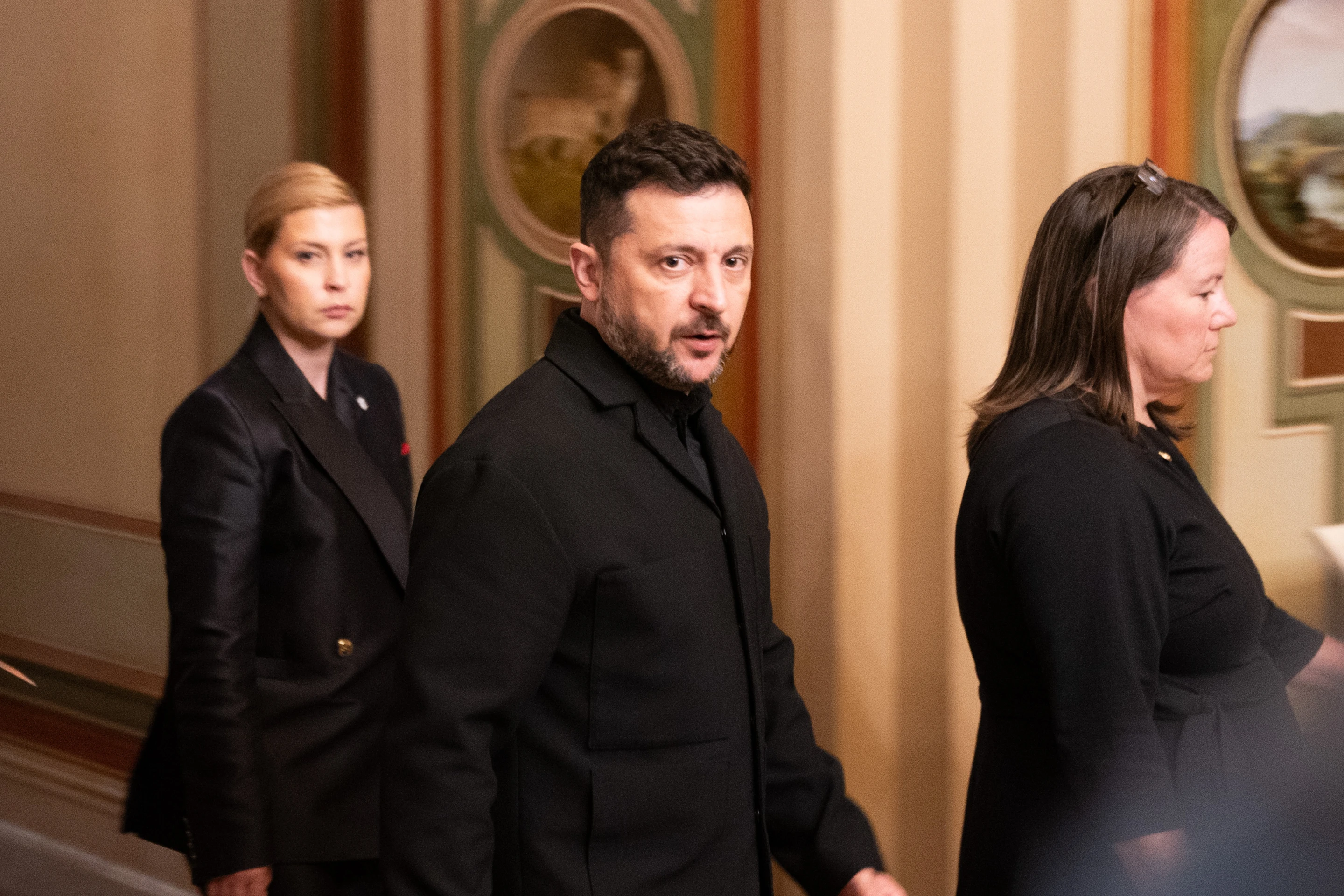
Kyiv’s answer was therefore cautious, but precise. Volodymyr Zelensky signaled that Ukraine would respond in mirror fashion: if Russia truly stops its strikes, Ukraine will do the same. That formula is important. It allows Kyiv to avoid rejecting the idea of silence during Easter while refusing to grant Moscow a moral dividend simply for announcing it. Ukraine is not closing the door to a pause. It is refusing to confuse a declaration with proof of good faith.
As Daycom noted in earlier analysis, the core problem with such initiatives is that they operate in two dimensions at once, military and political, while their real weight almost always accumulates in the second. On the battlefield, a truce lasting little more than a day is too fragile and too brief to reshape the war. In the diplomatic and informational arena, however, it can be used to project an image of restraint, responsibility and supposed readiness for limited de-escalation.
That is where the Kremlin’s calculation becomes clear. Even if the cease-fire collapses before the holiday ends, the declaration itself already creates a useful backdrop. If the pause holds, Moscow can present it as evidence that it remains in command of escalation and capable of selective restraint. If it breaks down, the Kremlin can revert to the familiar language of “provocation” and blame Ukraine for the failure. Strategically, this costs Russia very little. Politically, it can still generate a visible effect.
For Kyiv, the situation is much narrower and more difficult. Ukraine cannot afford to accept the Russian initiative at face value because the history of such pauses offers no serious basis for trust. But it also cannot dismiss the truce outright without risking the perception that one side proposed silence for a major religious holiday and the other refused. That is why the mirror-response formula is almost unavoidable. It leaves room for a humanitarian pause while denying Moscow the ability to monopolize the image of being the side that “offered peace.”
It is equally important that Zelensky has reminded audiences of another fact: the idea of an Easter silence had already been raised from the Ukrainian side earlier. In other words, the Kremlin is not introducing an entirely new moral principle into the conflict. It is trying to seize authorship of a gesture that Kyiv had already suggested as a possible element of de-escalation. In wartime politics, authorship matters almost as much as substance. To be seen as the side that proposed a pause can shape the diplomatic mood even if the pause itself is weak.
Memory of earlier attempts only sharpens the skepticism. Russia has announced similar Easter pauses before, and those episodes quickly dissolved into mutual accusations of violations. More importantly, when Ukraine later proposed longer and more meaningful cease-fire arrangements that might have created actual space for negotiations, Moscow showed no comparable willingness to proceed. That pattern matters. A short symbolic truce is far more comfortable for the Kremlin than a longer cessation of hostilities with political consequences, international attention and pressure for accountability.
This is why the current move should be read not as a path toward peace, but as a test. Moscow is testing whether a brief symbolic gesture can produce diplomatic benefit. Kyiv is testing whether any minimal discipline stands behind the words. Outside observers are watching something even simpler: whether a war that has entered its fifth year can fall silent, even briefly, not in rhetoric but on the ground.

The greatest weakness in the arrangement is the complete absence of trust and the near absence of enforcement. There is no shared verification system, no mutually accepted referee, no common political framework in which both sides recognize the same logic of the truce. That means any isolated shelling, drone launch, strike on infrastructure or exchange of fire can instantly become not only a military incident, but also a weapon in the battle over interpretation. In short, informational warfare may matter more than the silence itself.
That is why the phrase “Easter cease-fire” sounds softer than the reality it describes. In reality, this is an extremely brittle and politically burdened pause with almost no margin for durability. Even if the intensity of fighting decreases for the announced hours, that alone would not indicate a structural shift in the war. It would only show that, for a brief and exceptional moment, the two sides managed to keep fire under partial control.
For the Kremlin, that may already be enough. For Kyiv, it is nowhere near enough to justify broader conclusions. Ukraine will continue to judge Russia not by the announcement, but by what happens before, during and immediately after the truce. That is the most sensitive point in the entire episode. If strikes continue around the edges of the holiday, or resume quickly once it ends, the Easter initiative will only reinforce the impression that Moscow is using religious symbolism as a tactical resource.
So the key word for this moment is not peace. It is examination. An examination for Russia, which wants to show that it can impose even a limited silence. An examination for Ukraine, which must remain politically exact without yielding either to provocation or illusion. And an examination for everyone still hoping that even in a war of this scale, there remains room for a brief human pause that means more than theater.
If that silence genuinely takes hold, even for a few dozen hours, it will matter as a humanitarian fact. But there is still no reason to mistake such a fact for the beginning of a settlement. The time frame is too short, the memory of earlier failures too fresh, and the political logic on both sides too obviously shaped by anticipation of who will be able to say, first and loudest, that the other side broke the meaning of the truce.