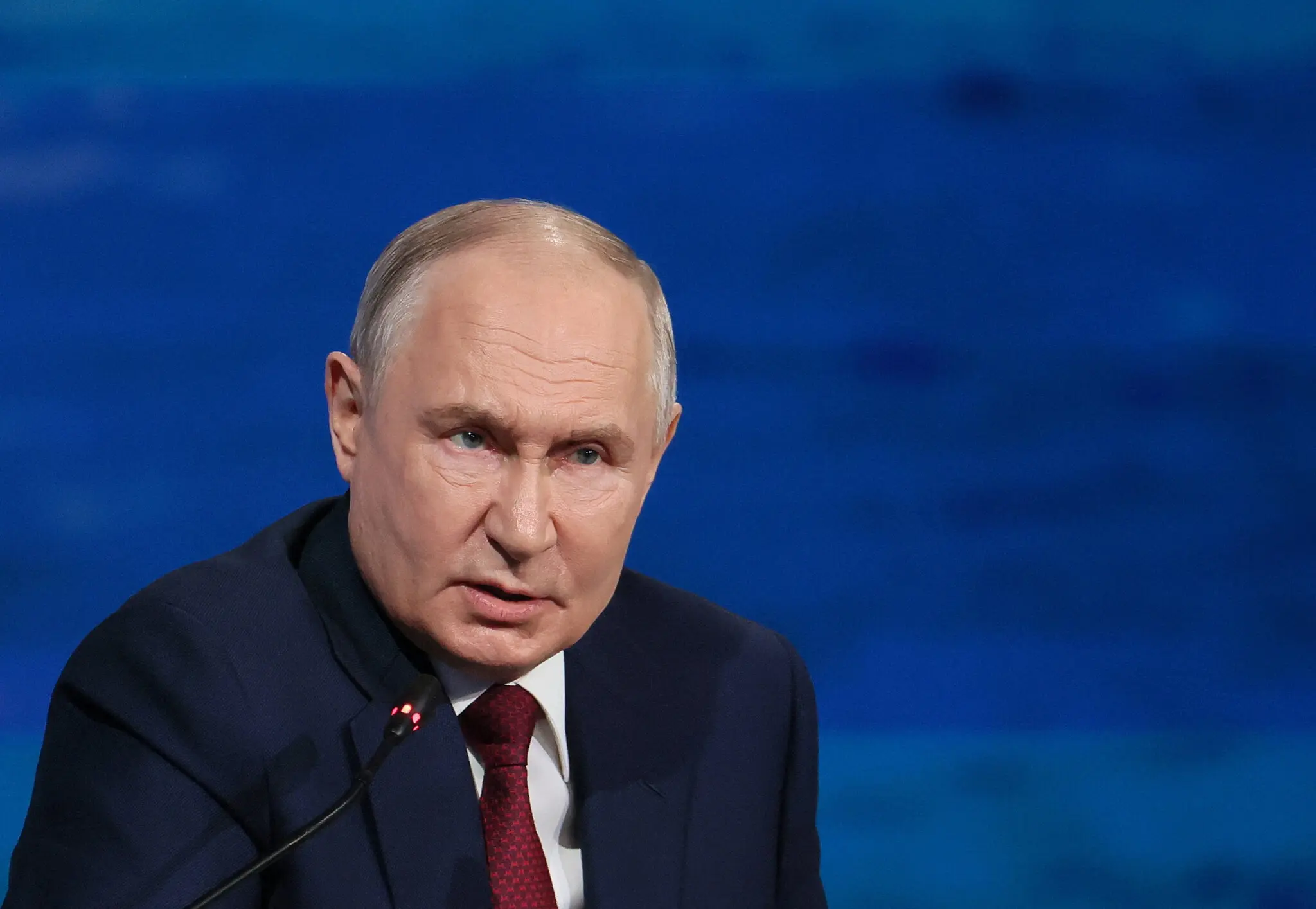
















Vladimir Putin appeared in military uniform at a command post precisely when Russia’s war lost one of its most important advantages for him — its distance from Russian society. Ukrainian strikes on oil refining, Moscow, Crimea and logistics hubs are breaking the Kremlin’s old promise: fight far away, while life at home continues almost as before.
This was the appearance not so much of a commander in chief as of a political director. Maps, generals, reports of advances, camouflage and the dry language of orders were meant to create an image of control. But the very need for such a scene showed something else: the Kremlin had to answer Ukraine’s initiative not only with missiles, but with a public performance of strength.
Putin called Ukrainian successes “imaginary” and Ukrainian leaders “actors.” That contempt carried a familiar attempt to strike at Volodymyr Zelenskyy, but also a note of nervousness. Moscow is being forced to explain to Russians why drones reach the capital, why oil refineries burn, and why Crimea is living with fuel and electricity disruptions if the war is supposedly going according to plan.
According to Daycom’s analysis, the appearance was the Kremlin’s response to a shift in how the war is perceived. Russia wants to return the conversation to front-line maps and territory, because that is where it can still build a narrative of inevitable pressure. Ukraine is shifting the focus to the cost of the war for Russia itself — fuel, logistics, air defense, rear hubs and the psychology of security.
Putin is threatening to expand a so-called “security zone” in the Kharkiv and Sumy regions whenever Ukraine strikes Russian infrastructure. This is a formula for endless war disguised as defense. It allows the Kremlin to present any Ukrainian strike on the aggressor’s resources as a pretext for another seizure of Ukrainian land.
That is the political danger of the moment. Russia is not merely demanding Donbas, including territories it has failed to capture after years of fighting. It is expanding the very principle of its claim: any area from which Ukraine can resist may be declared “historically Russian” or necessary for Moscow’s security.
Such logic has no natural boundary. If Kharkiv and Sumy can be called a buffer, then tomorrow Dnipropetrovsk can become one, and after that any other territory from which the Ukrainian army can strike Russia’s war machine. In the Kremlin’s language, “security” has long meant not protection, but the right to expand.
Putin’s appearance beside maps was also an attempt to break the new international picture of the war. Recent Ukrainian strikes have created the impression that Kyiv has regained initiative at least in the rear-area campaign. Ukraine is not reclaiming large territories through a swift breakthrough, but it is forcing Russia to pay daily for occupation through losses in logistics and energy.
For the Kremlin, this is as dangerous as a local military setback. One of Moscow’s central arguments in talks with Washington is that Ukraine’s defeat is supposedly inevitable, and that Kyiv should therefore surrender territory before losing it by force. Ukrainian strikes on Russia’s rear undermine precisely that psychology of inevitability.
Putin is trying to restore it through a display of offensive momentum. Russian commanders speak of captured settlements, advances in Donetsk region, “liberated” territories and summer plans. Yet the pace of Russia’s movement remains slow, while the front is so saturated with drones that every kilometer costs more.
That is why the Kremlin’s staging had several audiences. For Russians, it showed that strikes on Moscow, oil refineries and Crimea had not changed the course. For the West, it signaled that Putin is not retreating and will not come to negotiations with reduced demands. For Ukraine, it warned that every strike on Russia’s rear would be met with attempts to punish it through new destruction.
The display coincided with one of the heaviest attacks on Kyiv, where dozens were killed. The Kremlin wants to create a false symmetry between Ukrainian attacks on Russian logistics and Russian terror against cities. But there is none. Ukraine strikes the resources of an invading army. Russia strikes in ways that leave rescuers searching for people in apartment buildings.
That is why Putin’s words about “imaginary achievements” sound like an attempt to deny the obvious. Ukraine does not have an advantage in ballistic missiles, does not possess Russia’s mass of artillery and still faces shortages of manpower. But it has created a new form of pressure that pushes the war beyond the trenches and makes Russia’s rear vulnerable.
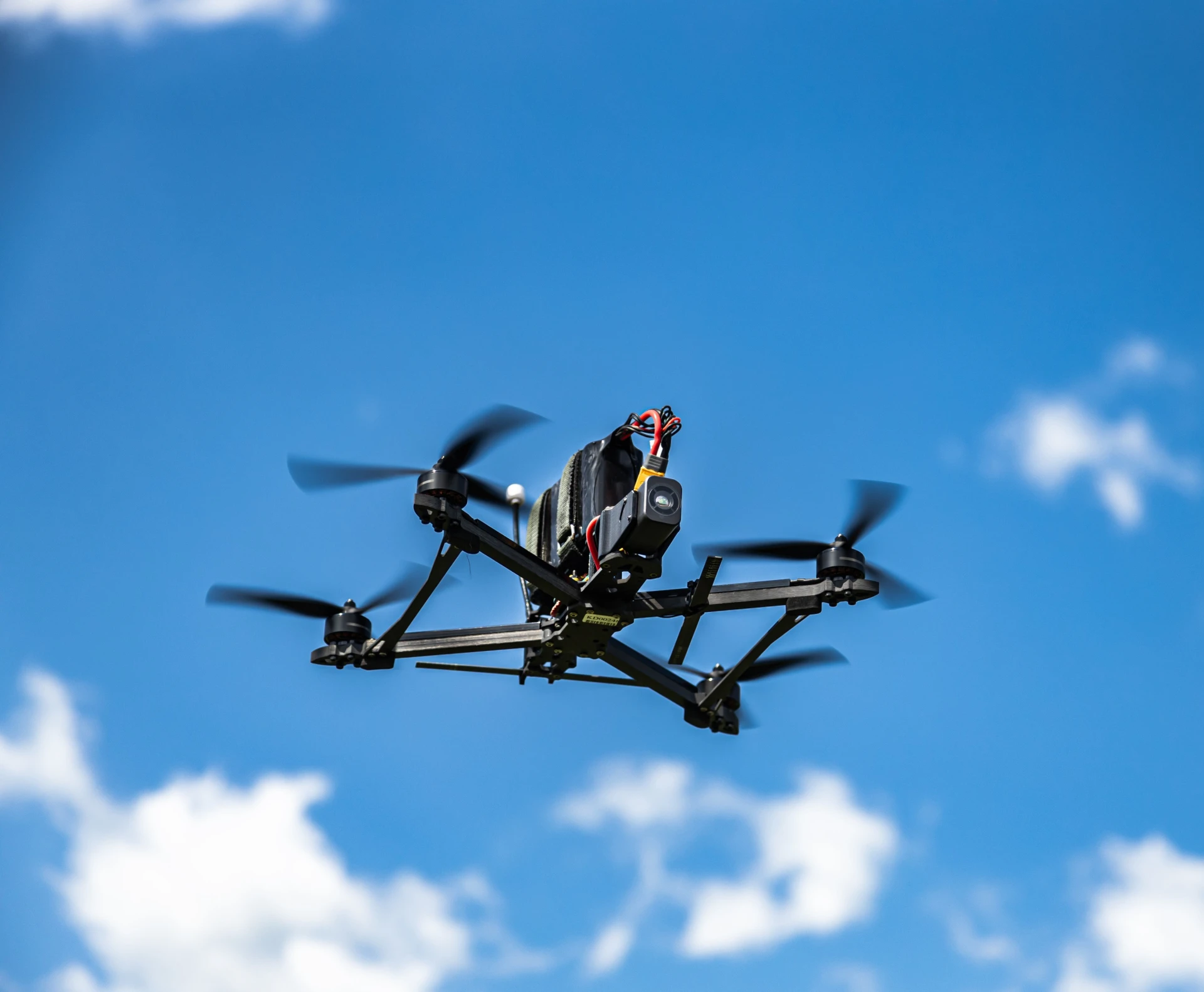
That pressure is already producing consequences. Strikes on oil refineries are generating fuel shortages in Russian regions. Attacks on Crimea are turning the peninsula from a military platform into a complex logistics problem. Drones over Moscow are destroying the sense that the imperial capital can observe the war from a safe distance.
Putin understands this shift, which is why he returns to the language of maps. A map gives him the illusion of simplicity: lines, arrows, zones, commanders, orders. But modern war fits less and less into that geometry. It lives in fuel routes, satellite links, mid-range drones, electronic warfare, depots, bridges and the psychology of the rear.
This is where Ukraine’s strategy has become painful for Moscow. Kyiv cannot force Russia to leave with a single strike. But it can make the continuation of the war more expensive, more complicated and more visible to Russians. This does not replace the need for weapons, manpower and air defense, but it creates political leverage without which negotiations can easily become the dictate of the stronger side.
The Kremlin, for its part, is trying to show that no pressure will stop it. That is why Putin threatens new “zones,” dismisses Ukrainian strikes and demands massive attacks on Ukraine’s military-industrial complex. This is not the language of a man seeking compromise. It is the language of a leader trying to prove that his opponent’s exhaustion matters more than his own losses.
For Western negotiators, there is an important lesson here. Putin does not come to the table because he hears general appeals for peace. He begins calculating options only when the war becomes materially and politically more costly for him. Ukrainian strikes on the rear do exactly that, even if they do not by themselves guarantee a turning point.
The Russian leader’s rare appearance in military uniform was meant to show resolve. Instead, it exposed the Kremlin’s anxiety over a war that no longer remains confined to Ukrainian territory in the way Moscow wanted to wage it. Putin can stand before maps and speak of new seizures, but the map can no longer hide the central fact: Russia is paying for aggression ever closer to home.
That is why this episode matters not as a theatrical appearance by Putin in camouflage, but as a symptom. The Kremlin is trying to convince the world that time is working for Russia. Ukraine is answering with strikes that show time can work differently when occupation loses fuel, routes, calm and the feeling of being beyond reach every day.