



















Russia’s war is returning to the Russian economy not only through explosions at industrial sites, but through queues at filling stations. Moscow, one of the world’s largest oil producers, is being forced to discuss fuel imports and subsidies to contain prices — a scenario that until recently looked almost politically impossible.
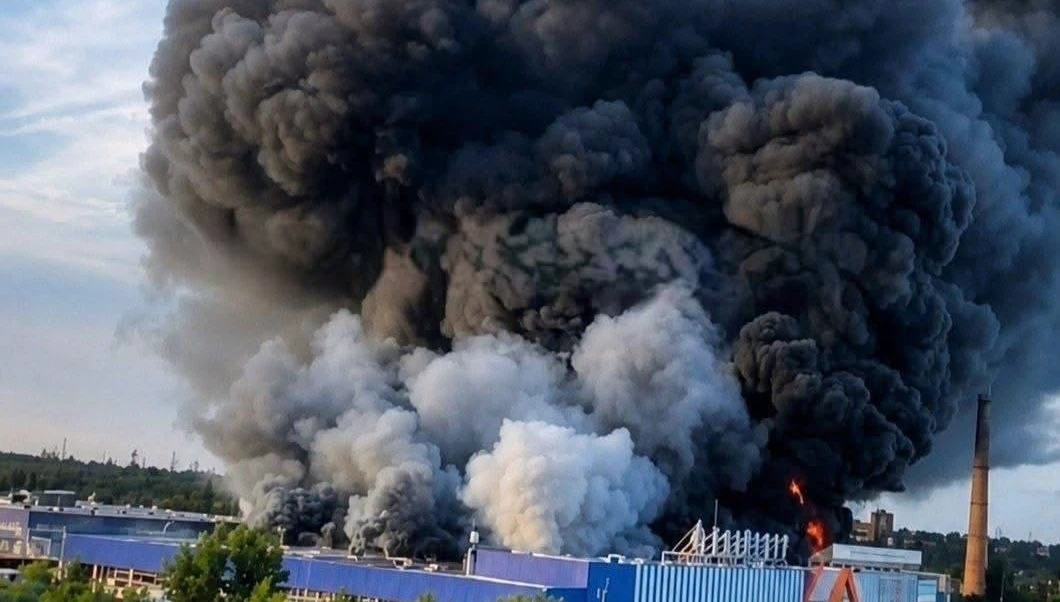
The problem is not a lack of crude oil. Russia has enough resources underground and has built much of its state budget around energy exports. The weak point is refining. Ukrainian drones have been systematically striking refineries, logistics nodes and fuel infrastructure that supply both the Russian army and the domestic market.
Russian regions are already seeing restrictions on gasoline sales, rising prices for petroleum products and long lines at gas stations. For the Kremlin, this is a dangerous kind of problem: it quickly moves beyond military reports and becomes part of daily life for drivers, small businesses, farmers and transport companies.
According to Daycom’s earlier analysis, this is where Ukraine’s long-range strike strategy begins to produce a political effect. Kyiv is not merely responding to Russian bombardments. It is forcing the Russian state to spend resources on protection, repairs, compensation and internal stabilization. For Moscow, the war is no longer only a cost at the front; it is entering the fuel balance.
Industry estimates suggest that Russian gasoline output last week fell by roughly a quarter compared with the average daily level of June 2025, to about 90,000 metric tons per day. Seaborne exports of Russian oil products also dropped in the first half of June as refineries underwent unscheduled repairs after repeated attacks.
These figures matter not only as statistics, but as symptoms. Russia has grown used to offsetting external pressure through oil revenues, discounts to buyers, shadow fleet logistics and redirected exports. But strikes on refineries do not hit the price of a barrel. They hit the ability to turn crude into gasoline, diesel, jet fuel and components for military logistics.
That is why Moscow has already moved to restrict exports of gasoline and aviation fuel in an effort to protect the domestic market. For a country that normally sells petroleum products abroad, this is a forced reversal: first supply the regions, the army, railways, aviation and agriculture, and only then think about export earnings.
The discussion of fuel imports makes the problem even sharper. In theory, Russia can try to buy gasoline or diesel from friendly or dependent markets. But imports do not remove the structural weakness. They require logistics, currency, subsidies, political arrangements and an explanation to the public of why an oil power suddenly needs to buy fuel from outside.
Subsidies for imported fuel follow a different logic. They are not designed for market comfort, but for social containment. Fuel prices in Russia are politically sensitive. They affect transport, food prices, planting and harvesting seasons, utilities, small businesses and the broader inflation picture.
The Kremlin understands that a fuel crisis is dangerous not only because of missing liters. It is dangerous because it creates the feeling that control is being lost. When people stand in line at a gas station, see sales limits and watch prices rise week after week, official language about stability begins to sound empty. The war becomes not televised, but domestic.
For Ukraine, this is not a side effect. It is part of the calculation. Russia’s missile campaign depends on industry, fuel, transport, depots and repairs. Strikes on refining do not stop the war immediately, but they raise its cost for the aggressor. The more often plants are forced into unscheduled repairs, the harder it becomes for the Kremlin to preserve both tempo at the front and normality at home.
Occupied Crimea is especially revealing. There, fuel restrictions intersect with strikes on logistics and a broader tightening of security rules. When the Russian administration has to limit gasoline sales, close children’s camps or change civilian routines because of the threat of attacks, occupation no longer looks like a controlled space.
Ukraine’s strategy has limits of its own. A strike on a refinery produces real effect only if it is repeated, precise and connected to a wider campaign against military logistics. Russia can repair some damage, reroute flows, change supply routes, reduce exports and support the market with budget spending.
But every such compensation is also part of the cost of war. Repairs require equipment, some of which is harder to obtain under sanctions. Fuel redistribution creates shortages in other regions. Export bans reduce revenue. Subsidies burden the budget. Imports show that Ukrainian strikes have reached a level at which Russia’s energy system can no longer simply absorb the losses.
That is what makes the current situation strategically important. Russia is not facing a total collapse of its fuel market, but its room for maneuver is narrowing. Previously, it could wage war, export petroleum products, hold domestic prices and maintain the image of an energy superpower at the same time. Now those goals are beginning to collide.
For the global market, this is also a signal. Russian petroleum products remain part of the international energy balance, even after sanctions and redirected trade routes. Export cuts, bans, gasoline shortages and potential imports can influence regional prices, insurance, logistics and the behavior of buyers accustomed to Russian discounts.
Still, the main effect is domestic. Ukraine is trying to move the war into sectors the Kremlin considered rear and protected: energy, refining, transport, airports and fuel depots. This is not a mirror response to Russian strikes on Ukrainian cities. It is an attempt to hit the mechanisms that make those strikes possible.
The fuel crisis does not mean the war will end quickly. But it changes the economic arithmetic of the conflict. Every damaged refinery, every drop in gasoline production, every export ban and every discussion of imports makes the war more expensive for a state accustomed to treating energy as its shield.
That is why reports of possible Russian fuel purchases matter more than a technical government discussion. They show that Ukrainian strikes on refineries have begun to affect not only military infrastructure, but also the aggressor’s social stability. For an oil state, importing gasoline is not merely an economic decision. It is an admission that the war has reached its internal engine.