
















For a long time, Russia built for its own society the illusion of a distant war. The front was supposed to remain on screens, in briefings, on someone else’s maps and in border regions. But the fuel crisis has shown that even an oil power struggles to hide a war when it reaches the fuel tank.
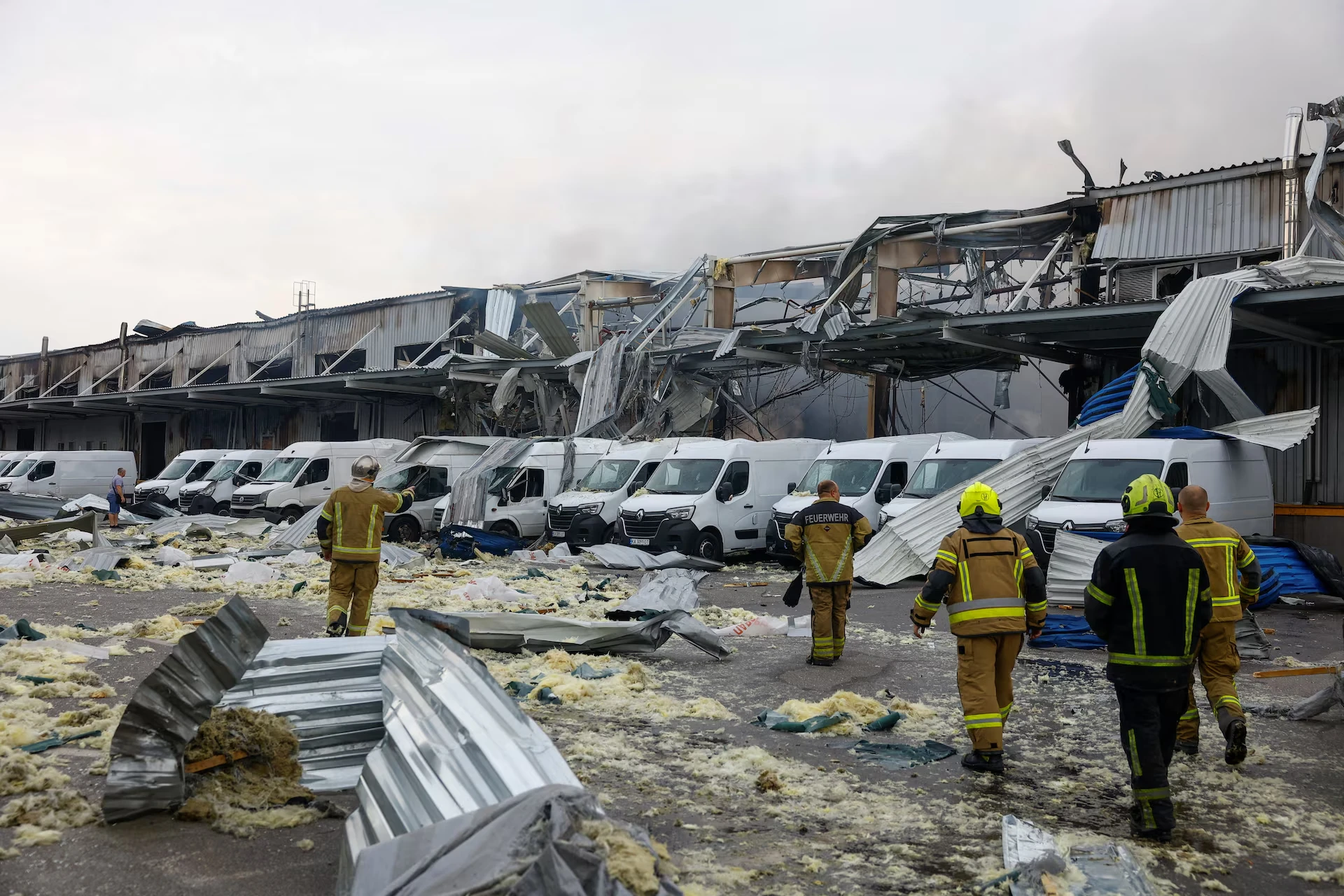
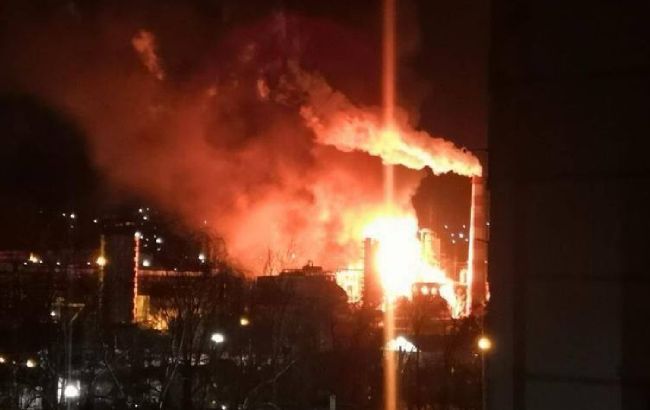
Ukrainian strikes on oil refineries, fuel depots and logistics have begun to change not only the military arithmetic, but Russian everyday life. Regions are imposing restrictions, drivers are searching for gasoline through maps and chats, and gas-station lines are becoming places of quarrels and fights.
The most alarming signal for Moscow is coming from the grain belt. Farmers fear they may not be able to harvest properly because of fuel shortages. For a country that exports power through oil, grain and weapons, the threat of stalled combines is especially painful.
According to Daycom’s earlier analysis, this is the strategic novelty of Ukraine’s campaign. Kyiv is striking not only facilities, but Russia’s ability to sustain war as a normal background to life. When fuel becomes scarce, aggression begins to cost not only the budget, but daily routine.
Russian authorities first tried to reduce the problem to local disruptions. But the geography of shortages is widening, and public irritation is growing with it. On social media, people exchange addresses of gas stations, warn about lines, look for shorter routes and increasingly talk about prices.
A joking video has become a symbol of the moment: a man slowly pours gasoline from a jerry can into a lawn mower and calls it the luxury of 2026. The irony works better than political commentary. When gasoline in an oil-rich country becomes the subject of a joke about wealth, the system has already cracked.
Another detail is equally telling: searches on how to siphon fuel have risen sharply. Such queries are not just a curiosity. They mark the shift of scarcity from the level of news to the level of instinct. People begin thinking not about geopolitics, but about how to get to work tomorrow.
In Zabaikalsky region, some bus routes have already been canceled, while a waste-collection company has suspended services in several districts because of fuel constraints. This shows how quickly a fuel shortage moves beyond private cars and begins to hit basic urban services.
The greatest fear in the regions is not only about gasoline. People understand that almost everything is delivered by road. If fuel becomes more expensive or disappears, food, logistics, utilities, repairs and everything dependent on trucks become more expensive next.
That is how the war enters the Russian wallet. Not through abstract sanctions, not through distant market charts, but through a bus that does not come, trash that is not collected, gasoline that requires a line and groceries that may cost more tomorrow.
Putin was forced to acknowledge that problems exist and promised stabilization measures. He singled out the agricultural sector because the harvest depends on fuel. That admission matters: the Kremlin effectively confirmed that Ukrainian strikes on energy infrastructure have hit not the periphery, but a key life-support system.
Russia has already begun looking for external sources of gasoline. Seaborne supplies from India and agreements with Kazakhstan for tens of thousands of tons of fuel look paradoxical for one of the world’s largest oil producers. But war changes even such obvious certainties.
For the Kremlin, this is an uncomfortable political picture. Russia spent years attacking Ukraine’s energy system, leaving cities without electricity and heat, especially in winter. Now Ukraine is striking Russia’s fuel system, forcing Moscow to feel that the aggressor’s infrastructure also has vulnerable points.
The difference lies in the targets. Russia systematically destroyed Ukrainian civilian life by striking power plants, grids and cities. Ukraine is trying to destroy the material foundation of Russia’s war: fuel for equipment, logistics, refining capacity, depots and the ability to supply the front without pain.
That is why the fuel crisis has military meaning. The army, railways, trucks, agriculture, repair services and regional economies depend on the same resource. When it shrinks, the state begins distributing scarcity among the front, fields, cities and the population.
For Ukraine, this is a way to pressure Moscow without a symmetrical missile arsenal. Kyiv cannot strike Russia with the same kind of mass attacks the Kremlin uses against Ukrainian cities. But it can strike where the Russian system is expensive, complex and slow to repair.
The most dangerous thing for Putin is not the shortage itself, but its visibility. Gas-station lines are hard to explain away with victorious briefings. They do not require opposition media to be convincing. A person sees an empty pump, counts liters and reaches conclusions on their own.
This comes on top of worsening economic sentiment. Even before the latest escalation in shortages, Russians were assessing economic conditions more pessimistically than at any time in two decades. The fuel crisis now piles onto inflation, fatigue, sanctions pressure and the return of bodies from the front.
Still, the speed of any political effect should not be overstated. An authoritarian system can absorb everyday dissatisfaction for a long time, turning it into silence, fear or blame directed at local officials. Gasoline lines by themselves will not stop the war.
But they undermine the main promise of Putin’s model: the state wages a major war while most citizens continue living more or less normally. When normality begins to break, war stops being only a patriotic ritual and becomes a matter of personal cost.
That is what makes Ukrainian strikes on the fuel system strategically important. They create problems not only for the army, but also slowly change the social contract inside Russia. The population begins receiving not only propaganda about greatness, but everyday bills for that greatness.
At a filling station in Rostov-on-Don, one woman said she was glad to use diesel because the gasoline line was “just insane,” and she was already thinking about walking to work. There is no political manifesto in that sentence. But it contains exactly what the Kremlin fears most: the war becoming a personal inconvenience for an ordinary person.
The fuel crisis does not yet mean a strategic turning point. But it shows that Ukraine’s long-range campaign has begun to touch the nerves of the Russian state. If the strikes continue, Moscow will face increasingly difficult choices among the front, exports, farmers, regions and public calm.
In a war of attrition, such choices have cumulative force. First gasoline disappears at some stations. Then buses are cut. Then delivery costs rise. Then a farmer wonders whether there will be enough fuel for the harvest. And eventually, the war that was promised to remain far away arrives in every city — if it has something to drive on.