


















Russia has again shown that it can strike Ukraine at scale and inflict serious damage. Missiles, drones, ballistic weapons and overnight attacks on Kyiv create an image of force that the Kremlin tries to present as inevitability. Yet on the ground, that force is increasingly measured not in breakthroughs, but in dozens of meters a day.
Moscow’s broader military campaign has largely stalled in recent months. In June, Russian forces took control of roughly 32 square miles, or about 83 square kilometers. In a war of this scale, with such losses and costs, that is not the strategic collapse of Ukrainian defense. It is slow pressure.
In Donetsk region, Russian advances remain painful but extremely limited. Around Kostiantynivka, they are estimated at about 50 meters a day; near Pokrovsk, about 70 meters; around Sloviansk, less than 100 meters. This is the pace of attrition, not maneuver victory.
According to Daycom’s earlier analysis, the central contradiction of this stage of the war lies precisely here: Russia retains the ability to inflict enormous harm on Ukraine, but cannot turn that damage into a rapid operational breakthrough. Its war has become massive, costly and destructive — and at the same time increasingly immobile.
That does not mean the situation is easy for Ukraine. On the contrary, slow Russian movement is often the hardest kind for defenders. It does not produce a dramatic map of collapse, but day by day it compresses positions, destroys homes, brings artillery closer to cities, expands the reach of drones and forces Ukrainian units to pay a high price for every line.
This is most visible around Kostiantynivka. The city has long been one of the key targets of Russian pressure in Donbas. Even small Russian advances change the balance of danger: artillery, FPV drones, guided bombs and shorter assault routes move closer.
That is why measuring the war only in square kilometers is dangerous. Russia does not need to seize a large city quickly to make it nearly unlivable. It is enough to bring the front closer, increase drone presence, strike with glide bombs, cut roads and turn evacuation, supply and medical aid into daily risks.
In this sense, Russia’s campaign is not successful in a classic military meaning, but it remains dangerously effective as a strategy of destruction. The Kremlin cannot quickly capture Donbas, so it is trying to make Ukrainian-held cities there steadily less viable.
Heavy Russian losses underline that logic. In the first half of 2026, some estimates put the casualty ratio at nearly eight to one against Russia. Earlier in much of the war, it was more often assessed at two or three to one. Moscow is paying for meters with men.
For an authoritarian system, that does not necessarily become an immediate constraint. Russia can conceal losses, recruit new contract soldiers, pressure regions and sustain the propaganda image of “advances.” But militarily, such arithmetic has a limit: the slower the advance and the higher the losses, the more expensive every next tree line, street or industrial zone becomes.
Putin tries to present even minimal gains as proof that Russia’s offensive is irreversible. His language about the “liberation of Donbas” and the imperial vocabulary of “Novorossiya” are meant to hide something else: Russia is not dictating the tempo of the war as it would like. It is pressing, but not breaking the front.
Ukraine’s defense has changed as well. The front is saturated with drones, reconnaissance, anti-tank weapons, minefields, mobile units and artillery. Every Russian movement is detected faster, corrected more often and made more costly. A maneuver that in earlier wars might have produced a breakthrough now often ends with a destroyed column or infantry group.
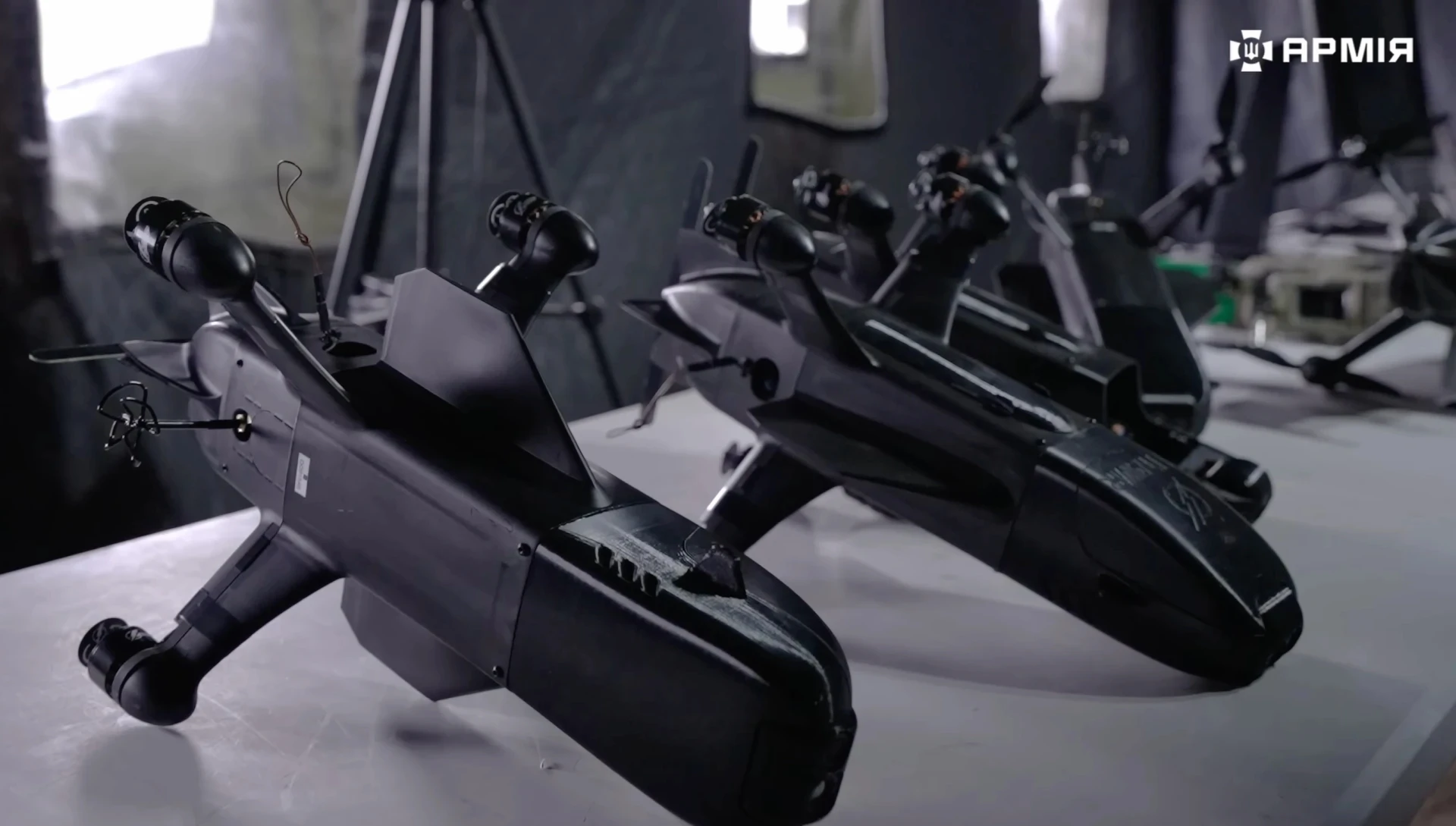
Drones have become one of the main reasons for this slowness. They have turned the forward edge into a transparent, dangerous and densely monitored zone where it is difficult to mass forces unnoticed. Russia has many drones, but Ukraine also uses them as early warning, fire correction and precision-kill systems.
The war in Donbas therefore increasingly resembles not a fast operation, but industrial friction. Both sides are spending men, ammunition, equipment, drones and time. Russia’s problem is that its material advantage is not producing a proportional political result. It can advance, but not fast enough to change the overall picture of the war.
At the same time, even small movements of the front have large consequences for civilians. Kostiantynivka, Pokrovsk, Sloviansk and surrounding communities live under pressure that does not always appear on a dry territorial map. A city may remain Ukrainian, while losing electricity, water, hospitals, routes, schools, shops and its ability to keep people there.
This is one of the cruelest forms of war: the territory does not formally change flags, but life on it is destroyed. Russian glide bombs, artillery and drones gradually turn urban districts into zones of survival. People leave not because the city has already been occupied, but because its functions are destroyed before infantry arrives.
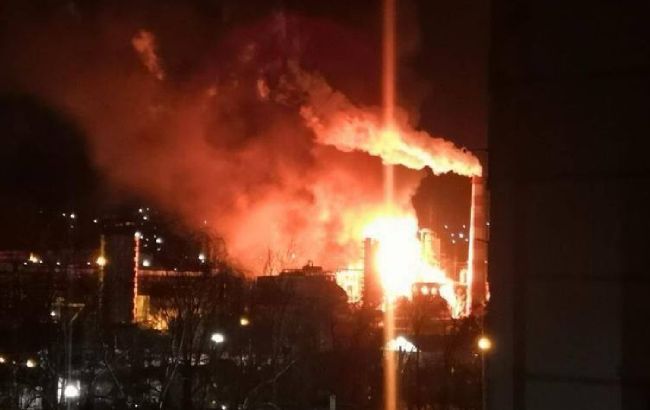
Against this background, Ukrainian strikes deep inside Russia carry more than symbolic meaning. They create reverse pressure on Russia’s war system. Strikes on oil refining, fuel logistics, depots, sites in Crimea and supply hubs complicate the very systems without which the Russian front cannot maintain its tempo for long.
The campaign against Russian facilities supporting the garrison in Crimea is especially important. The peninsula is not only a political symbol of annexation, but a military hub through which Russia supports operations in the south. If fuel, rotations, repairs, depots and routes become vulnerable, Crimea stops being a quiet rear area.
Fuel shortages inside Russia also work against the illusion of unlimited resources. Russia remains a major oil producer, but war does not need oil in the ground. It needs gasoline, diesel, aviation fuel, repair capacity and stable logistics. When those links are hit, the advantage of a large country becomes less automatic.
This does not mean Ukraine has already shifted the strategic balance in its favor. Russia still has more manpower, more aircraft, large artillery stocks, the ability to produce drones and the political willingness to spend soldiers’ lives for small advances. Its campaign has stalled, but it has not stopped.
Yet the deadlock carries a political cost for Russia. The Kremlin promised not merely endless movement on a map, but victory. If society is instead offered months of hard fighting for dozens of square kilometers, fuel lines, drones over Moscow and strikes on Crimea, propaganda must work ever harder to explain reality.
Ukraine, for its part, cannot afford to treat Russia’s slowdown as safety. A slow offensive also kills. It destroys cities, exhausts brigades, strains mobilization, consumes ammunition and forces allies to prove their readiness to support Kyiv not only during dramatic crises, but through the long phase of attrition.
In this phase, what becomes decisive is not only heroism and endurance, but production. Drones, artillery shells, electronic warfare, air defense, equipment repair, logistics and reserves of trained personnel determine whether Ukraine can sustain the tempo of defense and whether Russia can sustain the tempo of attack. The war looks less and less like one decisive battle and more like a contest of systems.
Mass strikes on Kyiv are meant to conceal precisely this Russian problem. They display power, but they do not prove strategic success. The Kremlin can launch hundreds of aerial targets, while on the ground its army still advances slowly, expensively and without a decisive result.
The current moment is therefore neither good for Ukraine nor triumphant for Russia. It is a dangerous balance of exhaustion. Moscow destroys more than it captures. Kyiv holds the front, but pays for it with constant strain. Every meter of Donbas becomes a question not only of tactics, but of state endurance.
Russia’s offensive is stuck in meters, but those meters must not be underestimated. They bring drones closer to cities, artillery closer to roads and glide bombs closer to residential blocks. That is why the task for Ukraine and its allies is not merely to stop the map from changing. It is to deprive Russia of the ability to turn even slow advances into the slow destruction of Donbas.