























Salem has endured for so long not because humanity is drawn to dark legends. It has endured because it revealed a mechanism that rarely grows old. A witch hunt does not begin on the day of execution, nor at the moment of the first accusation. It begins when a society agrees that one group of people may be understood less fully, heard less carefully, and protected less completely than others.
That is why Salem is not merely a Puritan relic or a museum piece from colonial America. It is a form of political memory. It returns whenever fear begins to masquerade as evidence, whenever exhaustion makes roughness feel acceptable, and whenever a great cause slowly releases a society from the obligation to see the human being inside the category. In the modern world, that fire is almost never literal. It is colder than that. It is administrative. It burns in the language of classification.
At the beginning of the full-scale war, Ukraine appeared to stand at the opposite pole from Salem. In February 2022, the danger was so immediate and unmistakable that, for many men, personal choice nearly fused with public duty. It still seemed that history was asking much, but asking it openly, without hidden exits for some and humiliating exposure for others.
According to Daycom’s earlier analysis, it is precisely that original clarity that makes the present unease so painful. What is now being damaged is not abstract loyalty, but the memory of a moment when society truly felt like a single body. The deepest wound is not the duty itself, but the transition from the feeling of a shared burden to the feeling of a burden laid unequally and therefore experienced as assigned in advance.
In the first year of the war, solidarity rested on more than patriotism alone. It rested on a deeper internal conviction: if the country was asking much, it was asking honestly; if risk had to be borne, then that risk was not accompanied by silent exemptions for some and silent payment by others. Human beings can endure extraordinary hardship when it does not come wrapped in the humiliation of visible unfairness.
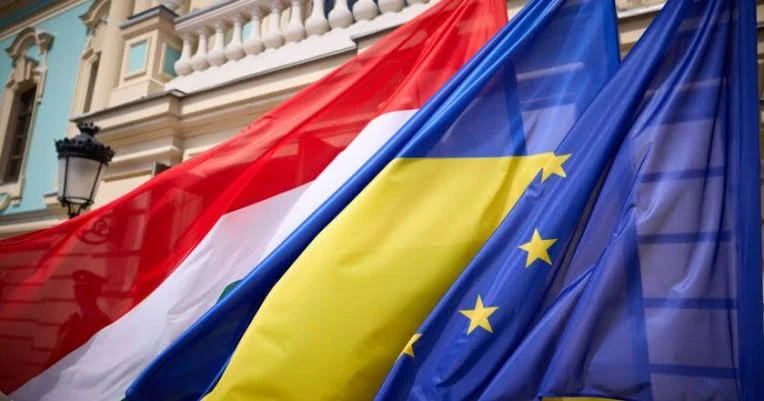
 Ілюстрація — для газети Дейком
But history rarely remains at the point of uplift. After the initial surge comes exhaustion. After exhaustion comes reckoning. After reckoning comes doubt. And this is the moment when a society begins to ask the question that is always heavier than any slogan: is danger really being distributed equally, is sacrifice really being shared, is the dignity of those asked to bear the greatest weight really being protected in the same measure?
From that moment on, the problem is no longer merely administrative or legal. It becomes anthropological. What happens to a person when he is no longer certain that the burden is truly common? What happens to a man in public space when he feels less and less like a citizen among citizens and more and more like the bearer of an obligation already placed upon him?
That question cannot be answered in the language of law alone, or in the language of morality alone. The deepest fracture opens between the two. Formally, duty may still remain universal. Procedurally, necessity may still retain its official name. But psychologically, something has already shifted. A man begins to feel that the social fabric itself has become asymmetric: that for some there remain routes of insulation, while for others there remains only the direct corridor of exposure.
It is here that inequality begins to destroy far more than isolated institutions. It destroys the sense that pain is being distributed honestly. It tells society that some people possess ways of slipping past risk — through money, status, connections, or the invisible protection of circumstance — while others face only direct vulnerability. And at this point a dangerous thought takes shape, one that people are often afraid to speak aloud: it is not fear alone that alienates a person, but the fear of being used without justice.
That thought is easy to dismiss as weakness. In reality, it is deeper than that. A person does not want to die “for someone else” only in the selfish sense. More often, he does not want to die in the moral sense of substitution. He does not want his own limit of pain to become compensation for someone else’s shelter, someone else’s influence, someone else’s ability to wait safely while others absorb the full weight of exposure.

Once a society reaches that threshold, its very optics begin to change. The view of a person as an individual — with a biography, work, family, private fear, and a right to dignity — starts to recede. In its place comes another view: the category, the resource, the unit of shortage, the figure who must be found, processed, pushed forward, without too much listening to his inner truth.
This is how the modern witch hunt begins in the twenty-first century. Not with mysticism. Not with the shriek of a fanatic crowd. But with the administrative habit of seeing not a face, but a function. Not a person, but a solution to a problem. Not a citizen, but a category of prior suspicion.
The most dangerous thing about this shift is that it almost always disguises itself as necessity. Society tells itself that this is only temporary hardness, a regrettable coarsening, severe but historically unavoidable means. Yet the human psyche hears the truth before public language is willing to admit it. It feels with extraordinary precision the moment when order stops protecting and begins searching.
And then the city itself begins to change. The street, the crossing, the station, the courtyard, the shopping center, the bus stop — all of it acquires a second, hidden meaning. A person counts not only hours and tasks, but routes, pauses, corners, places where it is better not to linger. Visibility begins to feel like risk. Presence begins to feel like something that can be turned against you. This is the psychological core of every witch hunt: not proven guilt, but pressure toward self-justification before any real conversation has begun.
Once that condition becomes widespread, it ceases to be a private fear. It becomes a form of social organization. On the surface, order may still appear intact. The official vocabulary may remain proper. Patriotic language may remain available. But underneath, something else is taking shape: some people no longer feel like full participants in a shared fate. They begin to feel like raw material for it.
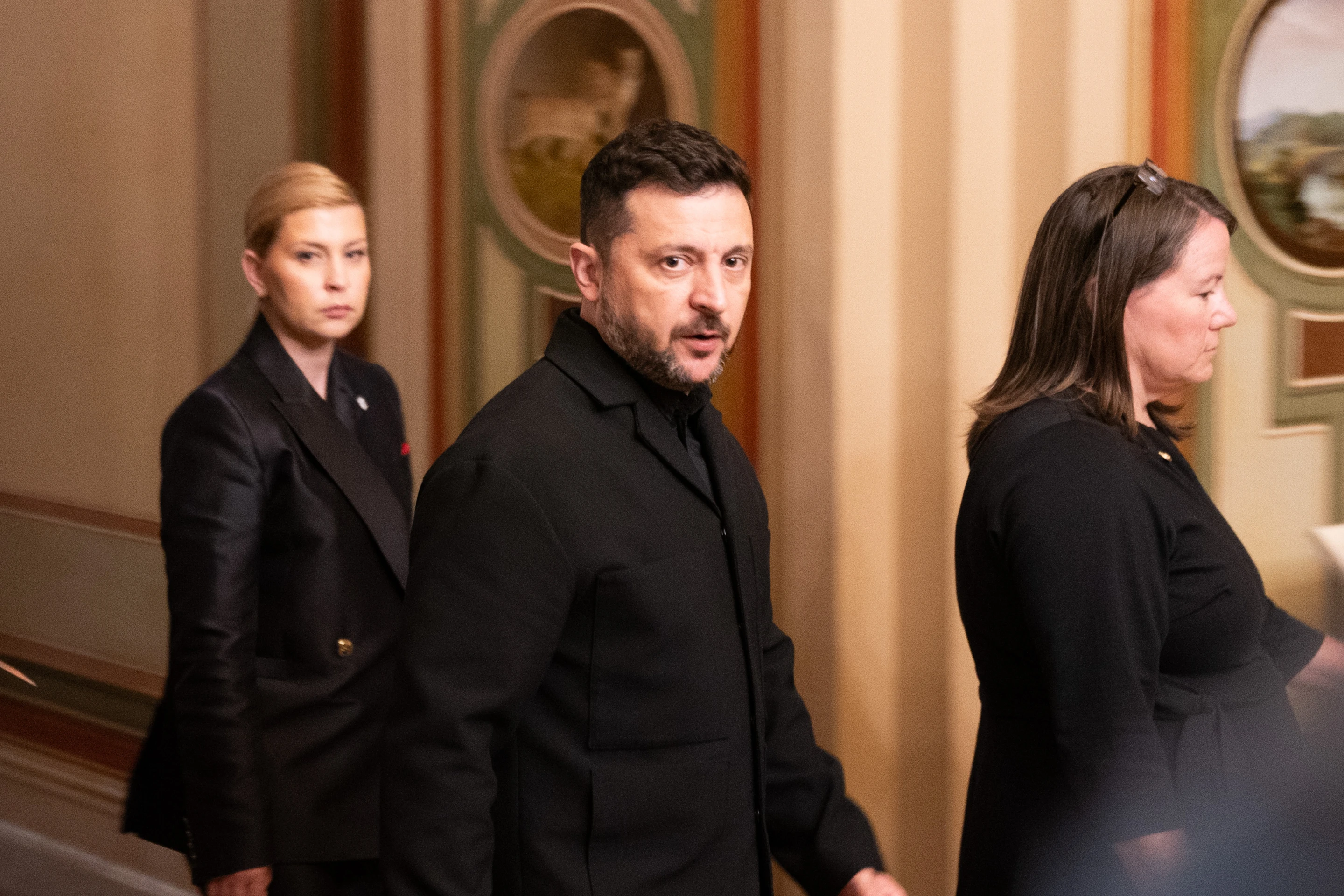
 Ілюстрація — для газети Дейком
Societies rarely recognize this turning point immediately. For a long time they tell themselves that these are only isolated excesses, tolerable exceptions, temporary changes in tone. But history suggests that major moral deformations almost never begin loudly. They begin quietly, as a habit of not noticing that dignity has already been moved outside the frame.
And here one of the central contradictions of modern Ukraine becomes visible. On the one hand, the society retains a powerful sense of national belonging, a strong emotional attachment to the country, a living memory of the first months of collective resolve, and the desire to understand itself as a nation that resists. On the other hand, beneath that strong collective identity there is a visible accumulation of fatigue — and with fatigue comes the thinning of everyday trust, without which any common effort begins to feel suspect.
This is a dangerous construction. A witch hunt does not require the total collapse of community. On the contrary, it often begins where the great words, flags, symbols, and rituals of unity still remain on the surface, while daily trust in the concrete person is already dying underneath. Outwardly, the society still speaks in the language of cohesion. Inwardly, it is already moving in the language of suspicion.
In such a condition, a tired society stops looking for truth and begins looking for reduction. Instead of asking the harder question — why does the shared burden no longer feel shared? — it asks the simpler and harsher one: who has not yet been reached? This is the moment when helplessness hardens into moral coarseness. And this is the moment when the person who only yesterday was a fellow citizen becomes a sign. Not a face, but a category. Not a story, but an answer to somebody else’s shortage.
Salem became a lasting symbol not because it contained so much religious darkness, but because it revealed how quickly a community can learn to replace evidence with imagination and law with necessity. A modern society repeats that mechanism not literally, but psychologically. It does not speak of witches. It speaks the language of procedures, registries, search, control, and expediency. But the essence of the danger remains unchanged: a certain group of people is no longer perceived in the full measure of its human dignity.
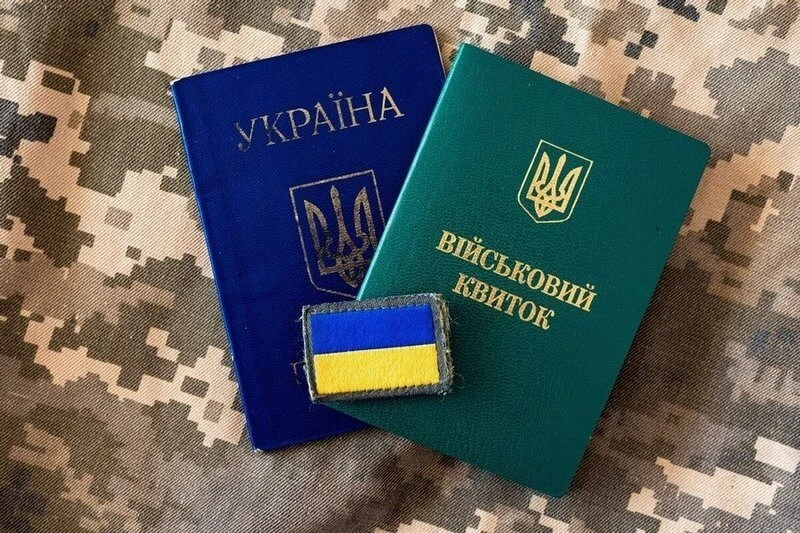
 Ілюстрація — для газети Дейком
That is why the decisive question for Ukraine today is not only how long the war will last or what the price of defense will be. The deeper question is whether society can hold on to the idea that justice is not a postwar luxury, but a condition of survival now. A country is defended not only by weapons. It is also defended by the line beyond which a human being ceases to be treated as a means.
If that line holds, a society can pass through severe trial without turning it into a moral catastrophe. If it disappears, something far harder to heal begins to emerge: a quiet internal rupture between state and citizen, between the greatness of an aim and the method used in its name, between patriotic language and the humiliated body moving through ordinary space.
In that sense, Ukraine’s future is being decided not only at the front and not only in offices of power. It is being decided in whether the state can demand much without teaching people to lose the feeling of their own dignity; whether society can endure a heavy duty without consenting to degrading inequality; whether a people can become exhausted without becoming deaf.
Because Salem’s shadow always arrives in the same way. First, a society stops seeing people equally. Then it stops listening to them equally. Then it begins to demand equal loyalty from all while no longer protecting their dignity equally. After that, the hunt no longer requires raised voices. It works quietly, like habit.
Ukraine is not yet in Salem. But the great tragedy of every exhausted society is that it can arrive there almost without noticing — not by betraying a great cause outright, but by growing tired of justice. And that is why the most important question today is not simply whether the country can endure the heaviness of its time. The question is whether it can endure its own power without turning that power into a license to see only function where there is still a person.
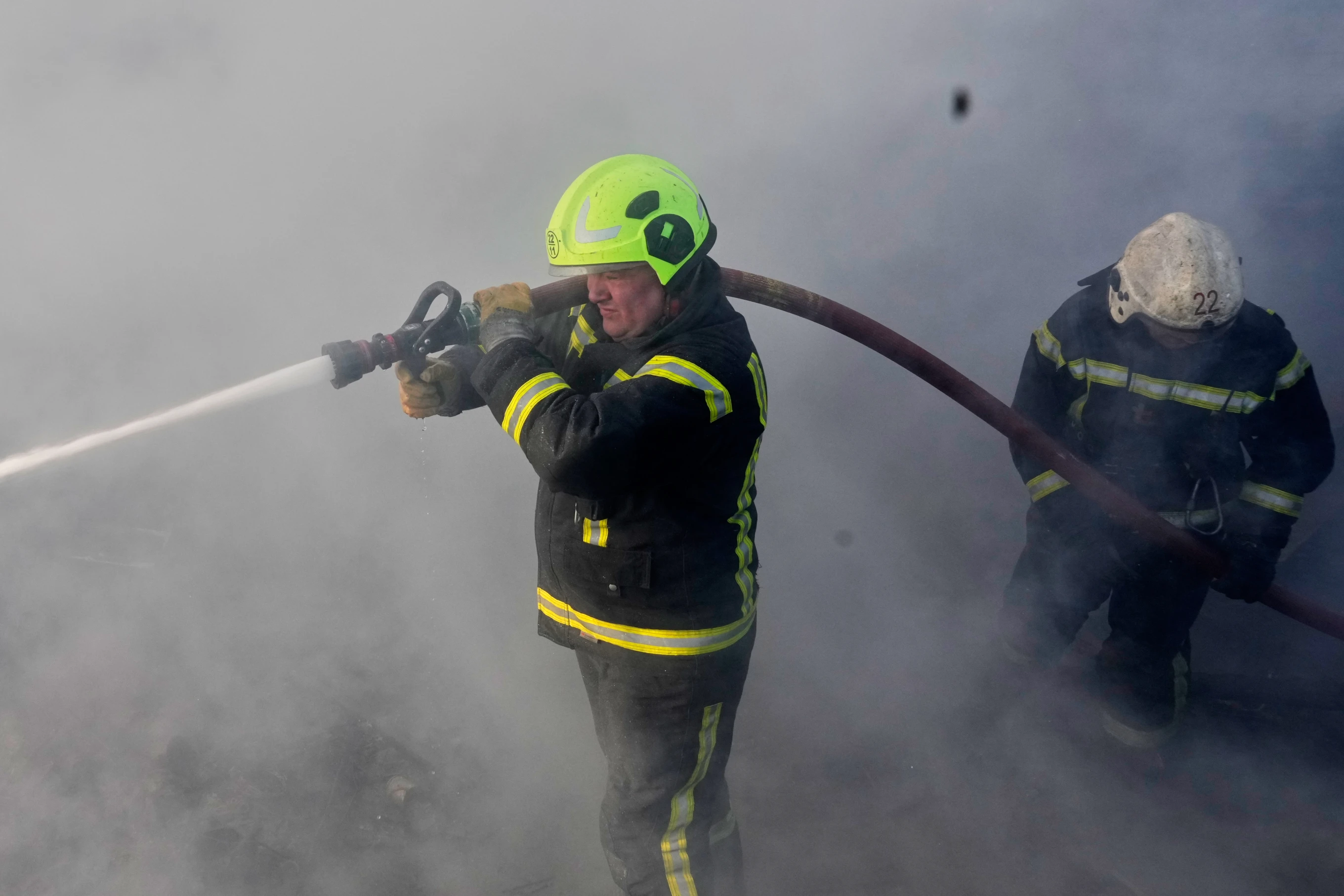
 Ілюстрація — для газети Дейком

Everything is decided at that boundary. Not only how Ukraine fights, but what kind of country it will emerge as: a society that passed through darkness and preserved a sense of the human measure, or a society that allowed fear, fatigue, and inequality to melt solidarity into a modern witch hunt.