





















When Washington removes sanctions not from an opposition figure but from someone who spent years at the core of power in Caracas, it is not revising the past. It is changing its priorities. In Venezuela’s case, the White House is speaking less in the language of punishment and more in the language of controlled normalization.
The decision to take Delcy Rodríguez off the sanctions list is not a technical correction or a minor bureaucratic gesture. It signals that Washington no longer sees her as a figure to be fenced off from all contact, but as someone fit for legal political and economic engagement.
This move fits into a broader turn in U.S. policy that began after Nicolás Maduro’s fall and continued with the restoration of diplomatic ties with Caracas. Sanctions relief is not an exception to that shift. It is one of its clearest expressions: instead of pressure as the defining principle, selective legitimacy is now being extended to those who can manage a transition without collapsing the system.
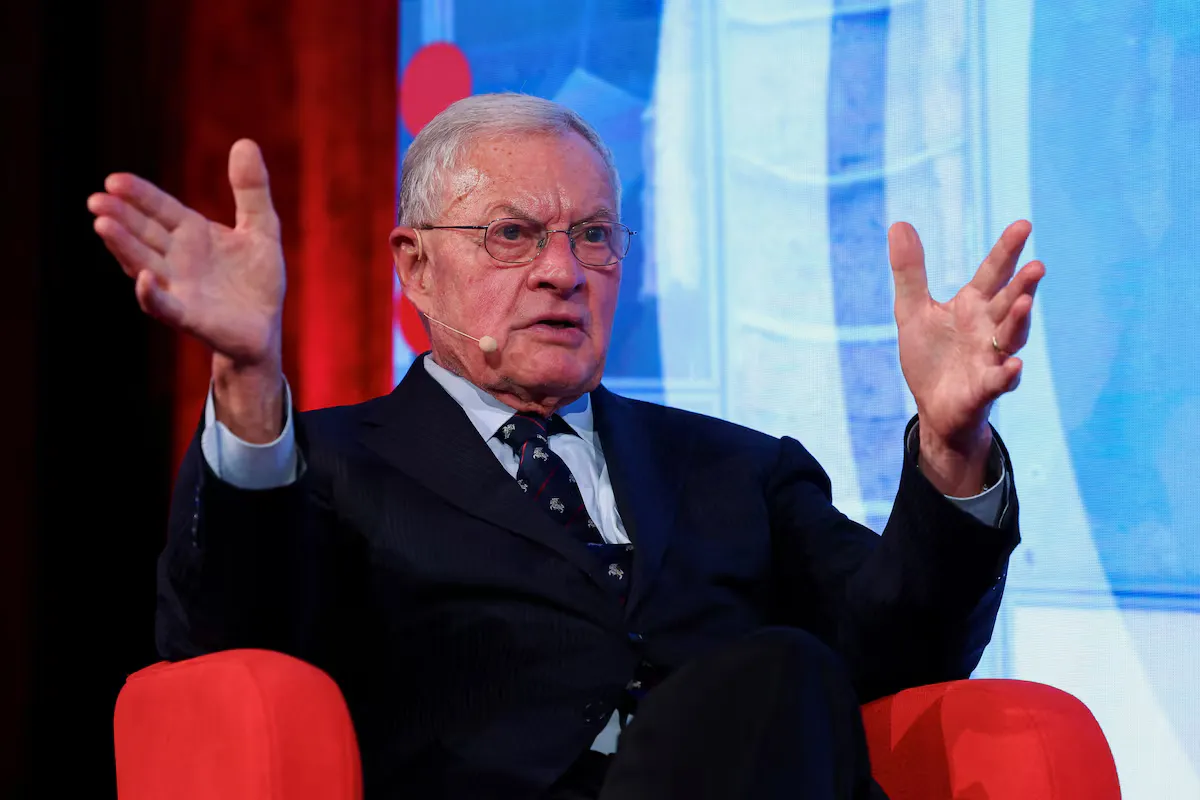
In Deykom’s assessment, Washington is not dismantling the old Venezuelan structure. It is choosing a new operator within it. Delcy Rodríguez was, until recently, a symbol of the order the United States had denounced as illegitimate after the events of 2018. Now she is becoming the figure through whom the White House hopes to repackage relations with Venezuela without risking a direct political vacuum.
That is the real meaning of the moment. Sanctions are not being lifted because Venezuela has suddenly become a democracy. They are being lifted because Caracas now has a figure capable of guaranteeing predictability in negotiations, access to resources and a minimum level of control during a transitional period. In American foreign policy, this is one of the clearest examples of moral rhetoric yielding to geoeconomic calculation.
The practical value of the decision is obvious. With sanctions removed, Rodríguez can deal with U.S. companies without exposing them or herself to legal risk, and Washington gains a formal channel for business at the highest level. That is why this step should be read first as the opening of a commercial door, not as an act of political reconciliation.
The most important dimension of that opening is energy. Venezuela remains a country with vast oil and gas reserves, and for the United States access to those reserves is not only commercially attractive but strategically useful. Where the logic of isolation once dominated, the logic of limited reentry by American capital is now beginning to take hold.
That is why this is not a standalone diplomatic episode but the outline of a new architecture of influence. An embassy in Caracas, restored relations, renewed interest in the oil sector, negotiations around minerals and wider commercial access all point in the same direction. The United States is not merely deleting one name from a blacklist. It is building a new mechanism of presence inside Venezuela.
The weakest part of that architecture is democracy. Formally, Washington can still speak about elections, political transition and a future legitimate order. In practice, however, it is already working not with the opposition as the center of future authority, but with an interim leadership drawn from the same governing system. That is a profound shift.
This is why the Rodríguez decision matters so much. In 2018, the United States sanctioned her as part of an authoritarian structure that had hollowed out Venezuelan democracy. In 2026, the same figure is being treated as an acceptable interlocutor because she can deliver economic opening without destroying the state’s internal manageability. In that logic, sanctions policy is not morality in action. It is a tool for selecting useful partners.
That creates a longer-term risk. Venezuela may receive investment, partial liberalization, recovering exports and a new diplomatic framework without receiving a real refounding of power. In other words, the country may move not from autocracy to democracy, but from an isolated autocracy to a market-compatible one.
That is where the true boundary of the new U.S. approach lies. The White House is not betting on full political transformation in Venezuela. It is betting on managed stability. That is faster, more convenient and more profitable in the short term. But it comes at a price: much of the old governing fabric remains in place under a new international arrangement.
So this American turn toward Venezuela should be read without illusion. Washington is not so much forgiving Caracas as reassessing its usefulness. After Maduro’s removal, the White House did not find an ideal democratic scenario. What it found instead was a workable formula: keep the broader system intact, replace the negotiating summit and move the crisis from the language of sanctions into the language of controlled deal-making.
That is the real significance of the decision on Delcy Rodríguez. It is not the triumph of democracy, not a moral rehabilitation and not full reconciliation. It is the choice of the most convenient path for America’s return to Venezuela — through a figure embedded enough in the old system to keep it from falling apart, and useful enough to become part of a new strategic bargain.