
















When a political event suddenly becomes an emergency, the first version of the story is rarely written in official statements. It appears in short videos, trembling voices, accidental angles and phrases that only minutes earlier had seemed harmless.
That is how the attack at the White House correspondents’ dinner at the Washington Hilton became not only a security incident, but a media event. The ballroom was filled with hundreds of journalists, cameras, phones and people professionally trained to record the moment. When gunfire was heard, many of those present were at once seeking cover and documenting the chaos.
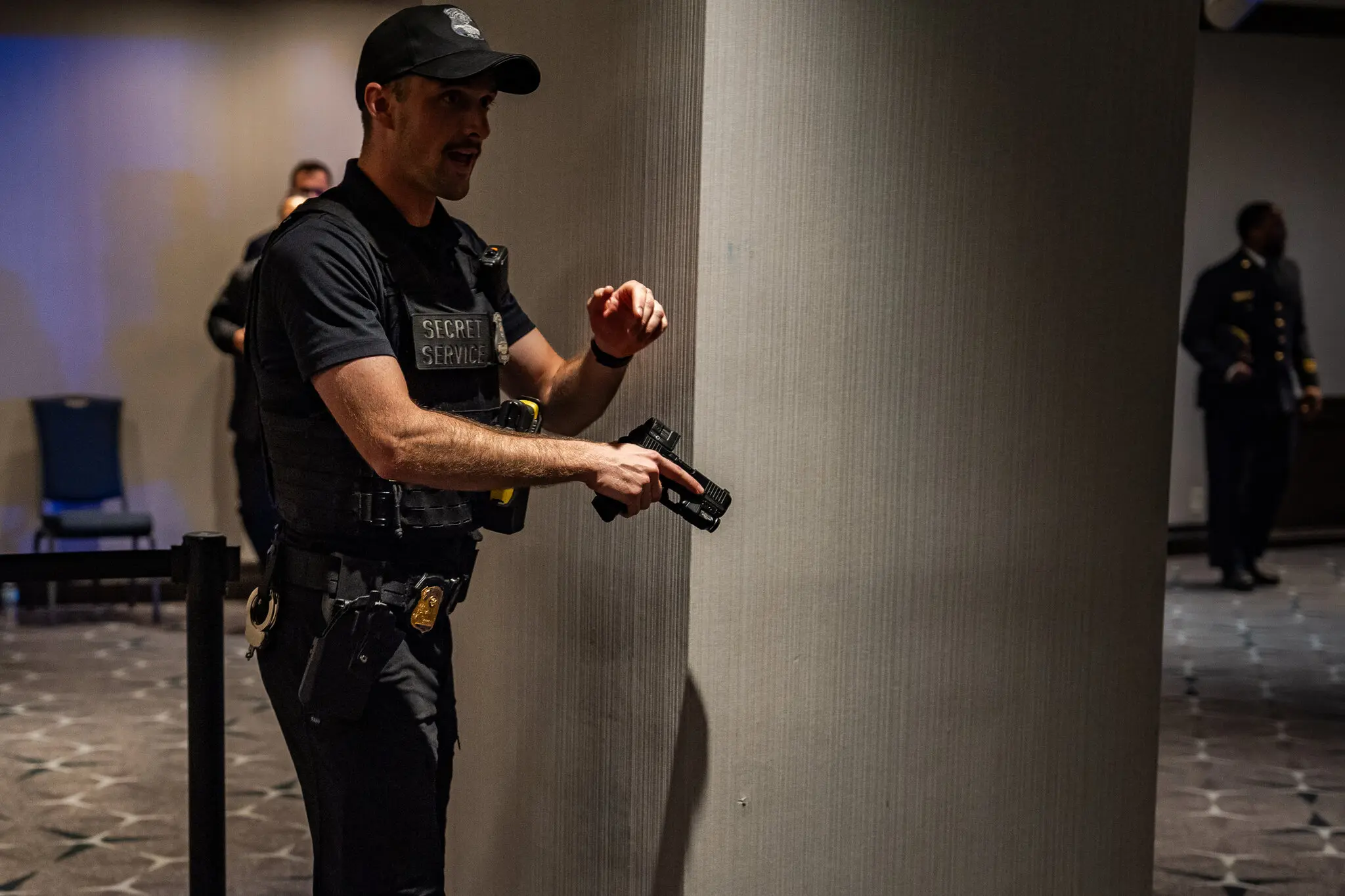
The suspect, Cole Thomas Allen, 31, of Torrance, California, was taken into custody after breaching a security checkpoint and exchanging fire with law enforcement. Investigators are still examining his motive, but the public image of the evening had already begun to form from fragments: agents with long guns, guests under tables, journalists in tuxedos holding phones and waiters refilling water glasses after the panic.
According to Daycom’s analysis, the power of the episode lies in the collision between danger and the ordinary. Social media did more than transmit chaos. It showed how American political culture absorbs even the threat of violence, turning it into a stream of videos, memes, brief commentary, moral judgments and fragments that outlive the official protocol.
One of the most widely shared moments came from White House press secretary Karoline Leavitt before the dinner. She had promised that Trump’s speech would be “classic” Trump — funny and entertaining — then added that “shots” would be fired in the room that night. She meant political jokes. After actual gunfire, the phrase instantly took on a darker meaning.

On an ordinary evening, it would have been routine Washington metaphor: “shots” as sharp lines, jabs at opponents, staged comic aggression. But political language in America now lives too close to real weapons. That is why the clip spread so quickly, accompanied by comments about eerie timing, poor taste and a phrase that had aged badly within hours.
Another fragment showed journalistic instinct in its purest form. Correspondent Matt Gutman stood near his table trying to understand what was happening while filming the scene on his phone. Outside the hotel, police lights flashed and officers rushed the perimeter. Inside the ballroom, guests still did not know whether the threat had ended.
His description was fragmented, and for that reason precise: long guns, Secret Service, people dropping to the floor, a strange hush in the crowd. In such moments, language loses its polish. It becomes a list of signs by which a person tries to assemble reality before fear outruns it.
Kaitlan Collins described the chaos from the main aisle of the ballroom. She saw Secret Service agents rush toward the stage to evacuate the president and members of the administration. Her calm tone contrasted sharply with the scene around her: heavy weapons, security personnel, tables, people in formal clothes who had lost the posture of a gala evening in seconds.
That contrast became the central tension of the videos from the Washington Hilton. Journalists spoke in the language of live reporting, but they were inside the event. They were not outside observers. They were potential victims continuing to do their work. Professional distance reduced the panic without eliminating it.
The most viral image, however, was not the president’s evacuation, but the man with the salad. Michael Glantz, an agent at Creative Artists Agency, remained seated at his table eating burrata while people nearby crouched on the floor. Social media quickly gave him a name: “the salad man.”
The image became popular not because it was important, but because it was absurdly complete. It contained the whole scene: danger, formalwear, fear, media noise and a man who either could not or would not enter panic mode. His calm seemed almost implausible, and therefore perfectly suited to the internet.
Another image was almost theatrical. After agents knocked down some of the barriers in the ballroom, they began to be restored. At the main table, where the president, the first lady and guests had earlier been seated, waiters resumed filling water glasses. It seemed unreal, as if the ritual of the dinner were trying to reassemble itself after violence had broken into it.
That scene said as much about institutional America as the images of security agents did. Even after a threat, the system tries to restore order: put barriers back, pour water, reset the table, resume the format. Yet that mechanical normality can be the most unsettling part. It shows how quickly the extraordinary becomes part of the script.
What almost disappeared behind the videos of the presidential evacuation was the hotel staff. Waiters, cleaners, kitchen workers and technical crews were not the central figures of the night, but they experienced it sharply. Some were crying. Some were shaking while continuing to clear tables as the room slowly returned to control.
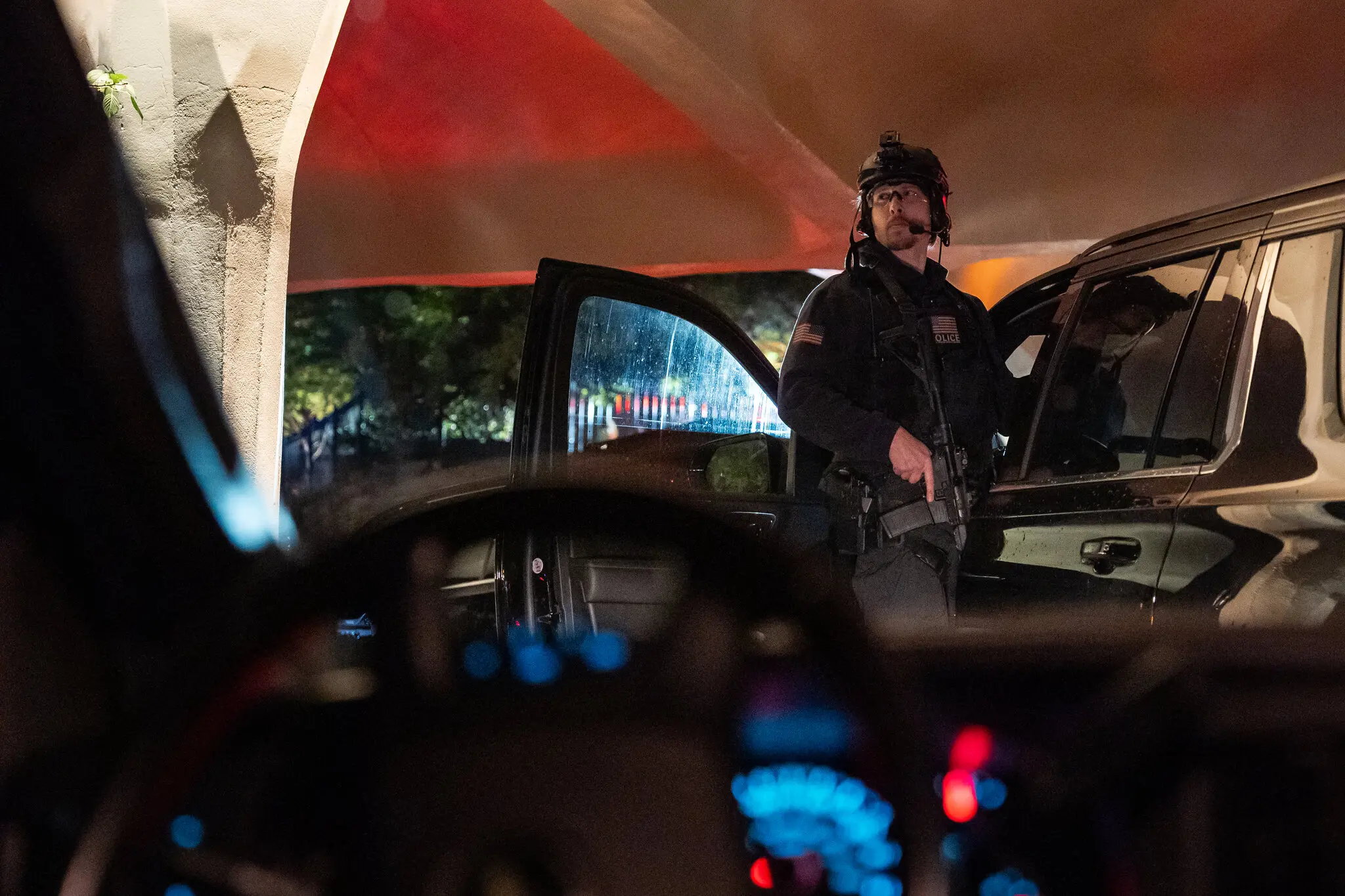
That detail matters because major political events often hide the people who make their visible smoothness possible. In the frame are the president, journalists, agents and guests. Outside it are hundreds of workers with no political status who nevertheless find themselves inside the same danger. Their vulnerability rarely enters the protocol.
This time, social media captured not one story but several at once. For some, it was a story about the Secret Service and the protection of the president. For others, it was about journalists filming their own fear. For others still, it was the absurdity of the man with burrata. For some, it was the waiters who continued setting water glasses after the chaos.
That fragmentation is how modern crises are remembered. There is no longer a single frame that explains everything. There are dozens of fragments, each claiming a piece of the truth. One shows panic. Another shows professionalism. A third shows a comic detail. A fourth shows invisible human exhaustion.
The attack at the press dinner did not become a mass tragedy. But it became a moment in which American public culture saw itself from the outside: armed, tense, quick to create memes, trained for the camera and at the same time unable to absorb danger fully without comic release.
That was the darkest irony of the evening. A dinner designed as a controlled performance of power and media was interrupted by a real threat, then turned into a performance again — this time digital. Fear, salad, security agents, water glasses and trembling waiters became parts of one story about a country learning to live between political ritual and the possibility of gunfire.