
























The strike on Primorsk was more than another fire at a Russian facility. It was an attack on the nervous system of Russia’s oil exports: ports, tankers, transshipment, insurance, routes and Moscow’s confidence that the war can remain far from its main sources of revenue.
Drones attacked the port of Primorsk in Russia’s Leningrad region overnight on Sunday. Local authorities acknowledged a fire, reported dozens of drones downed and stressed that there had been no oil spill. For one of Russia’s largest export gateways, it was another warning that distance no longer guarantees safety.
Primorsk’s importance extends far beyond regional infrastructure. It is one of Russia’s main outlets to the Baltic Sea, handling large volumes of crude oil and petroleum products. Its vulnerability turns the war from a land confrontation into a struggle over the export arteries of the Russian state.
According to Daycom’s earlier analysis, the attack on Primorsk reflects a shift in Ukraine’s long-range strategy. Kyiv is moving beyond symbolic targets and increasingly striking the links that give Russian oil its money, routes and physical access to global markets.
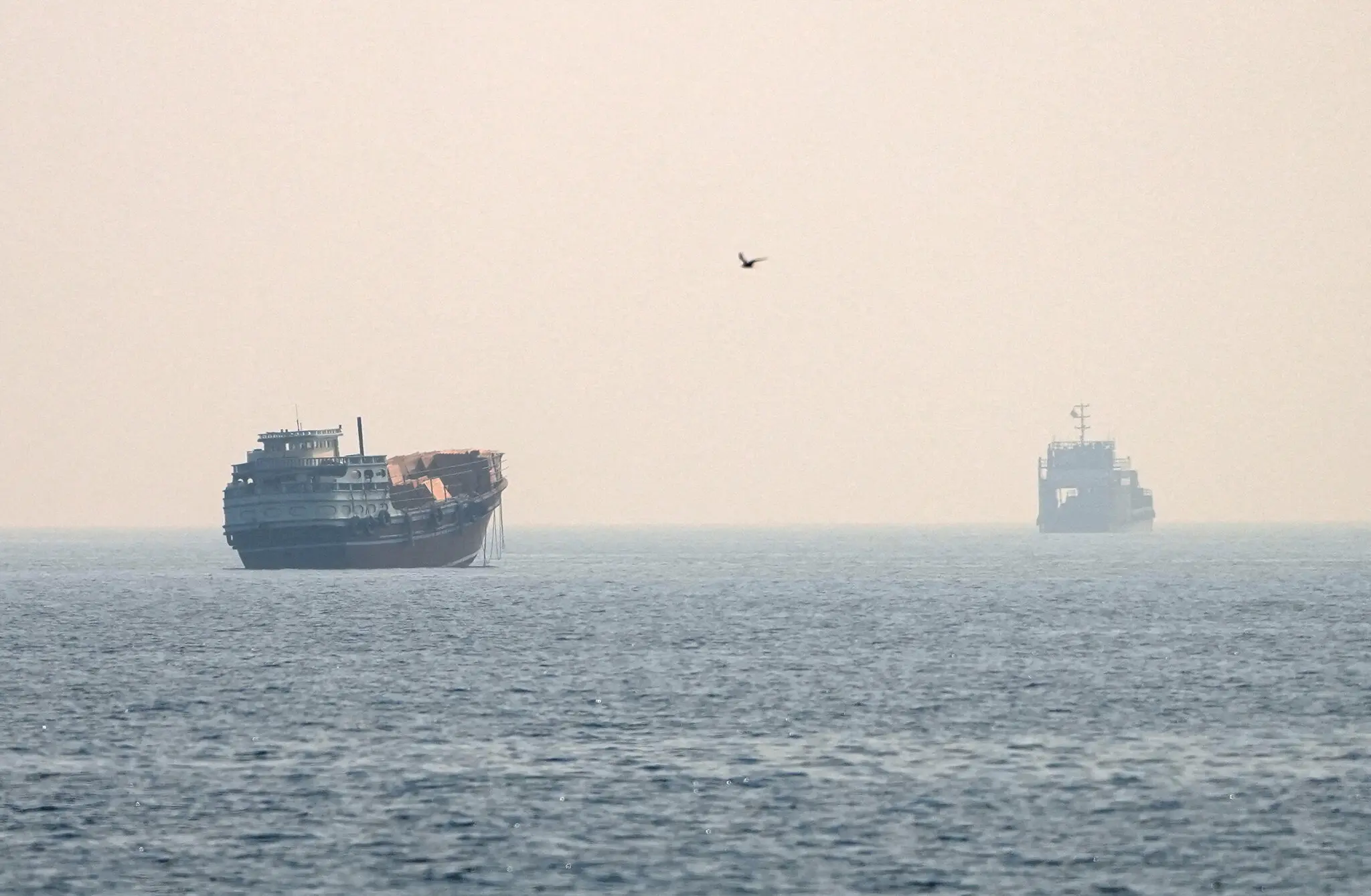
A second part of the same campaign unfolded near the entrance to the Black Sea port of Novorossiysk. Ukraine said two tankers used to transport oil had been hit. President Volodymyr Zelensky framed the strike as part of Ukraine’s expanding long-range capabilities at sea, in the air and on land.
The combination of the Baltic and the Black Sea is what makes this wave of attacks significant. Primorsk is a fixed export hub that cannot be quickly moved. The tanker fleet is the mobile part of the same system, helping Russia shift flags, owners, routes and documents to keep oil moving.
Ukraine has long treated the shadow fleet not only as an economic instrument, but as a military problem. Those vessels help Moscow preserve oil revenues despite sanctions pressure, sustaining its ability to wage a long war. Striking tankers therefore becomes part of a broader strategy, not an isolated maritime episode.
For Moscow, Primorsk’s exposure is especially painful because of geography. The port lies deep inside Russia’s northwest, in an area long regarded as rear territory. If drones can reach such facilities, Russian air defenses must protect not only the front and military bases, but export infrastructure across the country’s interior.
This does not mean an immediate paralysis of the Russian economy. Oil exports have reserves of resilience: alternative ports, temporary storage, rerouted cargoes, repair crews, administrative pressure and state buffers. But every such strike raises logistics costs and reduces the predictability of supply.
In a war of attrition, predictability can matter more than one-time damage. Buyers, insurers, intermediaries and shipowners calculate not only tonnage, but risk. Once a port or tanker can become a target, Russian oil stops being merely a discounted commodity and becomes a cargo carrying a war premium.
For Ukraine, the political logic is clear. Russian oil finances troops, missiles, drones, artillery and Moscow’s long-term capacity to continue the war. A strike on a terminal or tanker does not halt an assault at the front the same day, but it pressures the source that makes those assaults possible month after month.
The battlefield does not disappear behind the smoke over ports. Russian forces continue to press in parts of Donetsk region, including toward Kostiantynivka, one of the important nodes in Ukraine’s eastern defensive belt. Strikes on Russian energy infrastructure do not replace defense; they complement it.
Moscow is trying to force Ukraine to divide its strength across several dimensions of war: defending cities, protecting energy infrastructure, holding the northern border, countering drones and managing diplomatic pressure. Kyiv’s answer is asymmetric — shifting the cost of war onto Russian ports, pipelines, reservoirs and ships.
That is why Primorsk matters not as a single target, but as a signal. Russia’s territorial depth no longer guarantees safety for infrastructure that serves the war. The Baltic Sea, the Black Sea, oil transshipment and tanker routes are becoming parts of one operational space.
For the Kremlin, this is a dangerous change in the rules. Russia built a model in which it could destroy Ukrainian cities while keeping its own export arteries shielded by distance, air defenses and fear of escalation. Ukrainian long-range drones are gradually breaking that asymmetry.
The fire at Primorsk can be extinguished. Storage tanks can be repaired. Tanker routes can be temporarily changed. But it is far harder to restore the sense of invulnerability once one of Russia’s largest oil ports again becomes a military target and the shadow fleet ceases to be a shadow where the money of war can be safely hidden.