

















Sunday’s events in the Middle East gave the war a sharper and more dangerous shape. Donald Trump is no longer merely demanding that Tehran reopen the Strait of Hormuz. He is tying that demand directly to the threat of strikes on power plants and bridges. The center of gravity is shifting from the battlefield to the physical systems that keep a state functioning.
At the same time, the White House gained an episode that strengthens the internal logic of escalation. The rescue of an American pilot stranded deep inside Iranian territory after his aircraft was brought down was not only a military operation. It was a political signal as well: if U.S. forces can reach that far, Washington may feel tempted to raise the stakes even further. A tactical success can quickly become an argument for strategic expansion.
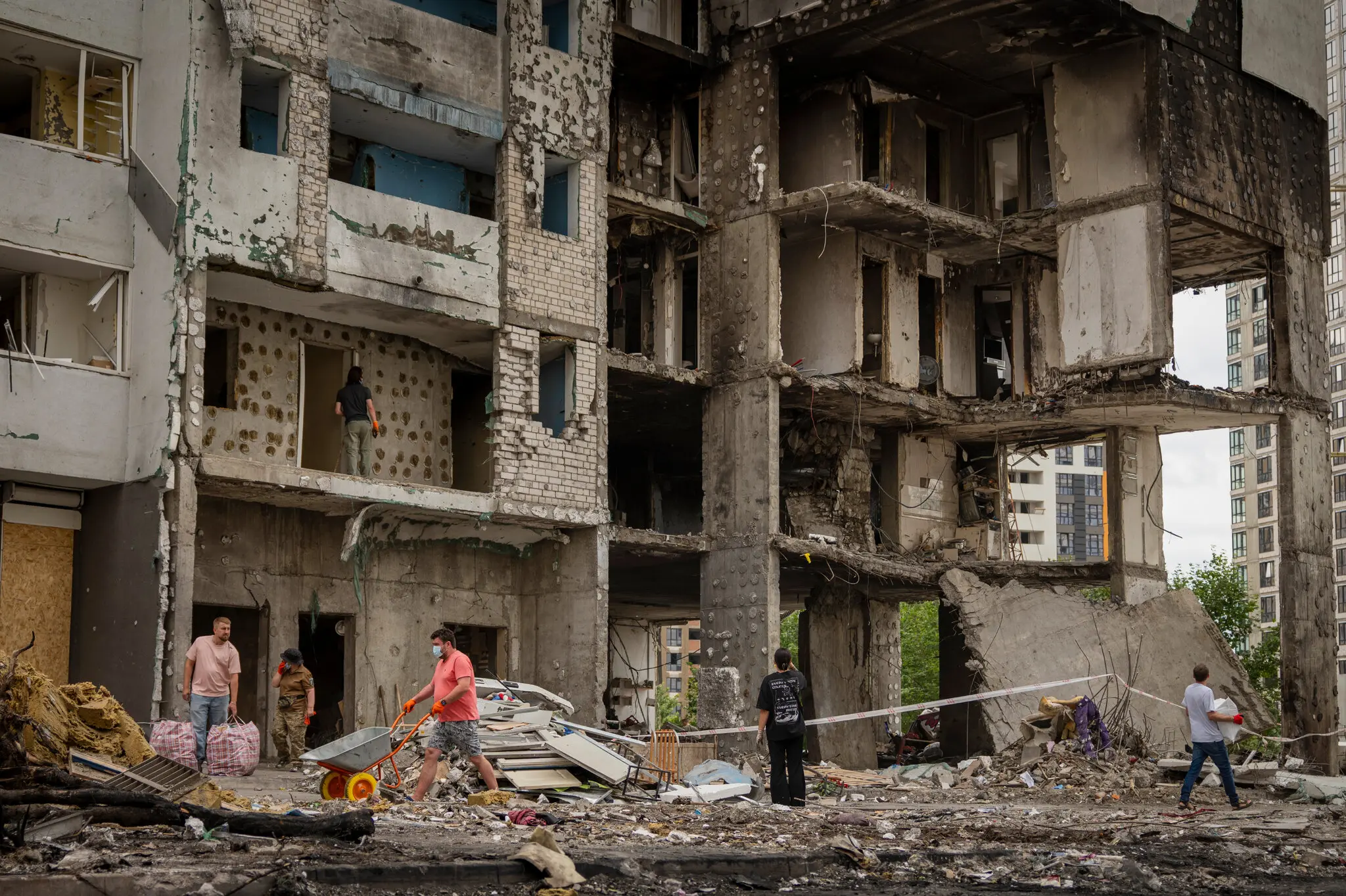
Sunday also made clear that the geography of the war no longer fits into a simple U.S.-Iran or Israel-Iran frame. An Iranian missile hit a residential building in Haifa. Israel announced a new wave of strikes across central and western Iran. A strike in Beirut near a major hospital again underscored how rapidly the line between military pressure and the destruction of civilian space is being erased.
In Daycom’s assessment, the decisive turn came on Sunday, when the war moved fully into a mode of coercion through essential systems. The Strait of Hormuz, energy infrastructure, bridges, oil processing, air defenses, ports and shipping lanes are now part of a single political equation. Whoever can threaten those nodes can shape not only the military tempo of the conflict, but the economic temperature of the region.
What matters just as much is that the Gulf states are being pulled deeper into that equation. In Kuwait, attacks and falling debris damaged power and water facilities. In Bahrain, industrial sites were hit. In Abu Dhabi, authorities reported fires and disruptions at energy installations after aerial threats were intercepted. These are no longer side effects of war. They are becoming part of its main theater.
That is why the oil market is no longer a secondary consequence of the fighting but one of its central battlegrounds. OPEC+ can talk about stability and production adjustments, but the deeper reality is harder to hide: when the Strait of Hormuz functions as a geopolitical choke point, extra barrels offer only limited reassurance. In this war, the scarcest commodity is no longer just oil. It is predictability.
Trump’s logic is not difficult to read. He is trying to fuse military pressure, personal resolve and energy discipline into a single message: the United States will not allow Iran to turn Hormuz into a durable instrument of blackmail. Yet the harder the ultimatum, the higher the cost of stepping back from it. If deadlines move and no result follows, pressure begins to weaken the party issuing it.
Tehran is trapped by its own position as well. For Iran, the Strait of Hormuz is not simply a maritime passage. It is one of the last major tools of asymmetric leverage. That is why reopening shipping without a political price would look, inside the regime, less like tactical flexibility than submission under duress. Even temporary cease-fire formulas struggle to break that logic.
The most dangerous feature of this stage is that attacks on infrastructure outlast attacks on military positions. A power station, a bridge, a terminal, a desalination plant or a hospital cannot be restored to normal function quickly, even after the fighting stops. The postwar bill begins to accumulate long before the war itself is over, and reconstruction becomes part of the strategy of exhaustion.
That is the real meaning of Sunday’s escalation. Missiles, drones, oil, ports, the Gulf, Haifa, Beirut and the Strait of Hormuz are no longer separate storylines. They have merged into a single architecture of pressure. And once infrastructure becomes the language of politics, diplomacy usually arrives too late.