











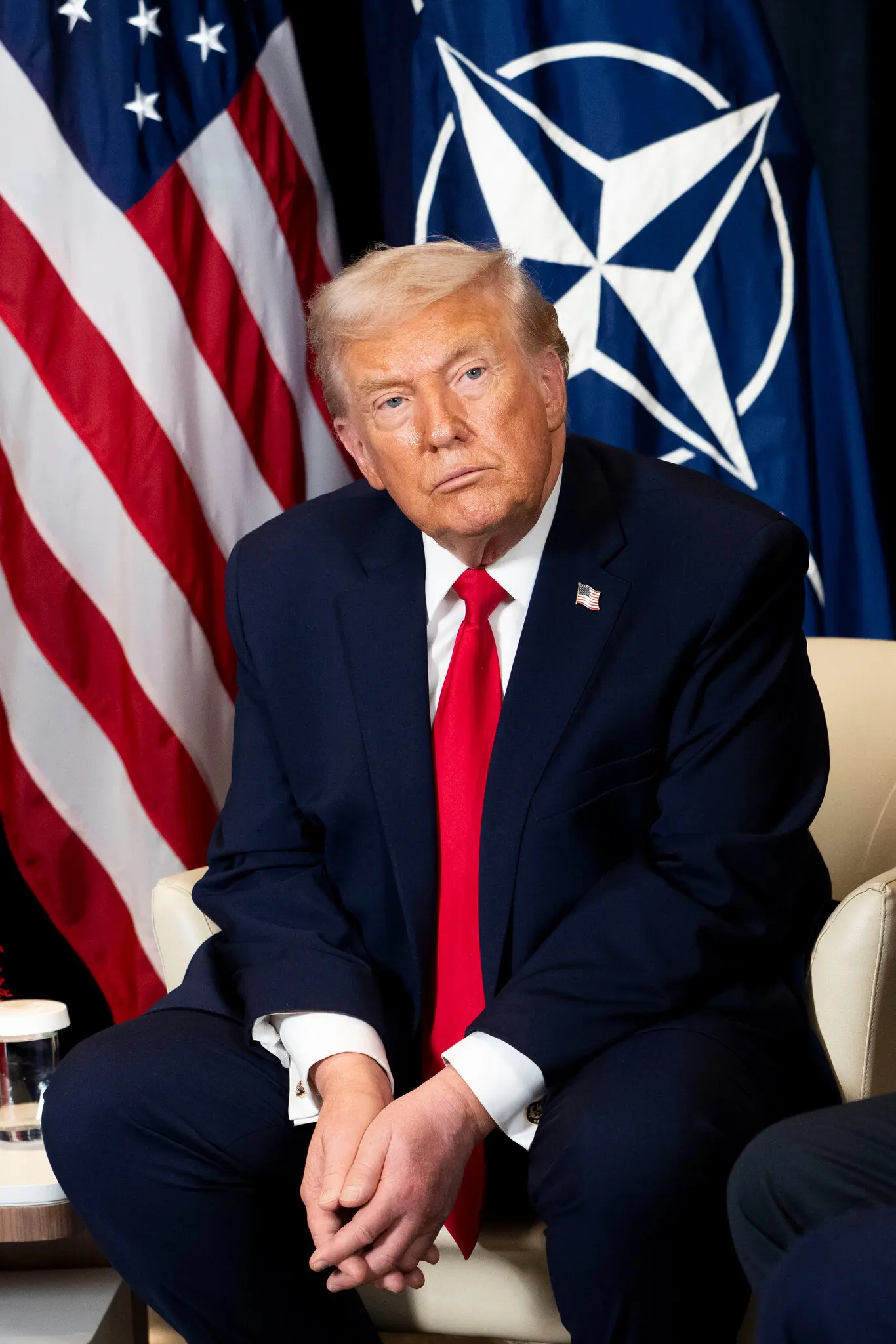





Donald Trump has insulted Europe before, but the current round of attacks lands differently. When a sitting American president, in the middle of a war with Iran, calls NATO a “paper tiger,” suggests that America’s commitment to the alliance may already be beyond review and tells allies to fend for themselves, this no longer sounds like rough transactional politics. It sounds like coercion. The U.S. security guarantee, once treated as the fixed foundation of the Atlantic order, begins to look conditional, emotional and strategically unstable.
For Europe, the real danger lies not only in the vulgarity of the language, though that matters. The deeper shock is that Trump is not merely criticizing one decision by London, Paris or Brussels. He is striking at the underlying assumption on which the postwar West was built: that the United States may be difficult, arrogant or self-interested, but in the end remains the indispensable pillar of European security.
Once Washington starts linking the defense of Europe to Europe’s willingness to endorse an American war in the Middle East, the alliance ceases to look like a system of collective security and starts to resemble a mechanism of situational pressure. The point is no longer shared defense. The point is obedience.
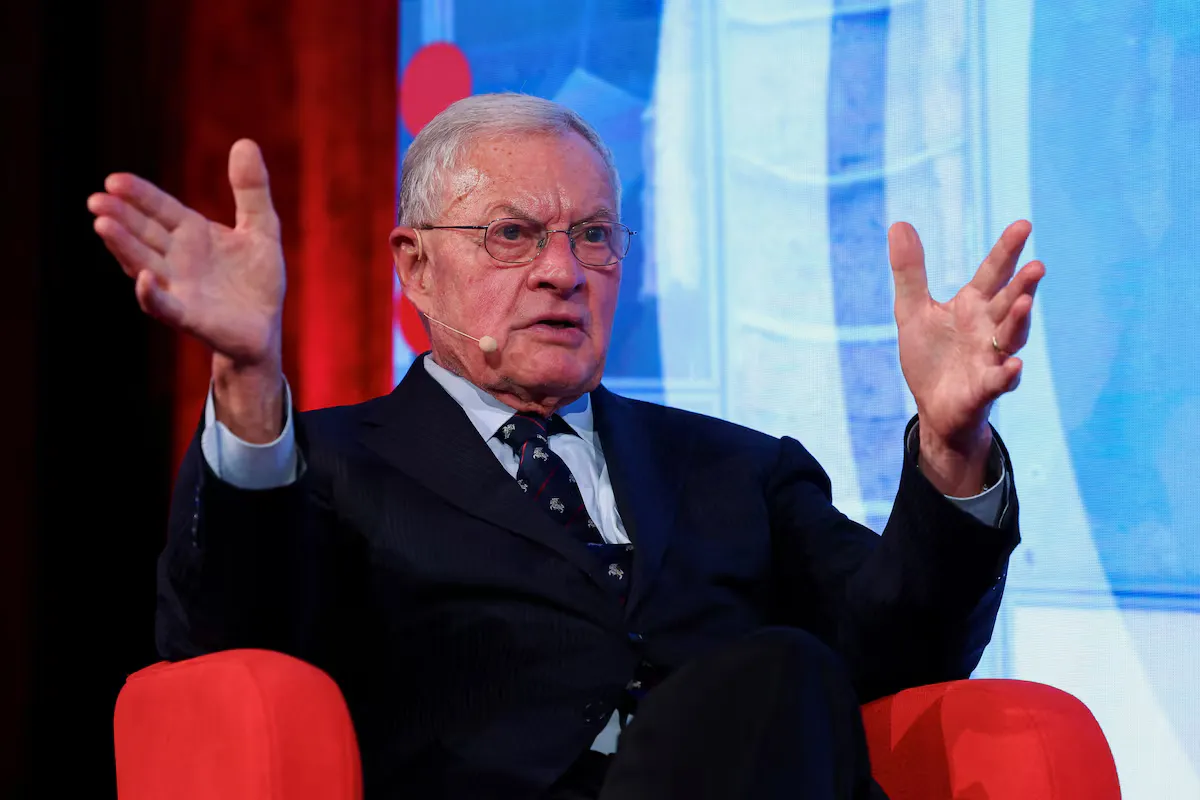
In Deykom’s assessment, that is what makes this moment more consequential than yet another Trump outburst. Europe is no longer hearing his rhetoric as noise. After years of threats, humiliation, improvisation and loyalty tests, European capitals are beginning to absorb a harder truth: American presence may continue, but American predictability no longer can be assumed.
That is a profound strategic rupture. European security after 1945 was never built on military hardware alone. It depended not only on U.S. bases, budgets and nuclear deterrence, but also on a psychology of trust. Even in periods of major disagreement, allies assumed that the structure itself would hold. Trump undermines precisely that confidence. He casts doubt not on one policy, but on the very idea of a durable American commitment.
This is why the European response has been so tense and so restrained at once. Keir Starmer refused to drag Britain into war with Iran and said clearly that it was not Britain’s war. Yet he also avoided direct confrontation with Trump, limiting himself to affirmations of NATO and invocations of national interest. That is not weakness of character. It is weakness of position. European leaders want to answer forcefully, but they fear that any direct rebuttal may trigger an even more destabilizing reaction from Washington.
That fear matters because it reveals a larger shift. Strategic autonomy, once easy to dismiss as a French obsession or a Brussels slogan, is starting to look less like theory and more like necessity. If the United States can convert its role in European security into a bargaining chip, then Europe has no serious choice but to prepare for a future in which Washington remains formally inside the system while ceasing to function as its unquestioned guarantor.
That is why Starmer’s language about closer ties with Europe carries more weight than a routine diplomatic gesture. For Britain, which spent a decade trying to balance post-Brexit distance from Brussels with a maximal reliance on the transatlantic relationship, the current moment marks a strategic return to geography. Not because London has suddenly rediscovered continental idealism, but because geography is beginning to feel more reliable than American temperament.
In a broader sense, Trump is forcing Europe to grow up in a way he may himself interpret as proof of strength. But it is a short-sighted strength. When allies are pushed to think less about how to deter Russia, stabilize the Middle East or protect global shipping lanes and more about how to insure themselves against American volatility, the result is not a stronger West. It is a more fractured one. That fragmentation benefits every adversary who sees advantage in the weakening of Atlantic cohesion.
This is especially dangerous in the context of Ukraine. European governments know perfectly well that without the United States, sustaining military support for Kyiv becomes harder, more expensive and politically more fragile. But the deeper damage lies elsewhere. If America starts behaving as though its participation in Europe’s security is a favor that can be withdrawn out of irritation or political pique, then the entire deterrent structure surrounding Russia begins to look softer. For Moscow, even the appearance of that doubt is a strategic gain.
There is another reason Trump’s rhetoric cuts so deeply. It imports the logic of the deal into a sphere where deals were never meant to define the relationship. States can bargain over tariffs, procurement, bases and industrial policy. But once bargaining begins over the question of whether allies will be defended at all, what erodes is not merely diplomatic etiquette. It is faith in the architecture of deterrence itself. And such faith is far harder to rebuild than any trade arrangement or budget commitment.
So what Europe is experiencing now is not simply another episode of American bullying. It is something more destabilizing: a moment of strategic recognition. Trump is alarming not only because he is crude, but because he is exposing the possibility that the old norm may not return when he is gone. If this style of alliance management — abrasive, conditional, openly humiliating and calibrated to immediate gain — becomes even partially normalized, then the problem ceases to be one leader’s temperament. It becomes a mutation in the nature of the transatlantic relationship itself.
In the end, Trump may be accelerating the very outcome he claims to disdain. He wants to remind Europe of its dependence and dramatize American indispensability. But the more often allies are publicly reduced to supplicants, the more urgently they begin to search for ways out of that dependence. Not overnight. Not painlessly. Not without contradiction. But no longer with the same illusions.
That is the real significance of this latest confrontation. The question is no longer whether Europe finds Trump offensive. It does. The question is whether Europe now believes it must build a strategic future that can survive him — and perhaps survive the America that comes after him as well. If that conclusion takes hold, then the most lasting effect of Trump’s pressure campaign will not be Europe’s submission, but Europe’s gradual emancipation from the very center of power he is trying to defend.