





















A case that turned a pop concert into a matter of national security has ended in Vienna. A 21-year-old Austrian man was found guilty of planning an attack outside a Taylor Swift concert in 2024, as well as other terrorism-related offenses connected to plans for attacks abroad.
The court sentenced him to 15 years in prison. In the case file, he is identified as Beran A., in line with Austrian privacy rules limiting the public disclosure of suspects’ and convicts’ full names. His defense has a short window to appeal, but the verdict has already become one of Austria’s most significant counterterrorism rulings in recent years.
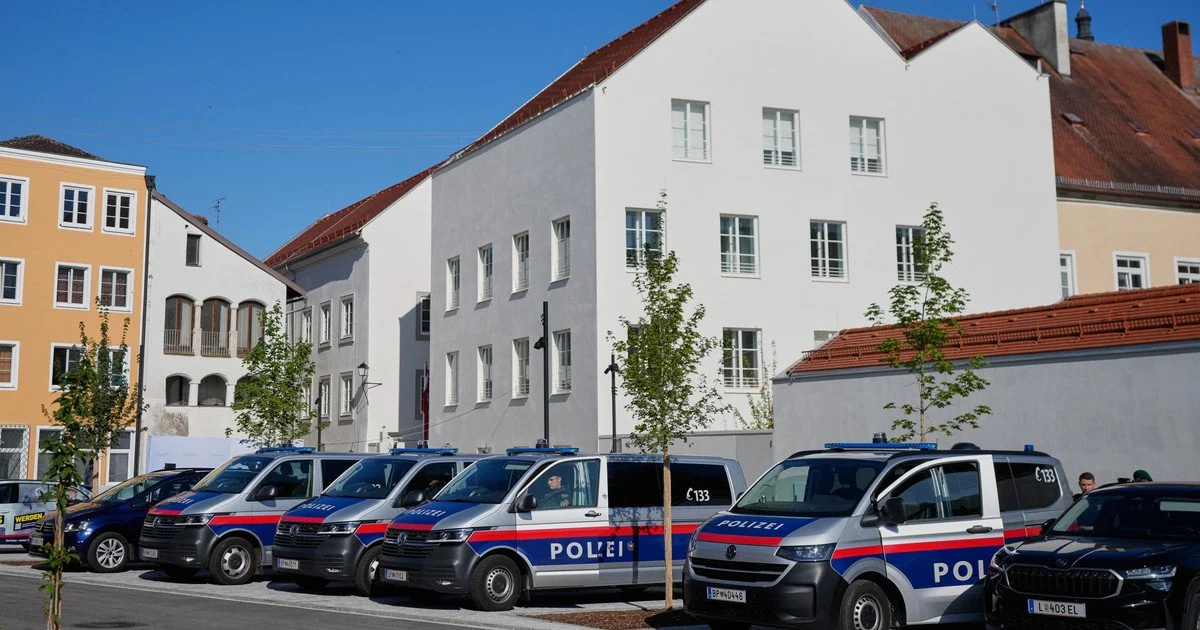
The case began in August 2024, when security forces searched a home in Ternitz. Inside, they found bomb-making components, knives, machetes, counterfeit money and material linked to the Islamic State. After the raid, all three of Taylor Swift’s Vienna concerts were canceled.
According to Daycom’s earlier analysis, the importance of this trial goes far beyond one pop event. It showed how modern terrorism seeks not only symbolic state targets, but places of mass emotion — concerts, festivals, stadiums and public spaces where thousands gather precisely to stop thinking about danger.
The planned attack was built around that vulnerability. It was not about storming the stage or striking inside the arena. The target was the crowd outside — people waiting to enter, meeting friends, buying merchandise, taking pictures and feeling part of a shared public experience.
That is the cruel logic of such plots: an attacker does not need to destroy a building. It is enough to strike trust. After that, every line outside an arena, every metal detector, every abandoned backpack and every sudden noise in a crowd begins to feel different.
For more than 150,000 fans, the cancellation was a shock. Many had traveled to Austria from other countries, spent money on tickets, transport and hotels, and planned the trip for months. But in cases like this, disappointment is the price of a decision that may have saved lives.
The trial also showed how crucial early intelligence work has become. The attack was stopped before it moved from intent to action. In terrorism cases, that line is decisive: the public often sees only a canceled concert, not what might have happened had the warning arrived too late.
Another layer of the case is the radicalization of young people in digital spaces. The 21-year-old defendant was not an older militant with a long history of war. He belonged to a generation for which propaganda, instructions, symbols and contacts can arrive not through underground cells, but through screens, closed chats and algorithmic isolation.
That does not reduce personal responsibility. On the contrary, the court established it clearly. But for the state, punishment is not enough. After every verdict, a harder question remains: where exactly should the system detect the moment when a person crosses from dark fantasy into preparation for real violence?
A second defendant, Arda K., was sentenced to 12 years in prison over plans for coordinated attacks in Saudi Arabia, Turkey and the United Arab Emirates. That part of the case widened the Vienna trial from a local story about a concert into an international web of intentions, contacts and terrorist planning.
That structure is revealing. Modern terrorist risk rarely exists in one place. A person can live in Austria, plan an attack near an arena, discuss violence in other countries, consume propaganda from a global extremist group and still appear to neighbors as part of ordinary urban life.
Vienna was not an accidental backdrop. It is a city of tourism, concert halls, international events and open public space. Such cities are among the hardest to protect without changing their nature. Security cannot turn culture into a fortress, but culture can no longer pretend that the threat does not concern it.
For the live entertainment industry, this verdict is another reminder that risk begins long before the first song. It runs through ticketing, queues, transport, fan zones, the perimeter, online signals, suspicious behavior and the exchange of information between countries.
For Taylor Swift’s fans, the Vienna episode will remain a painful memory of an event that never happened. Yet that absence was the central achievement of the security response. A successful prevention almost always looks like a broken plan, an empty arena, frustration and a trip that did not unfold. The alternative would have been far worse.
The verdict in Vienna does not solve the problem of radicalization, guarantee absolute safety at mass events or remove future risks. But it marks an essential boundary: preparation for terror is not an abstract crime of thought. When there are explosives, weapons, a target, ideology and an intent to kill a crowd, the state must act before the first blast.
In this case, the concert became a target not because of the music, but because music brings people together. Terror always attacks precisely that — society’s ability to gather without fear. The real meaning of the sentence is therefore not only 15 years in prison. It is the attempt to protect the right of people to go to a concert and think about songs, not exits, sirens and shrapnel.