

















In Washington, crises rarely remain confined to the incident that produced them. They quickly become arguments — in court, in the media, in partisan combat and in the struggle over symbols. After the shooting at the White House correspondents’ dinner, Donald Trump almost immediately shifted the conversation from hotel security to his own construction project.
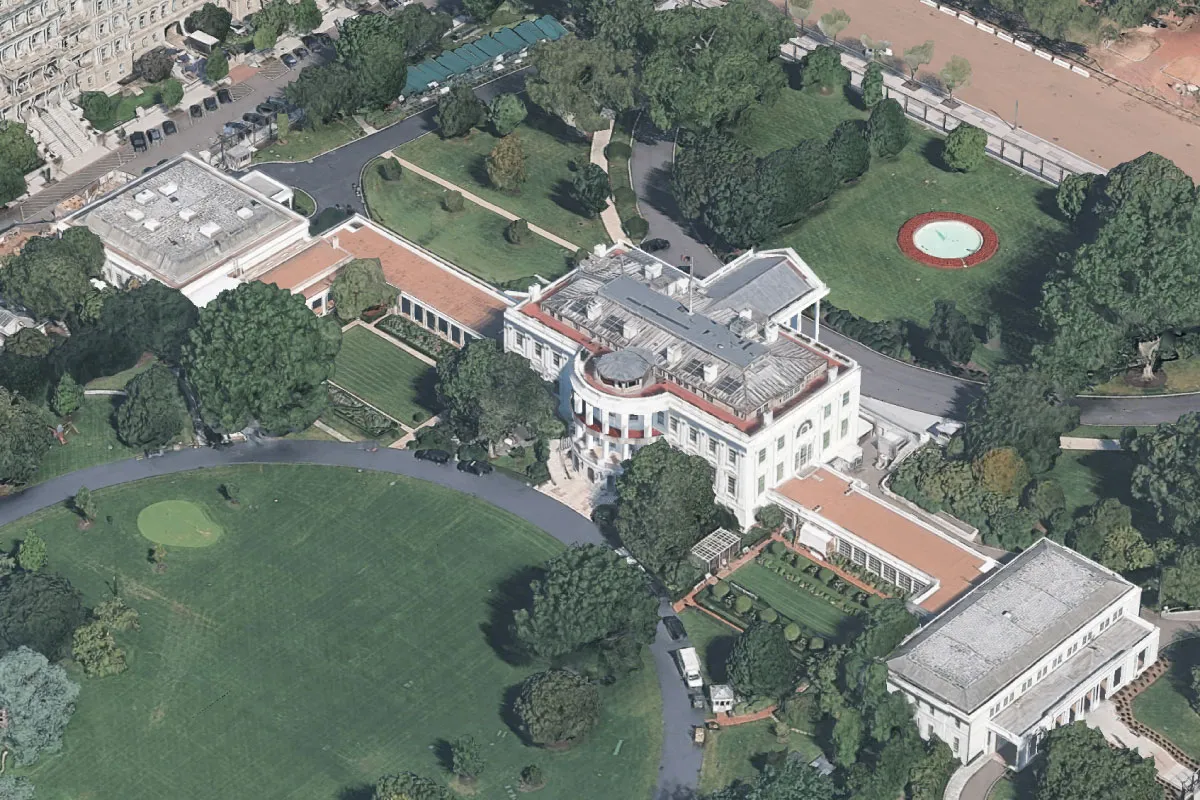
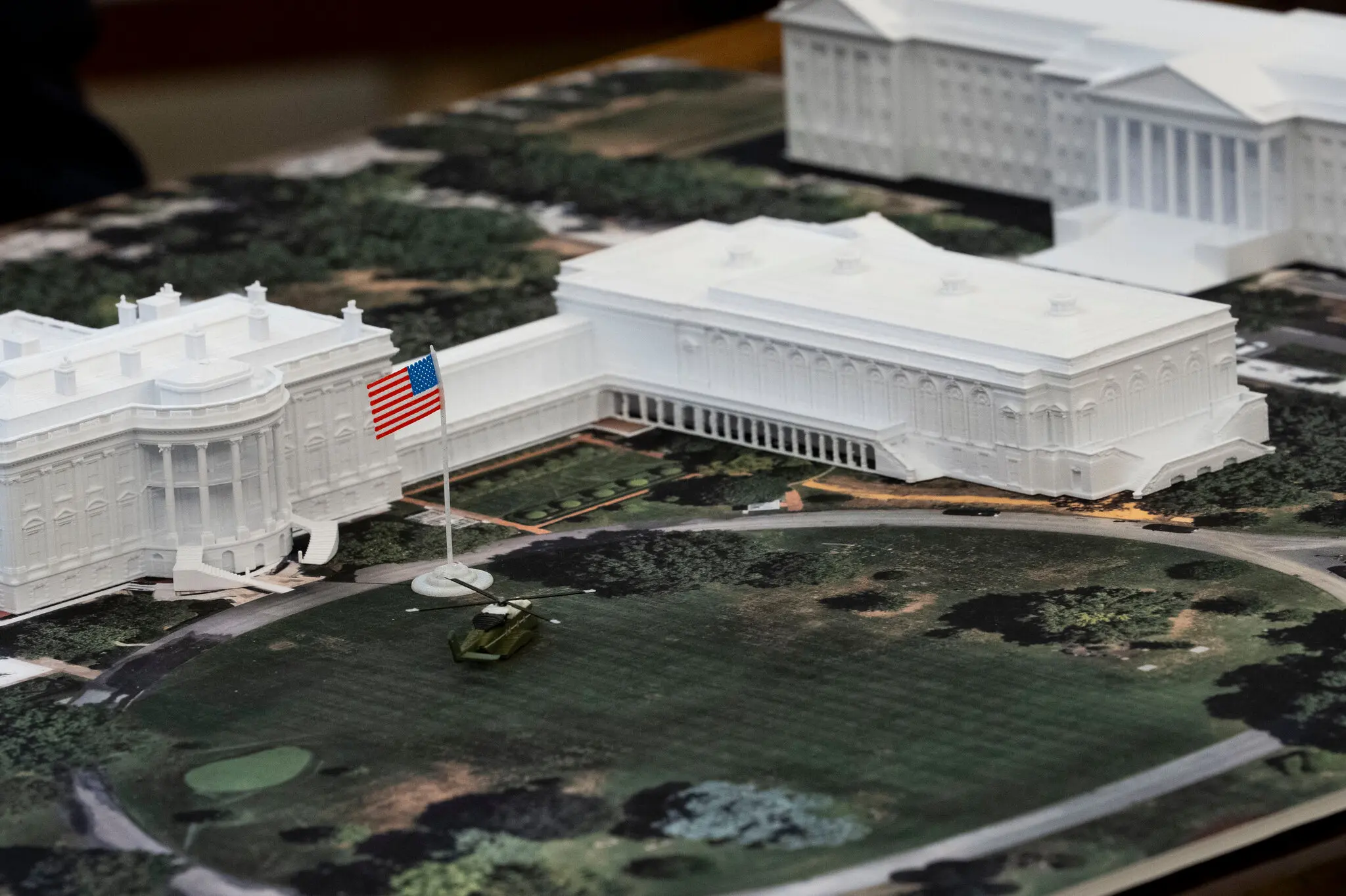
At issue is a new ballroom on the White House grounds, a large structure the president has promoted as the answer to a long-standing shortage of indoor space for official receptions. After the chaos at the Washington Hilton, the project acquired new political fuel: it was no longer being framed merely as an aesthetic or logistical improvement, but as a matter of national security.
Trump and his allies argue that the attack proved the need to hold major presidential events not in private hotels, but inside the controlled perimeter of the White House. Administration lawyers have already leaned on that logic to strengthen pressure on opponents of the project and to push back against litigation seeking to block construction.
According to Daycom’s earlier analysis, the central question is not whether the White House could use better infrastructure. The deeper issue is whether a real security threat can automatically become permission for a president to bypass political, historical and legal constraints.
The project has long since moved beyond an ordinary renovation. The ballroom is planned for the former site of the East Wing, with a proposed footprint of about 90,000 square feet and an estimated cost of roughly $400 million. Trump insists the construction will be paid for by private donors, though work involving security and the White House grounds inevitably touches the public interest.

That is what has made the project legally explosive. Opponents argue that the construction lacks proper congressional approval and implicates the special status of the White House as a federal historic site. The legal dispute is not really about architectural taste. It is about power: whether a president can unilaterally alter the physical shape of the most visible symbol of the American state.
The White House is not the private property of the president, even though the president temporarily lives and works there. It is a state residence, a historic symbol and a space traditionally governed through a balance between executive authority, Congress and public oversight.
After the shooting, the administration tried to reframe the fight. What had previously looked like a dispute over scale, donors, historic preservation and presidential authority was recast as a response to a direct threat against the head of state. In that logic, any delay in construction becomes not procedural caution, but almost a risk to the president’s life.
It is a powerful political move, but it has a weak point. The White House correspondents’ dinner is not a White House event. It is organized by an independent association of journalists who cover the presidency. That independence makes the question of moving the dinner onto White House grounds not only technical, but ethical.
For Trump, the ballroom represents controlled space, hardened glass, a secure perimeter and the ability to host large audiences without the complexity of hotel logistics. For parts of the press corps, the same proposal may look very different: the relocation of a ritual devoted to press freedom into the physical space of the power that the press is supposed to scrutinize.
That is the central paradox. Security matters. The Washington Hilton is a large, complicated, multilayered complex, difficult to protect when the president, senior officials, journalists and hundreds of guests gather in one place. But the convenience of security does not eliminate the question of independence.
Nor is the White House itself an absolute fortress. American history includes fence breaches, intrusions onto the grounds, security failures at official events and other episodes showing that no address can offer zero risk when power, publicity and symbolic importance converge.
The ballroom argument therefore cannot be reduced to a simple formula: the hotel is dangerous, the White House is safe. Reality is more complicated. Security depends not only on location, but on planning, access control, screening, coordination between agencies, perimeter discipline and the ability to respond quickly to a moving threat.
The legal fight continues. Courts have limited some aboveground construction while leaving room for work directly tied to security, and appeals proceedings have allowed parts of the process to move forward while the broader dispute remains unresolved. The result is an uneasy middle ground: the project advances even as its legal foundation is still being tested.
For Trump, that uncertainty is politically useful. Every day after the attack allows him to talk less about the limits of presidential authority and more about danger to the president. The debate shifts from law to instinct, from procedure to fear, from historic preservation to the image of agents escorting the head of state out of a room.
Yet democratic systems are tested precisely in such moments. If fear becomes a universal key for decision-making, almost any major project can be labeled a security necessity. If judicial oversight is portrayed as an obstacle to protecting the president, legal constraints become easy political targets.
The ballroom may indeed solve part of the White House’s infrastructure problem. It may give future administrations more room for receptions, state dinners and events requiring high-level security. But even a useful project should not be built as if the temporary occupant of the residence has the right to reshape it by personal will.
After the gunfire at the Washington Hilton, Trump gained a potent narrative. A president evacuated from a hotel speaks about a dangerous building and points toward a future protected ballroom at the White House. Politically, it is an almost ready-made scene. Constitutionally, it is a much harder question.
Three logics collide in this story. The logic of protection says the president needs the most controlled space possible. The logic of the press says a journalistic event should not move entirely under the roof of the power it covers. The logic of law says even presidential fear does not erase permits, procedures and limits on authority.
That is why the dispute over the ballroom has become larger than architecture. It is not only about walls, glass, donors and square footage. It is about who has the right to alter the country’s central symbol of state power, under what pretext and with what degree of accountability.
The shooting gave Trump the strongest argument available: the argument of danger. But in a democracy, even the strongest argument is not an automatic authorization. And if the new ballroom eventually becomes part of the White House, its political memory will already be divided: it will have been born not only from a need for space, but from a struggle over where security ends and power begins.