

















For years, financial markets lived with deferred anxiety. Investors had grown used to the idea that a major correction was always somewhere ahead — triggered by overpriced technology stocks, by the long afterlife of cheap money, by the sheer weight of inflated valuations. Each time, the system stepped back from the edge. What makes this moment different is that the new shock is not coming from inside the market. It is arriving through war and energy.
That is why the mood in the City of London is shifting from concern about an ordinary downturn to fear of something broader and harder to contain. The U.S. war against Iran no longer looks like an external geopolitical story running alongside the economy. It is striking at the central nerve of global capitalism — oil, shipping routes, inflation expectations, interest-rate assumptions and the price of risk itself.
The real danger is not merely that energy has become more expensive. It is that higher oil prices force markets to rewrite their entire map of the future at once. Expectations for rate cuts weaken. Credit becomes more expensive. Long-duration investment looks more fragile. Consumer demand appears less secure. In that environment, recession stops being a theoretical possibility and begins to look like a plausible chain reaction.
In Deykom’s assessment, what makes the current moment so dangerous is the way it binds several old vulnerabilities into a single point of stress. An energy shock on its own is painful. But when it collides with overstretched equity valuations, shadow banking, private credit and an overheated belief in the AI boom, the system becomes exposed not to one failure, but to a cascade.
Over the past two years, technology has carried the psychology of growth. Nvidia, hyperscalers, data centers, chip supply chains and AI infrastructure created a story so powerful that markets could treat the weaknesses of the wider economy as secondary. But energy disruption cuts directly into the most sensitive part of that story. Artificial intelligence is not powered by optimism alone. It depends on capital, logistics and enormous quantities of stable, affordable electricity.
Once energy prices rise, the economics of AI begin to change. Data centers become more expensive to run. Equipment is more costly to ship and install. Funding becomes harder to justify when recession fears intensify. And the very projects that had been presented as the architecture of the next growth cycle suddenly start to look like long, expensive commitments in a much harsher environment.
That matters because the technology rally is no longer confined to one corner of the market. It underpins retirement savings, household wealth, institutional portfolios and broader confidence in future growth. When the Nasdaq falls, it is not simply a problem for venture capital or speculative traders. It becomes a blow to perceived wealth, and from there to spending, lending and governments’ confidence that the economy remains manageable.
At the same time, another fracture line sits just beneath the surface: private credit. For years it expanded as an alternative to traditional bank finance, largely outside the public imagination. In calm conditions, it was sold as flexibility and innovation. Under stress, it begins to look like illiquidity disguised as convenience.
The danger in private credit is not that it must repeat the subprime crisis in exact form. The danger is more structural. When investors begin demanding their money back from assets that cannot easily be sold, the system runs into the oldest contradiction in finance: liquidity is promised on paper, but unavailable in practice. That is the point at which a contained problem can become contagion.
The City is nervous not only because of Britain’s own exposure, but because of what may spread from the United States. If falling equity prices damage household balance sheets in America, and if stress in private credit starts constricting the financial channels beneath the visible banking system, the consequences will not remain local. They will travel quickly through funds, insurers, bond markets, cross-border capital flows and global demand. For London, this is not a domestic scare. It is the anticipation of a wider transatlantic shock.
What makes the moment more unsettling is that markets had been expecting the opposite trajectory. After the energy shock of 2022, the baseline hope was for inflation to cool, central banks to lower rates gradually, and the global economy to slow without breaking. The war around the Strait of Hormuz has destabilized that entire logic. The soft-landing scenario has given way, once again, to fears of a much harder collision.
In other words, markets are being shaken not by one bad indicator, but by the collapse of a sequence of assumptions. Only recently, investors believed in cheaper money, stabilizing trade, expanding AI infrastructure and controlled inflation. Now they see more expensive oil, possible disruptions to energy shipping, tighter financial conditions, weaker margins and the growing chance that rates may need to stay higher for longer than anyone wanted.
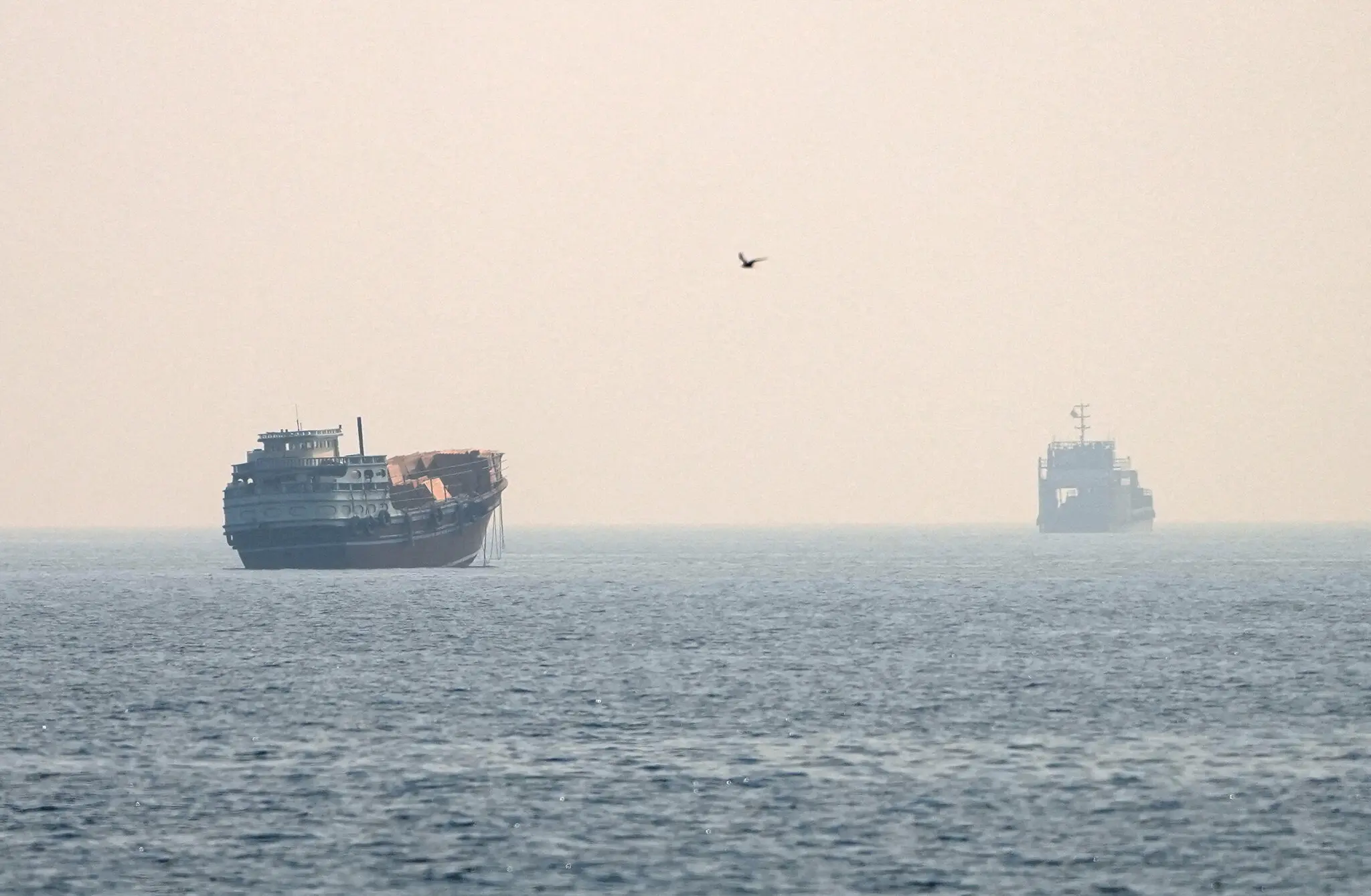
The Strait of Hormuz matters here not only as geography, but as a symbol. It exposes how fragile the global system has become after decades of relying on cheap energy transport and predictable maritime routes. Once one of the world’s essential oil corridors comes under prolonged threat, the model of frictionless globalization begins to look less like an economic given and more like a vulnerable political arrangement.
That is why this episode may prove more dangerous than a conventional market selloff. Equity markets fall all the time. But when stocks come under pressure at the same moment as an energy shock, potential retrenchment in AI investment, stress in private credit and harsher inflation expectations, the damage moves beyond trading screens. It reaches employment, consumption, investment planning and public finances.
The deeper risk for the West is that a long era of postponed vulnerabilities may now be ending not because of one grand mistake, but because several weaknesses have converged at once. Oil, equities, artificial intelligence, private credit, inflation, recession risk and Hormuz have suddenly been tied into the same knot.
That is why London is no longer worried only about another bout of panic. It is worried about the moment when the system discovers it has run out of room to retreat.