













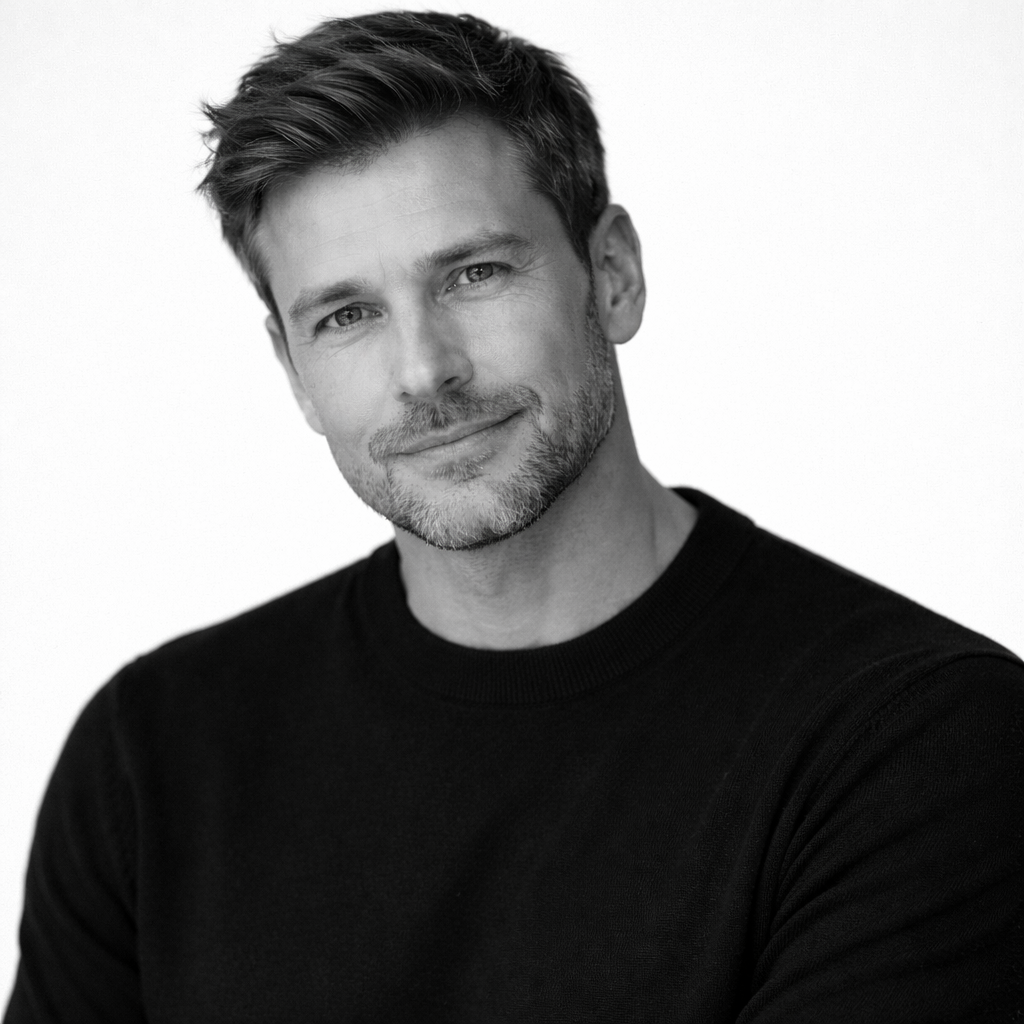

In the spring of 2026, a man who had spent decades overseeing the scientific power of the U.S. Air Force disappeared in Albuquerque. His disappearance became the point where facts run out — and the dangerous zone of interpretation begins.
The morning of February 27, 2026, seemed ordinary enough. A repair technician was at William Neil McCasland’s home. His wife left for a medical appointment at about 11:10 a.m. When she returned less than an hour later, the house was empty. No note, no call, no trace — only absence. By mid-afternoon, police had already received a missing-person report.
That is where a local case began to turn into something much larger. McCasland was not simply a retiree. He was a retired U.S. Air Force major general, a man who had once led the Air Force Research Laboratory — one of the central scientific institutions of the American military system. It is through structures like this that work moves on aerospace technology, weapons development, advanced materials, and highly restricted research programs.
That status is what turns the disappearance from a private event into one with systemic resonance. When a man of that rank vanishes, the question “Where is he?” quickly becomes another one: “What did he know, and what had he worked on?”
According to Daycom’s earlier analysis, stories like this demand a strict separation between fact and the meanings later attached to it. In McCasland’s case, the factual layer is spare and restrained. He disappeared within his own neighborhood. He left without his phone. Investigators said he may also have been missing personal items — a wallet, a backpack, as well as a holster and a .38-caliber revolver. No signs of struggle or violence were found inside the house.
Investigators also identified one detail that both clarifies and complicates the picture. McCasland had previously mentioned what he described as “mental fog” — episodes of confusion. That may point to a medical factor. But even that explanation does not settle the matter: people in such a condition do not usually vanish without a trace in an urban environment.
The search unfolded in the standard way: drones, helicopters, police dogs, door-to-door canvassing, the review of surveillance footage. At one point, a gray Air Force hoodie was found roughly a mile from the house. But even that lead proved unstable — the family could not confirm that it had belonged to McCasland. No blood was found.
This is the moment when the case begins to change its nature. As long as it remained purely a police matter, it contained little mystery and a great deal of ordinary uncertainty. But once McCasland’s name entered public circulation together with his biography, the story became part of a broader construction — the same one that now includes talk of a “series of scientists,” “secret programs,” and a possible “UFO connection.”
The logic of that shift is almost mechanical. The Air Force Research Laboratory is one of those institutions around which speculation about classified projects has circulated for decades. Wright-Patterson, where he worked, has long occupied a place in popular culture as a crossing point between science and military secrecy. Add a disappearance without an obvious explanation, and a narrative emerges that begins to live on its own.
But this is exactly where the boundary lies — and where it is most often ignored. The official investigation contains no indication of a violent crime. There is no confirmed link to any of the other cases. There is no evidence that McCasland’s disappearance was connected to his professional work. All of those lines appear later, as attempts to explain the void.
The paradox is that the void is precisely what makes the story so powerful. Death, even a tragic one, leaves behind a fact. Disappearance leaves behind space. And the higher a person’s status, the faster that space fills with hypotheses.
In the wider context, the McCasland case has become the anchor for the broader story of America’s “missing and dead scientists.” Other names now circulate beside his — physicists, astronomers, researchers tied to space and defense. Some of those cases are well documented, others far less so. But it is the disappearance of the general that gave the chain its sense of coherence.
That sense, however, is still not the same as proof. At the federal level, there has been no recognition of a single unified series. No common mechanism has been established. No central actor has been identified. What exists instead are cautious formulations suggesting that the pattern is serious enough to deserve attention.
In that sense, the McCasland story is neither proof of a conspiracy nor proof against one. It is an example of how the modern information environment works when faced with uncertainty. One hard fact, placed inside a context of silence and incompleteness, begins to attract other events to itself — even when no verified connection exists between them.
This story still has no ending. McCasland remains missing. The investigation continues. There are no answers — and that is exactly what keeps public attention fixed on the case. But once the dense facts are separated from the layers built around them, the picture becomes quieter and more severe: a high-ranking military science official disappeared under unexplained circumstances, and as of now there is no evidence that his disappearance is part of a larger hidden system.
Sometimes that is enough to make a story big. It is not enough to make it proven.