















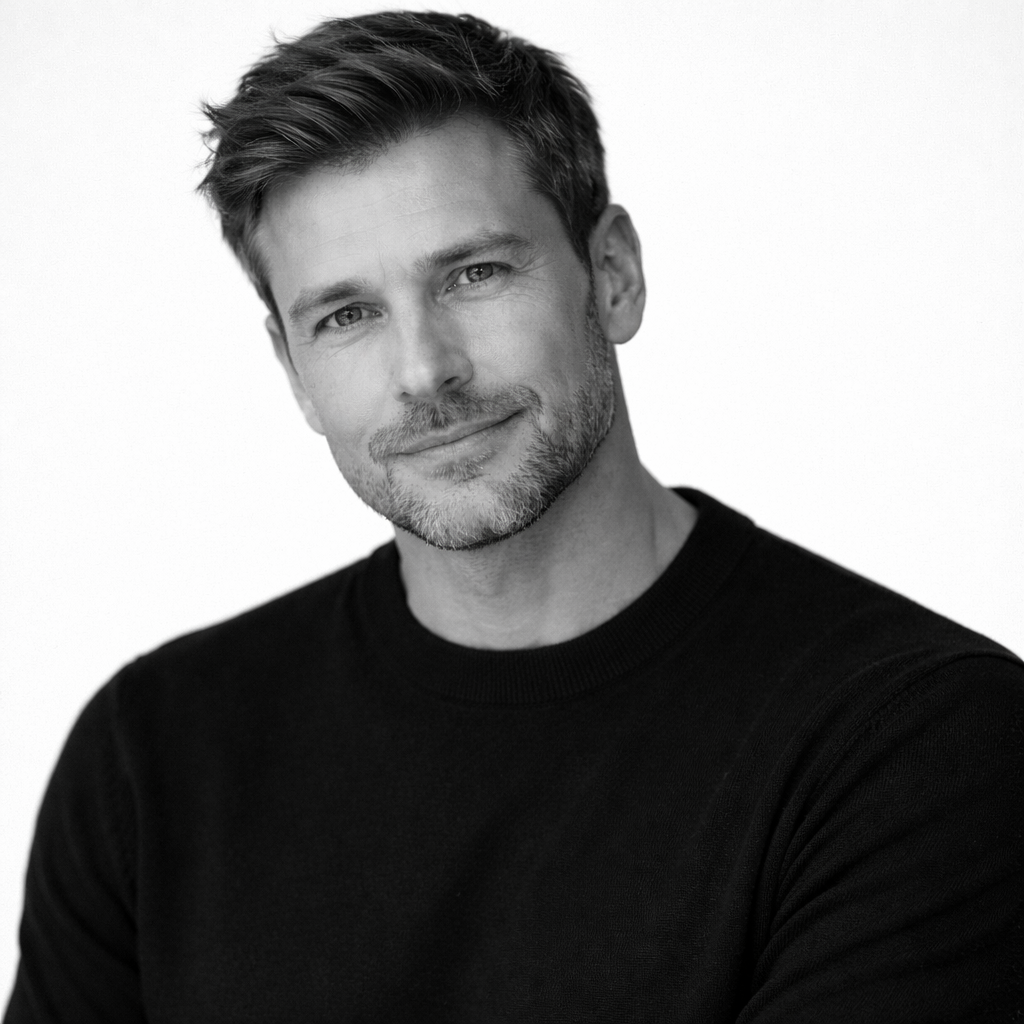

The story of the attack at the White House correspondents’ dinner quickly moved from the panic inside the ballroom to the biography of the man accused of bringing weapons into one of Washington’s most sensitive political spaces. At the center of the case is Cole Tomas Allen, 31, of Torrance, California.
His name is now tied not only to the disruption at the Washington Hilton, but also to a broader question of American security: how could a man with no prominent public political profile, an education record, tutoring experience and a background in game development end up at the center of an alleged attack aimed at administration officials?
The early portrait is unsettling precisely because it appears ordinary. Allen does not fit neatly into the simple image of a fanatic with a visible history of violence. To some who knew him, he was intelligent, quiet and almost unremarkable — a man who helped teenagers with math and science. That ordinariness makes the case harder to interpret.
According to Daycom’s earlier analysis, what matters here is not only the violence itself, but the gap between the suspect’s outward image and the scale of the threat investigators believe he was preparing. American security agencies increasingly face not obvious warning signs, but people whose radicalization may unfold with little public noise.
Investigators determined that the suspect traveled to Washington from California. His route was long and apparently deliberate: a train from Los Angeles to Chicago, then another from Chicago to the capital. He checked into the Washington Hilton a day or two before the dinner, giving him time to observe the hotel, the security setup and the rhythm of the event.
After the attack, federal agents searched his home in Torrance. For neighbors, the search was nearly as shocking as the violence was for guests at the dinner. A quiet California suburb suddenly became part of a case involving the president of the United States, the Secret Service, federal court and political violence.
At the time of his arrest, Allen was believed to have had knives, a shotgun and a handgun. That collection of weapons does not suggest a purely impulsive act. It points instead to what investigators are treating as a prepared attempt to break into an environment where the president, senior officials, journalists and political elites were gathered.
The federal charges also show how seriously authorities view the incident. Allen faces allegations that include using a firearm during a violent crime and assaulting a federal officer with a dangerous weapon. His first appearance in court is expected to give the case its initial legal shape, though many of its central questions remain open.
The most important of them is motive. Investigators are examining electronic devices, written material and messages Allen is believed to have sent to relatives before the attack. Those materials appear to reflect anger at Trump administration policies and suggest an intention to move from grievance to violent action.
That does not mean the motive has been finally established. In cases like this, early conclusions can change after investigators review correspondence, search histories, personal contacts and the suspect’s mental state. But the available outline already suggests that the attack is being treated not as random chaos, but as an act with a political direction.
Allen’s digital and professional trail has also drawn attention. In profiles linked to him, he described himself as an independent game developer. In 2018, he released Bohrdom, a niche project built around an asymmetric contest and a chemistry-based model. Before the attack, the game had almost no visible public life.
That detail does not explain the alleged crime, but it adds another layer to the portrait. Allen appears to have belonged to a segment of the educated technical world where a person can have serious intellectual ability while remaining socially obscure. Such a profile is difficult to read through conventional markers of threat.
His educational record offers no simple answers either. A person with the same name received an undergraduate degree from the California Institute of Technology in 2017. In 2025, a student with that name completed a master’s program at California State University, Dominguez Hills. The universities did not conclusively identify those records with the suspect.
For people who knew Allen as a tutor, the news was almost impossible to absorb. One local high school student described him as “a completely average guy” — the kind of phrase that often appears after acts of violence, when a community tries to reconcile its memory of a person with what that person is now accused of doing.
There is no excuse in that phrase. There is social bewilderment. It shows how limited everyday ideas of danger can be. A person may be polite, educated and useful to neighbors while also, if investigators’ theory is confirmed, moving toward political violence with cold consistency.
For the Trump administration, the attack became more than a security failure at one event. It became an argument in a larger debate over how public gatherings should be protected. For the press, it was a reminder that journalistic institutions can no longer treat their own rituals as insulated spaces. For investigators, it is a test of whether facts can be separated from political noise.
The most dangerous part of this case may be not what is already known, but what remains hidden. Did Allen act alone? How long had the alleged plan been forming? Were there signs of detailed preparation? Why did the White House correspondents’ dinner become the target? The answers will determine whether this case remains a single episode or becomes a symptom.
For now, the portrait of the suspect is assembled from fragments: a train route across half the country, a hotel room, weapons, written material, education records, an old game project, stunned neighbors and shaken students. Together they do not yet form a complete biography. But they already show one thing clearly: modern political threat does not always arrive from a shouting crowd. Sometimes it comes quietly, with a suitcase, an itinerary and a plan that becomes visible only when it is almost too late.