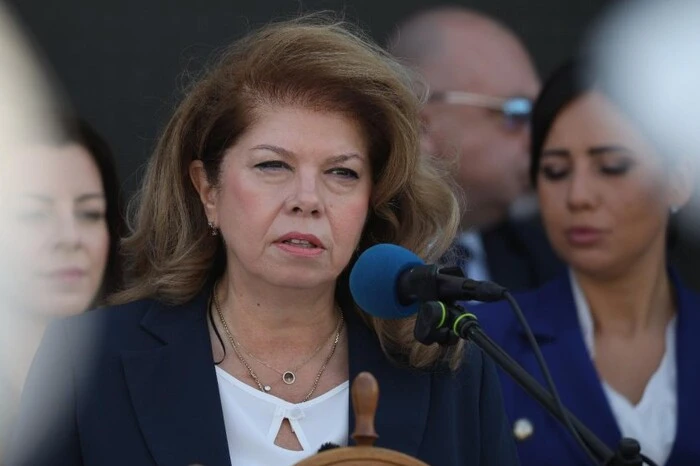















The meeting between Pope Leo XIV and Spain’s prime minister, Pedro Sánchez, in Madrid became more than a protocol moment in a papal visit. It revealed a rare political configuration: the head of the Catholic Church and a left-wing atheist prime minister standing on the same side of major disputes with Donald Trump.
What brought them closer was not theology or Spanish domestic politics, but the defining issues of the moment: the war in Iran, the conflict in Gaza, migration, international law, Europe’s rearmament, NATO and resistance to brute force as a universal political language.
The pope speaks about these issues as a moral authority. Sánchez speaks as a politician seeking to raise his weight beyond Spain and turn international disagreements with Trump into a source of domestic resilience.
According to Daycom’s assessment, the power of this scene lay precisely in its inner tension. Sánchez did not move closer to Catholic doctrine, and the pope did not become an ally of Spain’s Socialists. But their voices temporarily converged where the question was whether Trump’s politics should be accepted as the West’s new normal.
For Leo XIV, the conflict with Trump is primarily moral. He criticizes war, calls for diplomacy, defends migrants and challenges a logic in which force comes before law. This is not a party position, but a continuation of the Church’s social teaching in an age when borders, armies and technology have again become the main language of fear.
For Sánchez, the proximity is far more practical. The Spanish prime minister has long used the international stage as a place to compensate for weakness at home. His government faces pressure from the opposition, corruption scandals surrounding his political circle and family, and a society that remains deeply polarized.
That is why appearing beside the pope gives Sánchez not a church blessing, but the image of a responsible European leader. He can speak about peace, humanity, migration policy and international law not as an isolated Socialist in conflict with Trump, but as a politician whose rhetoric partly overlaps with the language of the Vatican.
This matters especially in Spain, where Catholic heritage no longer gives the right a monopoly on moral language. The far-right Vox party appeals strongly to Catholic tradition, yet it also clashes with the Church’s position on migrants. The papal visit exposed that divide: performative religiosity does not always match the position of Rome itself.
At the same time, Sánchez cannot embrace the pope too closely without risk. His left-wing electorate sharply disagrees with the Catholic Church on abortion, euthanasia, feminism, LGBTQ rights and the role of religion in education. For many of the prime minister’s supporters, the Vatican is not an ally, but an institution with which one can agree only selectively.
The Church understands that boundary as well. Spanish bishops acknowledge a certain harmony between Leo XIV and the government on migration, peace and criticism of technology monopolies. But they do not allow Sánchez to turn the pope into a political shield, because disagreements over life, family and bioethics remain fundamental.
The pope himself moved carefully. He spoke to the left when he addressed migrants, peace and social justice. But he also spoke to conservatives when he referred to the protection of unborn life. His message was not an entry into a governing coalition, but an attempt to remind Spain that moral politics does not fit neatly inside party borders.
This is the essential difference between Leo XIV and Sánchez. The pope is trying to rise above political polarization, even when his words inevitably have political consequences. Sánchez, by contrast, operates inside polarization and tries to turn an external confrontation with Trump into a resource for his own survival.
The opposition sees this clearly. Conservatives accuse the prime minister of trying to cover himself in the white robes of a popular pope, distract attention from scandals and appropriate a moral stage toward which he had previously shown little warmth. For the right, Sánchez is not a partner of the Vatican, but a politician skillfully using someone else’s symbolic power.
Yet the Spanish right has also found itself in an uncomfortable position. When the pope speaks about migrants, international law, the danger of humiliating opponents and the need for diplomacy, he is not only challenging Trump, but also part of the European right’s rhetoric. That is why his visit to Madrid was pastoral in form, but political in effect.
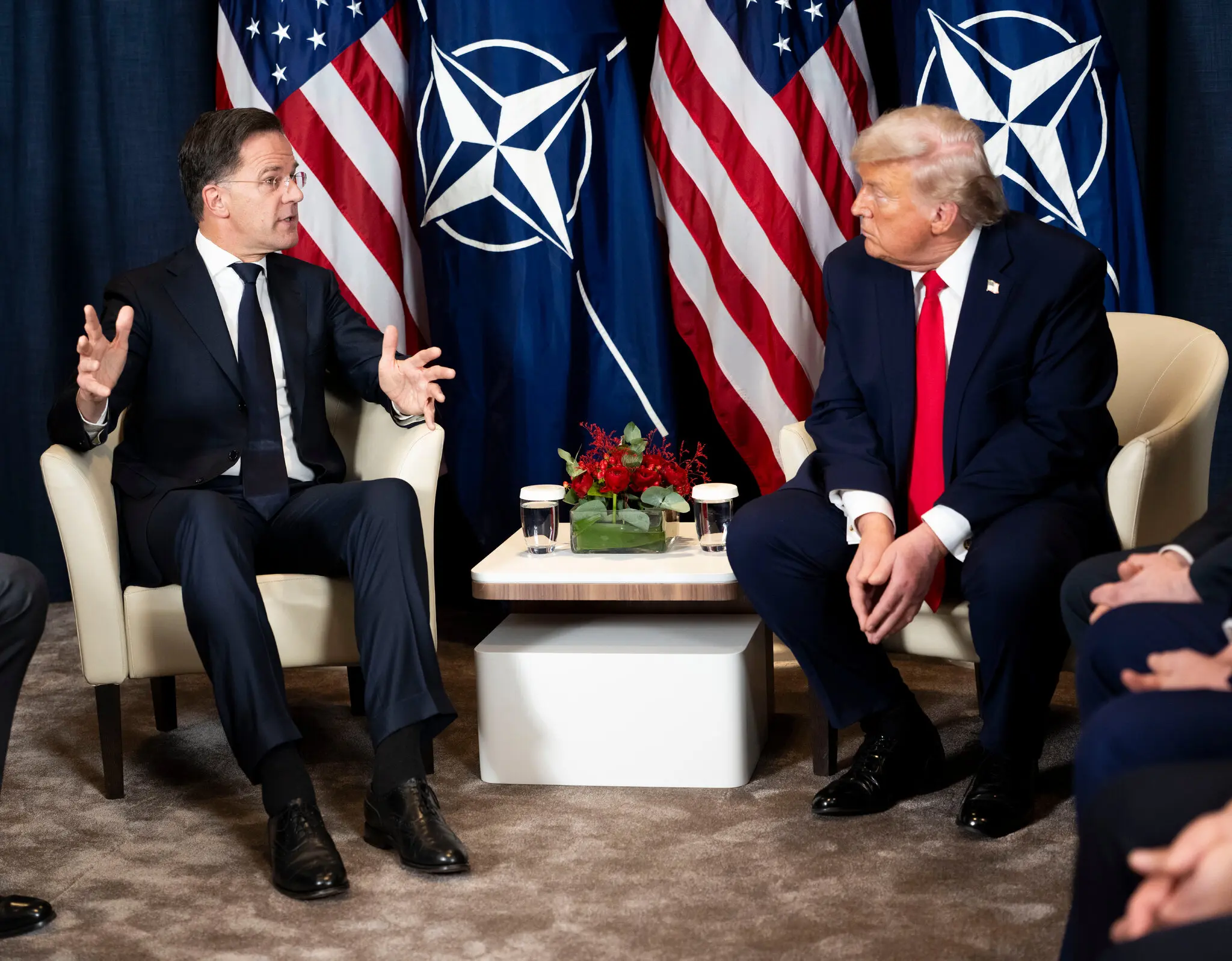
For Trump, this pairing is inconvenient for different reasons. The pope challenges his politics from the position of moral legitimacy, which is hard to reduce to party competition. Sánchez does so as a European leader openly resisting American pressure on war, NATO, migration and global security.
They should not be called allies in the full sense. Leo XIV and Sánchez are too different — in faith, goals, institutions, audiences and limits. But in the current Western crisis, they have temporarily become part of the same contrast: against a politics that reduces the world to force, deals and demonstrative toughness.
The scene in Madrid will not automatically change Spanish politics. It will not remove corruption allegations against Sánchez, convince right-wing voters or reconcile the Church with the left. But it gave the prime minister a rare moment in which his foreign policy line appeared not isolated, but connected to a broader moral current.
For the pope, the risk is different. The more his words coincide with the positions of left-wing governments, the more aggressively the right will try to portray the Vatican as a political actor. Leo XIV must hold a narrow line: speaking clearly enough to be heard, and independently enough not to be appropriated.
That is why the meeting between the pope and the atheist in Madrid became a symptom of a new moment in Western politics. The old divisions — believers against secularists, the left against the Church, conservatives as the Vatican’s natural allies — no longer explain reality. In Trump’s world, moral and political lines have been redrawn, and this meeting simply made them visible.