
















The Strait of Hormuz has once again become a place where a few dozen kilometers of water weigh more than hundreds of diplomatic statements. After the ceasefire between the United States and Iran, the struggle did not end. It moved into the most sensitive space of global energy: the maritime exit from the Persian Gulf.
Washington insists that its naval forces will maintain the blockade of Iranian ports for as long as necessary. Tehran responds by showing that it is ready to keep shipping under the supervision of the Islamic Revolutionary Guard Corps. In this contest, every vessel becomes not only transport, but a political signal.
The central uncertainty is that neither side fully controls the strait. The United States can intercept ships, track routes and pressure Iranian exports. Iran can make passage so risky that most commercial companies decide on their own not to move.
According to Daycom’s assessment, that is what makes the crisis especially dangerous: the Strait of Hormuz is not formally closed, but it has already lost normality. In the global economy, some routes do not need to be fully blocked. It is enough to make them unpredictable — and the price of risk begins to function as a blockade.
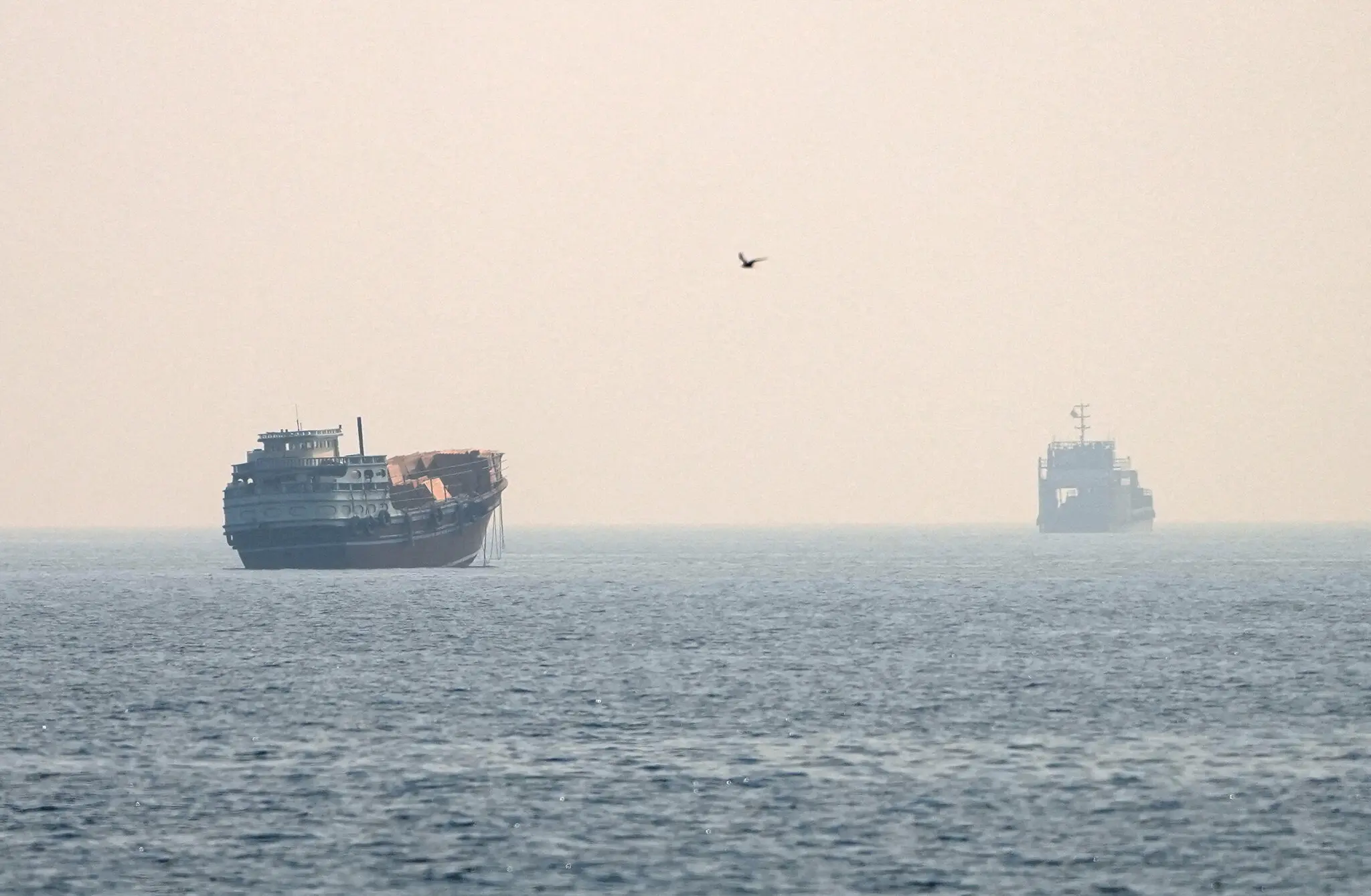
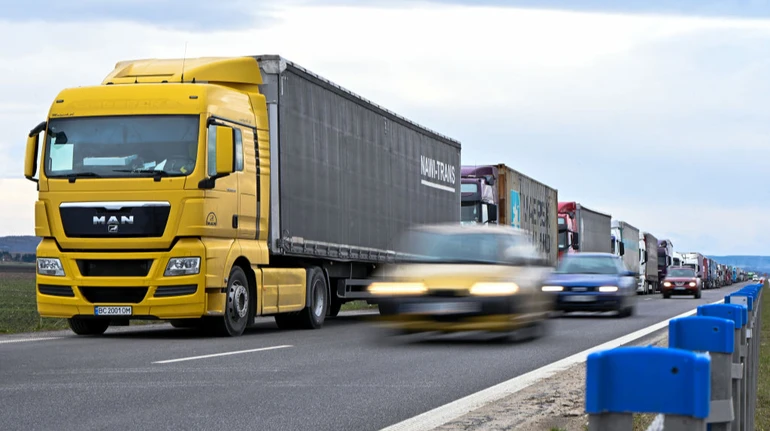
Shipping through the strait has fallen sharply. Many companies and insurers are reluctant to take the risk because of fears of mines, attacks by small boats, missiles or drones. Hundreds of vessels that would normally pass through this route are now waiting, changing plans or searching for legally and technically safer options.
The problem is that safer options are scarce. The Strait of Hormuz is not just another point on the maritime map. In normal times, roughly a fifth of the world’s oil supply and a significant share of liquefied natural gas moved through it. When this route slows, markets react before a physical shortage becomes visible.
That is why oil returning to around $100 a barrel is not merely a reaction to military headlines. It is the price of fear, insurance, delay, uncertainty and the possibility of supply disruption. The market is not buying only oil; it is buying the assurance that the oil will reach consumers at all.
Iranian power in Hormuz is not necessarily measured by large warships. After strikes against parts of its regular navy, the decisive role remains with asymmetric infrastructure: fast boats, mobile launchers, drones, missiles, sea mines, coastal shelters and the ability to act in a narrow space where every mile matters.
Iran’s so-called “mosquito” tactics do not require victory over the U.S. Navy in a classical sense. Their purpose is different: to make commercial shipping costly and dangerous enough that the private sector begins to retreat on its own. A tanker does not have to be sunk for a route to become unacceptable. The probability of attack may be enough.
Statements about sea caves, hidden positions and readiness to devastate aggressors have both military and psychological value. Tehran is showing that aircraft carriers cannot simply push it away from the strait. In a narrow maritime space, the weaker side can impose a war of nerves on the stronger one.
The American strategy is built differently. The United States controls the air, holds an advantage in intelligence, aviation, naval groups and the ability to operate not only in the strait itself, but also in the Gulf of Oman and the Arabian Sea. Washington is trying not so much to seal Hormuz as to isolate Iranian ports and cut routes linked to Tehran.
That distinction matters. Iran wants to show that no ship can pass without its consent. The United States wants to prove that Iranian vessels or cargoes cannot pass without American permission. The result is not a single regime of control, but two overlapping regimes of coercion.
That is why the picture on the water looks contradictory. Some vessels are indeed passing through the strait, including on routes closer to the Iranian coast. Others turn around, stop, or conceal their real points of origin and destination. Transponders go dark, data is altered, and ships try to disappear from the digital map and reappear somewhere else.
This creates another problem: modern maritime trade depends not only on physical movement, but also on trust in data. When a ship can declare a false route, switch off its signal or conceal links to Iran, every trader, insurer and port operator must spend more time assessing risk.
For the oil market, this means slowdown even without a direct shot being fired. A vessel waiting in the Gulf for permission is already part of the crisis. A cargo that cannot be insured on acceptable terms is already influencing the price. A route that is formally open but practically dangerous functions like a half-closed artery.
Tehran is trying to institutionalize this control. Requirements for passage permits, approved routes and the idea of transit fees or tolls are attempts to turn military pressure into a new order in the strait. Iran is effectively telling the world that anyone wishing to use these waters will have to account for its will.
For the United States, accepting such logic would be a strategic defeat. The American presence in the Persian Gulf has for decades rested on the guarantee of freedom of navigation. If Iran can impose a permission-based regime on the world’s main energy corridor, the balance would shift not only in the region, but across the entire system of maritime security.
But the American blockade also has a price. It strengthens Washington’s position at the negotiating table, yet gives Iran an argument that the ceasefire is not real while its ports remain effectively isolated. For Tehran, lifting the blockade becomes a condition for returning to talks. For Washington, keeping it in place is leverage for a more durable agreement.
This is where diplomacy is stuck. The ceasefire halted part of the fighting, but it did not remove the central cause of the conflict: who sets the rules of movement in the Strait of Hormuz, and who pays for the security of global energy. Until that question is answered, warships are effectively acting as negotiators.
The risk is not confined to the United States and Iran. Asian oil and gas importers, European consumers, insurers, shipowners, the aviation sector and petrochemicals all depend on whether Hormuz remains predictable. If it does not, even countries far from the Persian Gulf will feel the consequences through fuel prices, logistics and inflation.
The crisis in the Strait of Hormuz reveals the new nature of maritime power. Control no longer means planting a flag and fully closing a space. It means the ability to raise the cost of movement, force ships to wait, make insurers revise rates, make governments nervous and push markets to price in the worst-case scenario.
That is what makes the current situation so dangerous. It can continue without a major battle, while producing constant economic effects. It may not become an open war, yet it is already changing the behavior of traders and states. It can remain “controlled” only until one boat, one mine or one mistaken shot breaks that control.
Today, the Strait of Hormuz is not merely a maritime corridor between Iran, Oman and the Persian Gulf. It is a nerve of the global economy, caught between an American blockade and Iranian asymmetric force. As long as both sides believe the strait gives them leverage, its waters will remain calm only on the surface.