















Sanctions are rarely defined by the moment they are announced. Their real meaning appears at the moment of the first exception. That is what happened when the United States allowed the Russian tanker Anatoly Kolodkin, carrying roughly 730,000 barrels of crude, to proceed to the Cuban port of Matanzas. For Havana, the cargo looked like a brief reprieve. For Washington, it looked like something more revealing: a tacit admission that even an aggressive oil squeeze has a threshold beyond which pressure stops looking strategic and starts looking like the management of collapse.
Formally, the Trump administration has not abandoned its line. In January, the White House announced additional tariffs on countries that directly or indirectly supplied oil to Cuba, presenting the move as a national security measure and as leverage against the government of Miguel Díaz-Canel. In practical terms, those steps turned Cuba’s fuel shortage into an instrument of U.S. foreign policy.
The consequences were swift and severe. The Office of the U.N. High Commissioner for Human Rights warned in February that Cuba’s deepening economic emergency was being aggravated by recent U.S. measures restricting fuel flows. Reports from AP and other outlets described widespread blackouts, transport disruptions, soaring fuel costs and growing strain on hospitals and basic services. Once an energy crisis begins to reach water pumps, operating rooms and other essential systems, the question is no longer whether sanctions are “working.” It is whether an entire society is being pushed past the edge of ordinary functionality.
As Дейком sees it, that is the central meaning of the tanker’s passage. The significance of the shipment lies not in the amount of oil itself, but in what the permission reveals about the design of the policy. Washington still wants to keep Havana under maximum economic pressure. What it can no longer credibly pretend is that every additional turn of the screw automatically advances a political solution. At some point, sanctions stop isolating a regime and start undermining the material basis of civilian life.
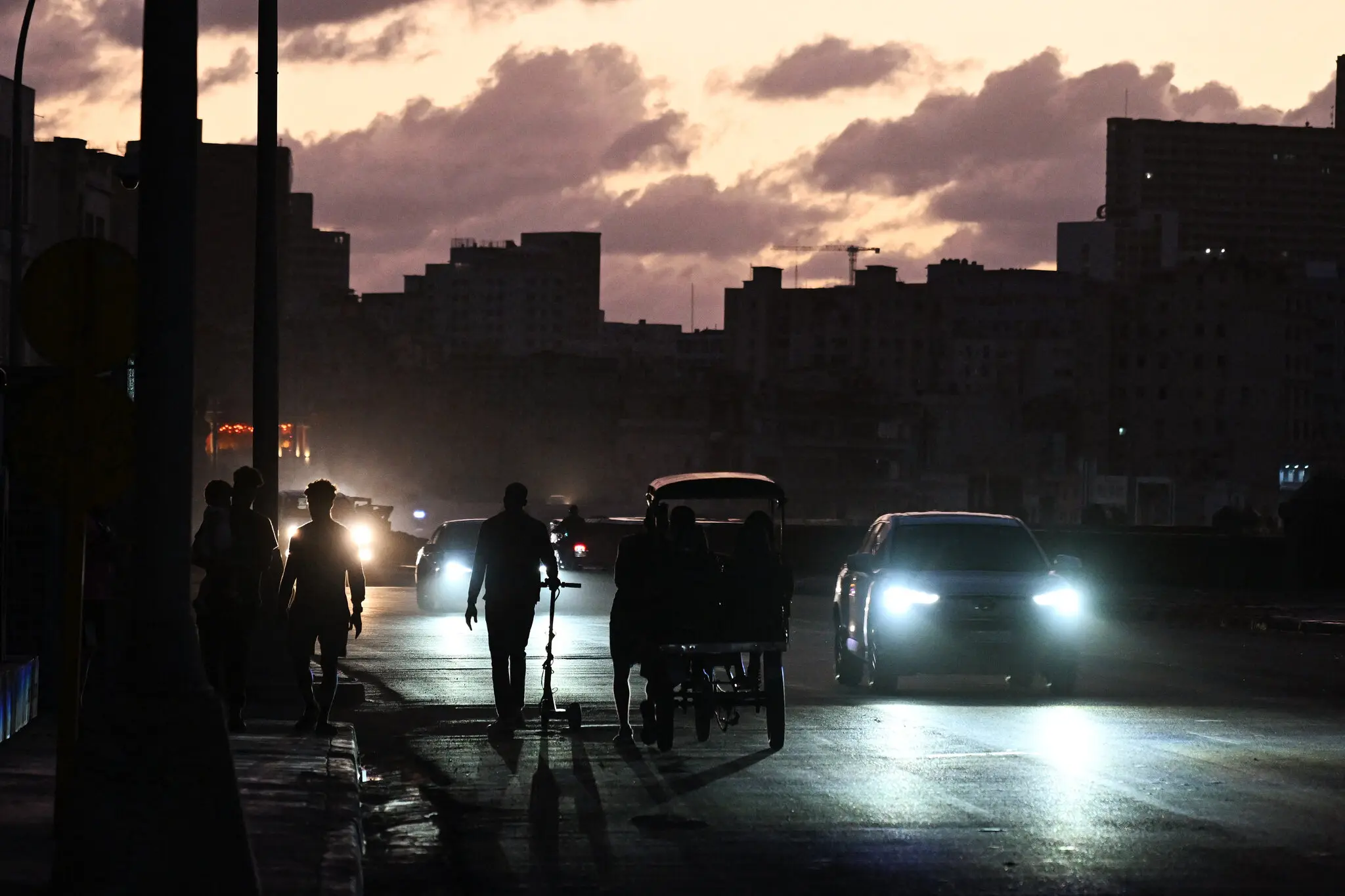 Цього місяця в Гавані відключення електроенергії — Яміль Лаге
That is why Trump’s remark that he had “no problem” with someone bringing Cuba a boatload of oil if the country needed to survive sounded less like magnanimity than like forced course correction. The White House has since made clear that such decisions are being handled on a case-by-case basis. That formulation matters. A sanctions regime that presents itself as firm doctrine has, in practice, slipped into discretionary management. The blockade remains in place, but it is no longer operating as an absolute rule. It is being adjusted in real time.
That shift creates an obvious political contradiction. Mexico was effectively pushed away from supplying fuel through the threat of tariffs. A Russian tanker, by contrast, was ultimately waved through. Once that happens, the issue is no longer simply humanitarian leniency. It becomes a question of selectivity. U.S. pressure on Cuba begins to look less like a universal principle than like a flexible tool shaped by timing, source and wider geopolitical priorities.
Those wider priorities are impossible to ignore. Against the background of war with Iran and heightened sensitivity around global energy flows, Cuba has plainly moved down Washington’s hierarchy of crises. Analysts quoted in recent reporting argue that the administration did not want the island’s fuel emergency to tip into a full breakdown while U.S. attention was fixed elsewhere. In that reading, Cuba did not win a policy reversal. It benefited from a moment in which the United States became too geopolitically overextended to press its pressure campaign to the limit.
Russia, meanwhile, extracted the maximum symbolic value from the episode. Dmitry Peskov said the delivery had been raised in advance with the United States and presented the cargo as aid to Cuba’s “friends.” For Moscow, the optics are almost perfect. It supports an ally, steps into a humanitarian gap created by U.S. pressure and reminds the world that, even under sanctions and amid war, it can still project influence into the Caribbean.
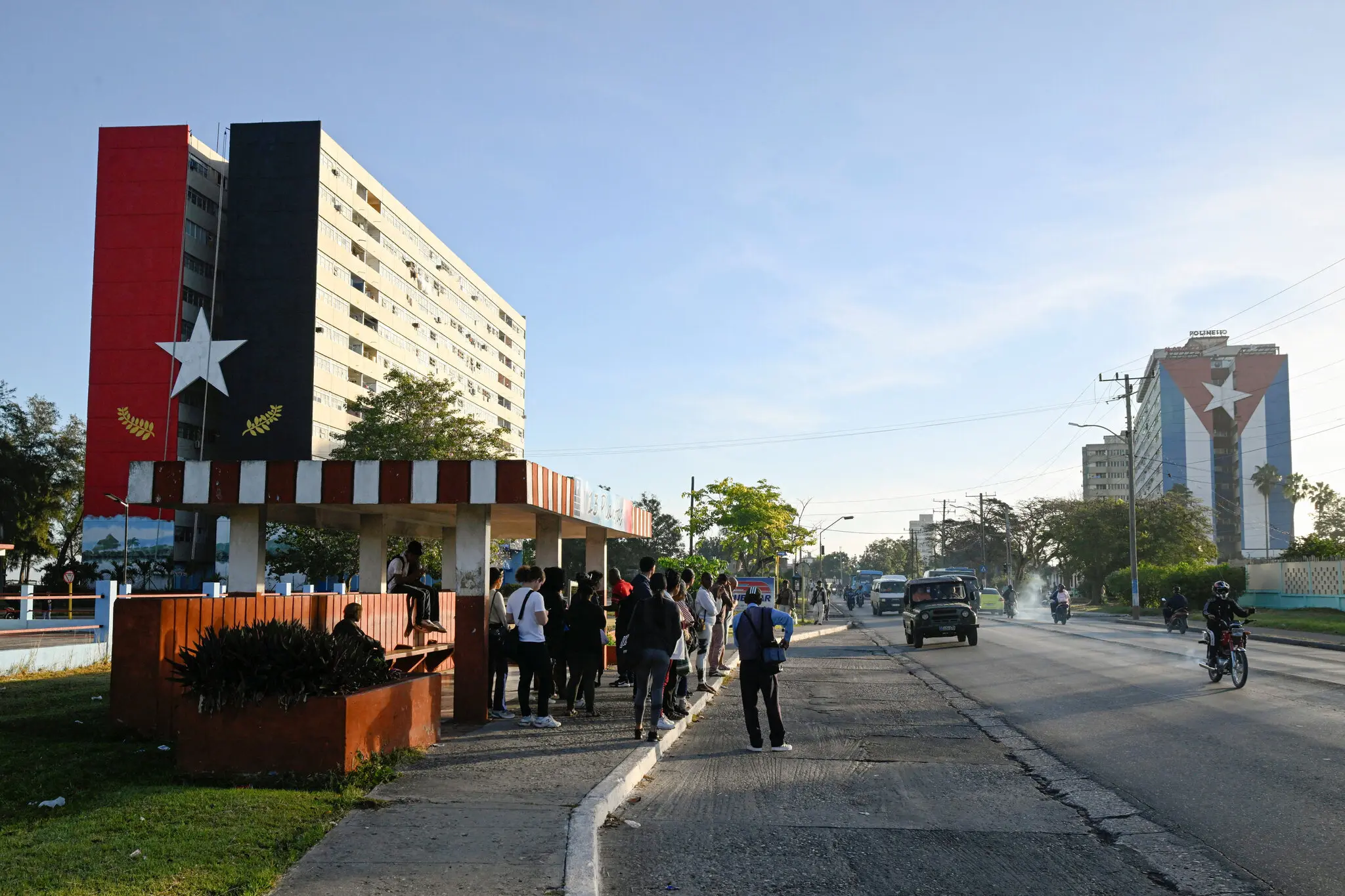 Люди чекають на автобус у Матансасі, портовому місті, куди очікується прибуття російського танкера — Норліс Перес
Yet the scale of the shipment should not be overstated. The same reporting makes clear that one tanker is not a solution to Cuba’s structural energy crisis. It is a temporary reserve, not a durable supply line. Experts cited by AP estimated that the cargo could cover only a limited span of diesel demand, while the broader shortages affecting electricity, transportation and productive activity remain in place. In other words, the tanker buys time. It does not restore normality.
That is why this moment should be read carefully. Washington has not abandoned its goal of weakening the Cuban government through economic attrition. The tariff framework remains intact, and Trump has not disguised his hostility toward Díaz-Canel’s administration. But by permitting Russian oil to enter, the United States has acknowledged something it would rather not say plainly: when sanctions begin to threaten the basic survival of an entire population, even their architects feel compelled to build in an emergency valve.
Politically, that may be the most important fact of all. America’s pressure campaign against Cuba rests on the rhetoric of firmness. This episode shows that, in practice, firmness has already become a regime of exceptions, pauses and tactical recalibrations. And sanctions that slip into manual control usually lose part of their persuasive force: for allies, because the rules no longer look consistent; for adversaries, because the toughness no longer looks absolute; and for Cuba itself, because even a brief reprieve becomes proof that pressure is not mechanically inevitable.
In the end, the tanker at Matanzas matters not simply as an oil shipment but as a political signal. It shows that Cuba’s blockade, U.S. sanctions, Russian oil and a deepening humanitarian emergency have fused into a single contradictory system in which no actor can behave quite as simply as it speaks. Cuba remains under pressure. Russia wins a symbolic opening. And the United States, for the first time in months, has demonstrated in practice that even the hardest strategy begins to bend when it is forced to look not only at a regime, but at the people living beneath it.