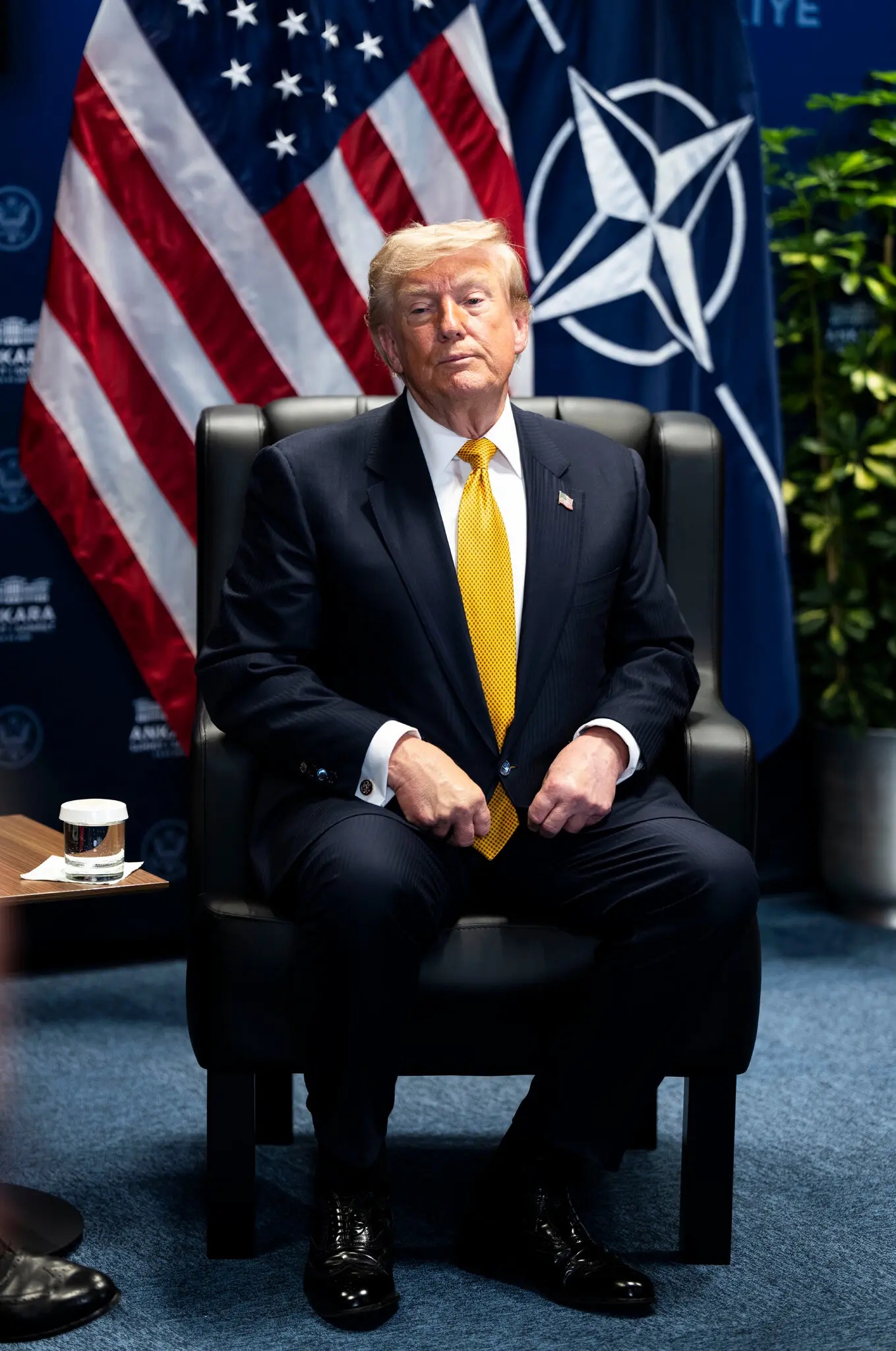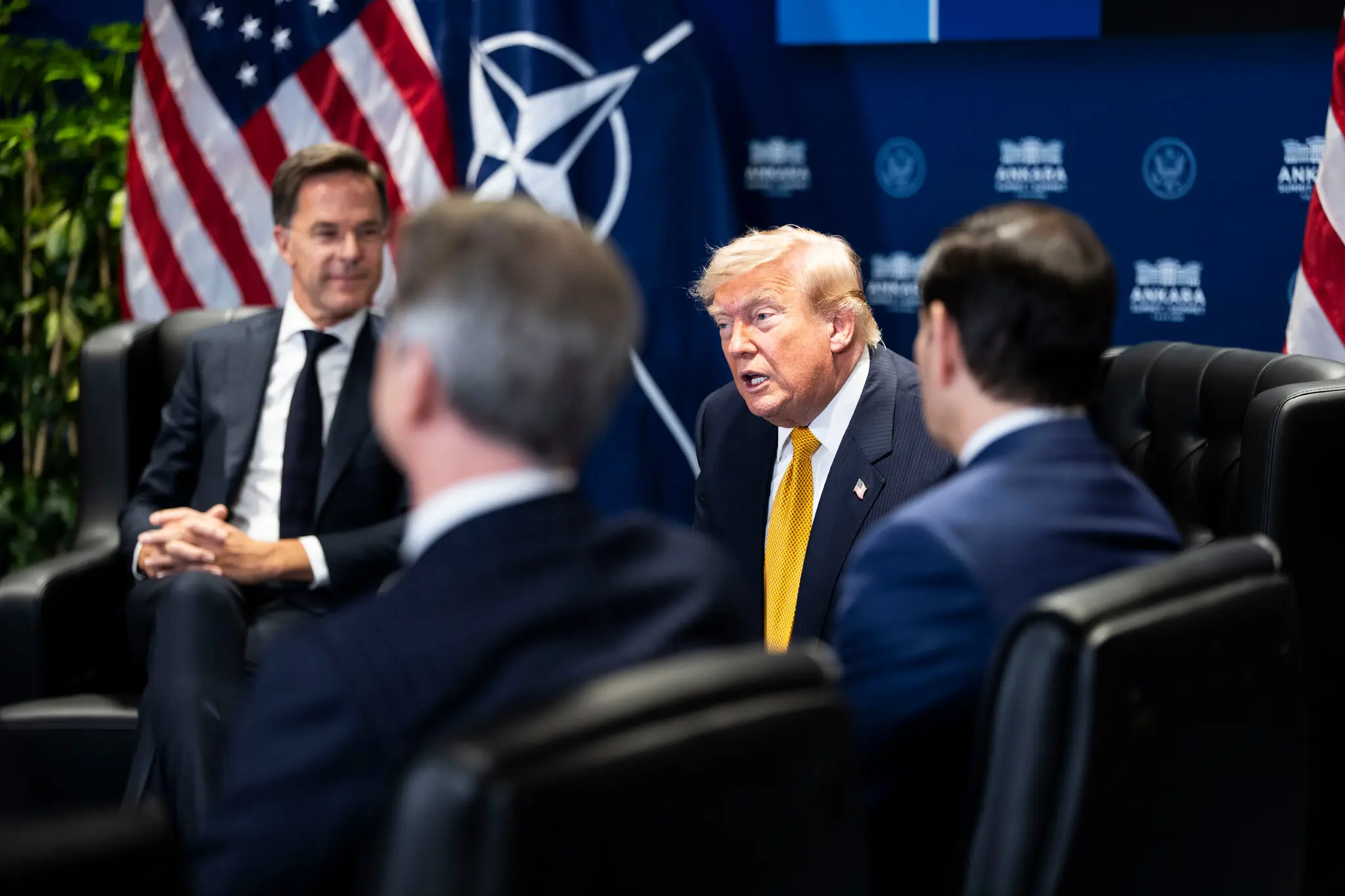

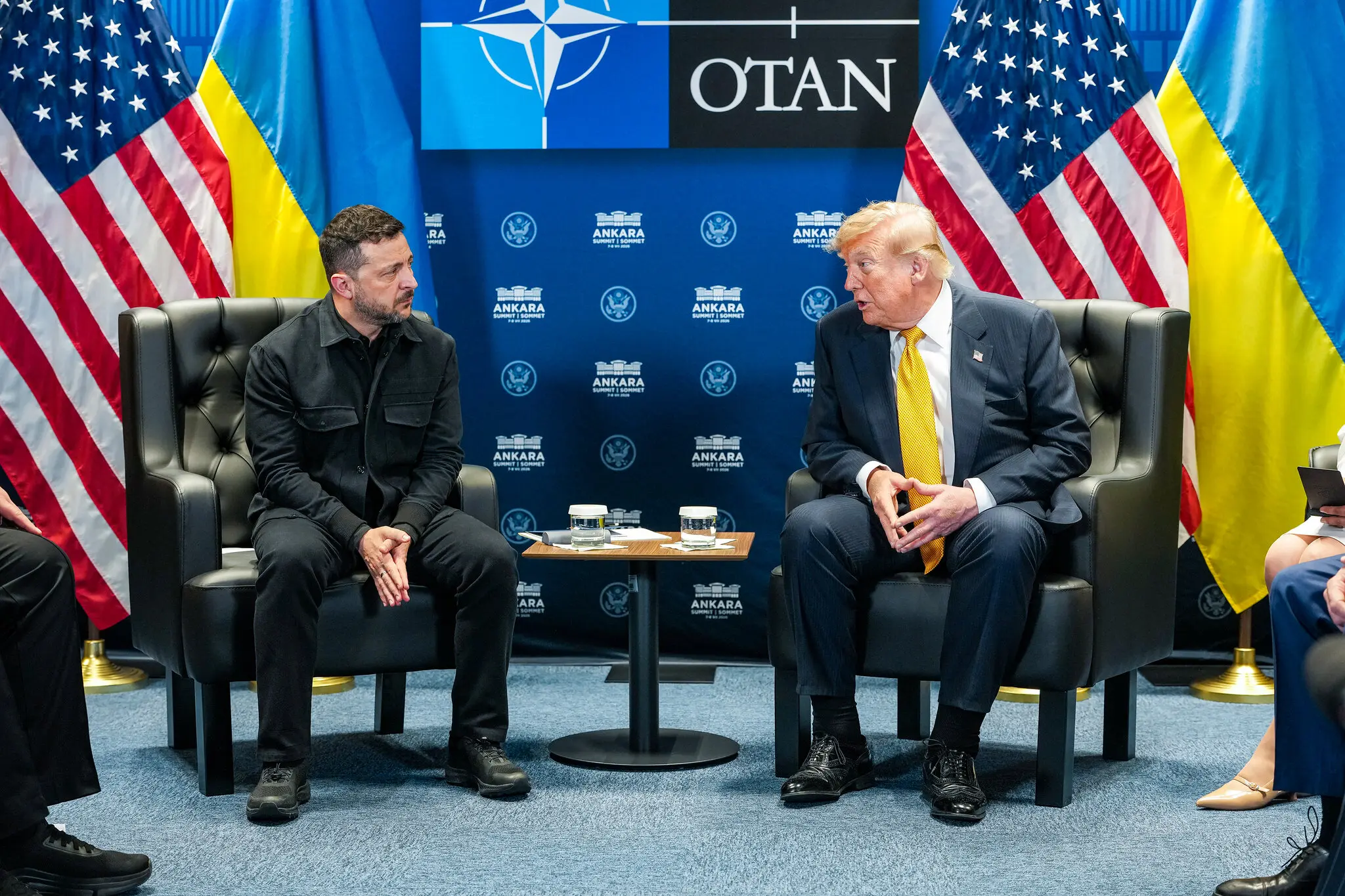






















The fragile cease-fire between the United States and Iran, which only weeks ago was meant to open a path toward de-escalation, has moved to the edge of collapse. After a new exchange of strikes, Donald Trump said in Ankara what markets and allies had already begun to price into their calculations: for him, the pause is probably over.
His phrase — “I think it’s over” — did not sound like a passing emotion, but like a political signal. The U.S. president threatened to strike Iran again “hard” and brought back into public discussion the idea of a naval blockade of Iranian ports. In a conflict where every word affects oil, shipping insurance and regional military readiness, this is no longer rhetoric for a domestic audience.
Tension rose after attacks near the Strait of Hormuz, the narrow route through which a major share of global oil and gas trade passes. Washington responded with strikes on targets in southern Iran and the return of sanctions on Iranian oil sales. Tehran called it open aggression and answered with attacks on U.S. military facilities in Bahrain and Kuwait.
According to Daycom’s analysis, the central issue in this crisis is not the formal question of whether the cease-fire still exists. The real issue is that both sides have again begun behaving as though the truce was merely a convenient pause between strikes. The diplomatic document may still exist on paper, but military logic has already moved ahead of political logic.
The preliminary agreement had three tasks: to halt direct attacks, restore safe shipping through the Strait of Hormuz and give negotiations time to move from a temporary pause toward a more durable settlement. All three elements are now under pressure. Ships are again becoming targets, military bases are again becoming objectives, and talks are becoming an appendix to coercive bargaining.
For the United States, the central issue is freedom of passage through Hormuz. Washington cannot allow Iran to treat the strait as its own lever of control over global energy. For Tehran, by contrast, control over this route has become almost the last major instrument of pressure after strikes, sanctions and losses at the top of the regime.
That is why the conflict over the strait is so dangerous. This is not merely a maritime corridor between Iran and the Arabian Peninsula. It is a place where a local strike on a vessel instantly becomes a global price signal. The jump in oil prices after Trump’s remarks showed how quickly markets read military risk.
Iran’s response was designed to demonstrate its ability to strike at the American presence in the Persian Gulf. The claim of attacks on dozens of military sites in Bahrain and Kuwait carried not only military meaning, but psychological weight: Tehran wants to show that any strike on Iran automatically expands the risk map for the United States and its allies.
Washington, for its part, is trying to regain the initiative after weeks of instability. Strikes on Iranian targets and renewed sanctions are meant to show that the United States will not accept a half-open strait, attacks on commercial shipping or Tehran’s attempts to dictate the rules of passage through a key energy artery.
But there is a trap in this logic. The harder the United States demonstrates force, the more Iran must respond in order not to appear broken after losses and internal shock. The harder Iran responds, the less political space Trump has to return to negotiations without another strike.
The death of Supreme Leader Ali Khamenei at the beginning of the U.S.-Israeli attack changed the internal context in Tehran. Funeral ceremonies, mobilizing rhetoric and the struggle for legitimacy after such a blow make any compromise with Washington toxic for Iran’s leadership. In such moments, regimes rarely choose silence as their first reaction.
Trump is still trying to leave the door to negotiations slightly open. His style has long rested on a combination of threat and offer: first maximum pressure, then the possibility of a deal. But the Iran crisis is different from a trade dispute or personal diplomacy. Here, every show of force may produce not a concession, but a retaliatory salvo.
The NATO summit in Ankara has therefore acquired an additional dimension. Allies gathered to discuss Ukraine, defense budgets and deterrence against Russia, but the Middle East has again broken into the center of the agenda. For the Alliance, this means a dispersal of attention precisely when Moscow is pressing Kyiv and testing NATO’s northern flank.
That benefits the West’s adversaries. Russia sees an image of America absorbed by the Persian Gulf. China sees how energy risk can alter the behavior of markets and allies. Iran is trying to prove that there will be no calm shipping without its interests being taken into account. Each of these players is reading not only statements, but the limits of American endurance.
For Europe, the danger is double. A new phase of war with Iran would hit oil, gas routes, insurance markets, inflation expectations and political unity. At the same time, it would draw part of America’s attention away from Ukraine, where Kyiv urgently needs air defense, interceptor missiles and long-term defense financing.
The Strait of Hormuz is therefore becoming more than a Middle Eastern problem. It is becoming a test for the entire Western strategy: whether the United States can simultaneously contain Iran, support Ukraine, keep NATO focused and prevent an oil shock that would hit its own voters and allies.
Tehran is also taking risks. Attacks on American facilities may strengthen internal mobilization, but they also give Washington grounds for further strikes. Control over the strait may be a lever, but overusing it could turn Iran into the chief culprit of a global energy panic.
That is why the current phase is so unstable. Both sides still speak about the possibility of negotiations, but their actions are creating the opposite reality. The United States strikes and tightens sanctions. Iran attacks bases and warns against interference in its management of the strait. Markets raise prices. Allies count risks. Diplomacy has not disappeared, but it has moved behind the military.
If the cease-fire collapses completely, the consequences will not be limited to Iran and the United States. Hormuz could become the point where war once again meets the global economy. Every tanker, every base, every missile and every Trump statement now functions inside a shared system of fear.
For now, this crisis does not yet look like a full-scale return to war, but it has already lost the central feature of a cease-fire: trust in the pause. When both sides prepare for the next strike faster than for the next round of talks, the cease-fire exists only nominally.
In Ankara, Trump effectively named what had become clear after the overnight exchange of attacks: the old pause no longer exists. The question now is not whether it can be saved in its previous form. The question is whether the United States and Iran can stop before the Strait of Hormuz turns from a lever of pressure into the center of a new major war.