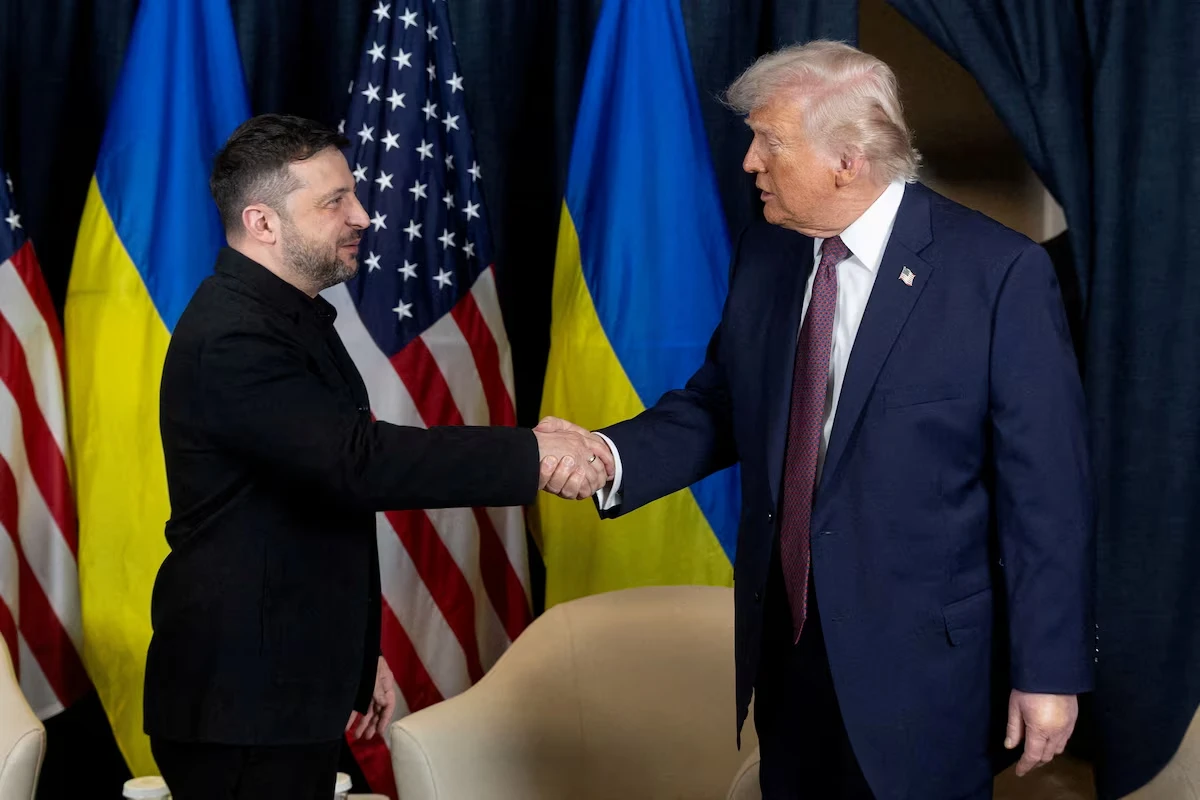

















On Sunday night, March 29, President Trump said Iran had agreed to let 20 more oil cargo ships pass through the Strait of Hormuz starting Monday, and described the move as a “tribute” to the United States and a “sign of respect.” He linked that decision to what he said were direct and indirect talks aimed at ending the war. Recent coverage has also described his broader effort to portray limited tanker movements as evidence that negotiations are gaining traction.
But the central fact in this story is not the number of ships. It is who now appears able to decide how many vessels move, when they move and under what conditions. When Trump recasts restricted passage as a gesture toward Washington, he is trying to rewrite the meaning of the event. For energy markets and maritime trade, the same development suggests something else: if Tehran can loosen traffic one day and constrict it the next, that power itself is the point.
That leverage matters far beyond the vocabulary of U.S. domestic politics. The U.S. Energy Information Administration says oil flows through Hormuz averaged about 20 million barrels a day in 2024, roughly 20 percent of global petroleum liquids consumption, with LNG flows also heavily exposed. Even if the United States depends less directly on the strait than Asia or Europe, the price of oil is set in a global system, not in a presidential news cycle.
In Daycom’s reading, Trump is speaking here less like a diplomat registering fragile progress than like a politician converting structural vulnerability into a personal victory story. This has long been one of his defining methods: to describe an opponent’s tactical concession as proof of his own authority. Yet the louder the White House calls partial tanker access a sign of “respect,” the clearer another truth becomes. Iran still appears to control the frame of the encounter itself.
That is especially striking in light of Trump’s own earlier rhetoric. He had previously downplayed the strategic relevance of Hormuz to the United States by noting that most of the oil moving through the strait goes to customers in Asia and Europe. Now the same waterway is being recast as a stage on which Iran is supposedly signaling deference to Washington. Politically, that is useful. Analytically, it is hard to sustain.
Nor is Tehran behaving like a government that has accepted defeat. AP reported last week that Iran rejected a U.S. 15-point ceasefire plan and issued its own counterproposal, including demands tied to reparations and sovereignty over the Strait of Hormuz. Pakistan, meanwhile, has been floated as a possible venue for direct or indirect talks. That does not look like capitulation. It looks like bargaining under the cover of escalation.
That is why Trump’s “sign of respect” formulation matters beyond its immediate theatrical value. It shows how the White House wants the war to be understood: not as a conflict with rising costs and an uncertain horizon, but as a sequence of presidential wins. In that narrative, even a narrowly limited tanker passage must be made to resemble an acknowledgment of American primacy. Global markets, however, are reading something harsher: that shipping volumes remain precarious, maritime risk is still elevated and the world’s energy system remains exposed to decisions made in Tehran and on the battlefield.
The episode is even more revealing because it overlaps with Trump’s other recent claims, from talk of de facto regime change in Iran to public remarks about seizing oil infrastructure such as Kharg Island. Taken together, the message is one of strategic overstatement: negotiations are presented as progress, coercion as control and every tactical shift as evidence of presidential dominance. That combination can be politically effective. It can also be strategically reckless.
A colder reading is more useful. If some vessels are moving through Hormuz again, that does not mean the crisis is receding. It means Iran appears to be using access to the strait as a calibrated instrument of pressure, while Trump is using those movements as a calibrated instrument of political branding. Between those two strategies lies the same fragile reality: oil, shipping insurance, jittery markets, allied uncertainty and a war that still lacks a credible path to conclusion.
So the real news is not that Trump saw “respect” where others see a transaction. The real news is that the Strait of Hormuz has become not merely a geographic chokepoint, but the working language of this war. As long as one side presents limited tanker movement as a diplomatic gift and the other can use that same movement as proof of sovereign control, no concession will feel final. For the Middle East, for oil prices and for American strategy, a fragile pause may prove more dangerous than open escalation.