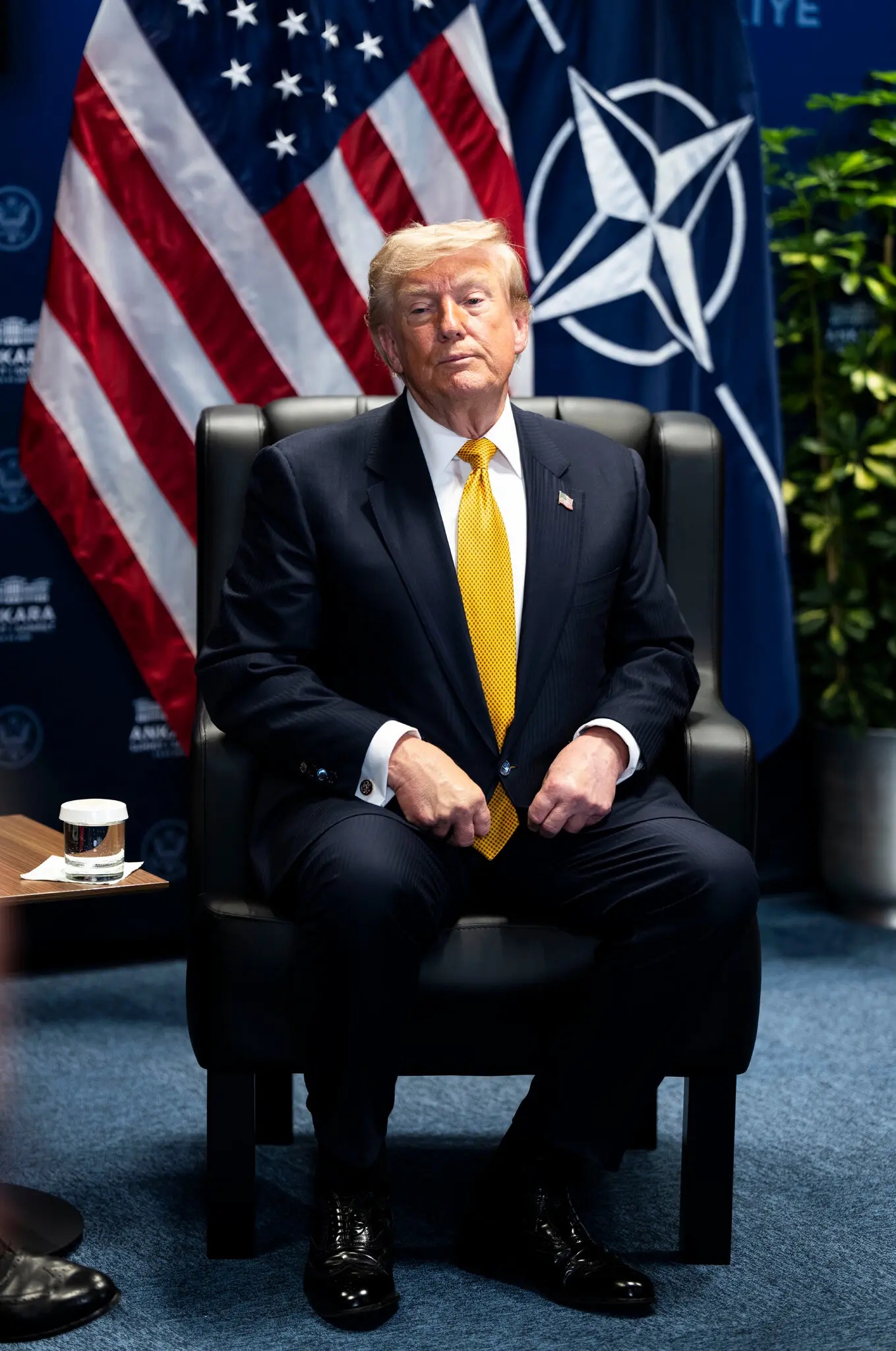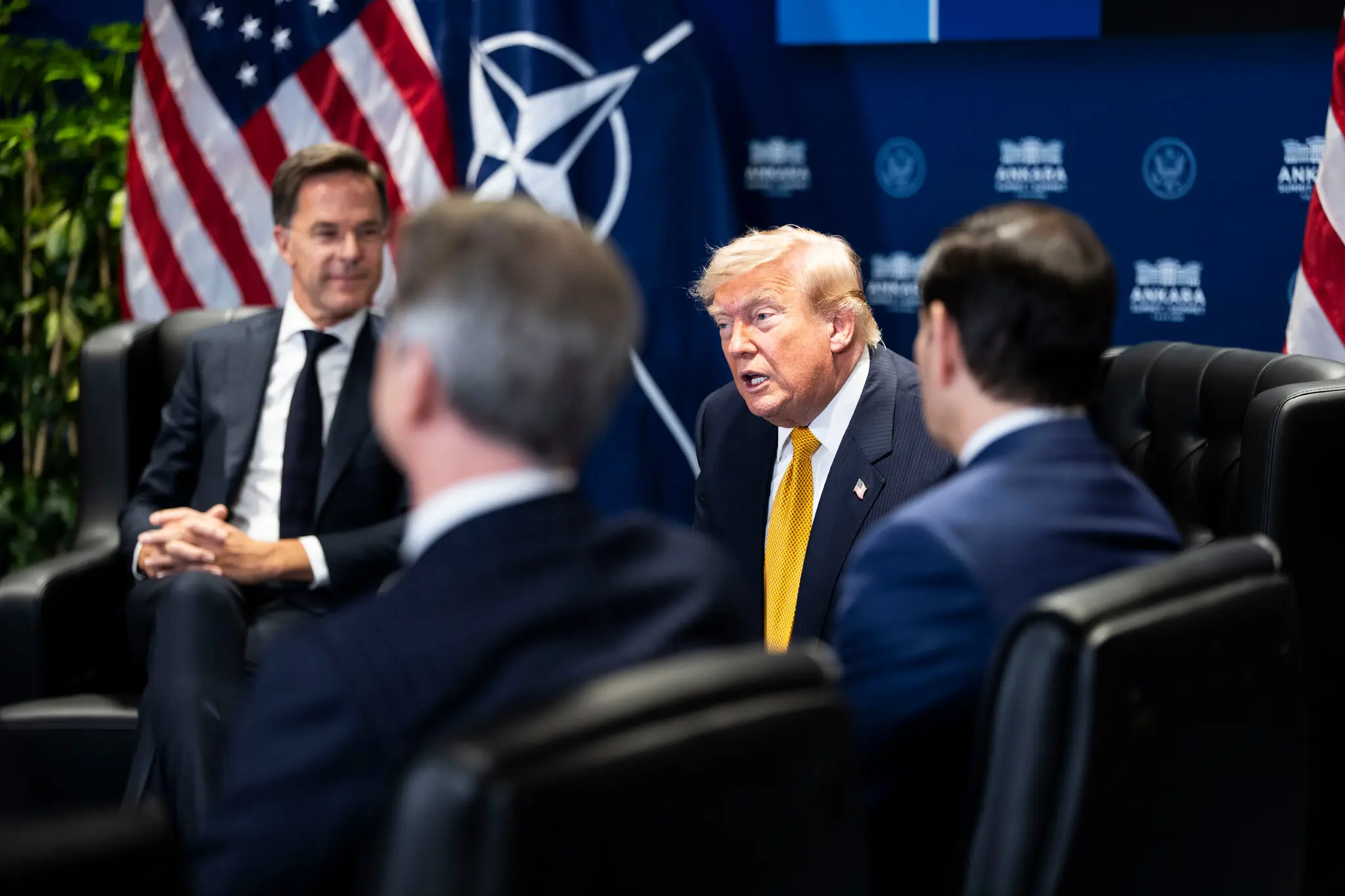

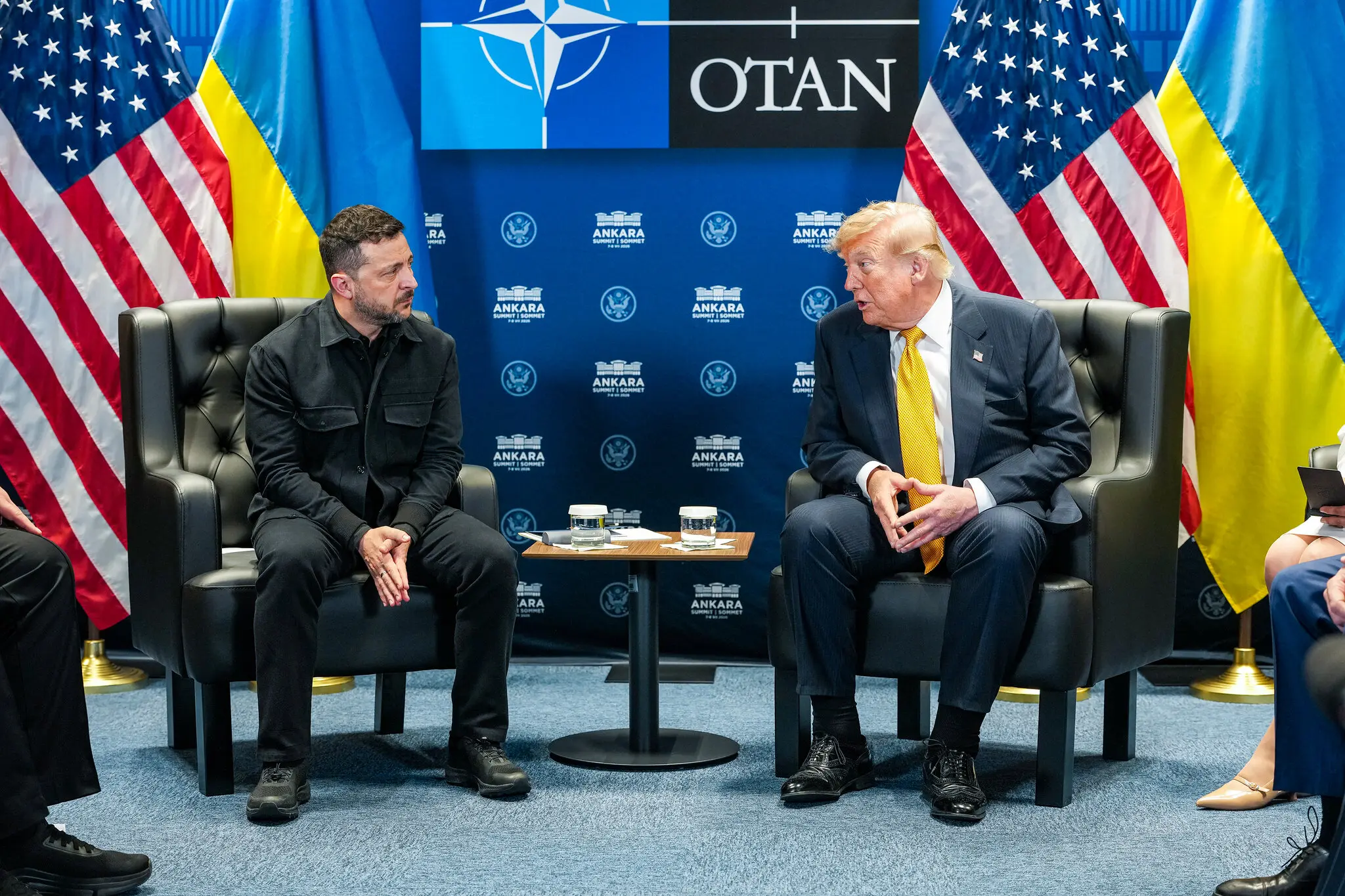




















Donald Trump chose Spain as a target for a public attack at the NATO summit in Ankara. His statement about wanting to “cut off all trade” with Madrid sounded severe even for a politician who has long used economic threats as an instrument of pressure.
At first glance, it was a personal swipe at Pedro Sánchez’s government. Spain irritates Washington with its defense spending, criticism of the war in Iran, refusal to automatically align itself with U.S. military decisions and a political model Trump sees as openly anti-MAGA.
But a trade war with Spain cannot function as a simple bilateral conflict. The country is part of the European Union, and foreign trade for EU member states falls under Brussels’ authority. To strike Madrid separately would almost inevitably mean striking the entire EU market.
According to Daycom’s analysis, this is where Trump’s loud threat runs into reality. He may use Spain as a political symbol of defiant Europe, but legally and economically he is facing not one country, but a common trade bloc with its own mechanisms of protection.
The European Commission cannot allow a precedent in which Washington punishes one EU member for its political position while bypassing the bloc’s common trade policy. If such an approach became normal, France, Germany, Italy or any other state could be next whenever it diverged from the White House on defense, taxation or foreign policy.
That is why Brussels’ response would almost certainly be European rather than merely Spanish. Trade restrictions against Madrid would open the door to EU countermeasures, new tariffs, legal disputes and tension across the transatlantic market. What Trump presents as punishment for Spain could easily become a U.S. trade war with Europe.
There is also a legal boundary. The American president has significant room to apply tariff pressure, but not absolute power to arbitrarily cut off trade with an ally. After judicial limits on executive tariff authority, the ability to impose sweeping duties without clear grounds has become narrower. The slogan “cut off all trade” requires real instruments, and those may simply not exist.
The practical side is even more complicated. Spain is the fourth-largest economy in the EU and an important tourism, energy, industrial and investment platform. A break with it would not be an isolated sanction. It would affect U.S. companies, investors, aviation, tourism, supply chains, pharmaceuticals, agricultural trade and financial markets.
Markets know Trump’s style well: a sharp statement, falling indexes, a nervous investor reaction, and then an attempt by the White House to clarify or soften the position. That is why the threat against Spain is dangerous not only as a political gesture. It could create a short but sharp shock at a time when the global economy is already under pressure from war, energy risks and instability.
The cause of the conflict is not only trade. Trump has long demanded that NATO members sharply increase defense spending. Spain has agreed to raise it to 2.1 percent of GDP, but not to the 5 percent level sought by Washington and increasingly framed as a new political standard for the Alliance.
For Madrid, a sudden jump to 5 percent would mean not merely a budget adjustment, but a revision of its social model, tax policy and national priorities. Sánchez offers a different argument: Spain should strengthen defense, but not dismantle its economic and social structure for the sake of a target imposed by America’s political tempo.
To Trump, this looks like weakness or sabotage. To Spain, it is an attempt to preserve a sovereign balance between security and domestic stability. That clash of models is what stands behind the crude phrase about cutting off trade.
The Iran factor added more tension. Madrid’s criticism of U.S. policy and its refusal to provide military infrastructure for American operations made Spain a convenient target. Trump sees alliance as loyalty at the moment of decision. Sánchez sees it as the right of an ally not to automatically support every operation Washington undertakes.
There is another irritant: migration. Spain’s economy has benefited significantly in recent years from immigration, which supports the labor market, consumption and demographic momentum. For Trump, whose politics are built on hard anti-immigration rhetoric, Spain’s relative success looks like an ideological challenge.
Economically, Spain is less vulnerable to U.S. pressure than many other eurozone countries. Its dependence on the American market is lower, and trade with the United States does not form a critical share of GDP. Madrid also runs a trade deficit with Washington, making the classic logic of tariff punishment less obvious.
That does not mean the blow would be painless. Specific sectors — olives, wine, pharmaceuticals, tourism services, aviation and investment projects — could suffer quickly. During Trump’s first presidency, U.S. tariffs on Spanish black olives already showed how a targeted duty can sharply alter a Spanish product’s position in the American market.
But a broad rupture would also hit the United States. American companies actively invest in Spain. The country attracts them with cheaper energy, developed infrastructure, renewables, an educated workforce and a market that is becoming increasingly attractive for artificial intelligence and other energy-intensive technologies.
In other words, Trump is threatening not only the country he wants to punish. He is threatening an environment in which American capital operates. That is why business and financial markets could become one of the main restraints on such a scenario.
There is a familiar Trump political mechanism at work here. He takes a real problem — the uneven distribution of the defense burden within NATO — and translates it into the language of humiliation, personal insult and trade threat. It creates a headline, but makes the underlying problem harder to solve.
For NATO, this is especially dangerous. The summit in Ankara was meant to demonstrate unity toward Russia, support for Ukraine and a new level of defense mobilization. Instead, the public clash with Spain shows that the Alliance may be entering a phase in which internal pressure among allies becomes almost as sharp as the external threat.
For Europe, the conclusion is clear: dependence on the American political cycle is becoming a risk not only in security, but also in trade. Today Spain is the object of attack. Tomorrow it could be any country that fails to fit the current logic of the White House.
For Spain, however, the crisis may have the opposite effect. Instead of isolation, it could gain broader support within the EU, because the question is no longer only Sánchez or a single defense spending figure. The question is whether an outside partner can selectively punish members of the Union for political inconvenience.
Trump wanted to project strength, but his threat exposed the limits of that strength. Trade with Spain is not a switch the U.S. president can flip without consequences. It is part of a complex transatlantic system in which every abrupt move strikes not only the intended target, but also allies, markets and Washington’s own interests.
That is why the most likely scenario is not a full rupture, but another cycle of pressure, tariff threats, political statements and negotiations through Brussels. Yet even if the threat remains rhetorical, its effect is already visible: Spain has become a symbol of a wider conflict between American coercive diplomacy and Europe’s desire to act not under dictation, but as an independent political bloc.