




















The final hours before Donald Trump’s Tuesday deadline revealed something essential about coercion and its limits. Threats to flatten Iran in a single night, to cripple its power grid, bridges and core infrastructure, did not create a visible sense of imminent political collapse. They produced something else: numbness, anger, fatalism and a new kind of internal hardening.
That is why the public mood inside Iran appears contradictory only at first glance. Some people are not panicking or making plans to flee because they no longer believe there is anywhere truly safe to go. Others answer with defiance. Others retreat into a tired indifference. But all of these reactions come from the same source: the threat has become so large that it no longer feels like pressure. It feels like a danger to the country’s basic existence.
When the United States threatens not only a regime but electricity, water, bridges, oil facilities and national logistics, it changes the object of the conflict itself. The issue is no longer simply whether military force can compel an elite to concede. The issue becomes whether an entire society is being told it may be punished as the environment in which that elite survives.
As Daycom noted in earlier analysis, that is where the current strategy begins to misfire politically. It assumes that enough fear will automatically sever the bond between a population and its rulers. In practice, Iran is moving toward a different logic: the greater the external threat, the easier it becomes for the state to speak once again in the language of national defense rather than domestic repression.
That shift matters because the regime does not need affection in order to benefit from it. It only needs enough people to conclude that whatever they think of their rulers in ordinary times, they are not prepared to see their country broken under outside bombardment. At that point, even a society full of grievance can begin to close ranks in ways that outsiders misread.
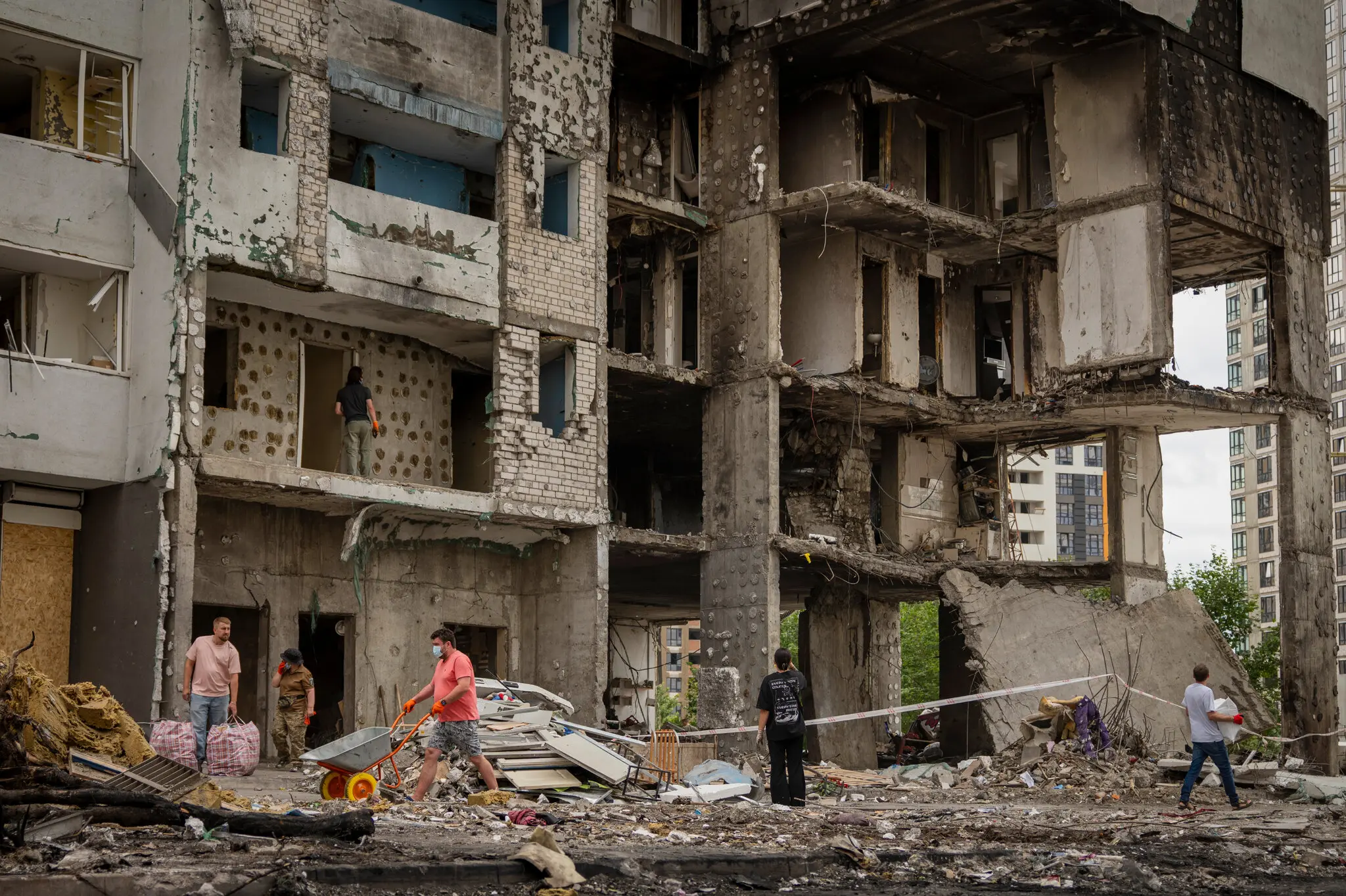
This is especially visible when strikes or threats extend beyond clearly military targets and touch the infrastructure of daily life: transport, bridges, rail links, universities and industrial systems. Once the damage is felt not as an abstract blow to the state but as a humiliation inflicted on ordinary existence, fear is joined by something more politically potent. It becomes easier for the regime to redirect anger away from itself and toward the external power making the threat.
That is why even some Iranians who were previously hostile to the system may now see American and Israeli pressure less as a path to liberation than as a form of external violence aimed at the country’s social and civic foundations. Calls for regime change lose force when they arrive not with a credible political future, but with the prospect of destroyed infrastructure, economic paralysis and humanitarian breakdown.
Trump’s deadline also changes the psychology of the crisis in another way. Repeated deadlines can function as bargaining tools so long as they still appear negotiable. But once they are paired with language about erasing a country in one night, they cease to look like leverage and begin to look like proof that the conflict has moved beyond normal political restraint. That does not automatically break a population. More often, it teaches people to live inside a new extreme.
Hence the strange combination of shock and defiance now visible in Iranian reactions. People may distrust their state, resent it and reject its propaganda, yet still refuse the logic of an outside ultimatum that openly threatens to leave them without water, electricity, transport and work. In that sense, the crisis is quickly becoming not only a struggle over the Strait of Hormuz, but a struggle over who still possesses moral language in the war at all.
It is no accident that calls are emerging inside Iran for the symbolic defense of infrastructure, while official rhetoric increasingly presents the moment as one of national concentration and endurance. The authorities understand the political mechanics of this very well. A threat against critical infrastructure is almost always easier to convert into defensive patriotism than into mass revolt against the state that governs it.
More broadly, the ultimatum exposes an old limit in every strategy of bombing for political rupture. Such strategies often underestimate the fact that societies under outside attack do not behave like electoral models. They behave like communities under siege. People do not necessarily begin to love their rulers more. But they often begin to feel more sharply that their country itself is being targeted from outside. That is a different emotion, and it generates a different kind of political resource.
The paradox of these days may therefore be the most important fact of all. The louder the threats of total destruction become, the less they function as instruments of pressure and the more they resemble a factory of new loyalty, built not from trust in the regime but from revulsion at external coercion. For Iran, that is a dangerous consolidation of fear. For the United States, it is the risk of mistaking silence, shock and immobility for signs of imminent internal collapse when no such collapse may be coming at all.