























In a foggy field in northeastern Ukraine, war does not look like a grand battle. It looks like a few colored dots on a screen. Four soldiers sit in a van, watching red and yellow signals, drinking energy drinks and waiting for the moment when a Russian Shahed enters their kill zone.
This is one of the new front lines of Ukrainian air defense. Not a battery of expensive missiles, not a fighter jet in the sky, but a crew with interceptor drones and only a few minutes to find the target, see it through a camera and ram it with explosives.
Such teams have become part of Ukraine’s larger effort to break the logic of Russian aerial terror. The Shahed, first an Iranian design and now mass-produced and modernized by Russia as the Geran, has become one of the most dangerous weapons of exhaustion: cheap, numerous, long-range and psychologically draining.
According to Daycom’s analysis, Ukraine’s fight against the Shahed is no longer just one element of air defense. It is a separate war inside the war. It will help determine whether the country can survive another year of strikes on energy infrastructure, military sites, cities and rear production facilities without exhausting its most expensive missile systems.
Russia launches thousands of attack drones every month. Ukraine shoots down most of them, but even those that get through cause serious damage. A single Shahed can hit a substation, warehouse, factory, residential block or facility worth hundreds of times more than the drone itself.
That is why Ukrainian soldiers speak about the economics of interception without sentiment. Even if dozens of cheap drones are needed to destroy one Shahed, the exchange can still be justified. The alternative is using a missile worth hundreds of thousands or millions of dollars, or allowing a strike on critical infrastructure.
This is the new mathematics of war. The Shahed is relatively cheap, but it forces the defender to spend far more expensive resources. The Ukrainian interceptor drone is meant to reverse that imbalance: a few thousand dollars against tens of thousands, plastic and explosives against a long-range Russian attack drone.
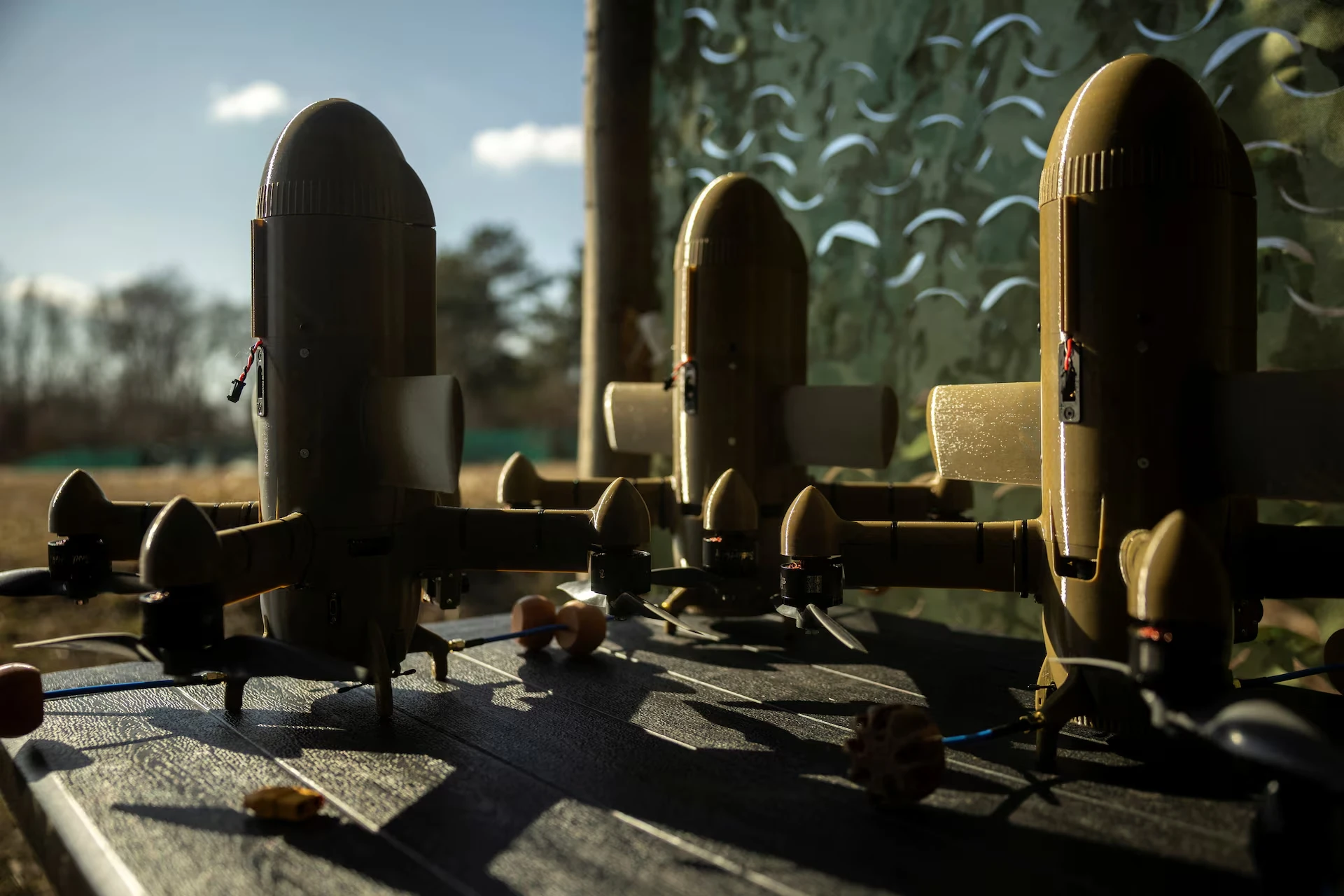
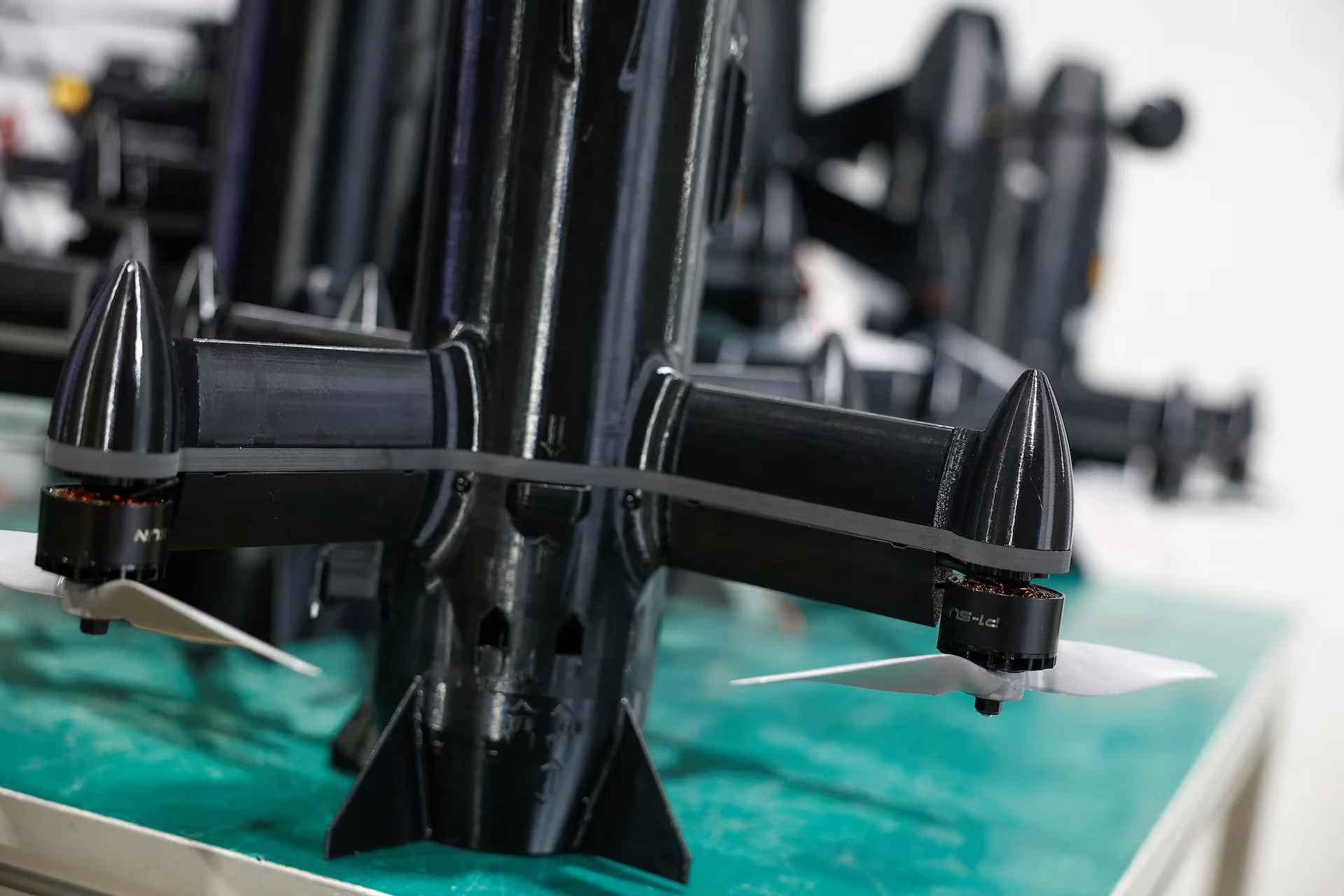
The simplest interceptors look almost crude: a 3D-printed body, a small charge, four propellers, a camera, speed and the skill of an operator. But that simplicity is what makes them scalable. Ukraine cannot afford to answer every cheap Russian drone with an expensive missile.
Cheap, however, does not mean easy. The crew has a very narrow window. A Shahed appears on radar, crosses a sector, quickly moves out of range, and the operator must guide the interceptor into position, find the dark silhouette through the camera and detonate near the target.
Weather can overpower technology. Fog, clouds, rain or night humidity can make the camera almost blind. A crew may launch interceptor after interceptor and fail to see a single target. In the Kharkiv region, one such night ended with the mission being abandoned: the drones had eyes, but no visibility.
That problem is pushing Ukraine toward automation. If an operator cannot see a Shahed through the camera, guidance systems are needed that can work in worse conditions. Automatic tracking, better sensors, video processing, artificial intelligence and stable communications are no longer technological luxuries. They are requirements for survival.
Russia is adapting as well. Ukraine’s early interceptors quickly lost effectiveness once Shaheds began flying faster. Their speed rose from about 170 kilometers per hour to more than 200, forcing interceptors to reach 300. Now some Russian drones are equipped with jet engines and can fly at roughly 400 kilometers per hour.
That means Ukraine must develop jet-powered interceptor drones of its own. The war is entering a phase in which technological advantage lasts not years, but months. A successful solution is quickly copied, bypassed or made obsolete. Today an interceptor downs a Shahed; tomorrow Russia changes speed, route, navigation or communications.
Russian navigation adaptation is becoming especially dangerous. Moscow is using new routes, more complex flight plans, elements of artificial intelligence and networks in which drones relay signals to one another. Such mesh networks help them defeat Ukrainian jamming and stay on course even under electronic warfare pressure.
Electronic warfare remains an important layer of defense. On some nights, it can neutralize a large share of attack drones by throwing them off course or disrupting navigation. But its effectiveness is uneven. Russian engineers keep adjusting their systems, and every wave of attacks effectively tests Ukraine’s defenses.
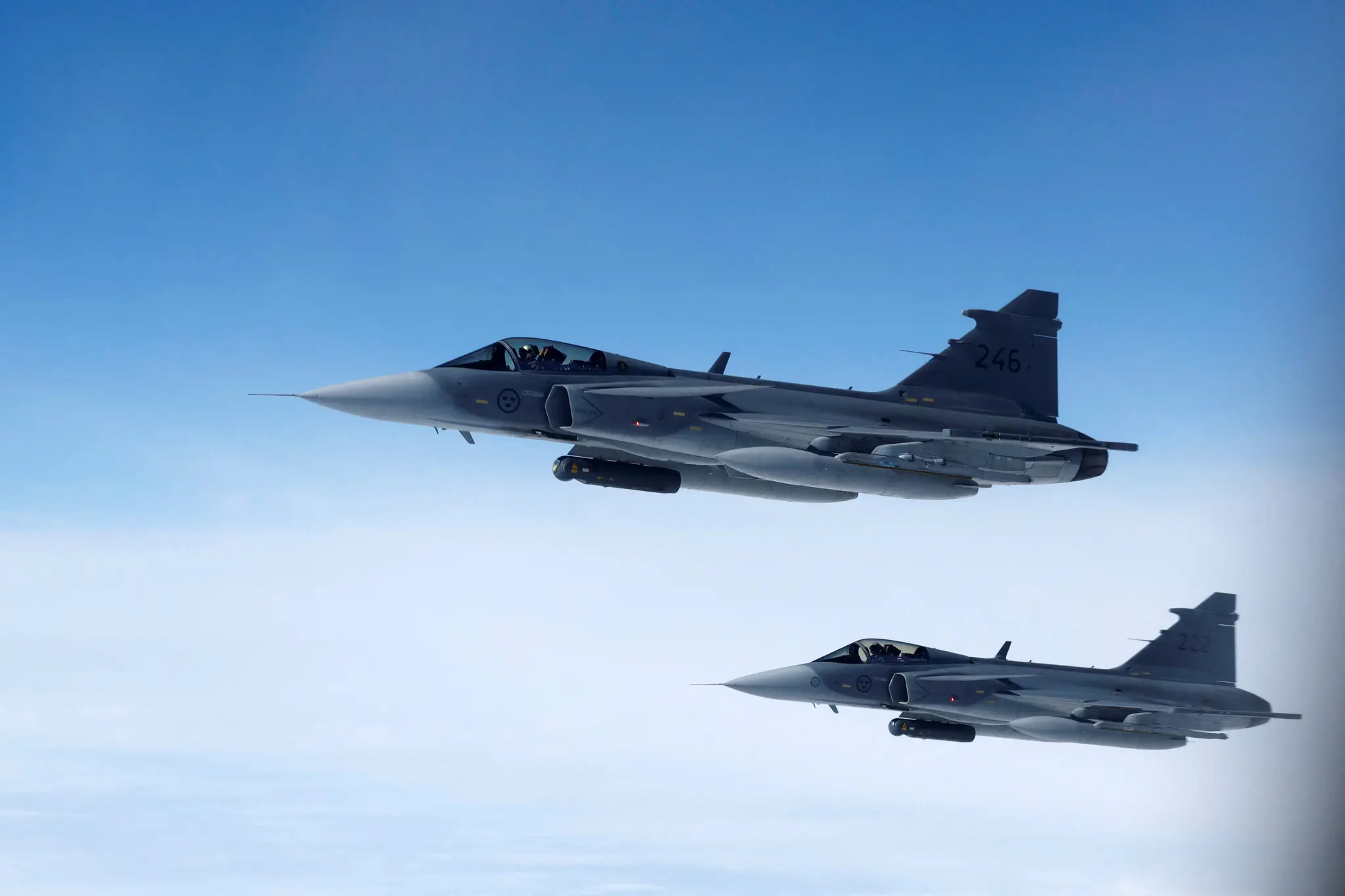
That is why Ukraine is building not one shield, but a layered system. Shaheds are targeted by interceptor drones, mobile teams with machine guns, electronic warfare, helicopters, F-16 fighters and conventional air defense. No layer is perfect, but together they are meant to raise the destruction rate to a point where Russia’s strategy loses much of its value.
The target is to neutralize 95 percent of Russian Shaheds and similar long-range drones. That is ambitious. Raising interception from 85 to 90 percent is already a major result, but the final percentage points are always the hardest. They separate a manageable threat from strikes that shut down cities and damage the power grid.
 Військовослужбовці підрозділу протиповітряної оборони 420-го окремого батальйону безпілотних систем «Хорт» літають з безпілотником-перехоплювачем P1-Sun FPV під час бойової зміни під час нападу Росії на Україну в Харківській області, Україна, 18 березня 2026 року — Валентин Огіренко
Russia understands this arithmetic. Its ground campaign has slowed, but its aerial pressure continues. Mass nighttime attacks exhaust air defenses, keep cities tense, force repeated repairs, scatter resources and create a sense of constant danger far from the front.
The Shahed is frightening not only because of its explosion. It is frightening because of its sound, its long flight time and the waiting it imposes. Its engine, which gave the drone its “moped” nickname, has become part of Ukraine’s nighttime acoustics of war. It is a weapon that does not merely destroy targets; it forces people to live in endless anticipation of impact.
Against that background, interceptors carry psychological value as well. Every Shahed destroyed is not only a saved substation or warehouse. It is proof that even a mass weapon of terror can be met with a cheap, mass response. Ukraine is not only trying to defend itself. It is trying to change the price of Russia’s attack.
Part of this new defense now works almost like remote work. Top operators can pilot interceptors through internet links in different regions, switching between video feeds. Ground teams prepare the drones and antennas locally, while the pilot may be physically far from the launch point.
That radically changes the idea of the front. An operator who in civilian life may have been a television producer, engineer or gamer now conducts night hunts for Russian drones. War absorbs civilian skills and turns them into military specialties.
But even this has limits. For the system to work nationwide, Ukraine needs thousands of crews, stable communications, interceptor production, training, repairs, logistics, a shared air picture and rapid technological updates. This is not one successful start-up. It is a national defense infrastructure.
That is why the fight against the Shahed has become a test of state capacity. Ukraine must not only fight at the front. It must build a technological system able to adapt every month to Russian changes — under fire, with limited resources and a constant need to protect civilians.
In this war, the future of air defense increasingly looks less like one expensive system and more like a swarm of cheap, fast and renewable solutions. Expensive systems remain critical, but a mass drone threat requires a mass answer. Ukraine is trying to build exactly that.
The battle against the Shahed will not be won by one technological breakthrough. It will be made of thousands of night shifts, failed launches in fog, faster motors, better cameras, new algorithms, cheaper bodies and operators who have only minutes to stop a drone before it becomes an explosion.
This is a war of exhaustion in which Ukraine is trying to exhaust the very logic of Russian terror. If the cheap Shahed no longer guarantees a cheap strike, Moscow will lose part of one of its most convenient tools. That is the strategic meaning of a night van, a screen full of colored dots and a small interceptor flying toward a much larger threat.