





















Ukraine has turned Patriot from a classic Western air defense system into a weapon of wartime economy. What Ukrainian crews learned in the United States and Germany quickly collided with the reality of a large-scale war: too few missiles, too many Russian attacks, and a launch decision that can mean choosing between one city and the next.
At first, Ukrainian soldiers used the system according to standard doctrine. Patriot was designed for armies with deep stockpiles, stable supply lines and a more controlled intensity of threats. Russia imposed a different scale: nightly waves of drones, cruise missiles and ballistic weapons that exhaust the system not through one strike, but through repetition.
So Ukrainians began rewriting the manual for their own war. Where classic tactics often call for two or more interceptors against a ballistic target, Ukrainian crews frequently risk using one. Where automatic mode might spend a precious missile on a cheap drone, operators switch to manual control and reserve Patriot for the fastest threats.
According to Daycom’s analysis, this adaptation has become one of Ukraine’s most important invisible achievements of the war. Kyiv did not simply receive a complex Western system. It learned how to use it under shortage, under constant Russian hunting and without the luxury of error. But now even the best tactics are running into a limit that ingenuity cannot bypass.
That limit is the interceptor stockpile. Patriot may see the target, the crew may be experienced, the commander may make the right decision, but if launchers are half-empty, the system stops being a full shield. The war for the sky increasingly looks less like a duel of technologies and more like a competition of factories, warehouses and logistics.
Ukraine’s school of Patriot use was born from scarcity. Crews learned to conserve missiles, rapidly change position after firing, hide real batteries under camouflage and deploy realistic decoys to draw Russian fire away. When a fully loaded system is worth roughly a billion dollars, a decoy costing tens of thousands becomes not a detail, but a survival tool.
This approach is already drawing interest from other states. Ukraine’s experience has shown that in the wars ahead, an expensive system must be protected as carefully as the city it defends. Once a Patriot battery fires, it becomes a target; if it does not move, Russia will try to strike it in the next wave. “Shoot and scoot” has become not a maneuver, but a condition for preserving the anti-ballistic shield.
Ukraine has also built a cheaper lower tier of defense. Slow drones are shot down with machine guns from rooftops, pickup trucks and helicopters, and increasingly by interceptor drones. This allows Patriot not to be wasted on targets that can be destroyed by simpler means. In this kind of war, the ratio between the cost of attack and the cost of defense matters as much as raw effectiveness.
Russia is exploiting precisely that ratio. It launches cheap drones to overload attention, radars and crews. It then adds cruise missiles to stretch defenses across multiple directions. The most dangerous role is given to ballistic missiles, against which Patriot remains Ukraine’s main and effectively irreplaceable tool.
Recent attacks showed that Moscow has adapted just as aggressively. One strike, involving dozens of missiles and hundreds of drones, ended with the most alarming detail: none of the 23 ballistic missiles was intercepted. Ukraine was able to stop most cruise missiles, but it was the ballistic weapons that broke through and caused the heaviest destruction.
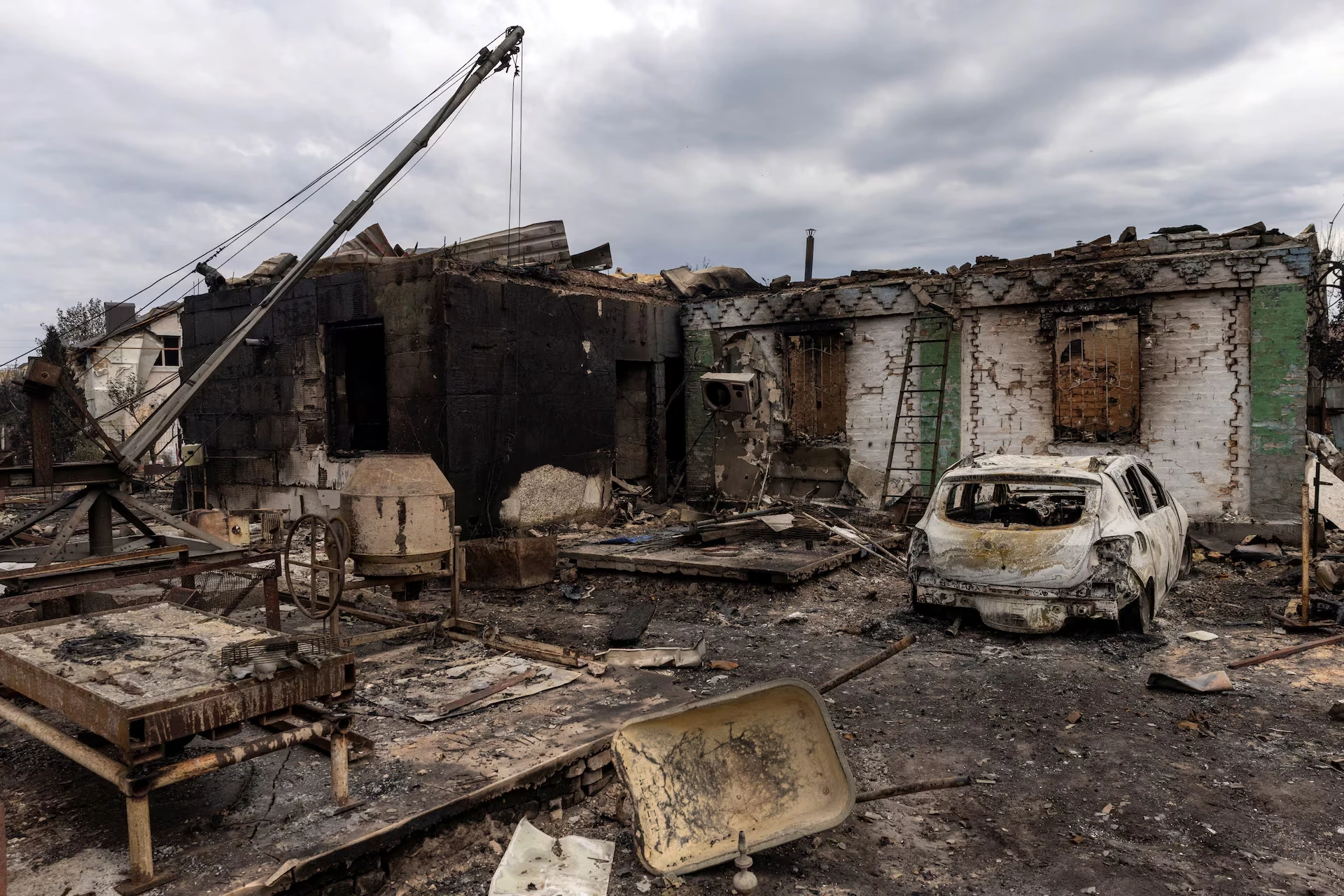
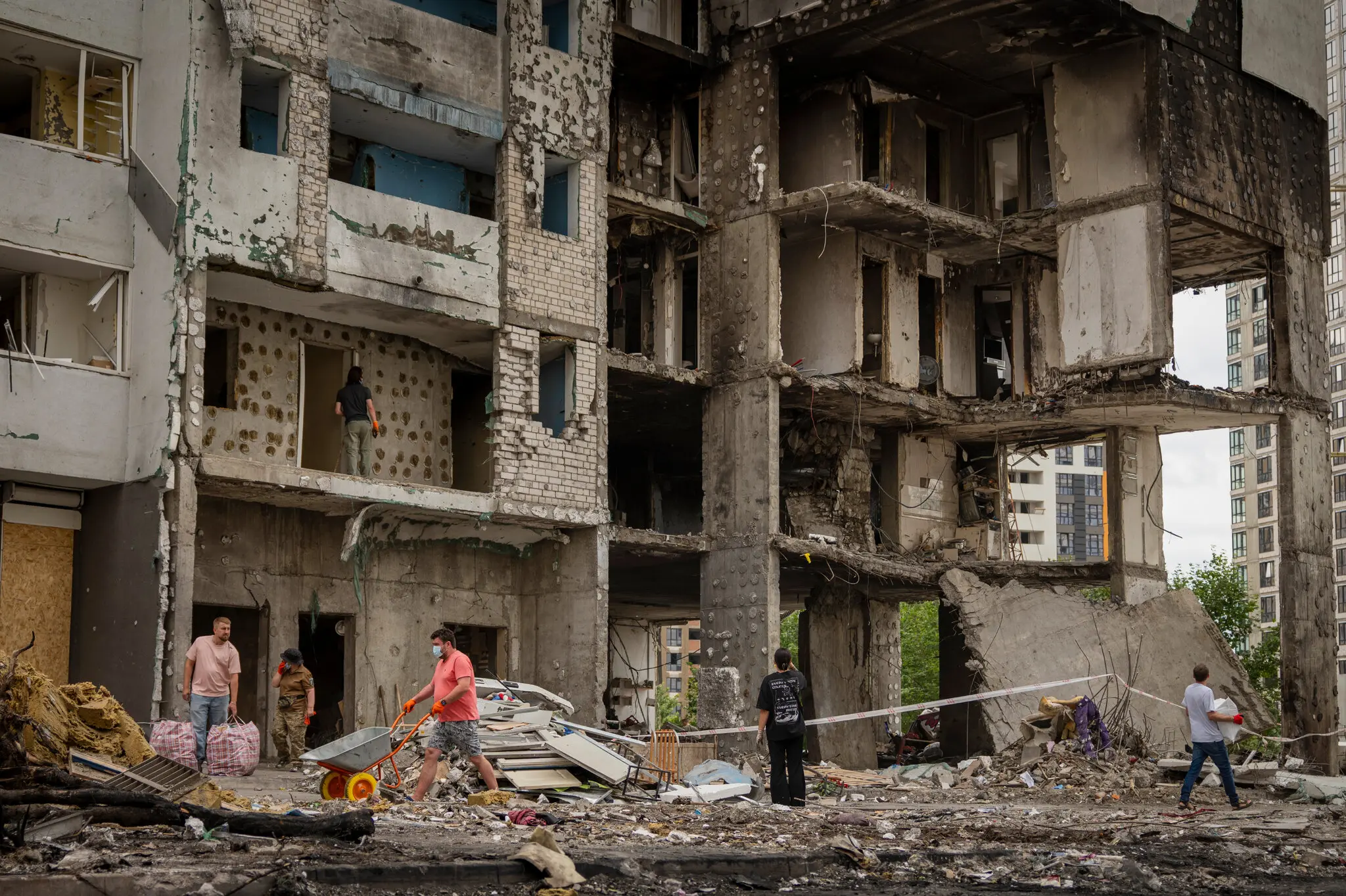
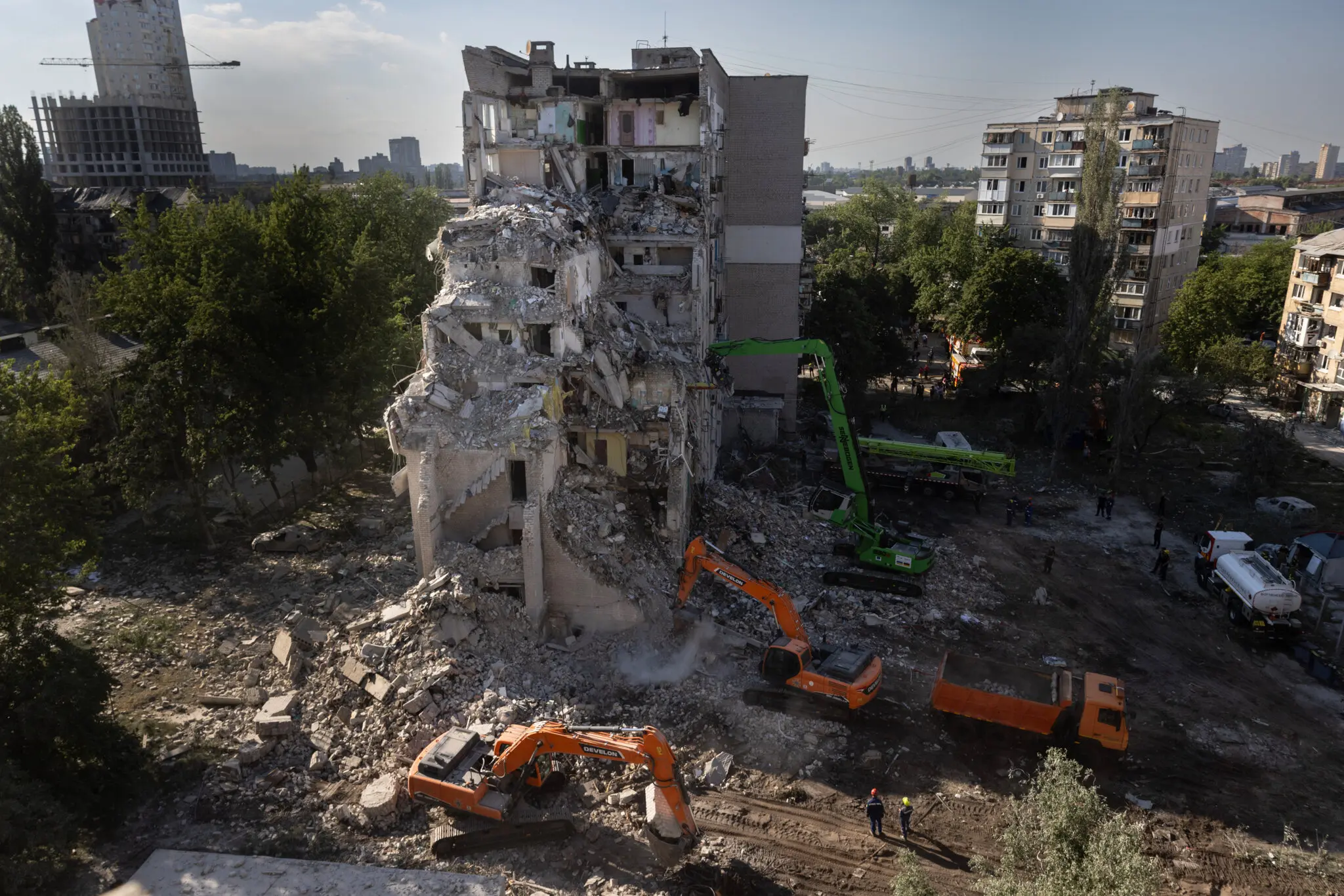
Another overnight attack on Kyiv confirmed the same trend. Ukraine intercepted only part of the ballistic salvo, while one missile destroyed an apartment building and buried people under rubble. This means Russia has found not merely a technical gap. It has found a political instrument of pressure on Ukraine and its allies.
A ballistic missile carries a particular psychology of war. It leaves little time between alarm and impact. It turns shelter into a matter of seconds. It changes the night life of a city because people understand that if the system has no interceptor, there may be almost no chance. That is why the Patriot shortage is not a military detail, but a direct factor in civilian security.
Since the start of the year, Russia has sharply increased its use of ballistic missiles. This is not an accidental choice, but a strategy. Moscow sees that drones can be shot down in large numbers, cruise missiles can be intercepted by other systems, and ballistic attacks force Ukraine to spend its scarcest resource. Russia is attacking not only cities, but the mathematics of Ukrainian defense itself.
Here, ingenuity has a ceiling. Ukrainians can learn to launch one interceptor instead of two, but they cannot endlessly reduce expenditure without increasing risk. One launch saves ammunition, but it also raises the danger. If the interceptor misses, there may be no second chance. Commanders work every day in a zone where mathematical economy borders on human tragedy.
This reality is also changing the role of the West. Patriot deliveries can no longer be treated as a separate item on a military aid list. They are a question of the tempo of the entire allied strategy. If Russia increases production of ballistic missiles faster than partners transfer interceptors, Ukraine loses not because it cannot defend itself, but because it lacks the ammunition for successful defense.
The global shortage makes the problem sharper. Patriot, and especially the advanced PAC-3 interceptor, is needed not only by Ukraine. The Middle East, the Persian Gulf, U.S. allies in Asia and Europe all now see missile defense as a new currency of security. But demand has grown faster than production lines.
Ukraine stands at the most acute point of this shortage. Other states are preparing for possible wars; Ukraine is spending interceptors in a real one. For Kyiv, each missile is not a reserve for the future, but an answer to tonight’s strike. That is why the slow flow of supplies through allied mechanisms no longer matches the intensity of Russian attacks.
This is the logic behind Volodymyr Zelenskyy’s demand for a license to produce Patriot systems in Ukraine. It is not only a desire for more systems. It is an attempt to escape a trap in which the country depends on other people’s stockpiles, queues and political cycles. If Ukraine cannot produce, or at least localize, part of the critical components, scarcity will remain a permanent lever of Russian pressure.
But a license would not be instant salvation either. Patriot is a complex network of technologies: radars, guidance systems, software, engines, warheads, precision components and quality control. Final assembly is not the central bottleneck. The real challenge is localizing the supply chain so that Ukraine genuinely produces protection rather than merely assembling imported parts.
That means the near-term strategy must be double. Ukraine needs urgent deliveries of interceptors now and a production agreement for the future. One without the other does not work. Deliveries alone leave Kyiv dependent. A license alone leaves cities exposed while future factories are still being built.
In this war, Ukraine has already become a laboratory for new air defense. It has shown how to combine expensive systems with cheaper tools, how to preserve interceptors, how to deceive enemy intelligence, how to move batteries and how to build layered protection under constant attack. But a laboratory cannot replace an arsenal.
Russia is learning too. It is increasing the number of ballistic missiles, combining strike systems, testing the saturation of Ukrainian defenses and searching for moments when shortages become deadly. This is no longer a war in which one technological advantage decides everything. It is a war of adaptations, where the side that changes faster and replenishes resources faster gains the edge.
That is why Ukraine’s Patriot experience is both proof of strength and a warning. It proves that well-trained crews can use a Western system more effectively than standard templates assumed. But it also proves that even the best system cannot function without enough missiles.
One Ukrainian commander’s phrase that these missiles are needed like air does not sound like emotional exaggeration. For cities under ballistic attack, it is literal reality. Air defense has become a condition for the country’s ability to breathe.
Ukraine has rewritten the rules for using Patriot, but Russia has changed the nature of its attacks. The question now is not whether Kyiv knows how to defend itself. It has proved that it does. The question is whether its allies can supply that skill with missiles, production and speed — without which the best tactics become only a way to delay the next strike.