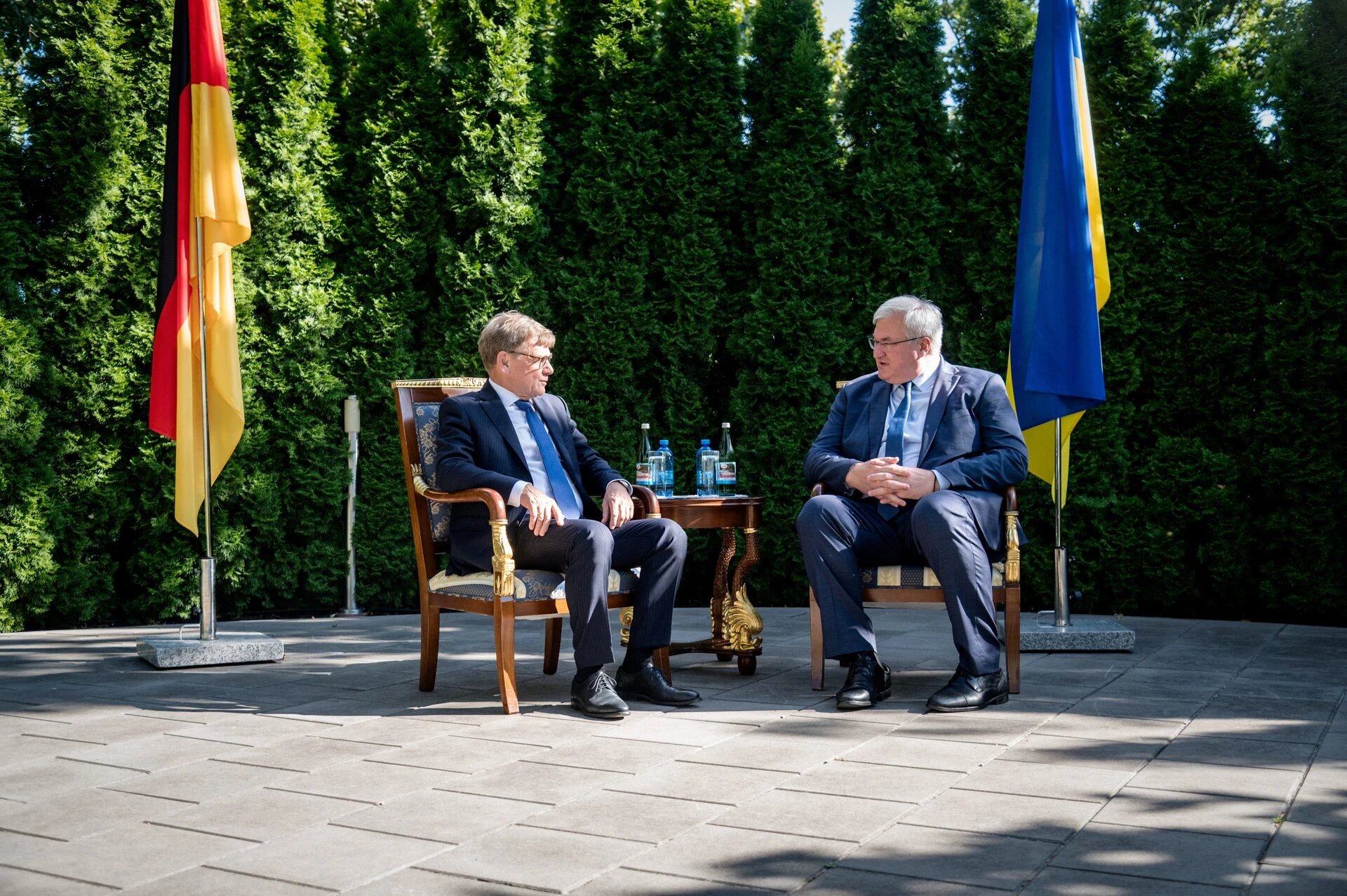

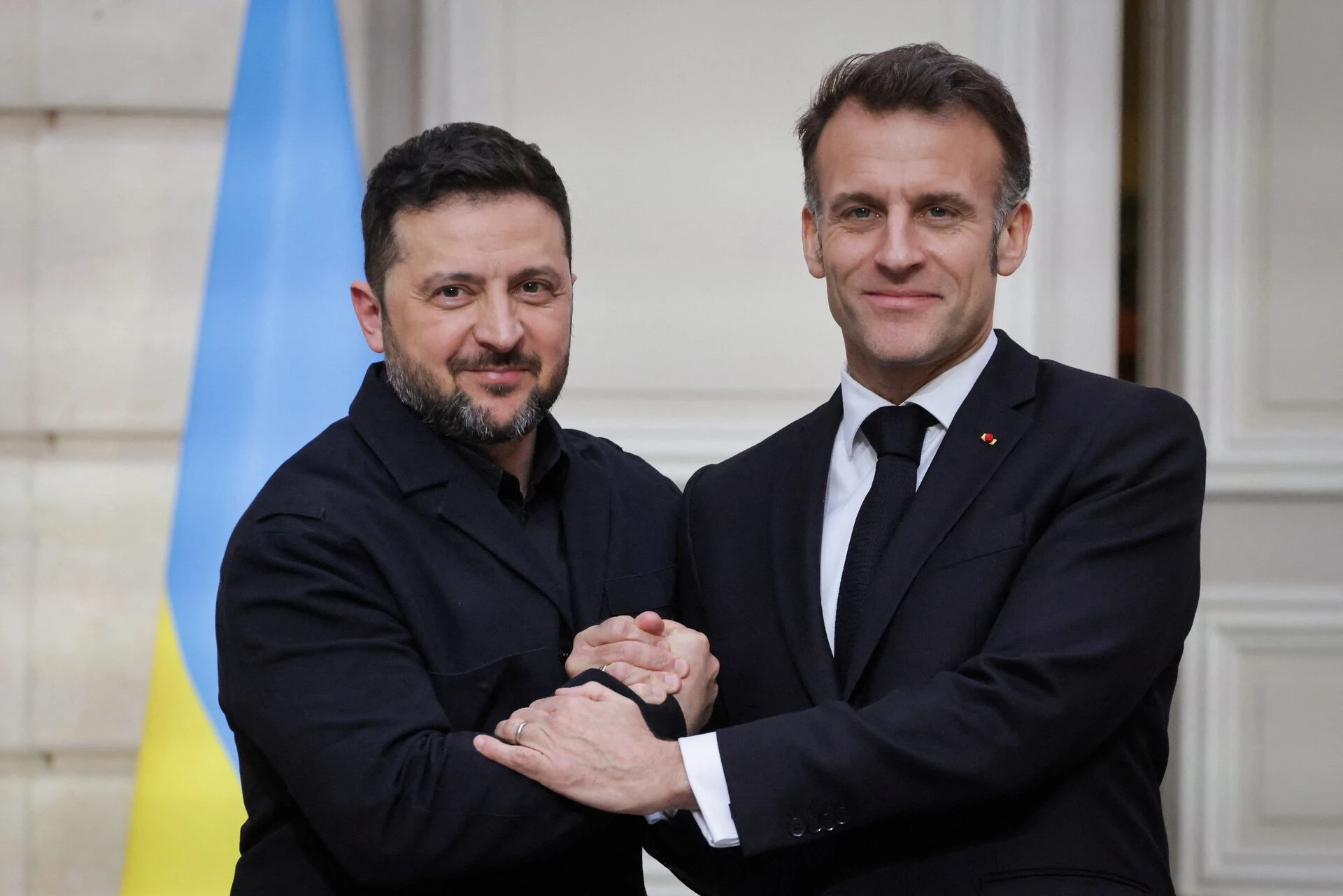





















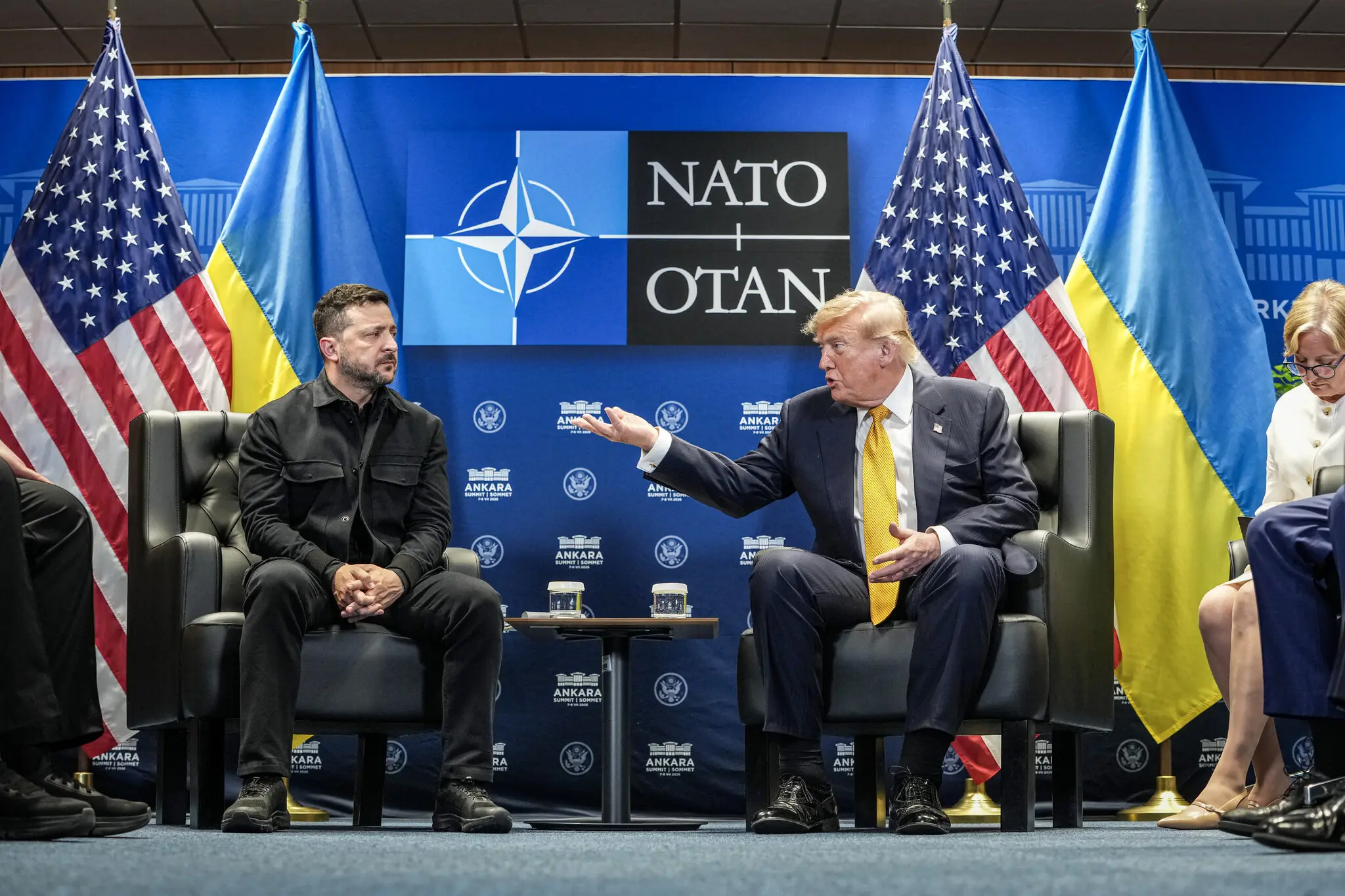
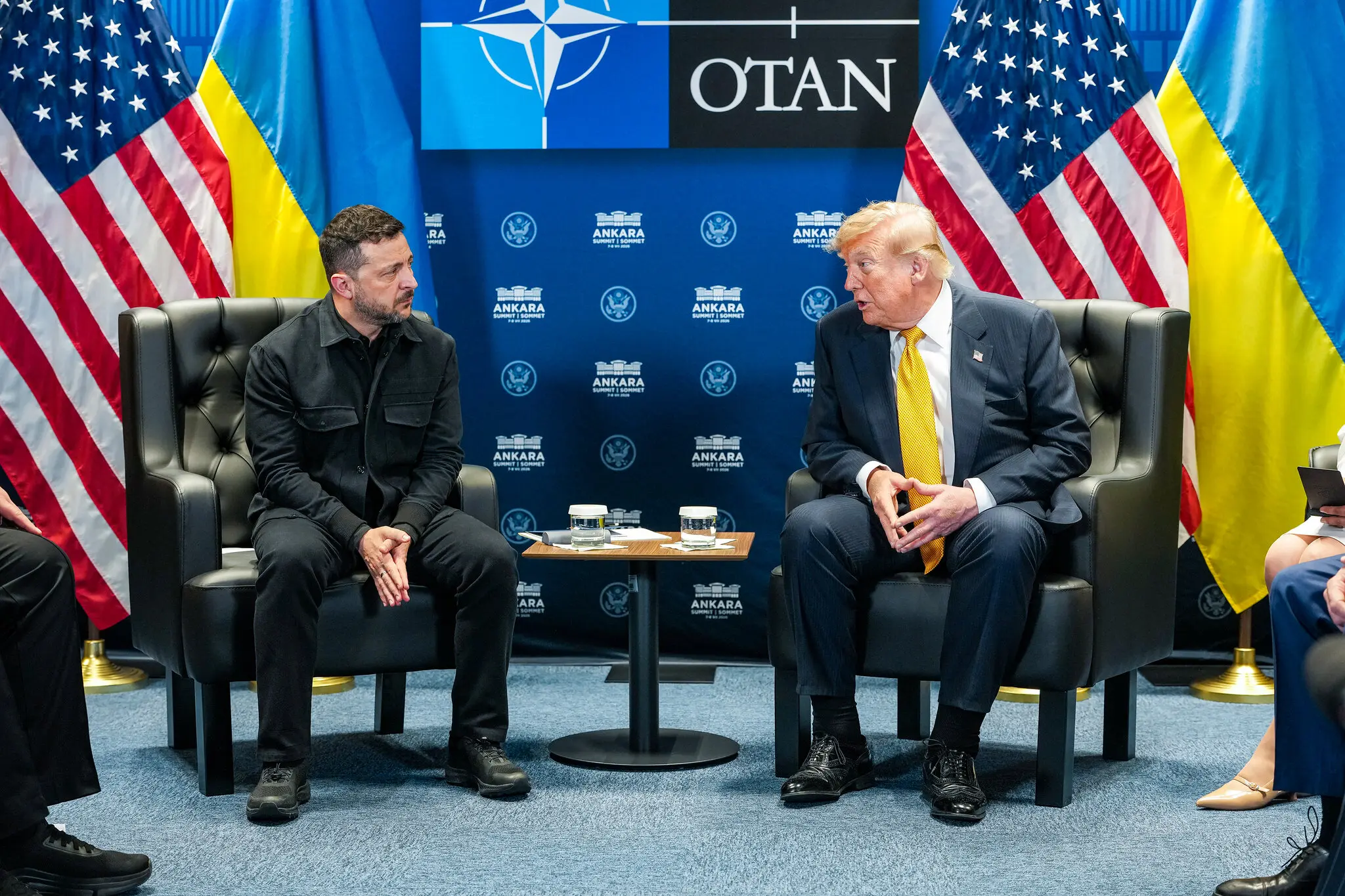
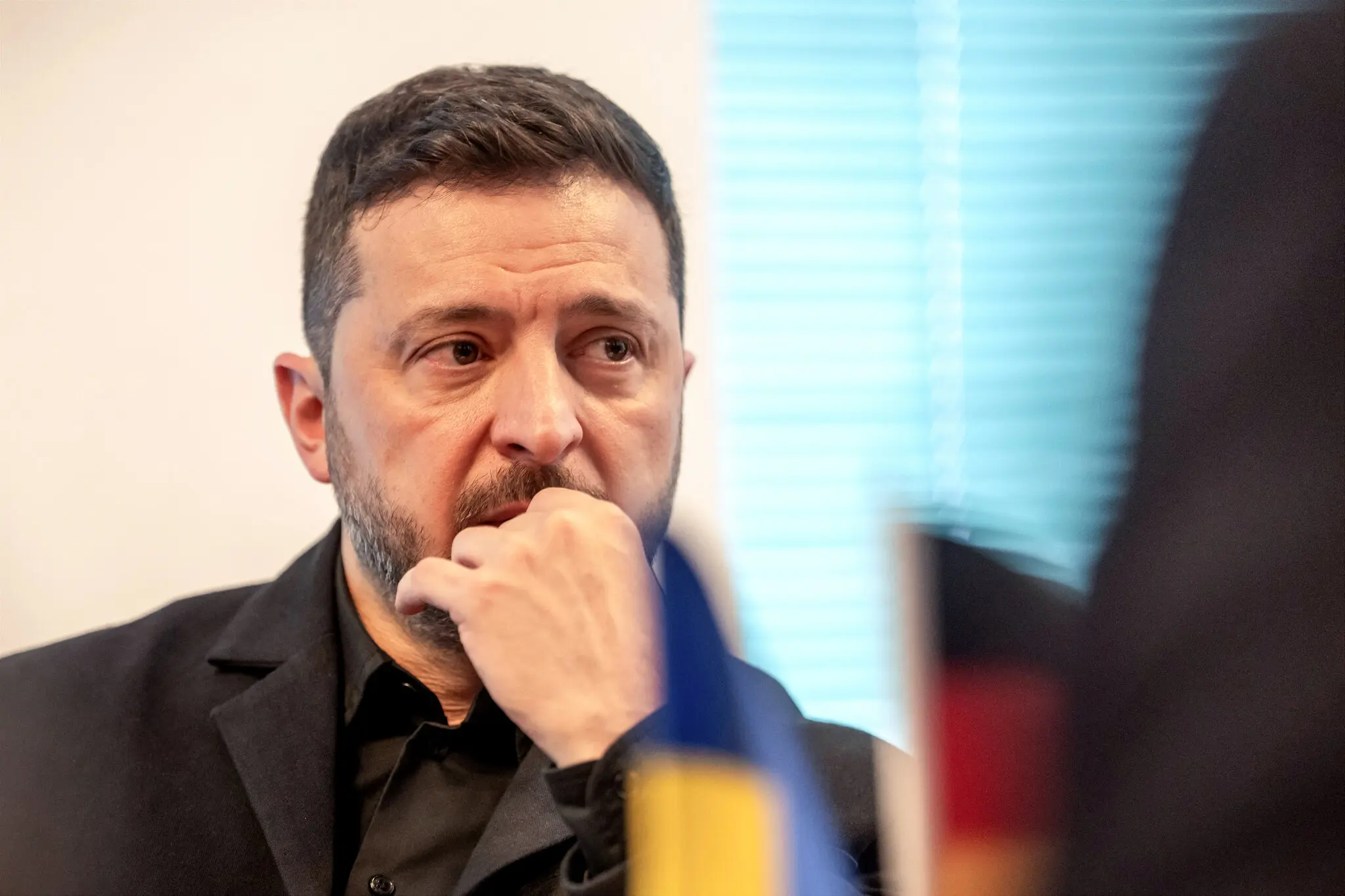
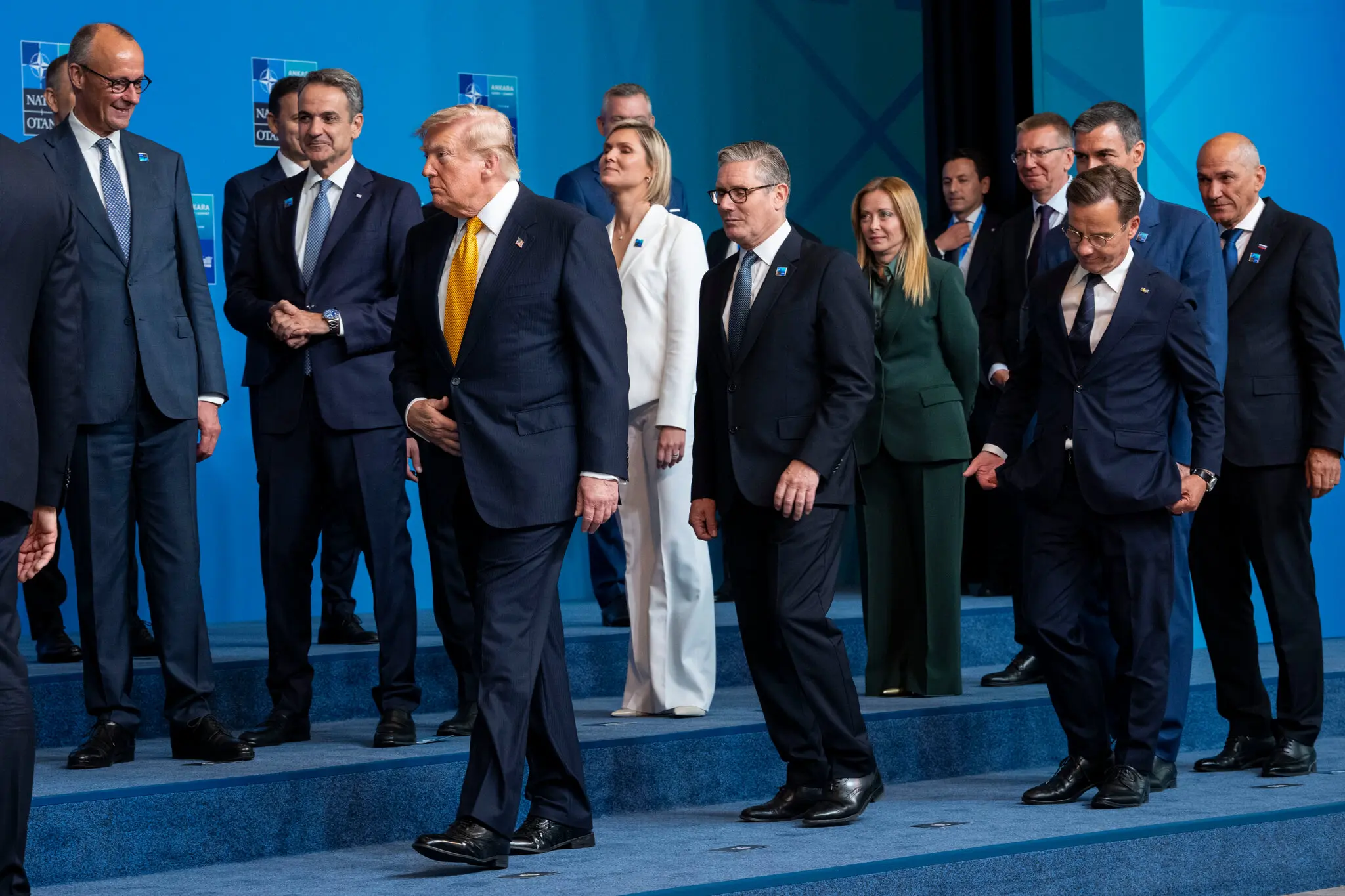
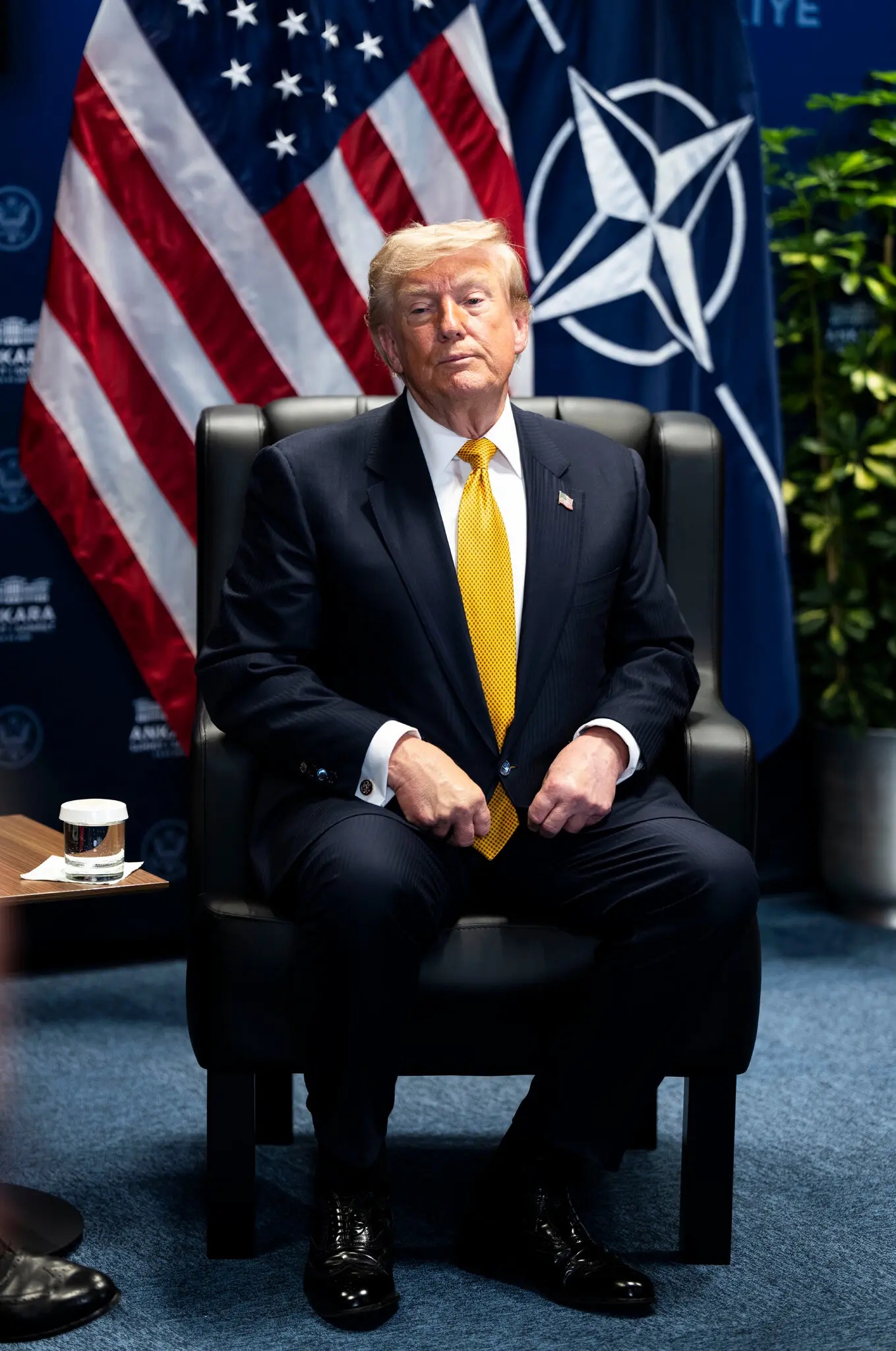
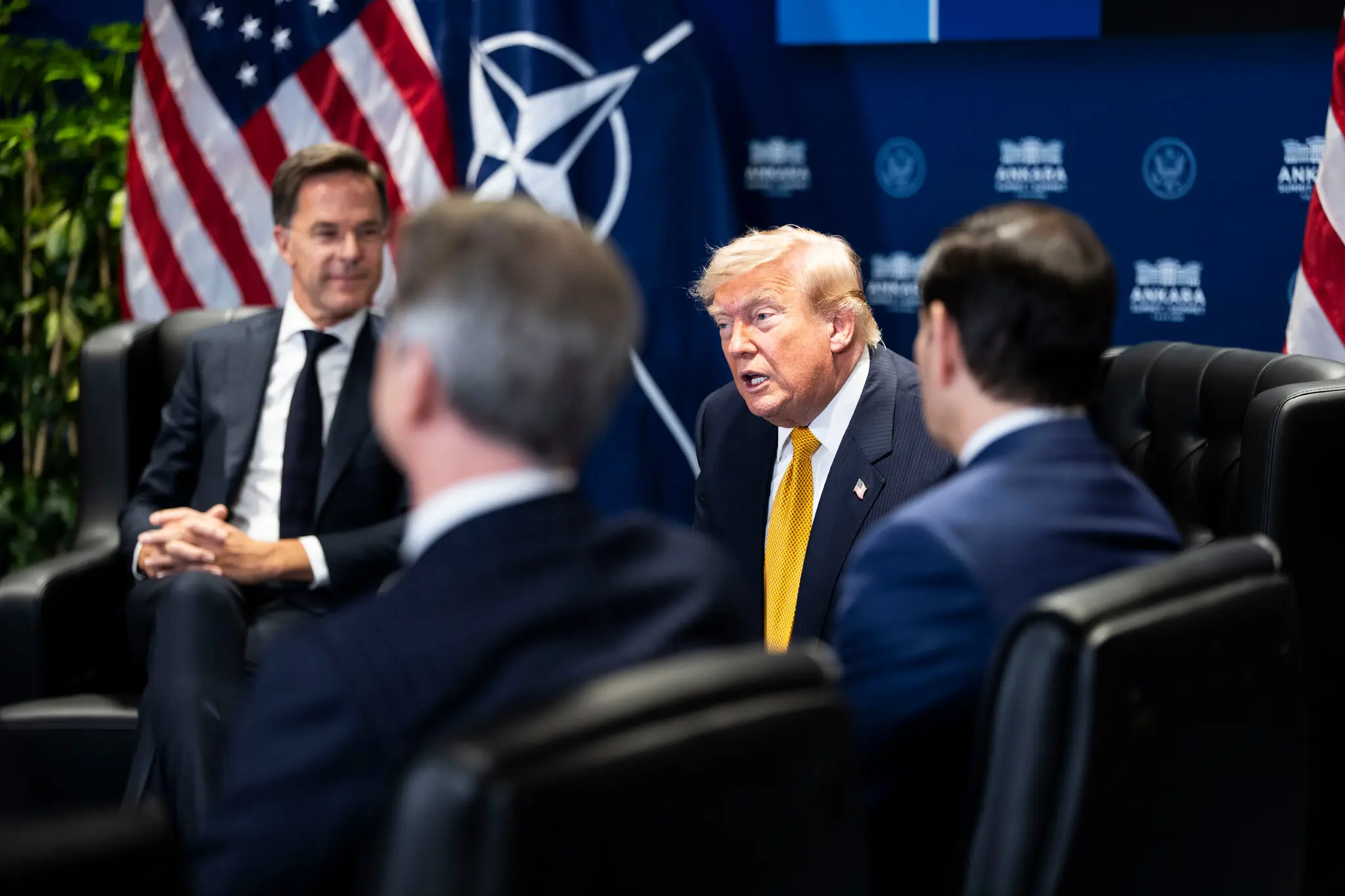
Volodymyr Zelenskyy arrived for his meeting with Donald Trump at the NATO summit in Turkey with an argument that needed no diplomatic translation. Behind it stood not formulas about future negotiations, but destroyed Kyiv apartment blocks, more than 50 people killed in a single week and a new wave of Russian attacks on Ukrainian cities.
The meeting took place at a moment when the war again revealed its central asymmetry. Ukraine can shoot down a significant share of drones, adapt its air defenses to mass attacks and search for vulnerable points in Russia’s rear. But against ballistic missiles, its protection remains critically limited.
On the eve of the meeting, Russia attacked Ukraine with 169 drones and seven missiles. Most of the drones were destroyed or suppressed, but some broke through the defenses. The most painful detail was that all seven ballistic missiles reached their targets. This was not a statistical accident, but a sign of a systemic gap.
Volodymyr Zelenskyy arrived for his meeting with Donald Trump at the NATO summit in Turkey with an argument that needed no diplomatic translation. Behind it stood not formulas about future negotiations, but destroyed Kyiv apartment blocks, more than 50 people killed in a single week and a new wave of Russian attacks on Ukrainian cities.
The meeting took place at a moment when the war again revealed its central asymmetry. Ukraine can shoot down a significant share of drones, adapt its air defenses to mass attacks and search for vulnerable points in Russia’s rear. But against ballistic missiles, its protection remains critically limited.
On the eve of the meeting, Russia attacked Ukraine with 169 drones and seven missiles. Most of the drones were destroyed or suppressed, but some broke through the defenses. The most painful detail was that all seven ballistic missiles reached their targets. This was not a statistical accident, but a sign of a systemic gap.
According to Daycom’s analysis, the meeting between Zelenskyy and Trump in Ankara was not merely an episode on the sidelines of the NATO summit. It became a test of whether the United States and its allies can distinguish political support for Ukraine from an actual military decision. For Kyiv, that difference is measured not in words, but in missiles intercepted or not intercepted.
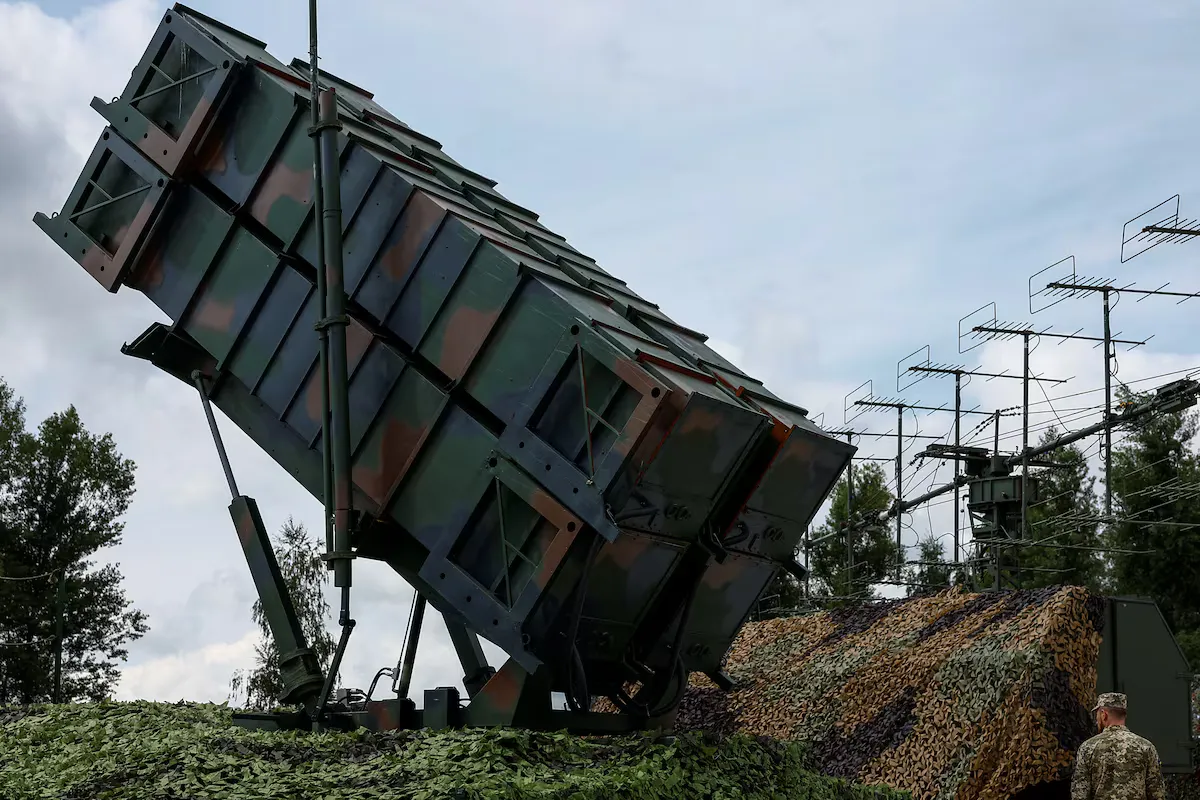
In this conversation, Patriot stopped being only the name of an American air defense system. It became a synonym for the survival of cities. Ukraine is not asking for an abstract strengthening of defense, but for a specific tool against weapons that travel faster than people can reach a shelter.
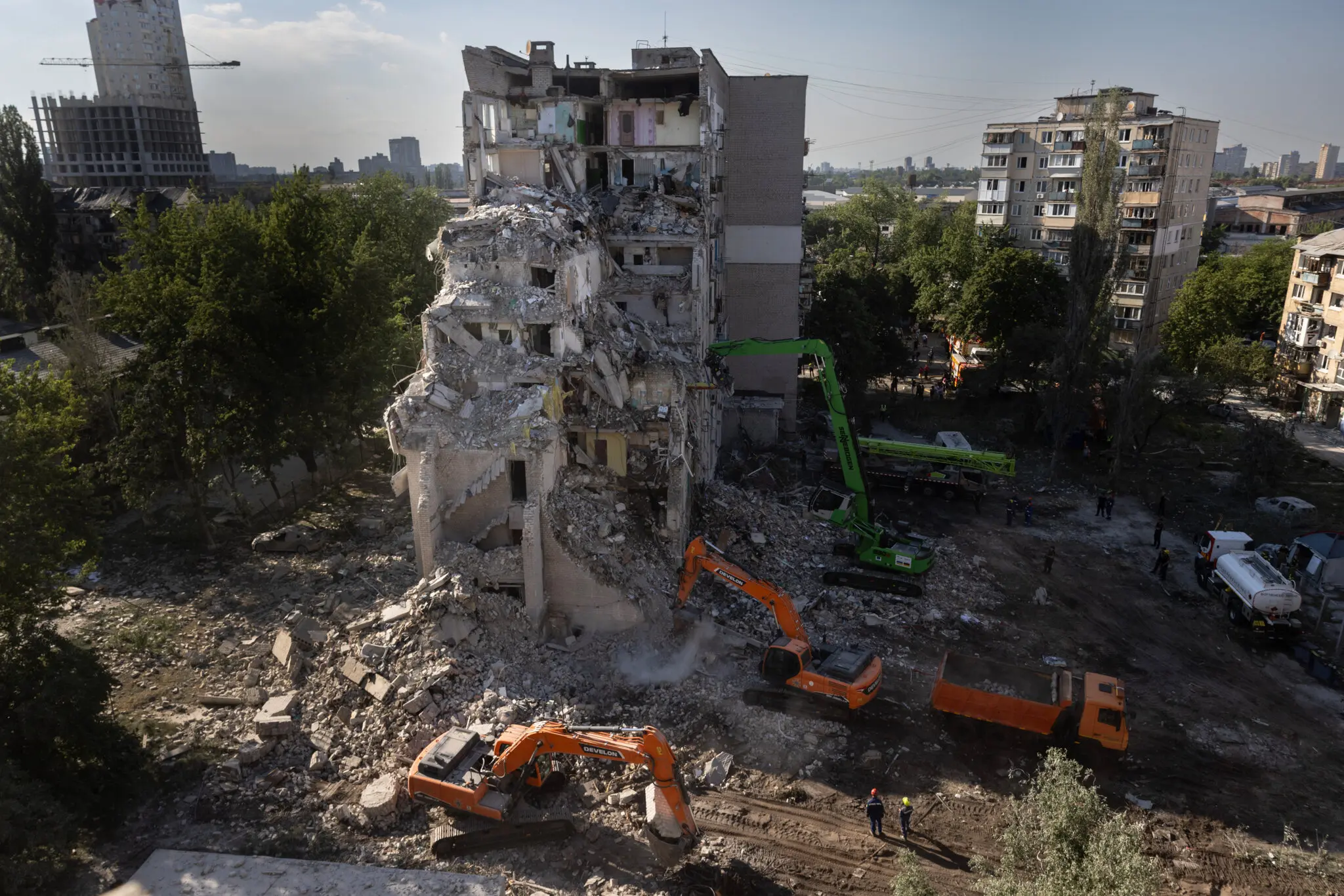
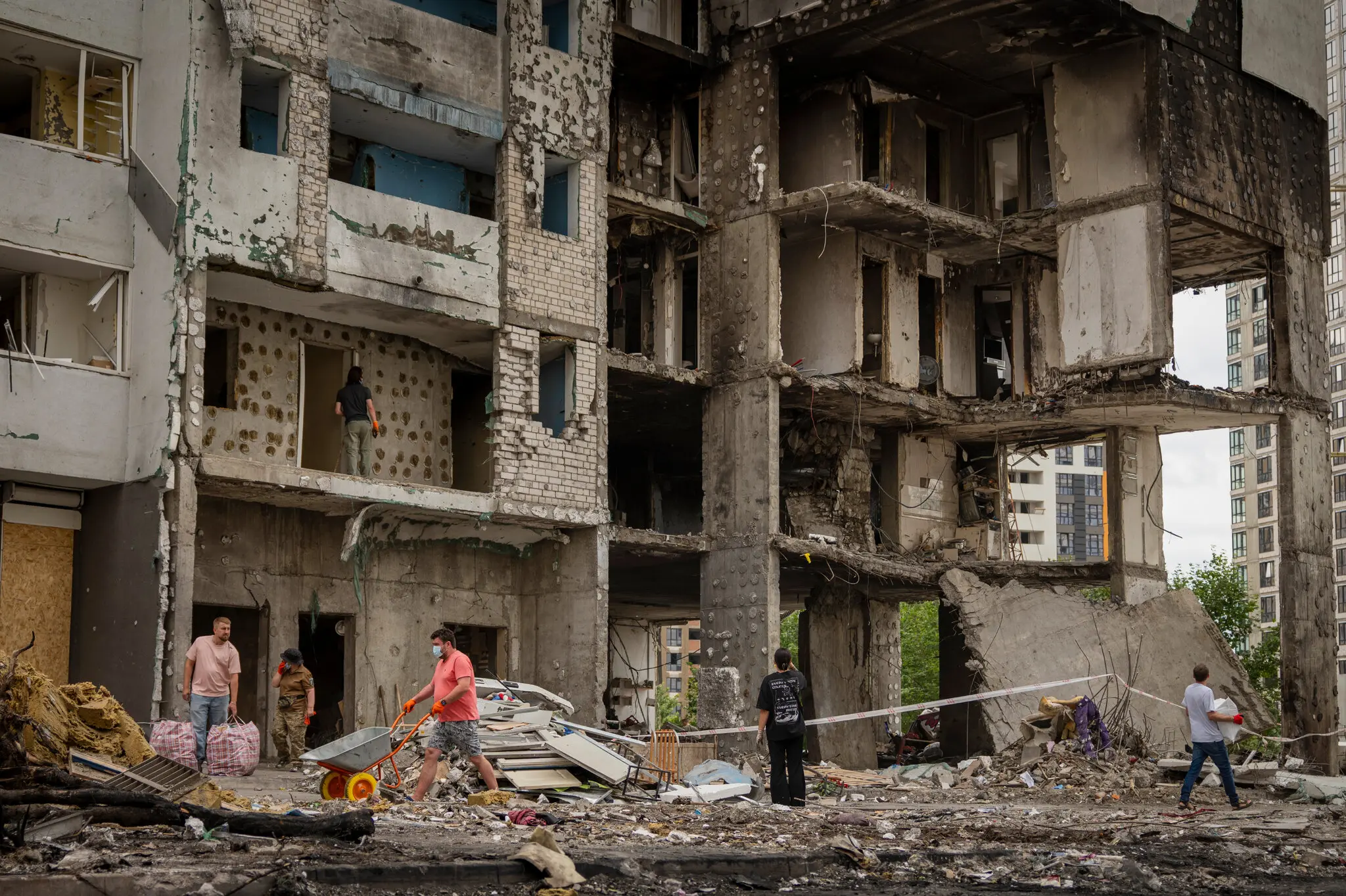
After the strike on Kyiv last Thursday, when 31 people were killed, rescuers spent two more days clearing the rubble of a partially collapsed nine-story building. It was not simply another episode of Russian terror. It was a scene that explained to Western capitals what a delay in supplying interceptors actually means.
On Monday, on the eve of the NATO summit, Russia struck the capital and the surrounding region again. The attack involved 351 drones and 68 missiles. None of the 23 ballistic missiles was intercepted. At least 19 people were killed. That number immediately changed the tone of the entire diplomacy in Ankara.
When Zelenskyy speaks with Trump about Patriot, he is not speaking only about an air defense system. He is speaking about whether Ukraine has the right to negotiate without standing under the ruins of its own cities. Without protected skies, any peace plan risks becoming not a path to ending the war, but a form of pressure on the victim of aggression.
Trump comes to this conversation with his own political formula: he wants to show that he can stop the war. But the Ukrainian experience destroys the temptation of quick solutions. A war does not end simply because the sides are brought to the table. It ends when the aggressor loses faith that force can take more than diplomacy.
That is why, for Zelenskyy, air defense is not an addition to negotiations, but their precondition. If Russia sees that ballistic missiles can pierce Ukraine’s defenses, it gains an incentive to strike more often. If those missiles begin falling before reaching their targets, the Kremlin loses one of its most effective instruments of psychological and political pressure.
This is the strategic weight of Patriot. It is not only the defense of a specific district or city. It is a change in Moscow’s calculation. Every intercepted ballistic missile reduces Russia’s ability to dictate the tempo of the war through fear. Every missile that gets through, by contrast, strengthens the Kremlin’s illusion that Ukraine can be worn down by attacks on civilian life.
Russia is trying to present its latest strikes as a response to Ukrainian attacks on its territory. But that logic reverses cause and effect. Ukraine’s long-range campaign did not emerge in a vacuum. It is a response to years of Russian bombardment, occupation, destruction of energy infrastructure and attacks on cities.
Ukraine is carrying the war into Russia’s rear not for symbolic revenge, but to change the price of aggression. Strikes on the Saratov region, Tatarstan and Bashkortostan fit into a wider strategy: to disrupt military production, oil refining, logistics and regional infrastructure that feeds Russia’s war machine.
For Moscow, this is painful not only materially, but politically. The war that the Kremlin tried for years to keep in a televised format is increasingly reaching Russian regions. Drones over industrial centers and fuel facilities undermine the central domestic contract of Vladimir Putin’s system: the front is far away, the state controls the risks, and ordinary life continues.
That is why Russia responds with demonstrative brutality against Ukrainian cities. It is not only punishing Ukraine for trying to carry the war deeper into Russia. It is trying to show its own society and the West that every Ukrainian success will carry a price for civilians. This is blackmail dressed as military strategy.
The tragedy in Kyiv over the past week brought that logic to the surface. Ballistic missiles are not flying at factory workshops or command posts, but at residential neighborhoods where people wake to sirens, search for their children, run into corridors or remain in bed because the explosion may be only minutes away.
It is inside those minutes that the real politics of Western assistance exists. For allies, the question is no longer whether to support Ukraine. That was the answer of the previous phase. The question now is whether they are ready to support it at the tempo of the war, not at the tempo of their own procedures, budget cycles and internal compromises.
The shortage of Patriot systems and interceptors exposes the weak point of the entire architecture of support. The West has the technology, resources, production base and political experience. But Russia often gains an advantage not through the quality of its weapons, but through the speed with which it applies violence. It strikes while partners’ decisions are still being coordinated.
For Ukraine, that means every pause in deliveries becomes an operational window for Moscow. Every month without additional air defense systems is not merely diplomatic delay. It is a series of nights in which Russian ballistic missiles test how much a city can endure without sufficient cover.
For Trump, the meeting with Zelenskyy became a moment in which his peace rhetoric had to be tested against the material reality of war. It is impossible to speak about ending the conflict without answering the question of what to do about missiles that are killing people tonight. Peace without defensive strength becomes a pause imposed on the weaker side.
This is especially important because the Kremlin has shown no readiness to abandon its maximalist demands. Russia continues to demand territories it has failed to capture and at the same time attacks Ukraine’s civilian infrastructure. Such behavior does not look like preparation for compromise. It looks like an attempt to make Ukraine more vulnerable before negotiations.
If Washington wants real influence over the course of the war, it needs not only mediation, but leverage. In Ukraine’s case, that leverage is the ability to deprive Russia of its advantage in aerial terror. That is why Patriot is not a technical subject for military experts, but a first-order political question.
Ankara also showed something else: NATO can no longer treat Ukraine’s air defense as a separate Ukrainian request. It is a question of European security. If Russia learns to systematically break through Ukraine’s sky, it will acquire a model of pressure that could be scaled to other directions — from the Black Sea to the Alliance’s eastern flank.
Western capitals often speak about the need to prevent the war from expanding. But deterrence begins not with statements, but with whether a missile is intercepted before it destroys a home. Ukraine’s sky today is the place where not only Kyiv’s defense is being tested, but also trust in the entire system of allied guarantees.
In this context, Ukraine’s long-range strikes on Russia and its request for Patriot systems do not contradict each other. They are two parts of one strategy. The first carries the cost of war onto the aggressor. The second reduces the aggressor’s ability to punish Ukrainian society for resisting. Without both elements, the balance remains dangerous.
Zelenskyy did not come to Trump to ask for sympathy. Sympathy after destroyed homes changes nothing. He needs a decision that alters Russia’s calculation before the next attack. In this sense, the meeting in Ankara became a conversation about time: who will act faster — the allies or Russian launch systems.
Trump, in turn, received a chance to show that his approach to the war is not reduced to pressuring Ukraine for the sake of a quick deal. If the United States helps close the ballistic gap, it will strengthen Kyiv’s position at any negotiating table. If not, Moscow will read that as permission to continue its nightly pressure.
After a week in which Kyiv again buried the dead and cleared rubble, the meeting between Zelenskyy and Trump is no longer an ordinary diplomatic episode. It has become a test of American resolve and Western speed. Not in speeches, declarations or general words about peace, but in the willingness to give Ukraine what can stop missiles before they hit human homes.













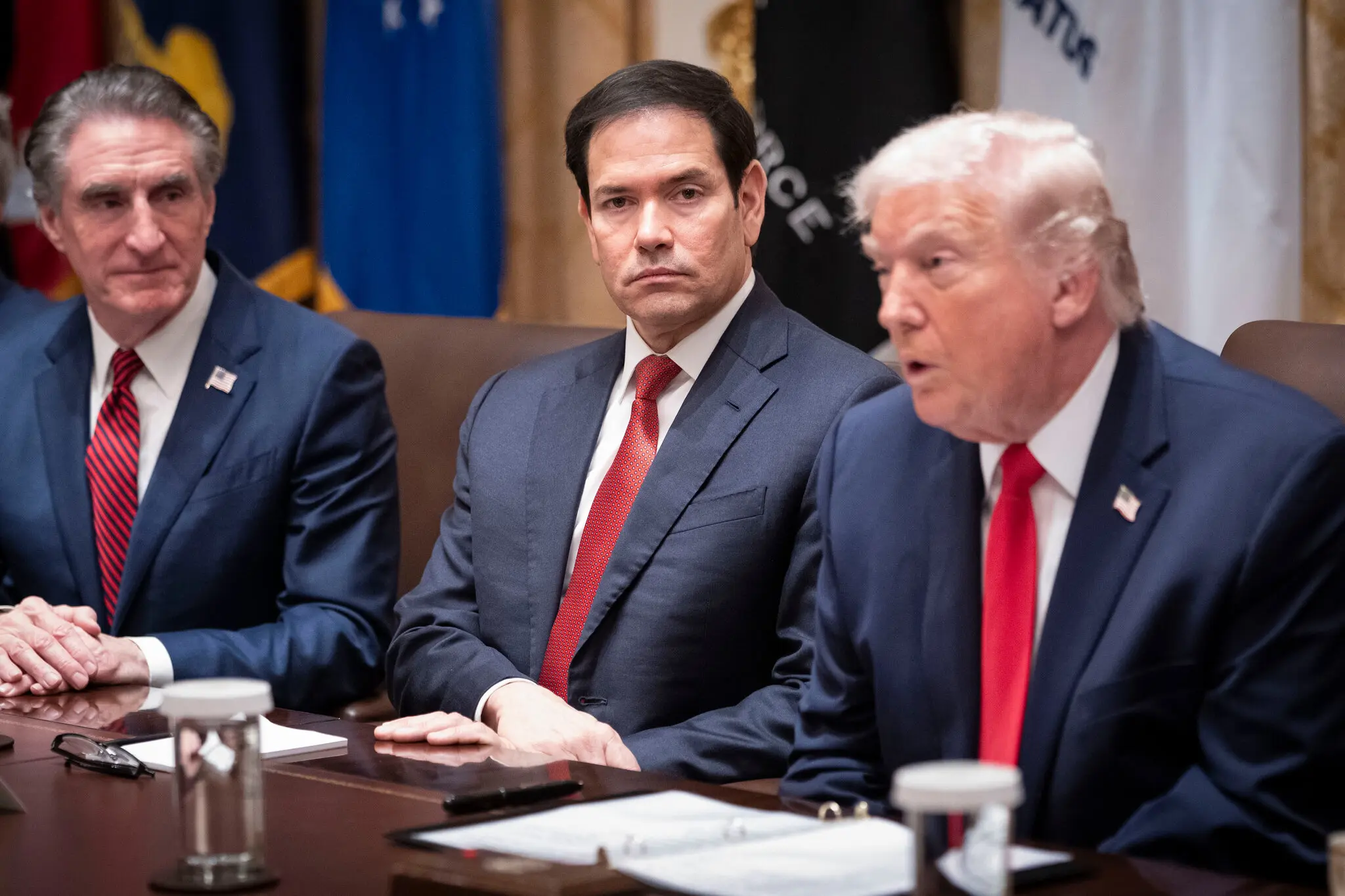


 Президент США Трамп звернувся до нації з Білого дому в середу — Даг Міллс
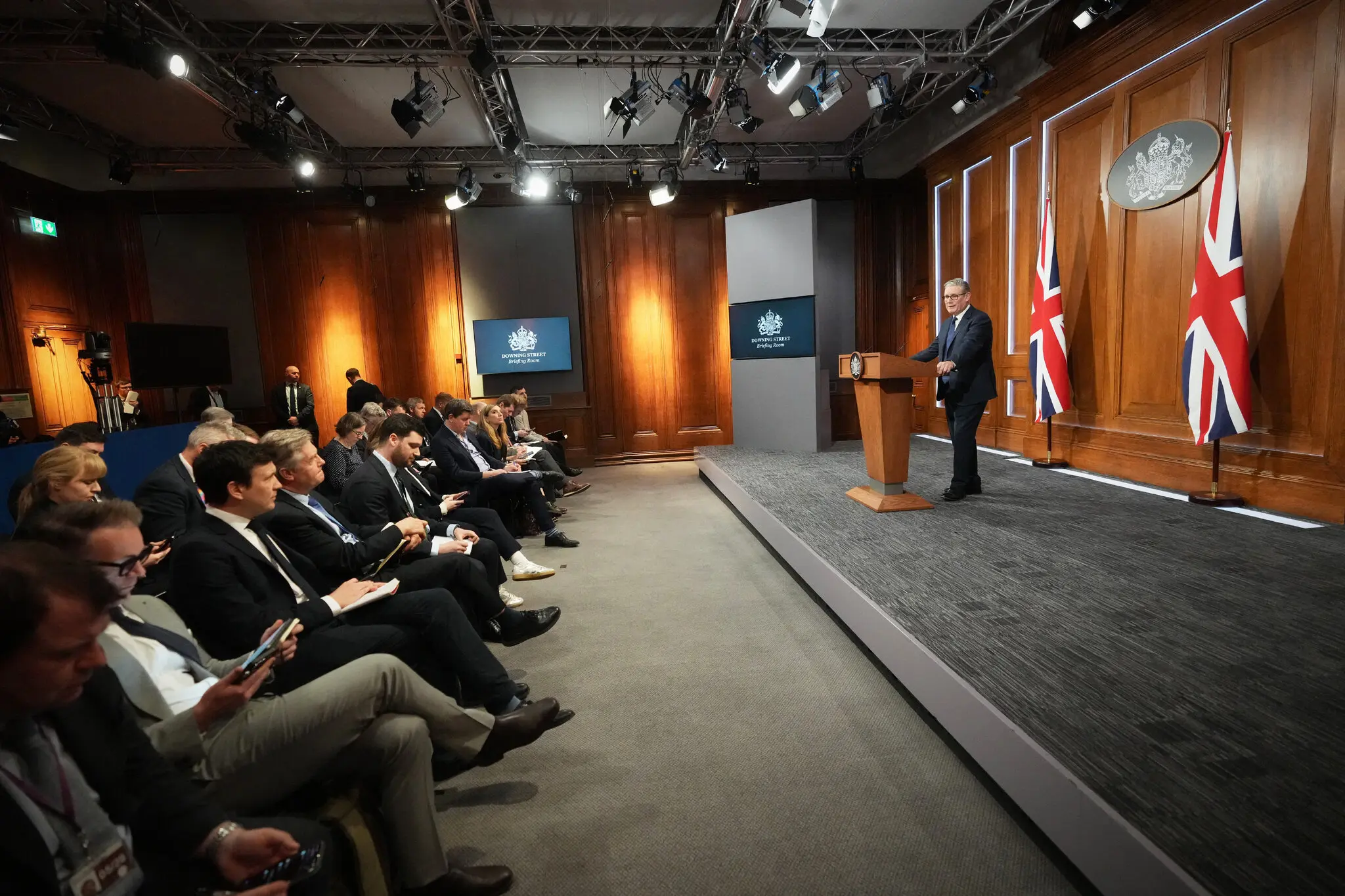 Прем'єр-міністр Великої Британії Кір Стармер у середу в Лондоні. Він заявив, що його країна повинна тісніше співпрацювати з Європою — Френк Аугштайн