





















Ukraine is entering a new phase of the war, one in which drones are no longer only weapons on the front line but also a language of international politics. What began as forced technological adaptation under Russian pressure is becoming a tool of diplomacy, export strategy and alliance-building.
Volodymyr Zelensky is increasingly offering partners not only Ukraine’s need for support, but Ukraine’s usefulness. Kyiv’s message is clear: a country that has spent years resisting Russia’s mass attacks has accumulated combat experience that most armies do not possess.
That argument has gained force after the escalation in the Middle East, where Iranian drones and missiles again showed how deeply modern warfare now depends on cheap strike systems, fast air defense, electronic warfare and trained operators.
Daycom’s earlier analysis treated Ukraine’s drone diplomacy as a shift in role: Kyiv no longer wants to be only a recipient of weapons. It is trying to become a provider of solutions — for Europe, the Middle East and states that see drones as one of the defining security threats of the next decade.
This strategy became especially visible in recent weeks. Ukraine has deepened defense cooperation with Gulf states, then expanded the drone track in contacts with Germany, Norway and the Netherlands. These agreements are no longer symbolic gestures; they involve production, investment and the exchange of battlefield expertise.
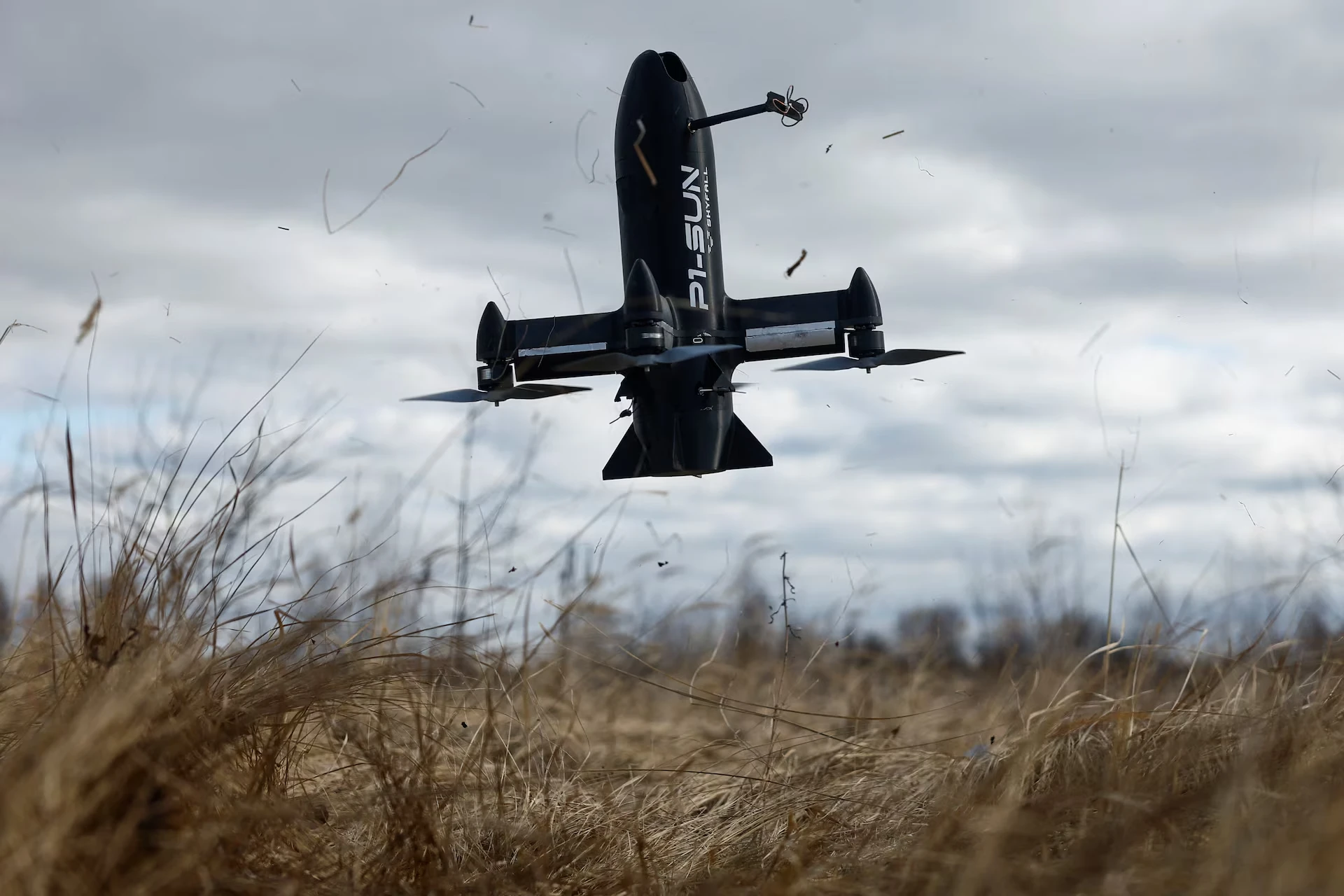 Дрон-перехоплювач P1-Sun FPV злітає під час випробувального польоту на полігоні в умовах російської агресії проти України, в невідомому місці, Україна, 6 березня 2026 року — Валентин Огіренко
The German package is the clearest example. Berlin and Kyiv agreed on a major defense program that includes Patriot supplies, air defense development, drones and industrial projects. For Ukraine, this is not just assistance. It is a way to embed itself in Europe’s defense architecture as an active participant.
The Dutch track carries a different value. It shows that Ukrainian drones are becoming the subject not of one-off purchases, but of industrial cooperation. Joint development and production involving companies from both countries are meant to turn Ukraine’s wartime experience into a scalable defense product.
The Middle East has opened an even wider field for Kyiv. After Iran’s attacks, regional governments began studying Ukrainian methods for countering Shahed-type drones: not only with expensive missiles, but through layers of cheaper tools — interceptors, machine-gun teams, radars, electronic warfare and tactical coordination.
This is where Ukraine’s experience has its highest diplomatic value. Patriot systems remain critical against ballistic missiles, but it is not economically rational to shoot down every cheap drone with an expensive interceptor. Ukraine has learned to build defenses where budgets, time and mass attacks leave no perfect options.
That does not mean Kyiv already has a finished export machine. On the contrary, the main problem is no longer demand, but the state’s ability to organize supply. Ukrainian manufacturers say they have spare capacity, while export controls have long remained a bottleneck for the defense sector.
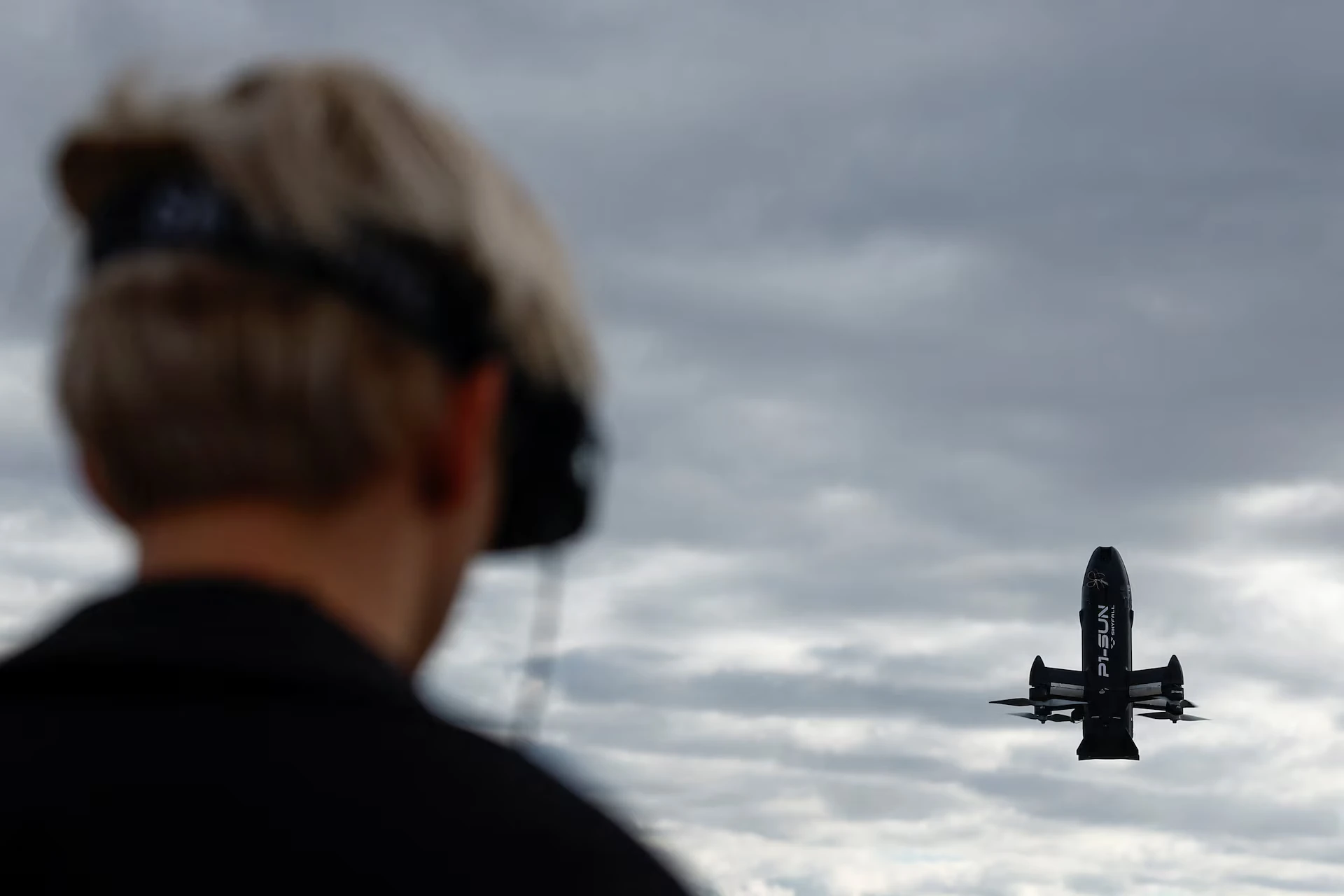 Співробітник компанії SkyFall керує безпілотником-перехоплювачем P1-Sun FPV під час випробувального польоту на полігоні, на тлі російського вторгнення в Україну, в невідомому місці, Україна, 6 березня 2026 року — Валентин Огіренко
Zelensky has acknowledged the issue directly: in some areas, Ukraine’s defense industry has up to 50 percent unused capacity, and arms exports must become a reality. At the same time, the army must retain priority for everything the front still needs.
This is a delicate balance. If Ukraine opens exports too broadly, it will face a political question: why weapons are going abroad while the front still needs drones, ammunition and air defense. If exports remain blocked, manufacturers will lose capital, scale and the chance to secure a place in the global market.
The second problem is technology protection. The most valuable part of Ukraine’s drone capability is often not the airframe or a single circuit board, but the process: rapid updates, field feedback, tactics, operator training and the integration of drones with electronic warfare and reconnaissance.
That is exactly what Russia will try to copy. Kyiv therefore has to sell its experience carefully. Partners want Ukrainian interceptor drones, FPV solutions, naval drones, strike systems and software. But excessive disclosure of tactics could quickly reduce the advantage Ukraine has earned at such high cost.
The third challenge is technological limits. Ukraine’s advantage is built largely on flexibility, scale and operator skill. That works well against many propeller-driven drones, but becomes harder against jet-powered targets, faster strike systems and the next generation of autonomous interceptors.
 Юрій, військовослужбовець підрозділу протиповітряної оборони 420-го окремого батальйону безпілотних систем «Хорт», готується до польоту безпілотника-перехоплювача P1-Sun FPV під час бойової зміни під час нападу Росії на Україну, Харківська область, Україна, 17 березня 2026 року — Валентин Огіренко
The global market will not wait. European companies are already developing autonomous counter-drone systems, while the United States and its allies are accelerating their own programs. If Ukraine wants to retain its edge, it must move from wartime improvisation to industrial standards, certification, servicing and long-term contracts.
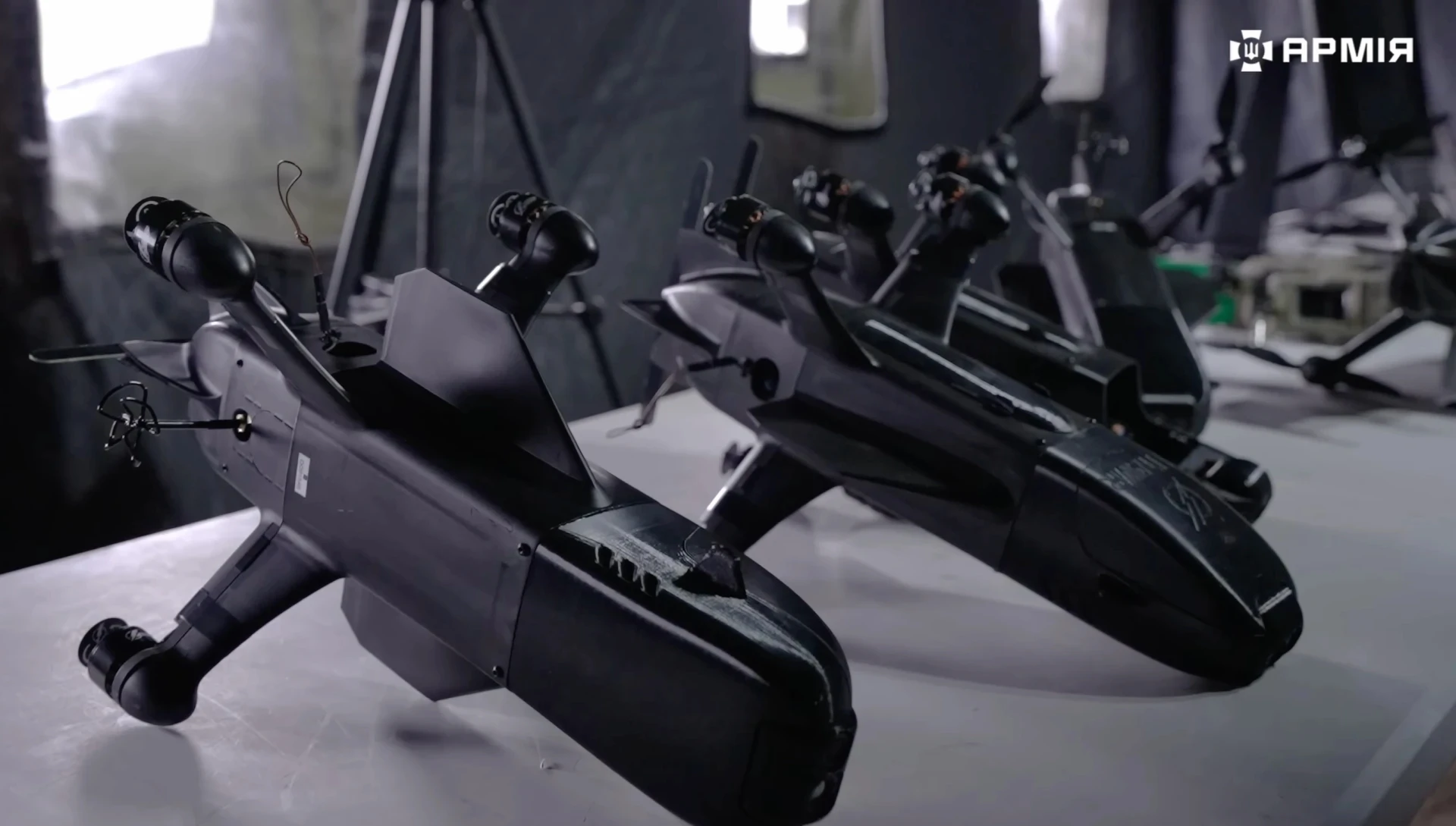
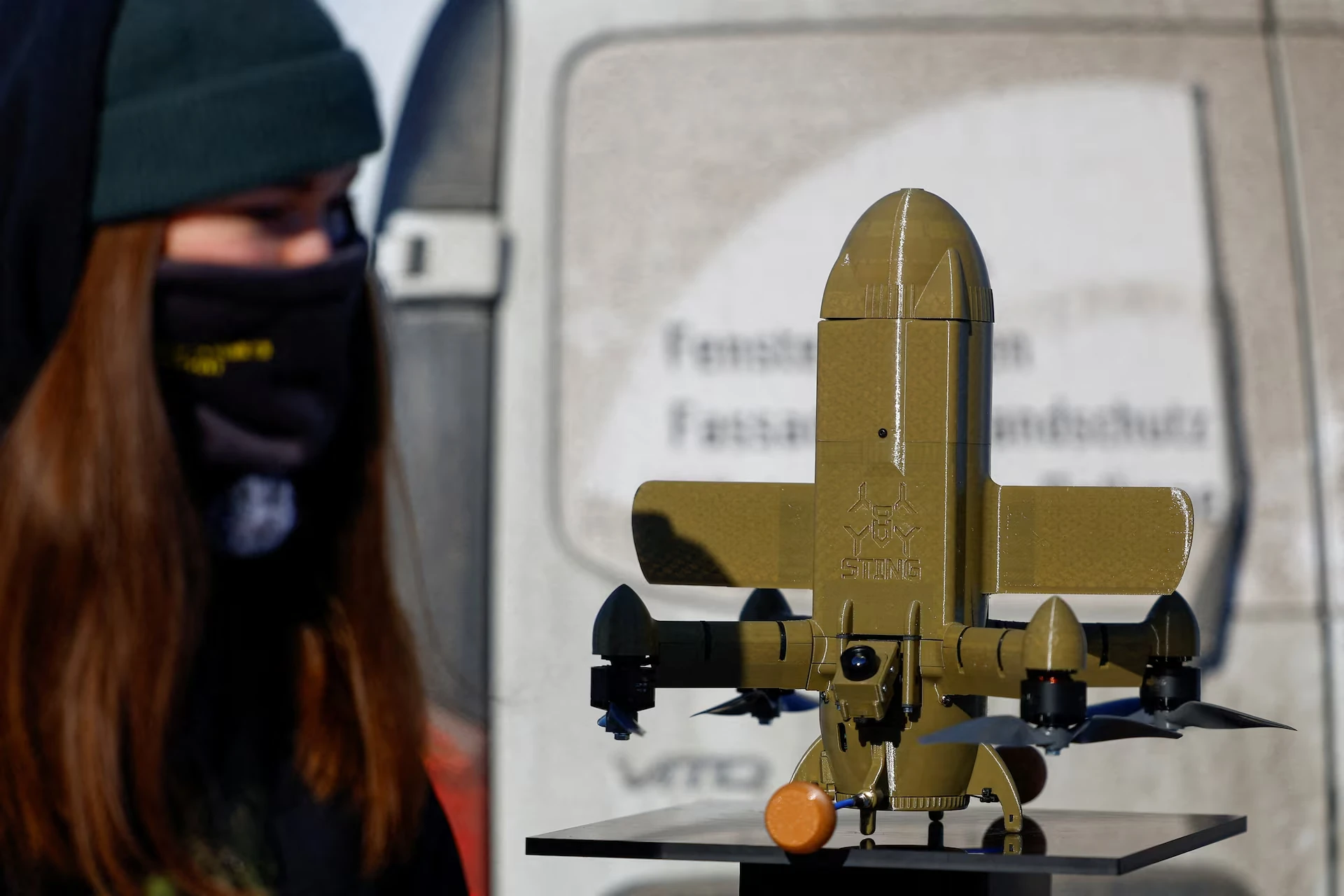
The potential remains substantial. Ukraine’s defense industry already covers a wide range of systems, from FPV and reconnaissance drones to long-range strike platforms, drone-missiles, electronic warfare and ground robotic systems. These tools were not designed in quiet laboratories, but under constant battlefield testing.
Kyiv has previously estimated its defense production potential in the tens of billions of dollars, including the ability to manufacture millions of drones a year if financing is available. That explains why arms exports are not only diplomacy for Ukraine, but also a possible economic model for the future.
Drone diplomacy also has an energy dimension. For contacts with Gulf states, security and technology are only part of the package. Energy supplies, investment and markets for Ukrainian agricultural exports also matter. Kyiv is trying to combine military expertise with a broader offer of mutual benefit.
There is another calculation beneath this strategy: dependence on Washington can no longer be Ukraine’s only pillar. Kyiv is not abandoning the American track, but it is looking for additional centers of support — in Europe, the Middle East and among states that have faced the danger of drones and missiles themselves.
 Військовослужбовці підрозділу протиповітряної оборони 420-го окремого батальйону безпілотних систем «Хорт» літають з безпілотником-перехоплювачем P1-Sun FPV під час бойової зміни під час нападу Росії на Україну в Харківській області, Україна, 18 березня 2026 року — Валентин Огіренко
The hardest layer remains missile defense. Ukraine is learning to counter drones more cheaply and flexibly, but ballistic missiles require systems of another class. That is why Patriots, European missile defense and Ukraine’s own anti-ballistic solutions have become matters not of prestige, but of survival.
Drone diplomacy has already brought Ukraine new partners and new agreements. But now comes the stage where reputation is not enough. Kyiv needs deliveries, quality control, export rules, protection of its intellectual edge, training centers, servicing and industrial scale.
Ukraine has turned weakness into advantage: the shortage of expensive systems forced it to create cheaper, faster and more numerous solutions. Now that advantage faces a different test — not on the front line, but at the level of the state. The winner will not be the country that first improvised drone warfare, but the one that turns its experience into a system.