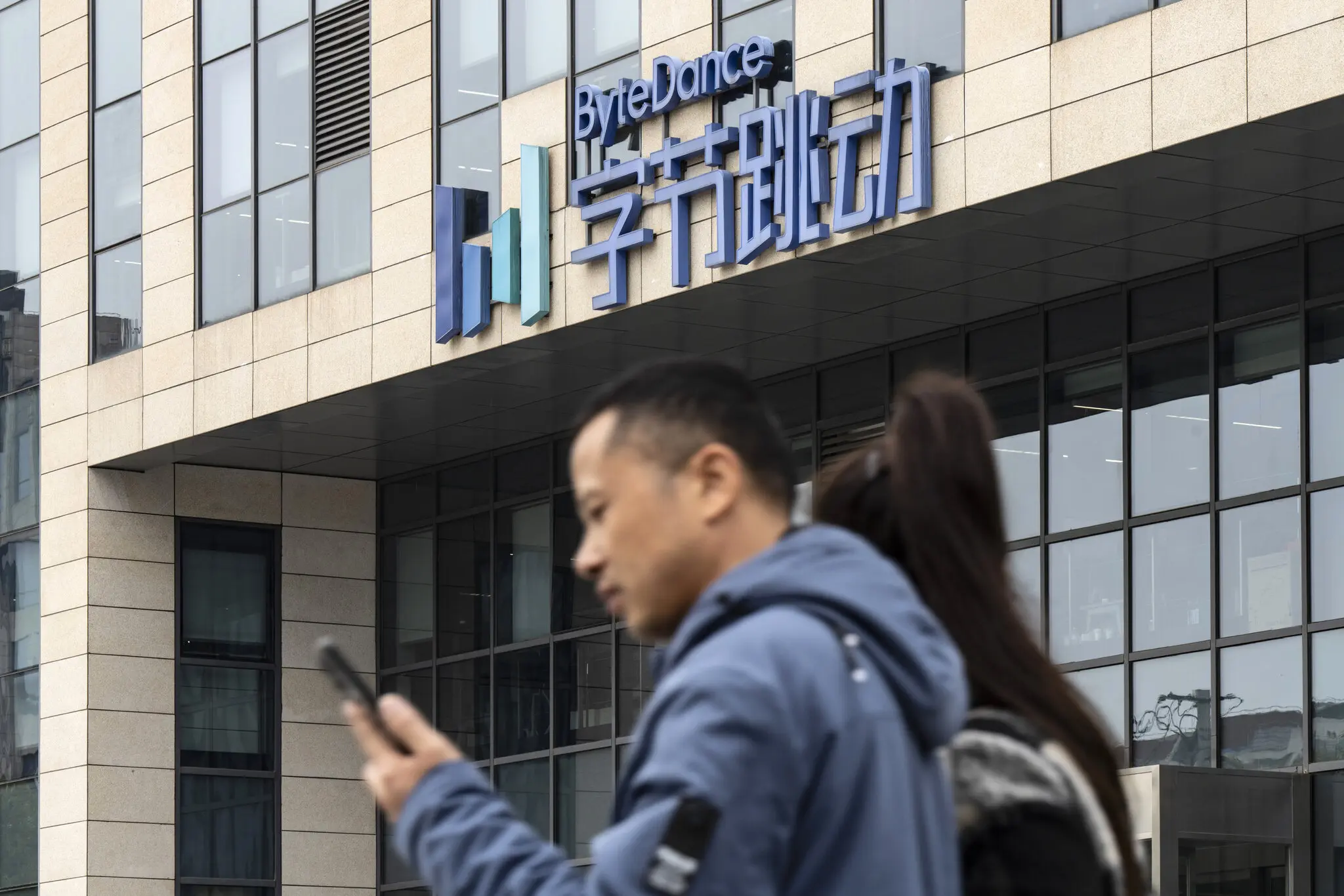
























American companies building the world’s most powerful artificial intelligence systems are increasingly accusing Chinese competitors of copying their technology. At the center of the dispute is distillation, a method the industry itself has used for more than a decade.
Anthropic says Chinese companies accessed its models through tens of thousands of unauthorized accounts, collected chatbot responses on a vast scale and used the resulting data to train their own systems.
The company describes the activity as an industrial effort to extract American AI capabilities. It is urging lawmakers to create mechanisms that would allow the government and leading laboratories to coordinate their response.
According to Daycom’s earlier analysis, the dispute extends far beyond intellectual property. American companies are trying to preserve their technological advantage in an industry whose basic architecture makes the imitation of model behavior increasingly difficult to prevent.
Distillation is not a new Chinese invention. Google researchers developed the technique in the early 2010s as a way to build smaller and less expensive systems using knowledge generated by more powerful models.
In simplified terms, one model acts as a teacher and another as a student. The larger system produces a substantial volume of answers, while the smaller one learns to reproduce its reasoning patterns, style and ability to perform particular tasks.
This allows developers to transfer some of the capabilities of a costly model into a system that requires less computing power. The technique is valuable because operating frontier AI remains expensive even for the largest technology companies.
The conflict begins when one company trains its system on outputs from a rival’s proprietary model. Anthropic, OpenAI and other laboratories prohibit such use under their terms of service, but enforcing those restrictions is technically difficult.
The boundary between legitimate optimization and unlawful copying remains unclear. Distillation does not necessarily reproduce source code or repeat text word for word. It seeks to imitate behavior — how a model responds, analyzes information and solves problems.
Traditional copyright law therefore offers no simple answer. Some legal specialists argue that covertly harvesting outputs at scale may violate trade-secret protections, but American courts have yet to establish a clear precedent.
The dispute is further complicated by the fact that Chinese companies are not the only ones using distillation. Elon Musk has acknowledged that his company, xAI, drew on OpenAI technology while training its own systems, describing the practice as common across the industry.
That weakens the moral position of American laboratories. They portray Chinese distillation as a distinctive threat even though similar methods have long been used by competitors inside the United States.
The difference lies mainly in scale and geopolitical context. Anthropic says entities linked to China operated about 24,000 accounts and generated more than 16 million conversations with Claude.
Volumes of that size are difficult to explain as ordinary customer activity. Repetitive prompts, coordinated account networks and systematic testing of specific abilities may indicate a deliberate effort to gather training data.
What particularly alarms Silicon Valley is the speed of China’s progress. Some specialists estimate that Chinese developers now trail the leading American laboratories by only about six months.
The release of GLM-5.2 by Chinese company Z.ai intensified those concerns. On several benchmarks, the model approached the performance of leading U.S. systems, including in cybersecurity, an area Washington considers strategically important.
American laboratories argue that Chinese developers would advance far more slowly without access to their models’ outputs. Yet it is almost impossible to determine how much progress came from distillation and how much resulted from independent research.
Building a frontier model requires more than a large collection of rival answers. It also demands computing capacity, high-quality data, strong engineering teams, algorithmic improvements and the ability to scale a complex system reliably.
That is why many researchers doubt that distillation alone can explain the success of Z.ai, DeepSeek or Alibaba. It can accelerate the acquisition of particular capabilities, but it cannot replace a serious laboratory or a mature technological base.
American companies also face a practical enforcement problem. They can suspend suspicious accounts, analyze unusual request patterns and impose access limits. But overly aggressive controls risk blocking legitimate customers.
Much of the suspected activity also takes place beyond U.S. jurisdiction. Even if an American court ruled that covert distillation was unlawful, enforcing that decision against a Chinese company would be extremely difficult.
Anthropic is therefore calling not only for new legislation but for closer cooperation among laboratories. OpenAI, Google and other companies are already sharing technical signals that may help identify coordinated data extraction.
Export controls on advanced chips remain Washington’s second major tool. Distillation can reduce training costs, but it does not eliminate the need for powerful processors to build and refine large AI systems.
That barrier is not absolute. Chinese companies can rent computing capacity through foreign data centers, combine larger numbers of less advanced chips and accelerate the development of domestic AI processors.
Tighter restrictions may slow progress, but they can also force Chinese laboratories to become more efficient. Scarcity encourages them to reduce costs, optimize architectures and extract more performance from fewer computational resources.
Distillation may also become less important as the industry shifts toward AI agents. These systems do more than answer questions: they use browsers, databases and software tools to complete multi-stage tasks with limited human supervision.
An agent’s behavior is harder to copy than the responses of a chatbot. Training requires interactive environments, realistic workflows, extensive testing, reliable tool use and the ability to recover from errors during a task.
A campaign against distillation may therefore protect the current generation of models without guaranteeing an advantage in the next. American companies could spend significant political capital fighting a technique whose strategic importance may gradually decline.
The deeper challenge is that the United States is trying to defend its lead through tighter control, while China is narrowing the gap through lower-cost models, open development and rapid deployment.
For Anthropic and OpenAI, distillation threatens the business model itself. They invest billions of dollars in training advanced systems, while a competitor may use their outputs to build a cheaper alternative without making comparable investments.
For the wider market, however, the practice has another effect. Smaller models reduce the cost of artificial intelligence and make it available to companies that cannot afford premium American services.
The dispute is therefore unlikely to produce a simple legal solution. Distillation is simultaneously an innovation tool, an optimization technique, a possible breach of contractual rules and a mechanism for geopolitical catch-up.
American companies have legitimate reasons to protect the results of expensive research. But China has not discovered a secret method of technological theft. It is using a technique that the American AI industry created, normalized and continues to employ.
Ultimately, U.S. leadership will not depend on whether American laboratories can prevent every form of imitation. It will depend on whether they can create the next generation of technology faster than their competitors can reproduce the last one.