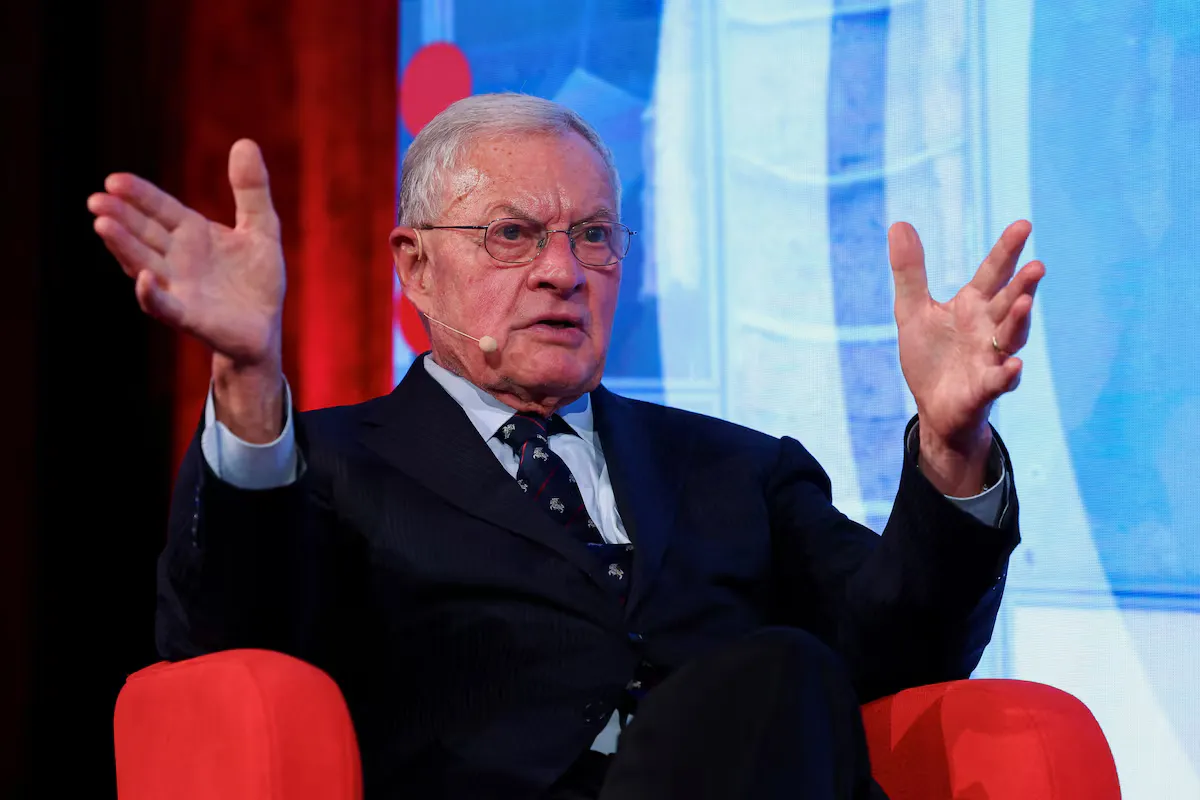




















Washington is approaching another consequential vote on U.S. sanctions on Russia, this time with a proposal designed to reach far beyond Russian companies and officials. Senator Richard Blumenthal says he hopes the House of Representatives will approve the package in September after strong bipartisan backing in the Senate.
Blumenthal, a Connecticut Democrat who discussed the legislation with Volodymyr Zelenskyy during a visit to Kyiv, has described the bill as a “sledgehammer.” Its central premise is that squeezing Russian entities alone is no longer enough if large foreign economies continue providing Moscow with an enormous market for its oil and gas.
The legislation would sanction senior Russian officials while giving President Donald Trump authority to impose tariffs of up to 100% on goods from major purchasers of Russian energy. China and India stand at the center of that calculation because both have become indispensable destinations for Russian hydrocarbons since 2022.
The political battle is therefore no longer simply about whether Congress wants additional pressure on Vladimir Putin. It is about whether Washington is prepared to make access to the American market part of the price other countries pay for continuing large-scale energy trade with Russia during the war in Ukraine.
Daycom’s analysis indicates that this secondary dimension is what makes the proposal unusually powerful — and unusually risky. Instead of concentrating pressure only on the sanctioned economy, Washington would try to change the behavior of third countries by forcing them to compare Russian energy discounts with their much larger commercial interests in the United States.
Russia’s ability to redirect energy exports has been one of the central limitations of Western sanctions since the full-scale invasion. Europe dramatically reduced many categories of Russian energy purchases, but the barrels did not simply vanish. Moscow redirected large volumes toward Asian markets, often accepting discounts in return for continued demand.
That adjustment allowed sanctions to impose costs without completely severing the revenue stream. Russia had to use more complicated shipping, financing and insurance arrangements and became more dependent on a smaller number of buyers. Yet as long as those buyers remained willing to take the oil, Moscow retained a substantial source of wartime income.
The proposed U.S. approach seeks to attack that remaining advantage. A foreign government or company might be willing to buy discounted Russian crude despite diplomatic criticism. The calculation becomes very different if those purchases threaten punitive treatment for a much wider range of exports entering the world’s largest consumer market.
That is why the potential tariff ceiling of 100% carries such political weight. The number is intended not merely to collect revenue at the U.S. border but to create leverage before the tariff is ever imposed. Washington could use the possibility of an extreme trade penalty to demand that major buyers reduce their dependence on Russian supplies.
For Moscow, the danger is not limited to losing entire customers. Even the threat of secondary penalties can strengthen buyers at the negotiating table. If purchasing Russian oil brings greater legal or commercial risk, refiners can demand larger discounts, forcing Russia to sacrifice more revenue on every barrel that still reaches the market.
That mechanism is important because sanctions do not have to stop Russian exports completely to hurt the Kremlin. In fact, removing too much oil from the global market could drive international prices sharply higher. Russia might then export fewer barrels but recover part of the loss through a higher price on the crude it continues to sell.
The more sophisticated objective is therefore to keep Russian oil moving while reducing the amount Moscow earns from it. Higher transaction costs, deeper discounts and reduced competition among buyers can all erode revenue without necessarily creating a global shortage that would punish consumers in the United States and allied economies.
China presents the largest strategic challenge to that approach. Its enormous refining system and energy demand give it substantial bargaining power, while its government has repeatedly resisted attempts by Washington to dictate its relations with Moscow. Russian energy also fits Beijing’s broader goal of diversifying supplies and securing favorable prices.
A tariff confrontation with China would therefore reach far beyond the Ukraine war. The two economies already operate under layers of trade and technology restrictions. Adding Russian oil to that contest could affect manufacturing chains, consumer goods and broader negotiations between Washington and Beijing.
India poses a different dilemma. New Delhi has become a major buyer of discounted Russian crude while simultaneously deepening strategic cooperation with the United States. Washington views India as an increasingly important Indo-Pacific partner, particularly as American policy seeks to balance China’s growing regional influence.
Punishing India too aggressively for Russian energy purchases could therefore damage another American strategic objective. New Delhi also guards its foreign-policy autonomy closely and has resisted the idea that its energy decisions should be determined in Washington, Brussels or Moscow rather than by Indian economic interests.
This is why the sanctions debate is really a debate about leverage and calibration. A threat weak enough to be ignored will not alter purchasing decisions. A threat applied mechanically at maximum strength could open simultaneous trade disputes with countries whose cooperation Washington needs on security, technology and global economic stability.
Some Democrats have consequently raised concerns about giving Trump broad authority to impose additional tariffs, even while supporting tougher measures against Russia. The issue is partly constitutional and partly economic: Congress would be handing the president another instrument capable of affecting large portions of American trade.
Blumenthal argues that exemptions would protect European allies from being swept into the same tariff regime. That distinction matters because some European economies still retain residual exposure to Russian energy, even as the continent has spent years reducing dependence and supporting sanctions against Moscow.
A secondary-sanctions system that punished allies alongside states substantially expanding Russian purchases could quickly undermine the coalition it was designed to strengthen. Successful sanctions depend not simply on severity but on maintaining enough international cooperation to prevent alternative routes from replacing the ones being closed.
For Ukraine, the logic is more immediate. Kyiv has long argued that Russian energy revenue should be treated as a direct component of Moscow’s ability to sustain the war. Oil and gas earnings help finance military production, personnel costs, procurement and the broader state budget that supports an increasingly militarized economy.
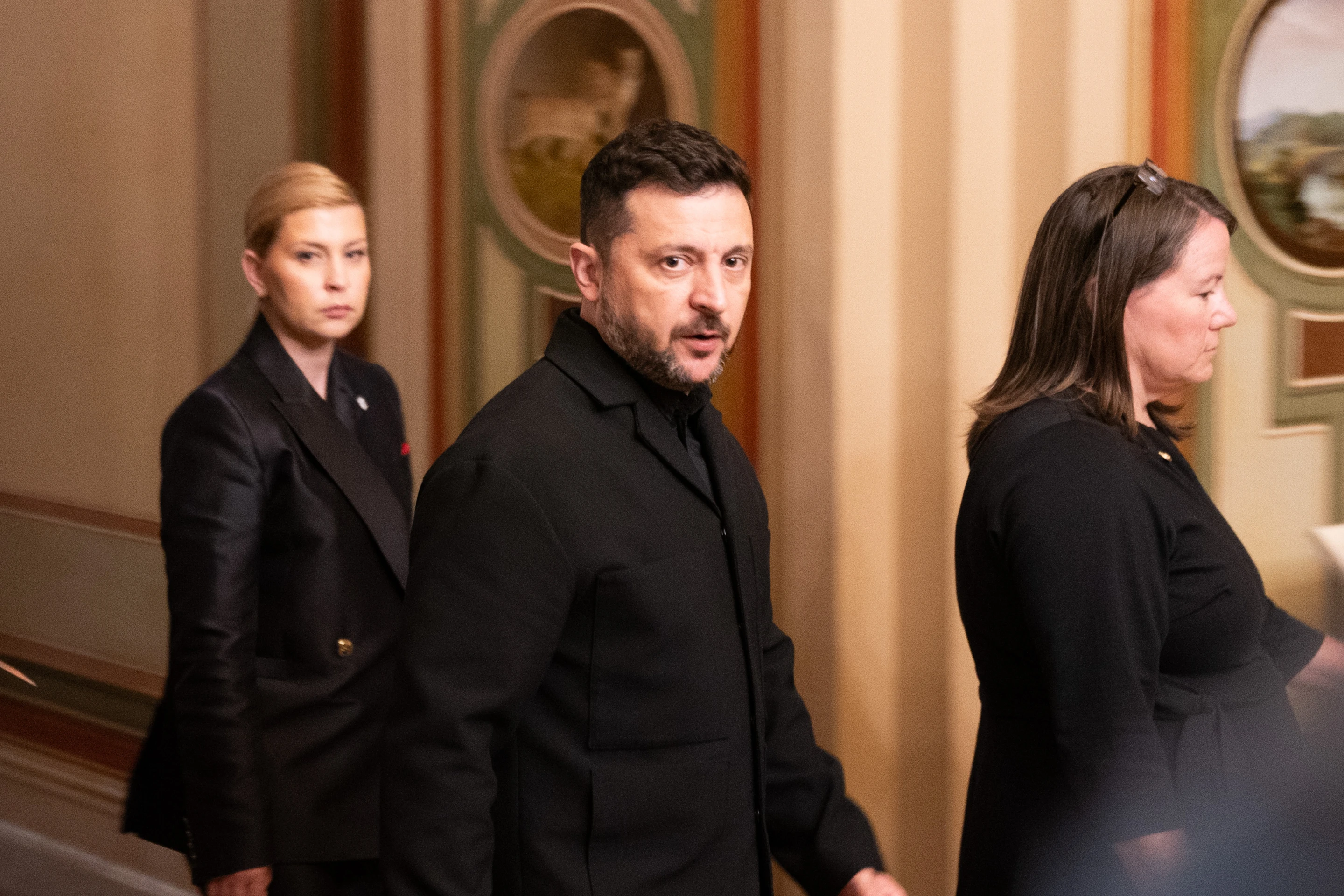
Blumenthal therefore asked Zelenskyy to engage members of the House directly, just as the Ukrainian president had previously spoken with senators. The request reflects a familiar reality of wartime diplomacy: Ukrainian officials are not merely seeking weapons abroad but actively lobbying foreign legislatures over the economic instruments used against Russia.
The House vote is less certain than the Senate’s earlier support. Lawmakers must weigh hostility toward Russia against concerns over inflation, executive power and the effects of another round of tariffs. The disagreement is not necessarily over the goal of reducing Moscow’s income; it is over how much economic collateral damage the United States should accept.
Tariffs are often discussed as if foreign countries simply pay them to Washington. In practice, the charge is collected on imported goods, meaning American importers face the immediate cost. Depending on the market, part of that burden can then move through supply chains into business expenses, reduced margins or higher prices for consumers.
That makes the proposal particularly sensitive after years in which tariffs have become a central instrument of American economic policy. A measure intended to punish Russian energy customers could ultimately affect the price of products with no direct connection to Russia, from industrial components to ordinary consumer goods.
The bill’s supporters are effectively making a different calculation: that failing to raise the cost of supporting Russia also carries a price. If Moscow retains enough energy revenue to sustain a long war, the United States and Europe face continuing military assistance costs, geopolitical instability and the risk that the conflict expands rather than ends.
The debate therefore turns on which costs are more manageable. One path accepts some possibility of trade disruption in an effort to weaken Russia’s war finances. The other limits economic spillovers but leaves Moscow greater room to monetize energy exports through countries outside the Western sanctions coalition.
Enforcement will ultimately matter as much as the statutory tariff ceiling. Russia has spent years building alternative trading networks, using intermediaries and adapting shipping and financial structures. Every new restriction creates an incentive for traders to change ownership structures, routes, paperwork or jurisdictions.
Secondary pressure becomes credible only when governments and companies believe Washington is actually prepared to use it. If the United States repeatedly threatens penalties but grants exceptions whenever a major economy resists, buyers will eventually discount the threat and continue negotiating with Russian suppliers.
The opposite scenario carries its own danger. If Washington demonstrates its resolve by targeting a major economy, markets will immediately reassess the risk of Russian trade. That could strengthen sanctions quickly, but it could also provoke retaliation and encourage countries to accelerate efforts to reduce their exposure to American financial and commercial power.
There is a longer-term strategic consequence here. The United States benefits enormously from the size of its market and the central role of its financial system. Using that position repeatedly as a sanctions weapon increases its immediate leverage, but it also gives other governments a stronger incentive to develop payment and trade channels less vulnerable to American decisions.
None of this means that the proposed sanctions would be ineffective. It means their impact would depend on behavior outside Russia as much as behavior inside it. The most important reaction may come not from the Kremlin but from ministries, refiners and trading companies in Beijing and New Delhi assessing how seriously to take Washington’s threat.
Timing gives the September debate another dimension. Ukraine is also trying to revive negotiations with Russia with American participation. A stronger sanctions law could therefore operate not only as punishment for the continuing war but as bargaining leverage during a renewed diplomatic process.
The theory is straightforward: Moscow should enter negotiations knowing that failure carries worsening economic consequences rather than a continuation of current conditions. Sanctions become part of diplomacy when they give one side something to avoid and the other something that can eventually be suspended in exchange for verifiable changes in behavior.
That leverage works only if the threat is credible. If Putin concludes that political divisions in Washington will prevent the strongest provisions from being used, the legislation becomes less valuable at the negotiating table. Congressional passage and presidential willingness to enforce the measure are therefore separate questions.
There is also no guarantee that economic pressure alone changes Moscow’s war aims. Russia has absorbed years of sanctions while continuing military operations, redirecting trade and accepting significant economic distortions. The Kremlin’s tolerance for cost has repeatedly proved greater than many Western governments initially expected.
Sanctions can still alter the resources available for that strategy. They can make imports more expensive, reduce fiscal revenue and force increasingly inefficient trading arrangements. Their effect is often cumulative rather than dramatic — a gradual narrowing of choices rather than a single shock that compels an immediate political reversal.
For Washington, the challenge is to make that cumulative pressure large enough to matter without destabilizing energy markets or creating unnecessary disputes with partners. Despite Blumenthal’s “sledgehammer” metaphor, the most successful application would probably require something closer to precision: clear targets, credible exemptions and disciplined enforcement.
For Kyiv, the calculation is less ambiguous. Every additional dollar Moscow must sacrifice through discounts, shipping costs or lost demand is a dollar that becomes harder to direct toward the war. Ukrainian diplomacy therefore sees sanctions not as an alternative to military support but as another way to reduce the resources available to the Russian state.
September’s House debate will consequently test more than the durability of congressional support for Ukraine. It will test whether lawmakers are prepared to move from sanctions concentrated mainly on Russia itself toward a model that directly pressures the foreign economies sustaining Russia’s most valuable export business.
If the legislation passes largely intact, Trump could gain one of the strongest economic tools Washington has considered during the war. The immediate question would then shift from what Congress authorized to how aggressively the White House intends to deploy that authority against countries whose cooperation the United States needs elsewhere.
If the tariff provisions are weakened substantially, the proposal will still add pressure on Moscow, but its central deterrent mechanism will lose force. The difference matters because Russia has already demonstrated that direct sanctions alone can often be routed around when large international buyers remain prepared to transact.
The real test of new U.S. sanctions on Russia will therefore not be the severity of the language written into law. It will be whether the threat changes purchasing decisions in Beijing and New Delhi, reduces Moscow’s energy earnings and strengthens diplomacy without creating an economic confrontation larger than the one Washington intended to manage.