



















American immigration policy has again moved beyond a domestic political dispute. U.S. Vice President JD Vance, a Catholic and one of the main political defenders of Donald Trump’s hard line, openly disagreed with the Vatican, calling its views on migration “troubling.”
This was not just another phrase in a television interview. Vance effectively challenged the moral framework that Pope Leo has been building around the treatment of migrants in the United States. For American politics, this is a sensitive moment: the first U.S. pope is increasingly criticizing one of the administration’s central policies.
Pope Leo has called for a “deep reflection” in the United States on how the state treats migrants. He has described the Trump administration’s approach to them as “extremely disrespectful” and criticized what he sees as “inhuman” treatment. Vance’s answer is that mass migration also has victims, and that Catholic leaders should not forget them.
According to Daycom’s earlier analysis, this dispute matters not only because of the personal clash between the vice president and the Vatican. It shows how the familiar boundary between religious ethics, party politics and state coercion is breaking down in the United States. Immigration has become a subject on which each side speaks the language of morality, but gives it a different meaning.
For the Vatican, the migrant is first of all a person in a vulnerable position. Catholic social teaching does not deny the state’s right to control its borders, but insists that security cannot erase human dignity. This is where Pope Leo draws his line: a state may have rules, but it must not turn a human being into an administrative problem.
For Vance, the emphasis is different. He speaks of citizens, local communities, pressure on public services, criminal security, social tension and the feeling that control has been lost. In his formula that “mass migration has victims,” the migrant is no longer the only moral center. Beside the migrant stands the voter who feels abandoned by his own state.
That is the force of the current conflict. The two sides are not merely arguing over deportation procedures or legal status. They are deciding who has the right to sympathy. The Vatican extends that right to migrants living under the threat of raids, detention and removal. Vance demands that the moral equation also include Americans who see migration as a source of risk.
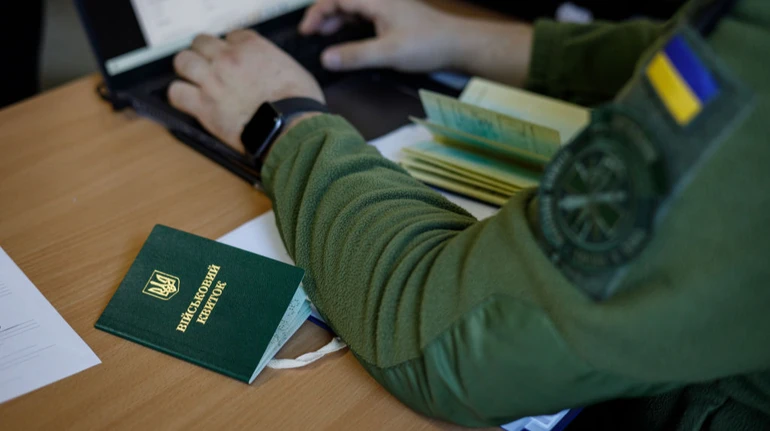
The Trump administration has made immigration control one of its central political symbols. Tough raids, a deportation drive, rhetoric about security and the illegal crossing of borders work not only as policy, but as a promise to restore order. For Trump’s supporters, this is proof of state strength. For critics, it is a warning sign of a dangerous narrowing of rights and freedoms.
Rights groups warn that such a policy can violate due process, chill free speech and create an atmosphere of fear for ethnic minorities. The issue of racial profiling has become especially sensitive: when people begin to fear not because of their actions, but because of appearance, language or origin, immigration law turns into a broader social anxiety.
Vance, however, does not present his position as anti-Catholic. On the contrary, he speaks as a religious politician who believes he has the right to argue with church leadership. This creates a complex image: a Catholic vice president does not reject the Vatican as an institution, but refuses to accept its moral judgment of U.S. immigration policy.
That is where the dispute becomes especially sharp. For earlier generations of American Catholics, tension between Washington and Rome was often a question of loyalty, identity and suspicion from the Protestant majority. Now the situation is different: a Catholic in the White House is arguing with the pope not about faith itself, but about how faith should operate inside state policy.
Pope Leo has not limited himself to immigration. He has also criticized other steps taken by the Trump administration, including its approaches to war, the Middle East and humanitarian crises. The Vatican declined to join the Gaza “Board of Peace” initiative, while on the Iran war the pope welcomed the interim arrangement between Washington and Tehran as a chance to stop the conflict.
This means the distance between Trump and the Vatican is wider than migration. It concerns the very idea of power. The U.S. administration speaks the language of control, borders, strikes, pressure and coercion. Pope Leo increasingly speaks the language of restrained power, protection of the vulnerable and diplomacy. There is almost no easy translation between these languages.
For Trump, criticism from the pope is politically inconvenient. It does not come from a liberal activist or an opposition politician, but from the head of a church to which millions of American voters belong. It matters even more that Pope Leo is American. His words cannot easily be dismissed as a distant Rome misunderstanding the realities of the United States.
At the same time, the Vatican is taking a risk. Too direct a criticism of the U.S. administration may deepen the sense among conservative Catholics that church leadership does not hear their fears about migration. If the pope speaks only about the suffering of migrants while they see problems in local communities, a gap opens between pastoral language and the political experience of some believers.
This is the ground on which Vance is operating. He does not deny the need for dialogue with Catholic leaders, but he offers a different moral lens. In that view, immigration policy is not only mercy toward arrivals, but responsibility toward citizens who pay taxes, rely on schools, hospitals and social services, and expect the state to control the border.
The problem is that this logic can easily move from defending order to justifying cruelty. The state does have the right to regulate migration. But when deportation becomes political theater, when fear becomes a tool of governance, and when groups of people are described primarily as threats, the distance between law and humiliation becomes dangerously small.
The Vatican is reminding Washington of precisely that boundary. Its position does not mean open borders and does not erase state sovereignty. It demands that a policy of control not lose its human dimension. In Catholic tradition, the weak, the stranger and the displaced are not exceptions to morality. They are often its test.
For the United States, this question goes far beyond church debate. Immigration has long been one of the main engines of political polarization. It shapes election campaigns, court battles, state policy, relations between federal authorities and cities, and Americans’ understanding of their own national identity.
Vance’s dispute with the Vatican shows that even a shared religious language no longer guarantees a shared moral conclusion. One Catholic sees strict policy as necessary protection for society. Another sees a threat to human dignity. Between them stands the state, deciding whose suffering should be politically visible.
The most important issue is not whether Vance will agree with the pope. He almost certainly will not. What matters is whether the United States can talk about migration without turning people into symbols. Migrants are not only victims. But they are not only threats. Communities that fear a loss of control are not always driven by hatred. But fear does not give the state the right to forget dignity.
That is why the conflict between Vance and the Vatican may become one of the clearest mirrors of American politics. In it, one sees a country that wants order and also needs a moral justification for that order. One sees a church trying to speak universally while confronting the national political loyalties of its own faithful.
The immigration dispute between Washington and Rome will not end with one statement. It is only unfolding. The harsher Trump’s deportation campaign becomes, the more often the Vatican will return to the language of human dignity. And the louder Pope Leo speaks, the more forcefully American conservatives will answer in the language of security, sovereignty and order.
There is no quick compromise in this tension. But there is one central question: can a state defend its border without destroying its own moral boundary? That is now the question facing the White House, the Vatican and JD Vance, a Catholic caught between two worlds — a faith that speaks of mercy and a government that demands toughness.