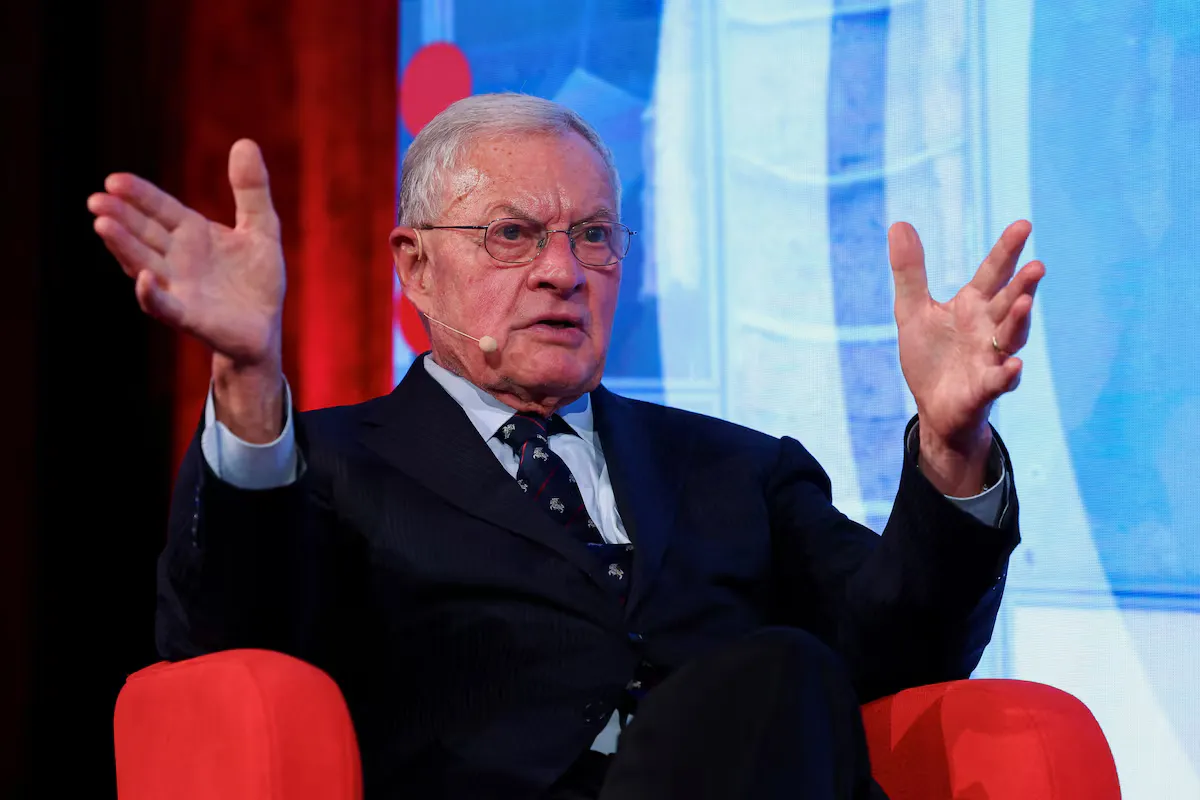




















JD Vance’s appearance in Athens, Georgia, should have been an easy political stage: a campus setting, a young right-wing audience, the Turning Point USA brand, the familiar energy of conservative mobilization. Instead, it became evidence of a deeper problem. Part of the American right is no longer willing to accept a new Middle East war automatically simply because Donald Trump is the one leading it.
The shouts from the audience about children, bombing and moral responsibility did not derail the event. But they changed its meaning. Vance was forced into an uncomfortable role. He was no longer merely a vice president defending an administration’s line. He was a politician trying to preserve loyalty to Trump without losing the anti-interventionist core of MAGA on which much of his own future depends.
What mattered most was not simply that a protest happened, but where it happened. Turning Point USA has spent years presenting itself as a machine of right-wing youth discipline, ideological clarity and electoral energy. When even that kind of room begins to show visible irritation over war, the fracture is no longer at the edges of the coalition. It is moving through the coalition’s active center.
According to Daycom’s earlier analysis, this is where a new Republican vulnerability becomes visible. Young voters on the right can still be rallied around immigration, campus politics, cultural conflict and hostility toward liberal institutions. They are much harder to hold together around a new military campaign in the Middle East, especially when it collides so directly with Trump’s old promise of no new wars.
Vance seemed to recognize that in real time. Onstage, he effectively conceded that young voters do not like the administration’s current Middle East policy. That was not a casual gesture of empathy. It was a political correction. He was trying to calm the room without surrendering it, to acknowledge the discomfort without allowing it to harden into disaffection.
The difficulty is that this maneuver does not resolve the contradiction underneath it. Vance cannot openly break with Trump, because his national rise was built on loyalty to the president and on his place inside the Trump movement. But he also cannot fully merge himself with the White House’s new war posture, because many anti-interventionist conservatives long saw him as one of their own — more cautious, more skeptical of foreign entanglements and more attentive to the cost of American force abroad.
That is why his tone in Georgia was so careful. He did not move into direct confrontation with antiwar criticism, but he did not distance himself from the administration either. Instead, he chose a middle path: acknowledge the doubts, urge the audience not to disengage and shift the conversation back toward the broader Republican agenda — immigration, domestic order and cultural politics.
For a politician already viewed as a leading contender for 2028, that is an unusually precarious position. Vance is trying to speak in two languages at once. One is the language of Trump loyalty, movement discipline and unified struggle for power. The other is the language of right-wing disappointment, which is asking more loudly why an America First movement is once again expected to justify war far from home.
The dispute around the Pope added another layer to the same problem. A day earlier, Vance had sounded sharper, effectively warning the pontiff to be more careful when speaking about war, morality and theology. By the time he stood onstage in Georgia, the tone had softened. He voiced respect for the Pope and acknowledged his right to speak, while still trying to push back against the substance of the criticism. It was not a theological debate. It was a live political recalibration.
That recalibration matters because Vance plainly understands the limits of the moment. For the White House, friction with the Vatican, anxiety over the Iran war and fatigue with an increasingly erratic foreign policy style are beginning to merge into one broader problem. Even a sympathetic audience no longer hears every administration decision as a natural extension of its own will.
There is also the pressure coming from the anti-interventionist right itself. As influential voices on the right grow harsher in their criticism of the administration over Iran, Vance cannot afford a simple politics of total identification. He has to remain Trump’s heir while also signaling to those who believe Trump himself is drifting away from the original promise of restraint.
That is close to an impossible balance, but it is now central to Vance’s political identity. If he stays too tightly bound to the president, he risks losing the part of MAGA that valued him precisely for his caution and skepticism. If he leans too openly into the language of antiwar dissent, he weakens his standing inside the administration and risks open tension with the man who made him a national figure.
So the meaning of the Georgia episode lies not in the fact that Vance was heckled. Its importance is that even in a space where MAGA should have heard only its own echo, war already sounded like political dissonance. And the closer the Republican Party moves toward 2028, the more often Vance will have to explain not why he is loyal to Trump, but where the line now runs between Trumpism as a movement and Trumpism as a foreign-policy project that no longer carries an unquestioned mandate from its own base.