




















JD Vance’s visit to Budapest in the final stretch before Hungary’s parliamentary election does not look like protocol. It looks like intervention. A vice president does not arrive days before a vote, appear alongside an incumbent and attend a political rally unless the message is meant to be unmistakable.
That message is simple enough. The Trump White House is no longer pretending neutrality. It wants Viktor Orban to survive the hardest election of his long rule. What is at stake is not only a friendly government in Central Europe, but a symbolic outpost of a much larger ideological project.
Orban has long ceased to be merely the prime minister of a medium-sized European state. For the Trump camp, he became something more useful: proof that a nationalist, anti-liberal, sovereignty-first system can hold power for years inside the European Union while openly clashing with Brussels and steadily hollowing out liberal checks from within.
As Daycom argued in earlier analysis of Europe’s new right, the most important elections are no longer only about who forms the next government. They are about which political model gets to present itself as viable. Hungary has become that kind of test case. If Orban holds on, the result will be read as confirmation that illiberal democracy still works. If he falls, the damage will extend well beyond Budapest.
That is why Vance’s visit matters so much. It is not simply support for a conservative partner. It is an attempt to protect one of the movement’s most important European assets at the very moment when that asset looks vulnerable. Orban is running not as the unchallenged master of the system he built after 2010, but as a leader facing the most serious threat of his career.
The rise of Peter Magyar and the Tisza party has changed the atmosphere of Hungarian politics. For years, Orban’s dominance rested not only on electoral success, but on the widespread assumption that no opponent could turn public frustration into a credible alternative. Magyar has disrupted that logic. He does not arrive from the distant margins of the old opposition, but from a world that knows the machinery of power from the inside. That makes him more dangerous than a conventional critic.
This is one reason the American endorsement carries such visible urgency. Confident incumbents rarely need a visiting vice president to validate them days before an election. External support of this kind often reveals weakness as much as strength. It suggests that symbolic reinforcement from abroad is now considered necessary because domestic political inertia may no longer be enough.
For the Trump administration, however, Orban is far more than a Hungarian ally. He is a central figure in a broader European strategy. Through him, the American right sees a route into the continent’s ideological battles over migration, national sovereignty, liberal institutions, cultural identity and the future of the European Union itself. Budapest, in this view, is not peripheral. It is a beachhead.
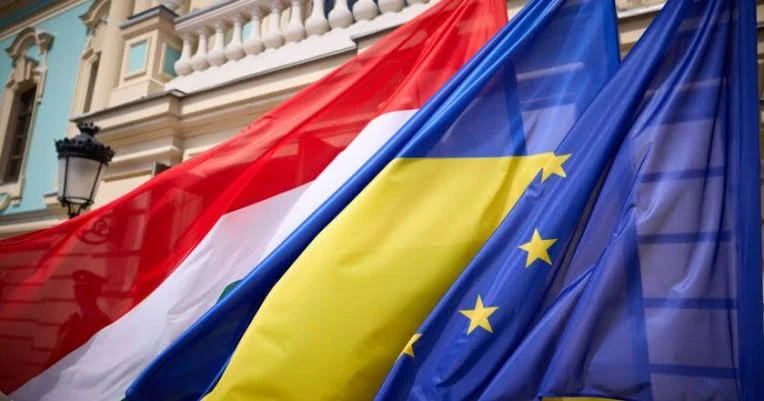
That is also why the visit has alarmed so many in Europe. Orban is not merely an internal Hungarian problem. He has become one of the most consistent obstacles to European unity on Ukraine, Russia and foreign policy more broadly. His willingness to slow, dilute or block common positions has made Hungary a structural complication inside the EU at precisely the moment when Europe is under pressure to act faster and more coherently.
The tension goes deeper than policy. Orban’s political system has long presented Europe with an uncomfortable contradiction: Hungary remains inside the institutional West, yet increasingly operates according to a different internal logic. Elections still take place, but the media landscape, public institutions, civic space and distribution of power have been bent over time to favor the ruling machine. That is what makes Orban so valuable to admirers abroad. He offers not just rhetoric, but a working model.
For Trump and Vance, preserving that model matters. If Orban wins again, they gain a powerful argument that their worldview is not uniquely American. It can endure inside Europe, inside the EU, and inside a system that was supposed to immunize itself against exactly this kind of politics. If Orban loses, the blow will be larger than one electoral defeat. It will shake the symbolic core of an illiberal network that has invested heavily in his durability.
Peter Magyar understands this, which is why his warning against foreign interference landed so sharply. Saying that Hungarian history will not be written in Washington, Moscow or Brussels was more than campaign rhetoric. It cut directly into the contradiction at the center of Orban’s image. A leader who has built so much of his authority on the language of sovereignty now finds himself publicly boosted by a foreign power days before a national vote.
Still, the decisive question remains domestic. However dramatic the Vance visit may appear, elections are rarely settled by external endorsement alone. Hungarian voters are dealing with more immediate pressures: cost of living, economic fatigue, corruption, institutional exhaustion and the accumulated wear of prolonged one-party dominance. Those forces cannot be overridden simply by a show of American favor.
That is what makes the moment so politically revealing. Vance is not arriving for a victory lap. He is arriving for a rescue attempt. The trip is an investment in the survival of a leader whose importance now exceeds his country, but whose system may be entering a period of genuine strain. The symbolism is powerful, but it is also risky. If Orban still loses, the visit will look less like strength than like the public failure of an international political alliance to save one of its own.
In the end, this should be read clearly. Vance’s trip to Budapest is not a decorative gesture between friendly governments. It is a deliberate act of political backing for a leader whom Trumpism sees as indispensable to its European ambitions. What is being defended in Hungary is not only an incumbent prime minister. It is the claim that illiberal power remains a winning formula inside the heart of Europe.