
























Western Europe entered the summer with a temperature surge that no longer looks like an exception. June became the hottest month of its kind ever recorded in the region, while an early heat wave broke records in France, Britain, Spain and several other countries. What once seemed like the peak of August is now arriving at the beginning of summer.
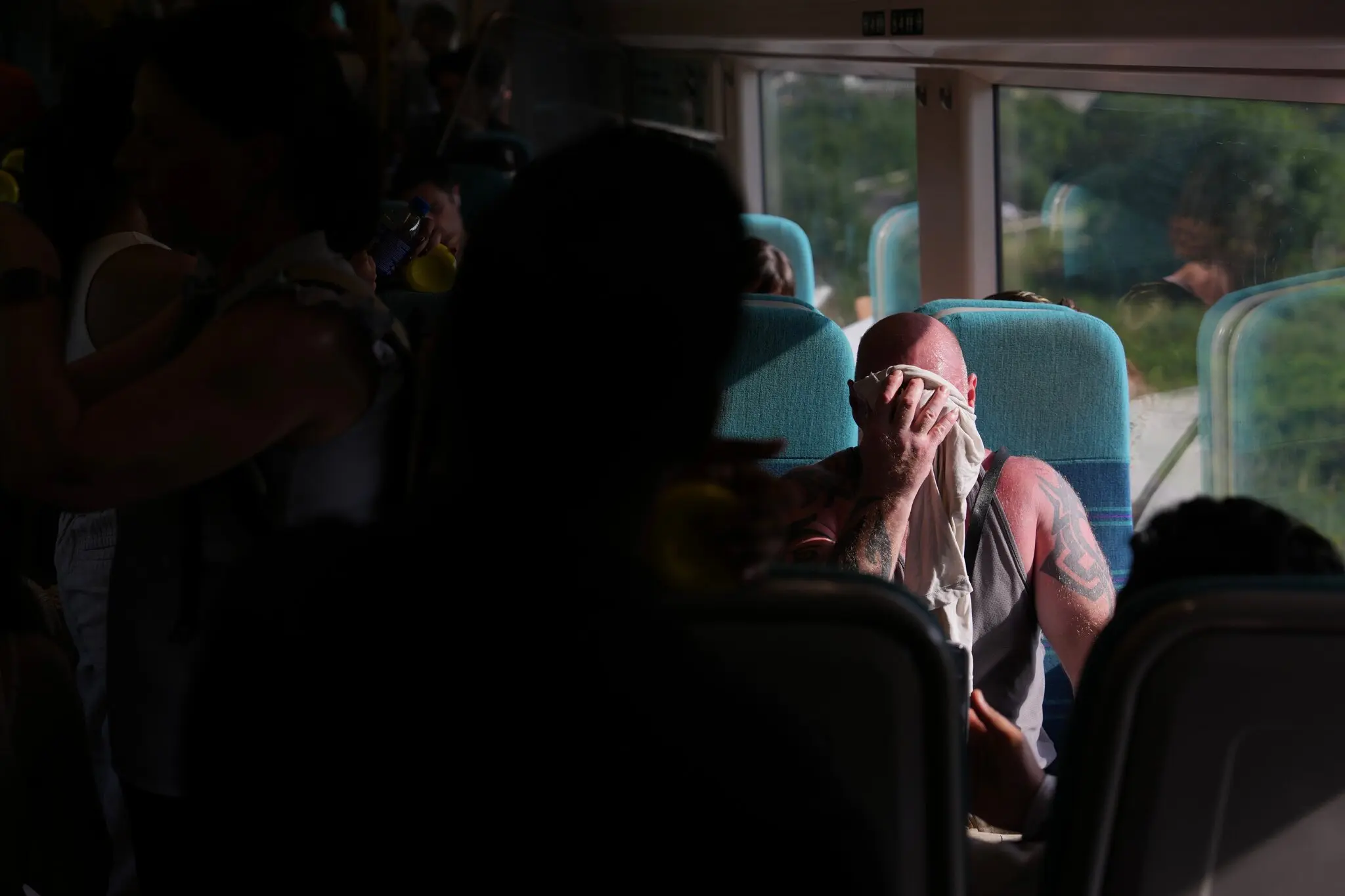
Average temperatures in Western Europe in June were 3.05 degrees Celsius above the norm of recent decades. In climate statistics, that is a sharp shift. For people, it means something simpler and harsher: stifling trains, overheated apartments, dangerous work shifts, strained hospitals and cities that lose the ability to cool down at night.
Globally, June was the second-warmest ever measured. The planet was about 1.39 degrees Celsius hotter than at the beginning of the industrial era. This is no longer an abstract climate threshold, but the background against which every new heat wave has a greater chance of becoming record-breaking.
According to Daycom’s assessment, the central lesson of this summer is not only the record itself, but the changing logic of risk. Europe is no longer facing isolated anomalies that can be endured and forgotten. It is entering a cycle of repeated heat shocks, in which one wave follows another and leaves people and infrastructure little time to recover.
June’s heat followed a suffocating May, and shortly after temperatures eased, parts of Europe began heating up again. That sequence is what makes the current situation so dangerous. It is not one record day, but the sustained pressure of heat that breaks the usual mechanisms of adaptation.
In parts of England, Spain, Germany, the Netherlands and Switzerland, June temperature records were broken by wide margins. France recorded its hottest day not only for June, but for any month. It did so three days in a row. That repetition destroys the old idea of a record as a single boundary.
The atmospheric patterns that create long periods of summer heat are not new. What is new is the background against which they now unfold. Because carbon dioxide and other heat-trapping gases have accumulated in the atmosphere, the baseline temperature has risen. The same weather systems can now push thermometers more easily toward dangerous and record levels.
That is the defining feature of the climate era Europe is entering. Heat no longer requires an extremely rare set of conditions to become extreme. It begins from a higher platform. When hot air stalls over the region, cities, fields and bodies are forced to endure temperatures that were once far less likely.
Cities remain especially vulnerable. Asphalt, concrete, dense construction and a shortage of greenery absorb heat during the day and release it at night. The body does not get the rest it needs. For older people, children, outdoor workers and those with chronic illness, that can become a matter of life and death.
French mortality figures showed the cost of this new reality. During three of the hottest days in late June, about 1,000 excess deaths were recorded. Most of those who died were over 65, but excess mortality rose across all age groups. Heat is no longer a narrow problem of the elderly alone.
Estimates of the total number of deaths linked to June’s heat in France may exceed 2,700. Numbers of that scale move the climate crisis from the language of charts into the language of public safety. This is not merely discomfort or seasonal inconvenience, but a force already increasing mortality in wealthy countries with advanced health systems.
The comparison with 2003 carries particular weight. That year, extreme heat in Europe caused tens of thousands of excess deaths and shocked governments into action. Countries built response plans, warning systems and protocols for hospitals and municipalities. But today’s heat waves are testing those systems under conditions that are becoming more frequent.
Climate adaptation can no longer be limited to warnings in weather forecasts. Europe needs cool public spaces, shade on streets, upgraded hospitals, protection for workers, revised schedules for construction and transport, and affordable cooling for homes. Without that, every future heat wave will turn social inequality into a medical risk.
The challenge is especially difficult for countries whose housing stock was not designed for prolonged heat. Many homes in Britain, France and the Netherlands were built to retain warmth, not release it. In a cooler climate, that was an advantage. In the new temperature reality, it can become a trap.
Transport is another weak point. Overheated trains, warped rails, pressure on power grids and heavier demand for air-conditioning create cascading effects. Heat affects not only health, but productivity, mobility and the ability of cities to function at their normal pace.
Agriculture faces a different set of threats. Early heat worsens drought, accelerates the evaporation of moisture from soils and changes the timing of crop development. For Spain, France and southern Europe, that means pressure on harvests, water supplies and food prices. A climate anomaly quickly becomes an economic one.
The ocean is an additional source of concern. Warmer seas feed humidity, influence atmospheric patterns and intensify stress on ecosystems. When land and ocean accumulate heat at the same time, the region is not simply experiencing a hot month. It is seeing a sign of a broader reshaping of the climate system.
The main political problem is that records quickly become routine. Each new temperature peak draws attention for a few days, then is displaced by other crises. But infrastructure, health care and labor markets cannot afford such a short memory. They must plan not for the climate of the past, but for the one that is already forming.
Western Europe has the resources to adapt, which makes its current experience especially telling. If wealthy states with developed health systems are recording thousands of heat-related deaths, less protected regions of the world face even harsher consequences. Europe’s record is not a local story, but a global warning.
This June’s heat does not prove the future. It shows the present. The climate crisis is no longer waiting on the horizon; it is entering rail timetables, hospital protocols, electricity bills, work schedules and mortality statistics. The question is no longer whether the next record will come. The question is how ready Europe will be when it does.