












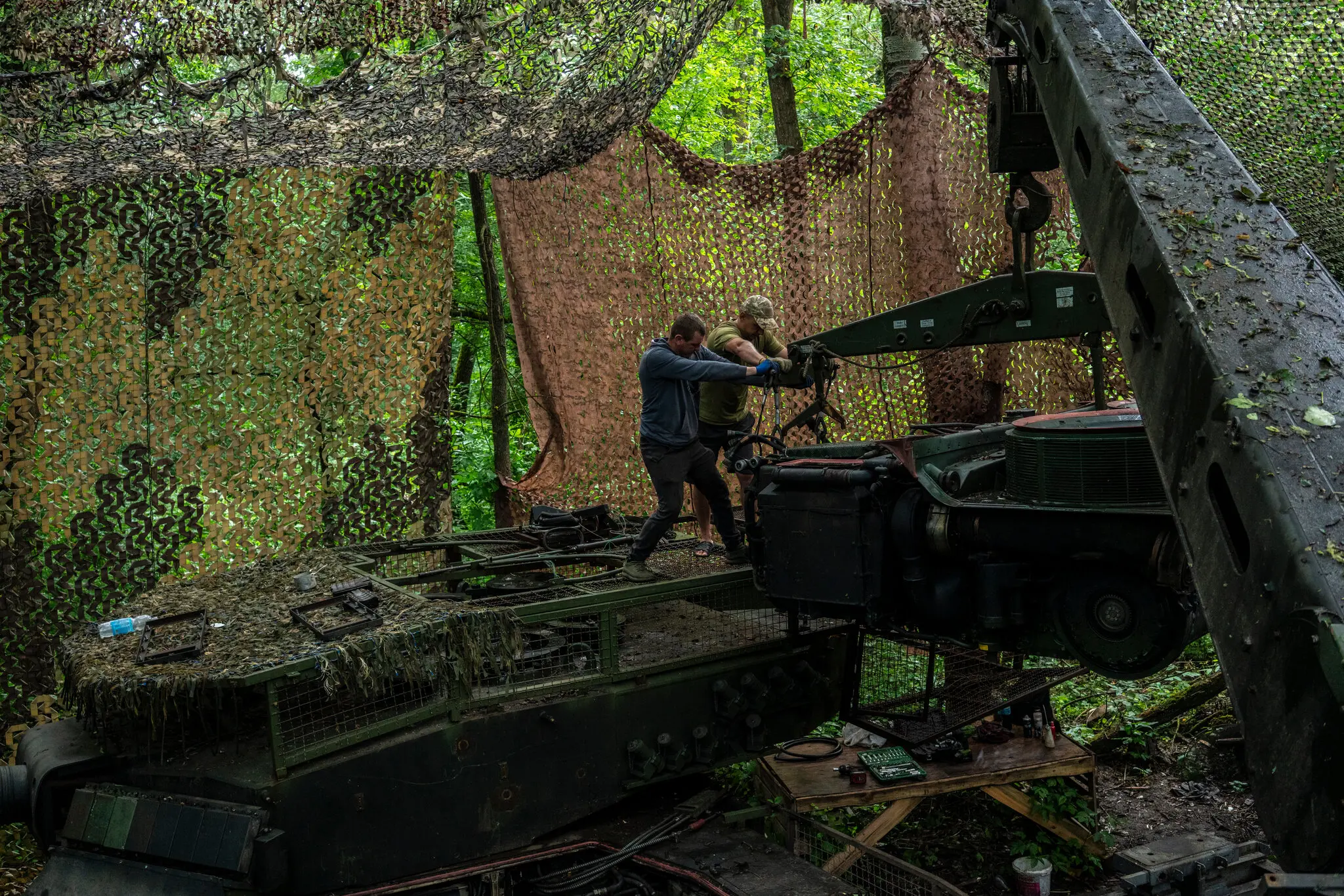






Three years ago, Leopard, Abrams and Challenger tanks were among the weapons Ukraine wanted most from its Western allies. Kyiv argued that modern armour was essential for breaking Russian defensive lines. Today, some of those machines sit for months under camouflage nets, hidden well behind the front.
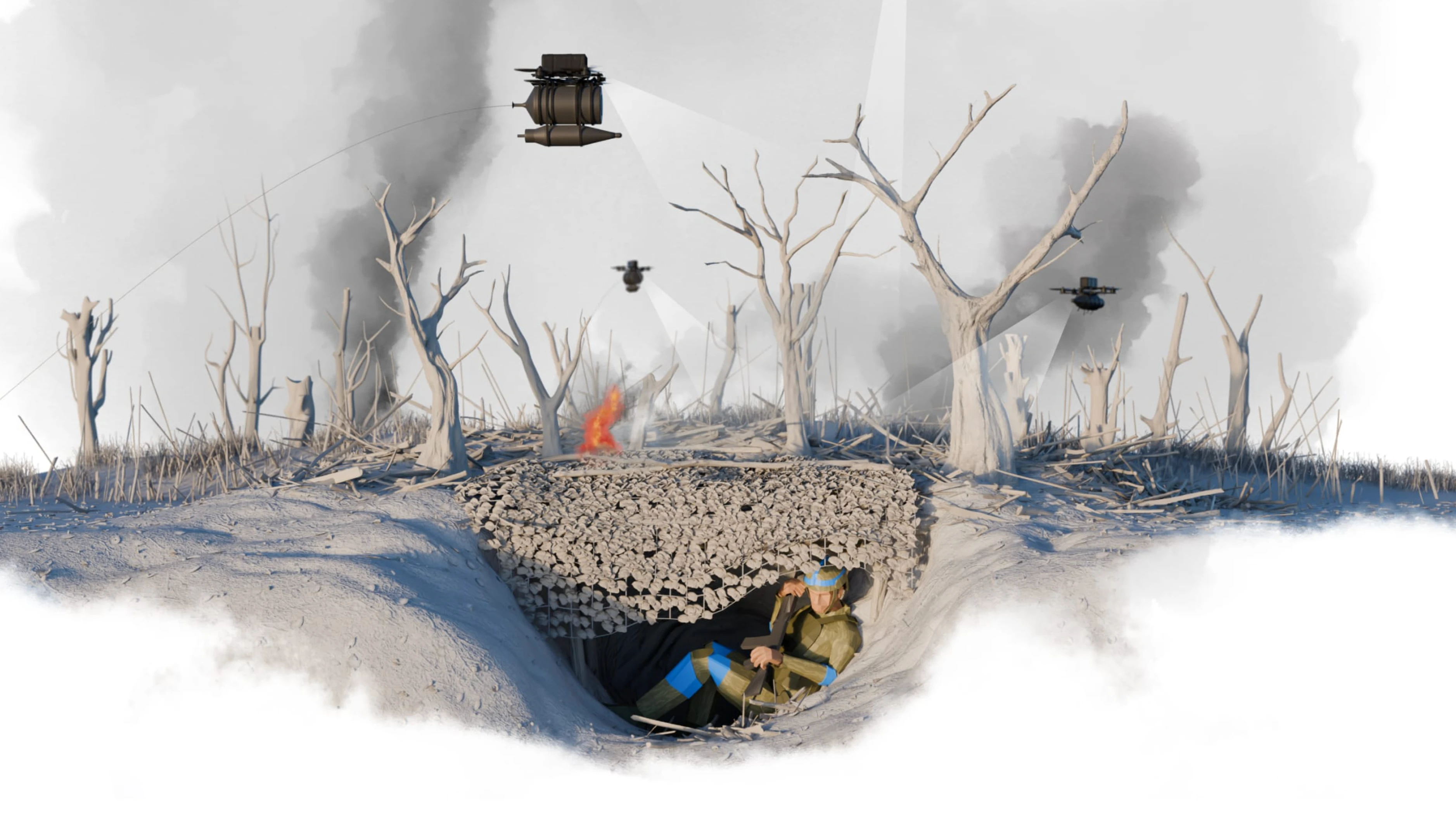
The reason is not that Western tanks in Ukraine suddenly became poor vehicles. The battlefield changed around them. Reconnaissance drones now watch much of the front almost continuously, while cheap FPV drones can locate heavy armour, pursue it and attack its weakest points.
In the 33rd Separate Mechanized Brigade, which received German Leopard tanks, crews still train and maintain their vehicles. Combat missions, however, have become rare. Some tanks are now used to recover damaged equipment, and even those operations are often timed for rain, fog or strong winds.
Former Ukrainian commander-in-chief Oleksandr Syrskyi acknowledged shortly before leaving his post that armoured vehicles were being used only sparingly. He was replaced in July by Mykhailo Drapatyi amid a broader debate over how Ukraine’s army should adapt to a battlefield increasingly dominated by unmanned systems.
Daycom’s analysis indicates that the story of Western tanks in Ukraine is not simply one of cheap drones defeating expensive armour. Tanks have lost the freedom to operate as originally intended because battlefield transparency has eroded one of the main conditions for massed armoured manoeuvre: surprise.
The logic looked very different in early 2023. Western planners hoped Ukrainian mechanised formations could use modern armour to penetrate Russian fortifications and exploit a breakthrough quickly. The United States agreed to provide 31 M1 Abrams tanks, while Britain supplied 14 Challenger 2s.
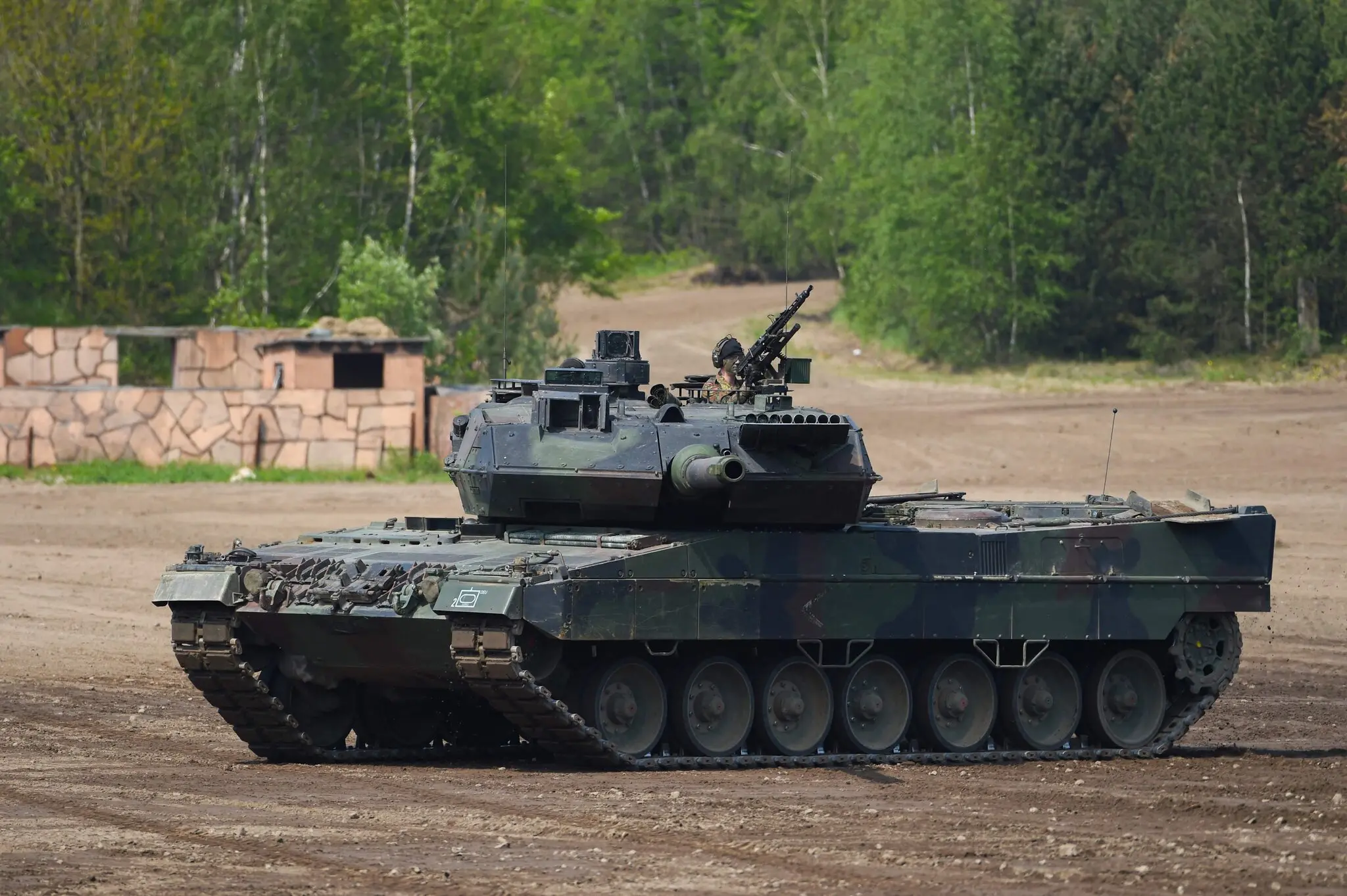
Ukraine also received dozens of Leopard 2 tanks in several variants from Germany, Poland, Spain, Sweden, Canada, Norway and other countries. Germany delivered 18 Leopard 2A6s, while allies later launched a much larger programme involving older Leopard 1A5 tanks.
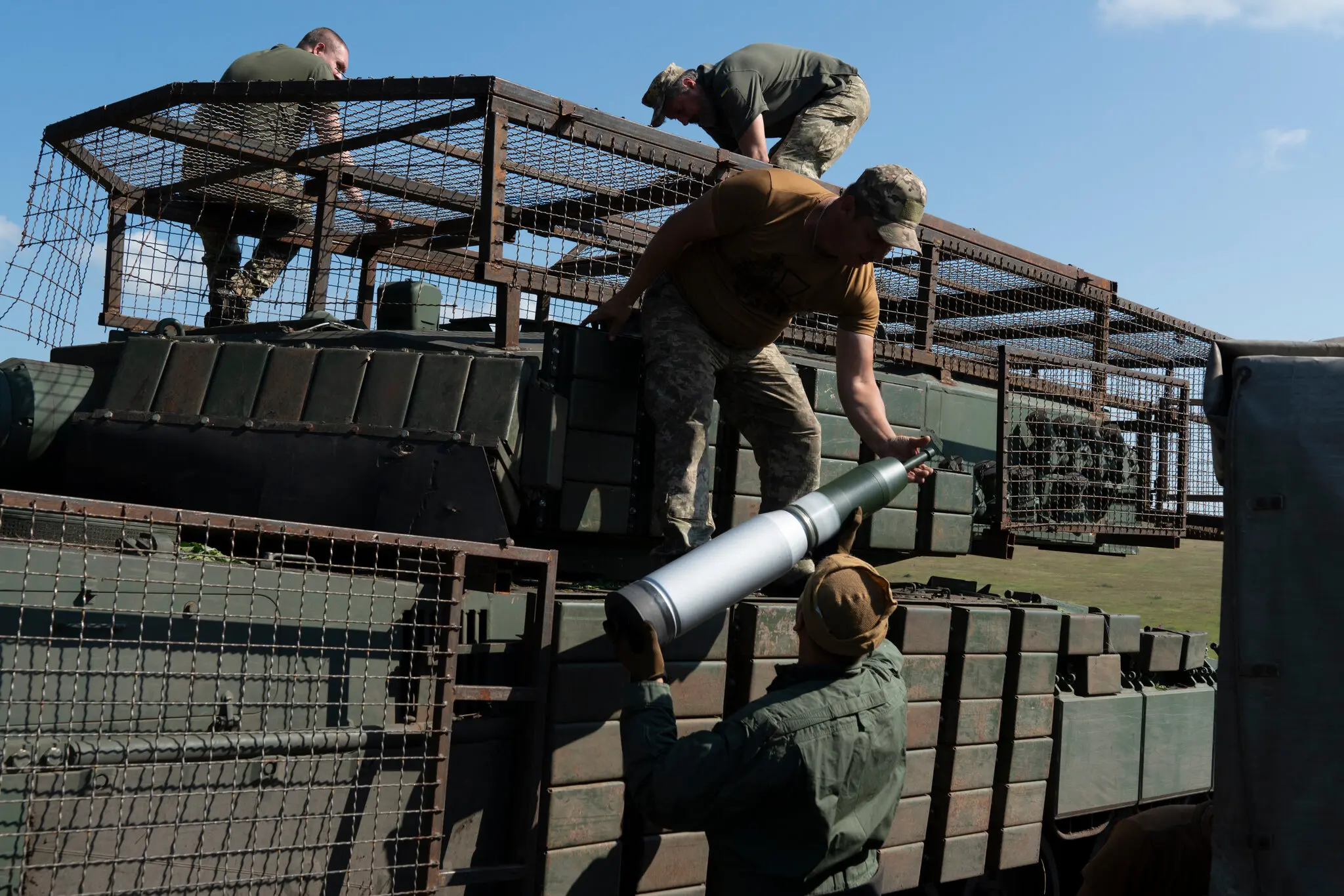 Бійці 33-ї бригади завантажують снаряди в танк "Леопард" для навчань на полігоні в Харківській області — Брендан Гоффман
The vehicles offered genuine advantages. Modern optics allowed crews to detect threats earlier, 120mm guns delivered accurate fire, and the protection built into Western tanks often improved crew survival even after serious hits.
But the tanks arrived on a battlefield where the conditions for a classic breakthrough were already disappearing. Russia had laid deep minefields and covered them with artillery, anti-tank weapons and drone reconnaissance. On some sectors, mine belts stretched hundreds of metres.
During Ukraine’s 2023 counteroffensive, a mechanised column could be stalled by a single disabled vehicle or a failed attempt to clear a minefield. Once halted, the formation became much easier for Russian drones and artillery to locate and strike.
That was only the beginning. Over the following years, the FPV drone evolved from an improvised tool into a mass-produced precision weapon. Its camera allows an operator to steer toward the turret roof, engine compartment, hatch or another area where armour is thinner than at the front.
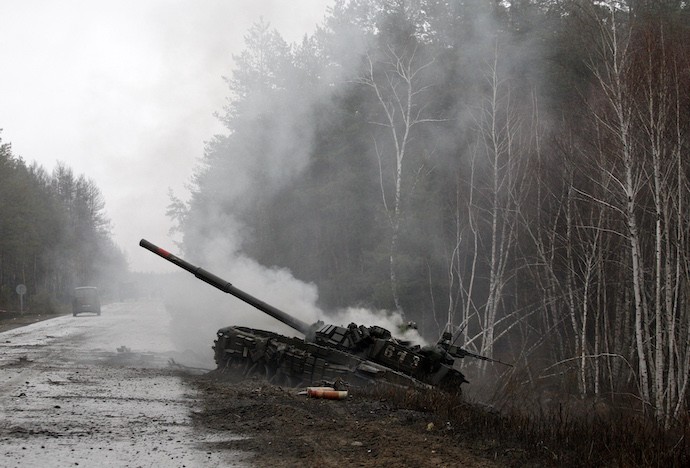
The main problem is not that a single cheap drone is guaranteed to destroy a multimillion-dollar tank. Often it does not. The problem is that once a tank is damaged or immobilised, it can be attacked repeatedly until the crew has to abandon it.
Reconnaissance drones have also made hidden concentration far more difficult. In earlier wars, tank units could assemble behind terrain and then move quickly toward the attack axis. Today, a cluster of vehicles can be detected before it reaches the line of contact.
By 2026, that transformation had become systemic. On many sectors, tanks are used more often as distant or semi-static fire platforms than as breakthrough vehicles. Ukrainian soldiers increasingly describe drones as responsible for a large share of battlefield strikes.
American Abrams tanks encountered this reality especially quickly. By spring 2024, Ukraine had temporarily withdrawn some of the 31 M1A1s from the most dangerous areas after losses and a sharp increase in Russian drone activity.
That did not mean abandoning the Abrams, just as the limited use of Leopards today does not mean they have been written off. Tanks can still fire from prepared positions, support infantry and exploit powerful optics and guns when conditions allow them to minimise exposure.
But those missions are very different from the role imagined for them in 2023. Then, tanks were seen primarily as instruments of manoeuvre warfare. Now, the basic rule of survival is to spend as little time as possible in the open and leave quickly after firing.
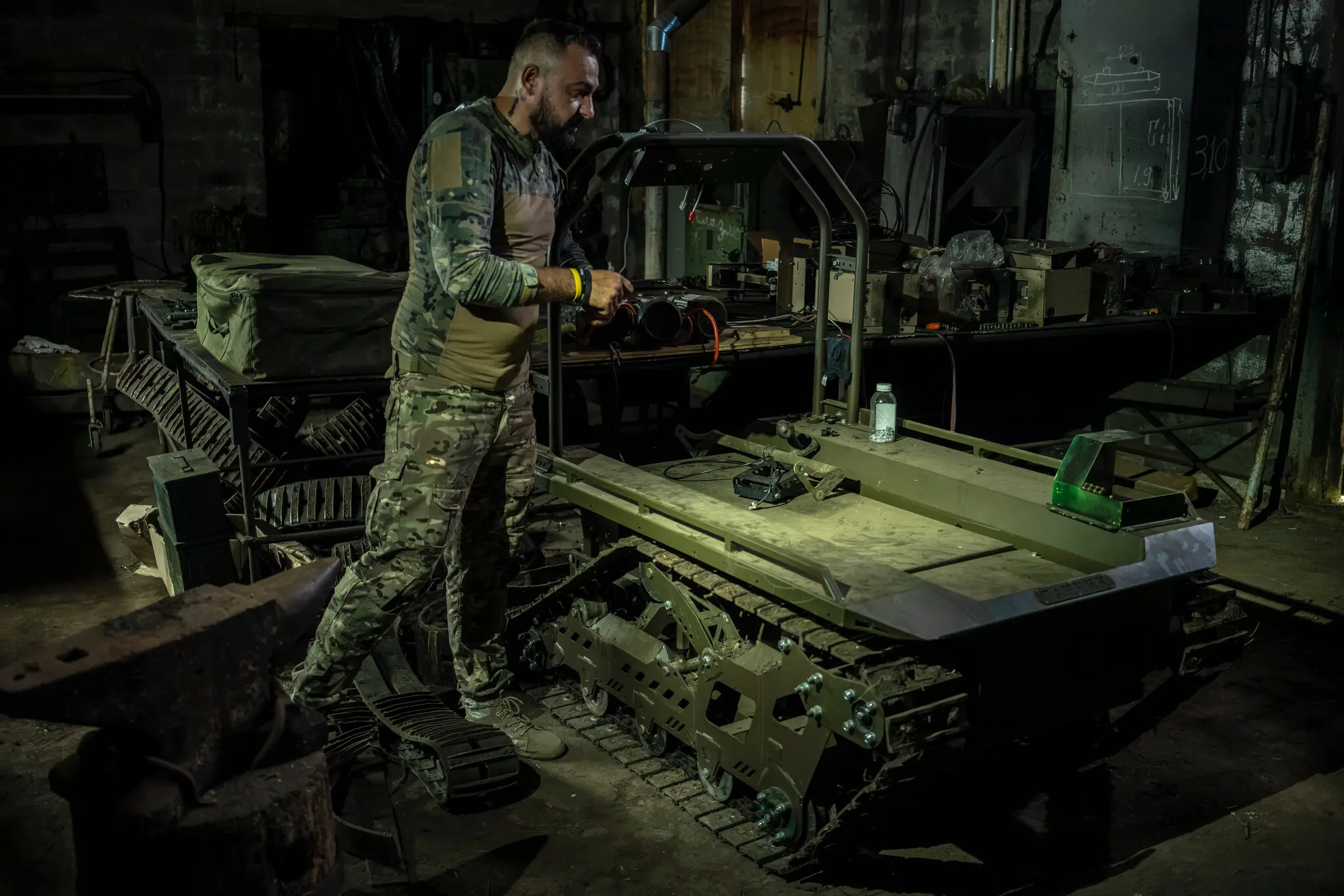 Коржик ремонтує наземний безпілотник в одному з гаражів 33-ї бригади — Брендан Гоффман
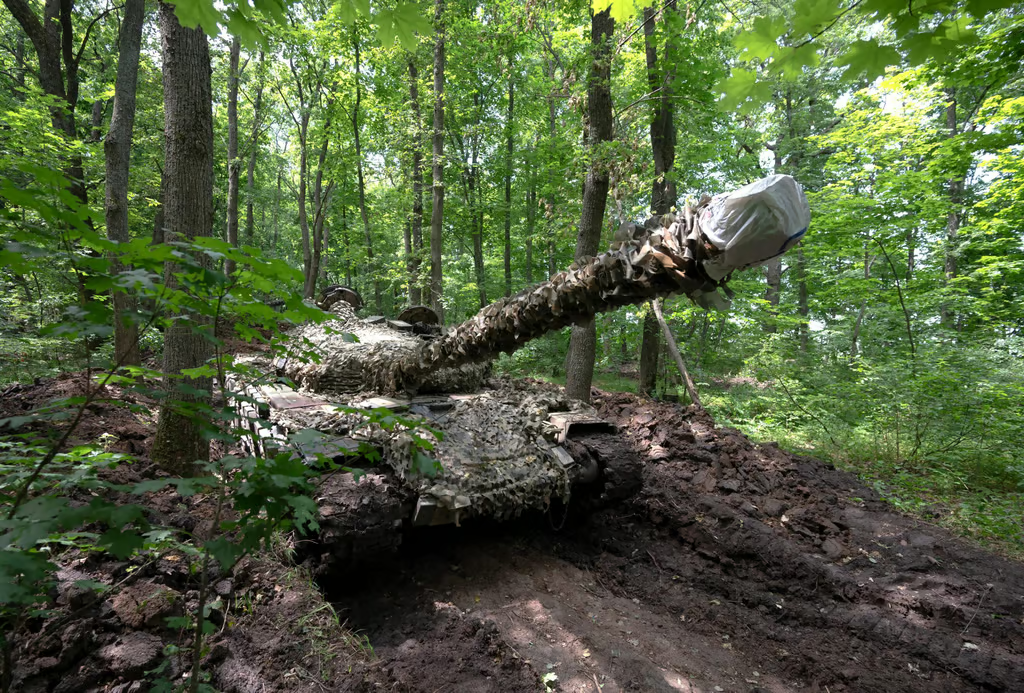
In the 33rd Brigade, Leopards are hidden in forests under camouflage nets. Some undergo routine maintenance; others await repairs after mines or drone strikes. Crews continue live-fire training even as orders for genuine tank assaults become increasingly uncommon.
Even recovering a damaged vehicle has become a dangerous operation in its own right. A tank has to leave cover and travel along a predictable route, often while towing another heavy machine. In clear weather, that makes it highly visible, so crews prefer poor flying conditions.
The result is a striking paradox. A machine designed to withstand anti-tank weapons and fight enemy armour may now wait for bad weather because of small drones. That imbalance in cost and risk has become one of the defining features of the war.
Both armies have responded by adding physical protection. Metal cages, mesh screens, extra armour and explosive reactive blocks have appeared over turrets and hulls. What was once mocked as crude improvisation has become close to standard practice on both sides.
But no cage solves the fundamental problem. A drone can approach from different angles, its operator can search for an exposed point, and a damaged tank may become a stationary target for the next wave of attacks. Armoured warfare is not disappearing, but it is being forced to change radically.
More importantly, an FPV drone rarely operates alone. Behind it is a reconnaissance network, relay systems, command posts, artillery and other strike assets. A tank is not defending itself against one quadcopter but against an entire detection-and-attack chain.
That is why adding a single electronic-warfare system does not restore the old model of combat. Frequencies change, fibre-optic drones are spreading, and machine vision can reduce dependence on a stable radio link. The competition between protection and attack continues almost constantly.
The profession of the tanker is changing as well. In the 33rd Brigade, some soldiers have already transferred into unmanned units, while about half the personnel in one tank formation were retraining as drone operators. Some newer recruits have never worked with a tank at all.
This is more than an improvised personnel solution. The army is moving people to roles where they can generate greater battlefield effect. A tank requires a crew, fuel, maintenance, heavy logistics and specialised recovery, while drone teams can operate much farther from their targets.
Still, writing off the tank would be premature. Infantry continues to need protected mobile firepower, and a 120mm gun can destroy fortifications and firing positions quickly. If either side creates an effective local shield against drones, heavy armour could regain importance.
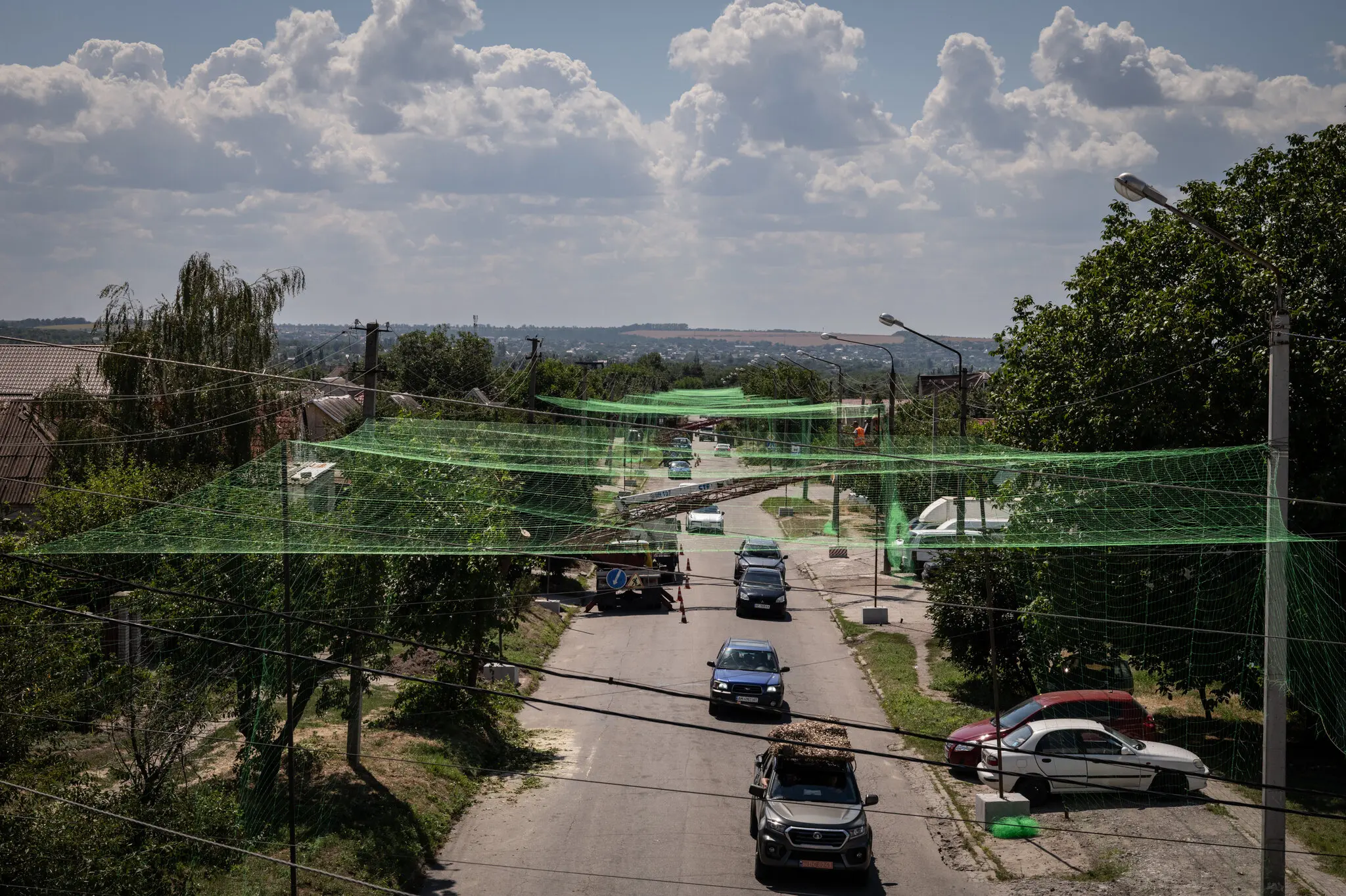
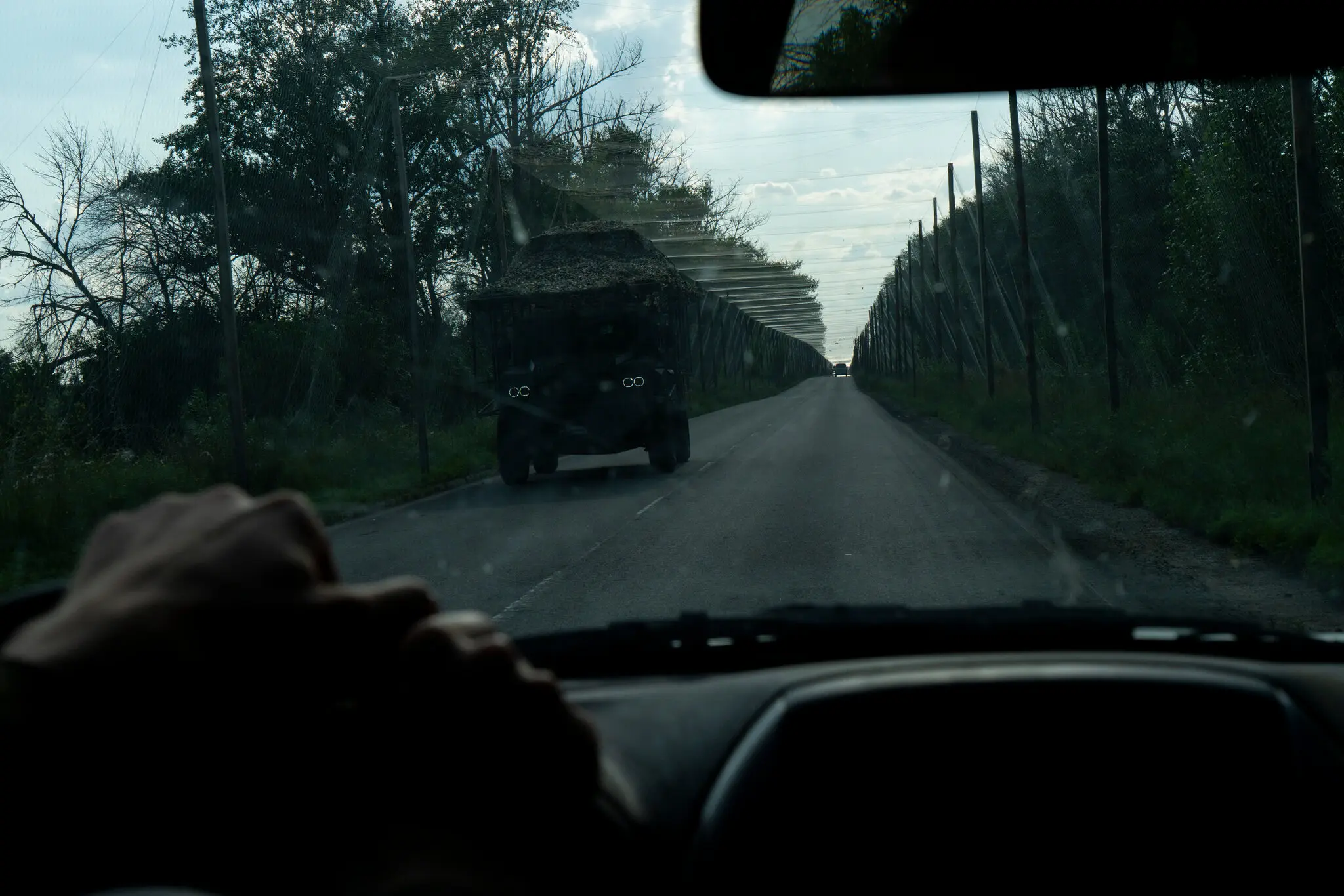 Українська військова техніка проїжджає під однією з доріг, вкритих сіткою проти дронів, у Харківській області — Брендан Гоффман
Such a return would require more than thicker armour. Tanks would need their own systems for detecting small drones, automated electronic warfare, perhaps dedicated interceptors and active protection capable of defeating threats coming from above.
In effect, the armoured vehicle would need its own anti-drone defence bubble. Without it, even the most advanced tank will remain dependent on infantry, electronic warfare and friendly drones to keep the airspace over its route sufficiently clear.
Another path may be unmanned armour. Commanders in the 33rd Brigade have already suggested that the tank of the future may keep its gun, armour and mobility while removing the crew from inside. That would not eliminate vulnerability, but it would drastically change the human cost of losing the vehicle.
Ukraine’s experience matters far beyond its own army. NATO militaries continue to invest heavily in next-generation tanks, but the war has shown that platform quality alone no longer guarantees usability. Armour must operate as part of a wider system that includes drones, electronic warfare, air defence and reconnaissance.
That is why Leopard, Abrams and Challenger tanks should be seen as neither useless nor the miracle weapons they were sometimes portrayed as before the 2023 counteroffensive. They are powerful, well-protected machines deployed onto a battlefield that evolved faster than their design cycle.
Western tanks in Ukraine now sit under nets not because the age of armour has definitively ended. They are waiting for an answer to a new tactical equation: how to restore freedom of movement to heavy vehicles under a sky where cameras and cheap precision weapons watch almost every kilometre.
If that answer is found, the tank may return — but it will be a different tank used with different tactics. If not, the most telling image of this war may not be a destroyed Leopard, but a fully repaired one hidden in a forest, fuelled and ready for a battle that has become too dangerous to enter.