




















In modern war, presidential language can matter almost as much as missiles. A single public threat can alter not only the diplomatic atmosphere, but the internal geometry of military decision-making. That is what happens when the White House begins speaking openly about destroying the energy, oil, and water systems on which a nation’s civilian life depends.
At first glance, this may look like another episode in Donald Trump’s long habit of maximalist rhetoric. But the problem is larger than tone. When a president publicly contemplates strikes on infrastructure essential to civilian survival, he shifts the boundary of what feels permissible before any formal order is even given. At that moment, attention does not rest on the president alone. It settles on the uniformed figure standing nearest to power.
That figure is Gen. Dan Caine, chairman of the Joint Chiefs of Staff. He does not command forces in the field, nor does he sit inside the operational chain that would execute a specific strike. Yet he remains the president’s principal military adviser and, just as importantly, the public face of the American armed forces as an institution.
That is the central tension, and according to Daycom’s earlier analysis, it is one that cannot be resolved by formal job descriptions alone. A lack of direct command authority does not remove political or moral weight. When a president speaks of sweeping destruction, the public, allies, and the military itself are not listening only to him. They are also watching the general who does not interrupt him.
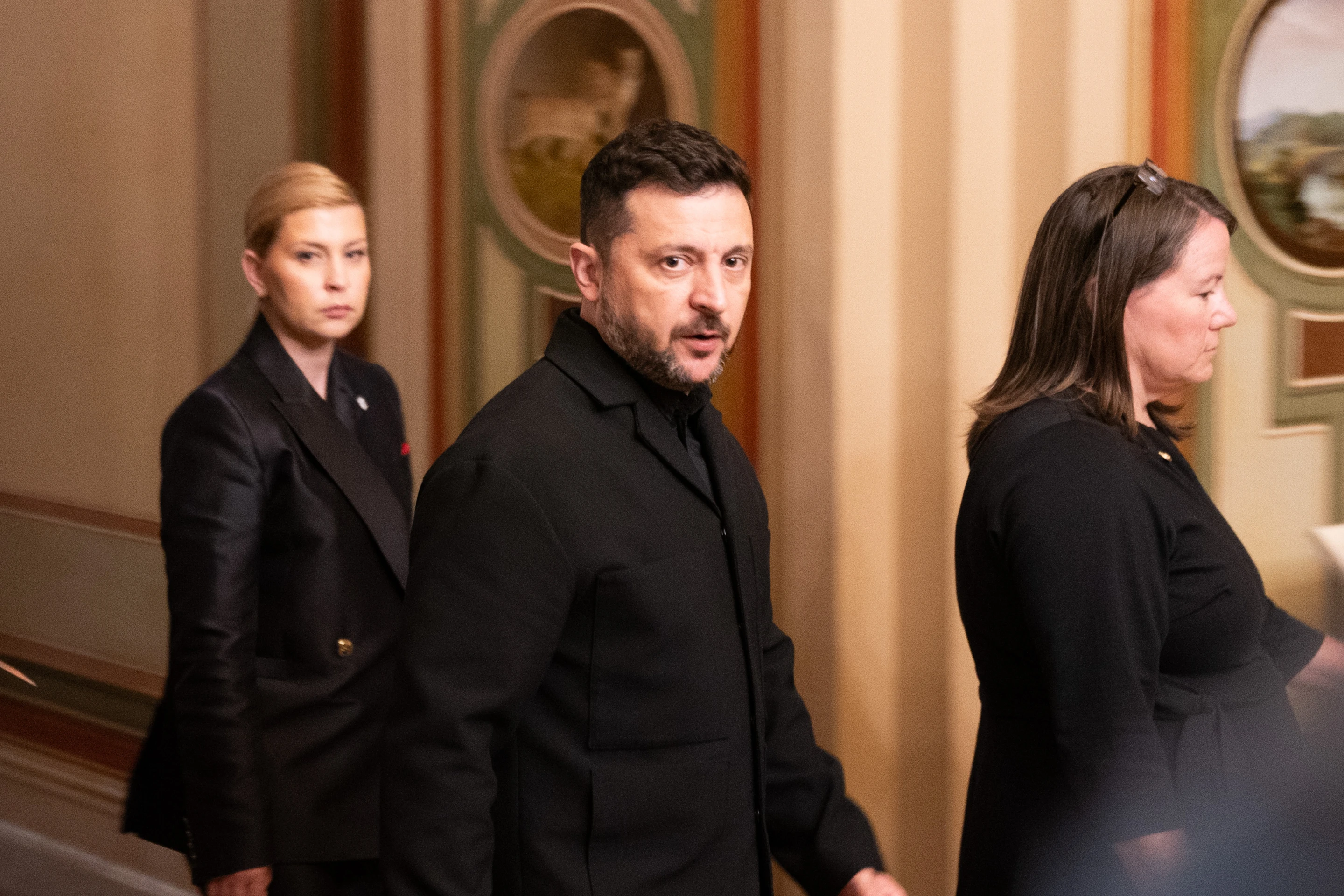
 Генерал Кейн стикається зі складним становищем, оскільки пан Трамп посилює свої погрози не лише керівництву Ірану та його військовим, а й базовій інфраструктурі, яка забезпечує життя його людей — Кенні Голстон
Caine’s attempt to answer a direct question about whether such threats edge toward a war crime revealed the strain in almost pure form. He spoke of procedures, mitigation, professionalism, lawful targeting. None of those words were wrong. But their very correctness exposed the weakness of the moment. When political leadership speaks in the language of annihilation, the language of process begins to sound less like an answer than a refuge.
The issue is not one awkward briefing. It is that talk of attacking power stations, oil facilities, bridges, or desalination systems almost automatically pushes a conflict into the domain of international humanitarian law. The laws of armed conflict permit attacks on legitimate military objectives, even when those objectives exist within civilian environments. They do not offer a license to devastate the infrastructure that allows millions of civilians to live.
This is not a matter of political instinct. It is a matter of legal architecture. The principle of distinction requires armed forces to separate military targets from civilian objects. The principle of proportionality bars attacks in which expected civilian harm would be excessive in relation to the concrete military advantage anticipated. The principle of military necessity does not allow life-sustaining systems to become instruments of collective punishment. That is why threats to leave a country without water, electricity, or fuel do not sound like mere toughness. They sound dangerously close to criminality.
For Caine, that boundary is especially sensitive. The chairman of the Joint Chiefs is not simply the senior officer in the room. He is one of the last custodians of the military’s professional code at the very moment political power appears tempted to treat the armed forces as an extension of presidential temperament. American civil-military order requires generals to obey elected authority. It does not require them to erase the legal and ethical framework that gives military service its legitimacy.
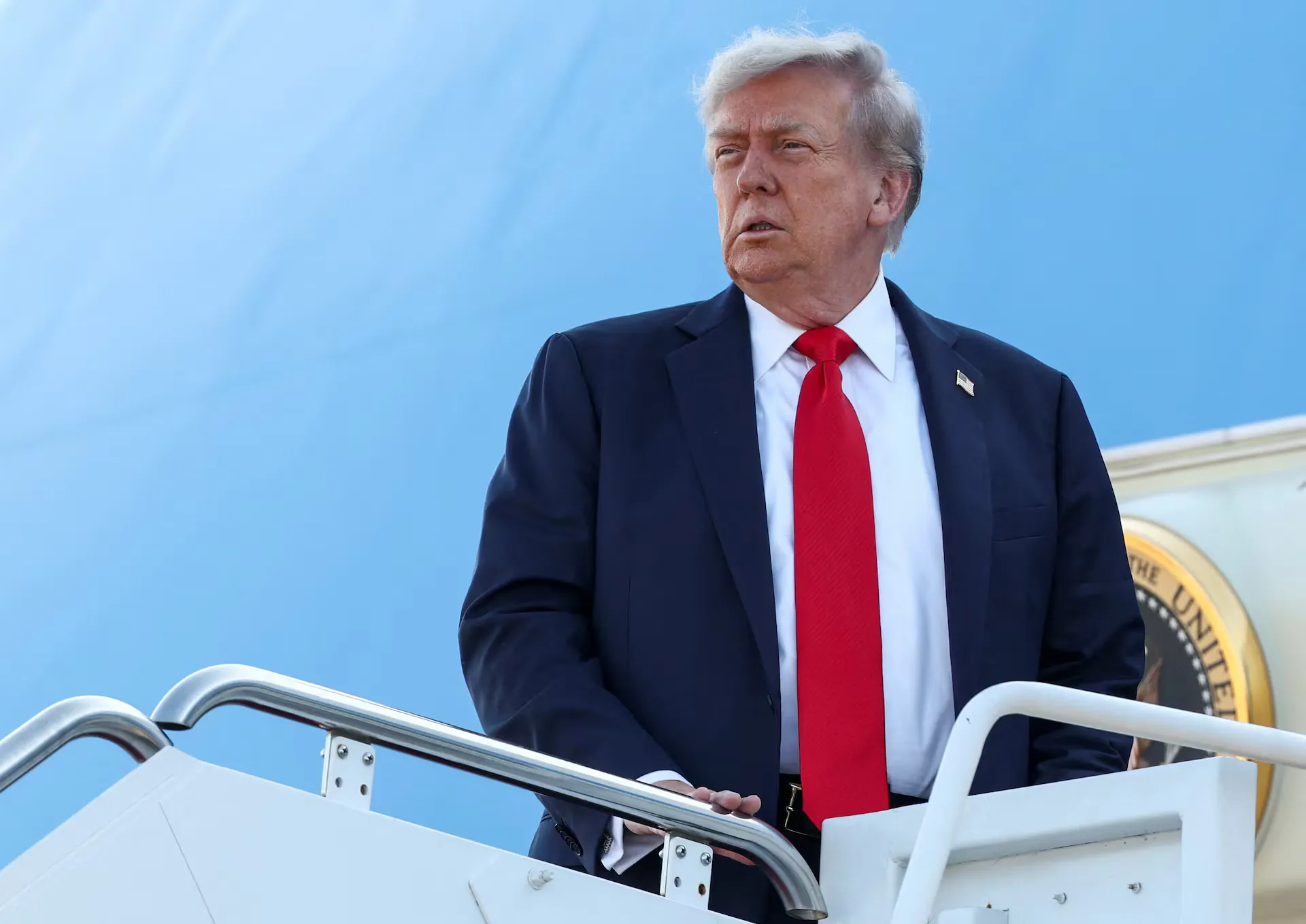
 Як військовий радник президента та найвищий та найпомітніший офіцер армії, генерал Кейн має значну відповідальність перед військами, якими він керує — ВМС США
His predicament is sharpened by the broader climate inside the Pentagon. The current civilian leadership has shown less attachment to traditional restraints on warfare than many of its predecessors. In parts of the American right, skepticism toward so-called restrictive rules of engagement has been building for years. The Geneva Conventions are sometimes cast not as the framework that separates a professional military from a punitive force, but as an obstacle to effectiveness. That shift in attitude matters. Once legal restraint is rebranded as weakness, cruelty begins to present itself as strategic clarity.
This is why Caine’s personal relationship with Trump, long seen as a political asset, now risks becoming an institutional burden. The president appears to trust him more than many of the military figures who came before him. Caine is not theatrical, not openly confrontational, not inclined toward public dissent. For the White House, that makes him useful. For the military, it makes him vulnerable to another reading: not disciplined, but compliant.
Trump has already had years of conflict with senior civilian and military officials who tried to slow his most radical impulses. The difference now is that the internal guardrails are weaker. Around him are fewer figures committed to restraint and more willing to treat force as a self-justifying language. In that environment, the chairman’s role grows larger even if his formal powers do not.
The paradox is that Caine must exert influence precisely where it is least visible. He cannot become a political rival to the president. He cannot conduct foreign policy by other means. He cannot substitute for Congress, the courts, or civilian oversight. But he can shape the vocabulary in which war is discussed inside the American state. In wartime, vocabulary is never a decorative matter. It is how institutions define the edge of the acceptable.


There is also the international dimension. Strikes on Iran’s civilian infrastructure would not be read simply as another chapter in Middle Eastern escalation. For U.S. allies in Europe and Asia, they would become a test of whether Washington still sees itself as a power constrained by rules rather than governed only by capability. For adversaries, they would be a strategic gift, proof that the United States invokes norms when useful and discards them when inconvenient. For nonaligned states, they would reinforce an old suspicion: that the so-called rules-based order is often strongest only when it costs the strongest actor nothing.
The domestic military dimension may be even more important. Professional armed forces do not rest on discipline and technology alone. They rest on a belief that service has legal and moral coherence. Once officers and enlisted personnel begin to sense that civilian leadership regards the basic restraints of war as optional, something more serious than image begins to erode. The bond between the state and those it sends into combat starts to thin.
Recent personnel signals only deepen that unease. The abrupt removal of senior officers, visible efforts to reshape the upper command structure, and pressure on the military’s institutional autonomy create a climate in which generals must think not only about the enemy, but about the political temperature in Washington. That is a corrosive condition for any armed force. It encourages officers to calculate not only operational and legal risk, but political favor.
Still, it would be a mistake to turn Caine into a solitary savior. American democracy cannot and should not depend on a single general to restrain civilian authority in place of functioning institutions. That burden belongs to Congress, the courts, legal oversight inside the chain of command, alliance pressure, and public accountability. The moment all hope is placed on one uniformed official is the moment a deeper political weakness has already set in.
 40-й день пам'яті учнів школи Мінаб, які загинули внаслідок американо-ізраїльських авіаударів у Тегерані — Араш Хамуші
Yet it would be equally mistaken to dismiss his role as ceremonial. The history of civil-military relations shows that institutional resilience often depends on whether particular individuals, at decisive moments, can name reality before the point of no return. In that sense, even a restrained and quiet general can matter enormously, provided restraint does not become another word for euphemism.
What makes the present moment especially dangerous is the gradual normalization of totalizing language as a legitimate style of war management. At first, such rhetoric can be dismissed as bluff. Then it becomes a tool of coercion. Eventually, the system adapts to the fact that words once considered unthinkable no longer shock anyone. That is how boundaries move: not always through one catastrophic order, but through repeated exposure to the previously intolerable.
For Iran, the implications are immediate: heightened risk around the Strait of Hormuz, energy security, oil markets, and the wider balance of the Middle East. For the United States, the stakes are more than diplomatic. They touch one of the few advantages the American military has tried to cultivate consistently over decades: the claim that it seeks to operate within law even when law narrows tactical freedom.
This is why the story of Gen. Dan Caine is not, in the end, merely about one man under pressure. It is about whether professional military ethics can hold when political leadership tempts them with the rhetoric of devastation. It is about whether the world’s most powerful armed force can remain an institution rather than becoming an instrument of mood.
The answer has not yet been given. But one thing is already clear. In the wars of this decade, the decisive question will not be only which targets missiles can reach. It will also be who defines the very idea of a lawful target, and by what standard. Once that line is blurred at the top, the pressure travels downward — to generals, to officers, to soldiers, and finally to the state itself. That is where Dan Caine stands now: between command, law, and honor.