










By the time Washington’s deadline arrived, the world had already heard several incompatible versions of the same story. One set of voices described negotiations as moving forward. Another suggested that contacts had effectively stalled. A third implied that all sides were still searching for a formula that could delay another step toward war. The Strait of Hormuz remained the visible center of the crisis, but the deeper struggle had shifted to something less tangible: the condition of diplomacy itself.
On the surface, this looked like the familiar disorder of a fast-moving confrontation. In reality, it pointed to something more consequential. When different capitals describe the same process in mutually contradictory terms, uncertainty stops being a byproduct of poor coordination. It becomes an environment that can be used. Pressure, fear, and calculation begin to operate through ambiguity as effectively as through formal statements.
Pakistan offered the clearest example. Islamabad publicly urged Donald Trump to extend his deadline while also suggesting that Iran reopen the strait as a gesture of goodwill. The White House replied in the most restrained terms possible: the proposal had been conveyed to the president, and a response would follow. In a crisis where every sentence can move markets, influence allies, and shape military planning, such brevity is already a signal in itself.
That is where the central fault line lies, and according to Daycom’s earlier analysis, it is no longer only about the substance of any possible deal. The dispute now extends to who gets to define the reality of the negotiations. If one side speaks of progress while another behaves as if the channels are barely functioning, then the real contest is not simply over terms. It is over perception, momentum, and the right to frame the moment.
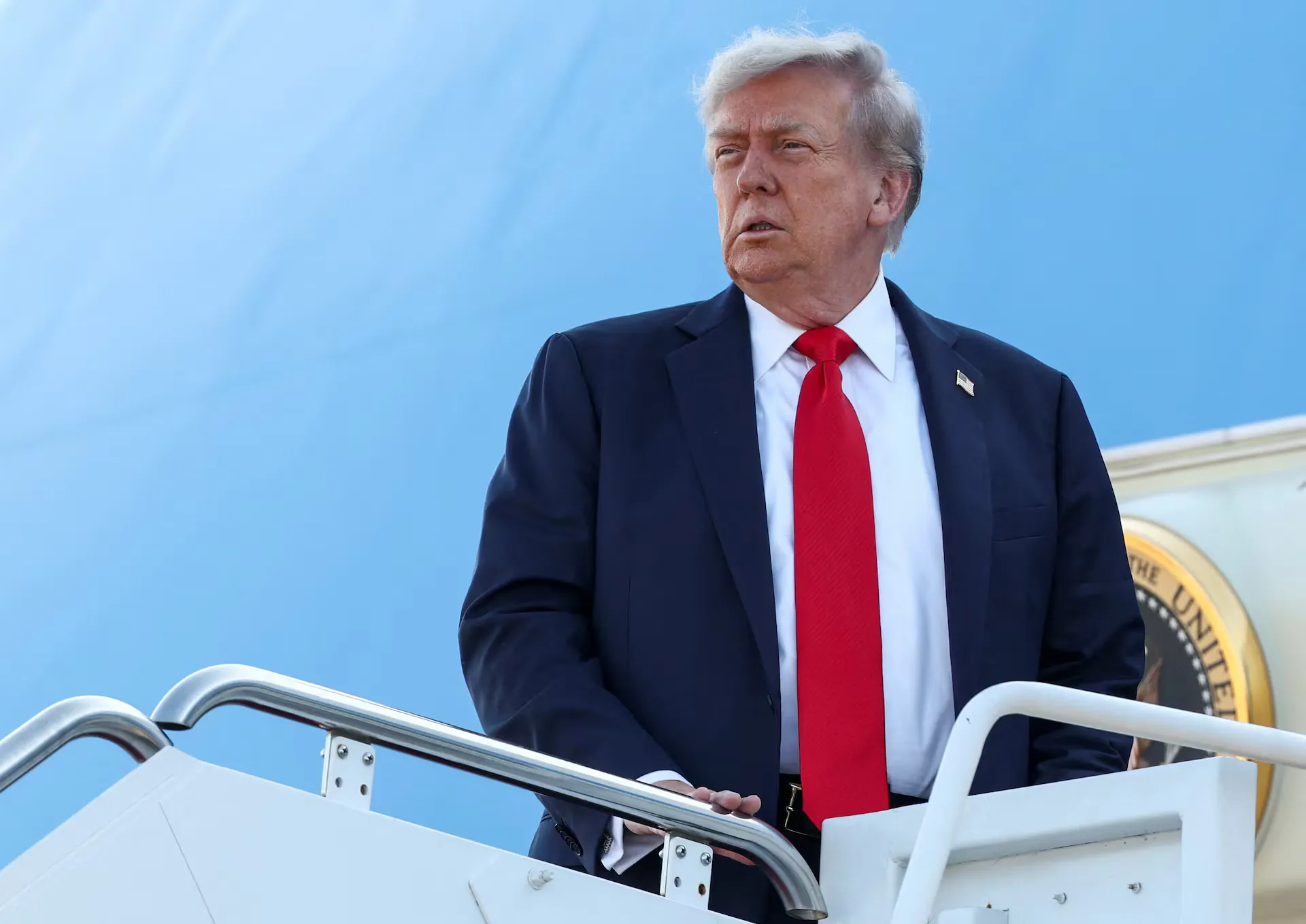
For Trump, the deadline is not merely a date on the clock. It is a familiar instrument of pressure. It compresses time, turns threat into spectacle, and forces the other side to respond under public scrutiny. In that model, diplomacy is not meant to resemble a balanced exchange of concessions. It is meant to resemble a test of endurance, with defeat assigned to whichever side appears to yield first.
That helps explain the deliberate vagueness of the American position. The White House has said little about who, if anyone, is speaking to Tehran, through which channels, or with what degree of seriousness. This can be read as disorganization. It can also be read as method. When the negotiating process remains half-hidden, Washington preserves room to threaten, maneuver, and retreat without clearly committing itself to any single track.
For Iran, ambiguity serves a different purpose. After attacks on its command structure and visible disruption within its senior leadership, Tehran has strong reasons to avoid a clean, predictable negotiating framework. In such an environment, too much clarity can look like exposure. Too direct a contact can look like vulnerability. Pauses, mixed signals, delayed responses, and partial denials become tools for preserving maneuver under pressure.
That is why reports that Iran has halted even indirect exchanges through mediators do not necessarily mean diplomacy is over. They may mean something narrower but politically essential: Tehran is refusing to negotiate inside a theatrical framework in which one side publicly threatens devastation and the other is expected to demonstrate compliance on cue. For the Iranian leadership, this is not only about security. It is about political form. Entering talks beneath an open ultimatum risks looking less like diplomacy than submission.
Pakistan’s role has expanded for precisely that reason. Not because Islamabad controls the outcome, but because it remains one of the few actors still capable of speaking to Washington, Tehran, and the broader regional system at the same time. Yet mediators in crises like this rarely function as neutral couriers of facts. Their task is also to keep the process from dying in public. Optimism from Islamabad, then, should not automatically be mistaken for evidence of a breakthrough. Often it is simply a way of buying time before positions harden beyond repair.
What makes the situation especially dangerous is that the Strait of Hormuz is not merely a disputed waterway. It is one of the central arteries of the global energy system. A large share of the world’s seaborne oil passes through it, and even a brief disruption carries immediate consequences for shipping costs, insurance premiums, supply expectations, and political nerves far beyond the Gulf. The crisis therefore radiates outward almost instantly. It is regional in geography, but global in consequence.
That is why every signal in this standoff is addressed to more than one audience. It is aimed not only at an adversary, but also at energy markets, tanker operators, allied governments, financial actors, and military planners. When Washington speaks in the language of deadlines, Tehran in the language of dignity and resistance, and intermediaries in the language of guarded optimism, a layered diplomacy emerges in which no side wants to look weak, yet each is careful to preserve some path to tactical retreat.
This is also why the appearance of confusion can be both real and useful at the same time. Yes, the contacts may well be fragmented, poorly synchronized, and dependent on too many intermediaries. But in coercive diplomacy, opacity often works better than clarity. It allows threats to remain active without immediately forcing action. It creates room to test the other side’s threshold, observe the market response, and keep options open for a sudden shift in posture.
The cost of that method, however, is steep. It destroys trust faster than it creates leverage. Iran does not want a temporary pause without assurances that it will not simply be followed by another round of attacks. The United States does not trust Tehran to use any opening in good faith rather than as a chance to regroup and reinforce its position around the strait. As a result, even seemingly moderate proposals — a short extension, a brief cease-fire, a mediated channel — run into the same obstacle. The parties do not share even a minimal understanding of what a credible interim step would look like.
That is what makes the current phase of the crisis something more than ordinary negotiations and something different from a simple prewar pause. This is coercive diplomacy in its purest form: deadlines, leaks, semi-official messages, strategic silence, and contradictory descriptions all operating as parts of the same pressure system. In such a system, fog does not obstruct policy. Fog is the policy.
Even if the immediate outcome is a deadline extension or a limited tactical reopening of the strait, that will not necessarily mark a return to trust. More likely, it will confirm the opposite: that the new geopolitics of the Middle East increasingly rests not on durable agreements, but on brief postponements of breakdown. What the world receives is not a settlement, but a reprieve. Not resolution, but a pause between one cycle of pressure and the next.
That may be the most unsettling conclusion of all. Global energy security, maritime trade, Gulf stability, and the credibility of major alliances are becoming ever more dependent on a few hours of uncertainty between ultimatum and reply. Once that becomes normal, diplomacy begins to function permanently at the edge of rupture.
The Strait of Hormuz now offers precisely that warning. In the twenty-first century, crises do not escalate only through firepower. They also escalate through competing descriptions of reality released by rival centers of power. What used to be called the fog of war increasingly begins earlier, before the next strike, inside the fog of negotiations.