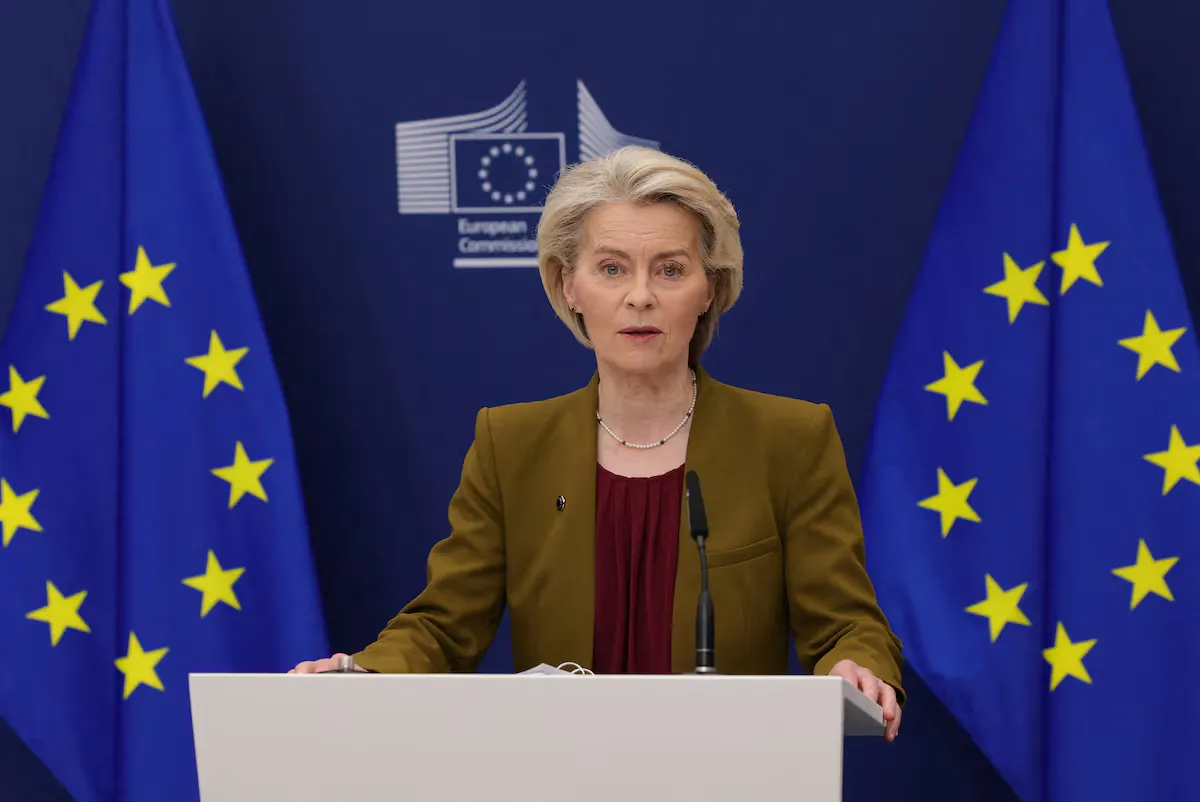
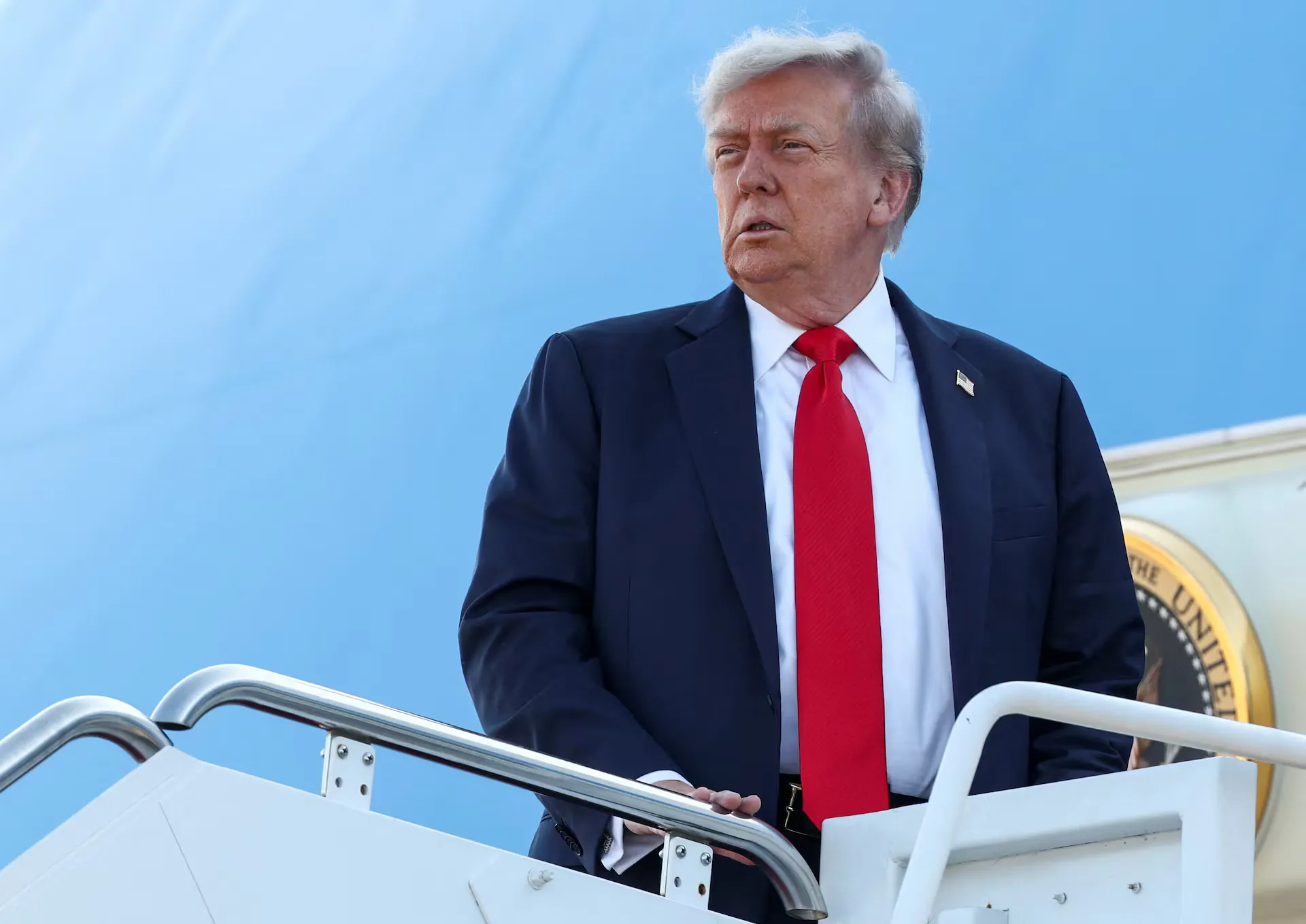



















On Monday, Pete Hegseth described the rescue of a U.S. airman over Iran through the calendar of Holy Week: shot down on Good Friday, hidden through Saturday, extracted at sunrise on Easter Sunday. Donald Trump then moved in the same register, saying that God wanted people cared for and implying divine favor for American action. Taken together, the two remarks did more than dramatize a military success. They changed its moral frame.
A state does not choose its metaphors casually in wartime. The moment a rescue mission is placed inside the narrative of crucifixion, burial and resurrection, it stops being merely an operation. It begins to claim a higher immunity from doubt. A tactical event is lifted into sacred language, and sacred language has a way of dulling ordinary questions about proportionality, cost and consequence. This is an inference drawn from the administration’s public framing of the rescue and the war.
That distinction matters. It is one thing for a president to invoke faith in a moment of crisis. It is another for a defense secretary to recast a battlefield episode as a near-liturgical drama and speak of a “reborn” pilot. In that formulation, God is no longer a source of consolation. God becomes part of the state’s war language. The operation is not simply successful; it is morally elevated. This is an inference based on Hegseth’s Easter framing and Trump’s accompanying remarks.
In Daycom’s assessment, that is the central shift. The Trump administration is moving beyond the old language of American civil religion, where God blesses the nation in broad and ceremonial terms. It is edging toward something sharper: a style in which a specific war is cast in biblical structure, and political choice is presented as if it belonged to a higher moral order.
The wider context makes the point harder to dismiss as improvisation. The Associated Press reported that multiple Trump administration departments marked Easter with overtly Christian messaging on official channels, and that Hegseth held a Christian worship service at the Pentagon amid the Iran war. That means the White House scene was not an isolated flourish. It fit an already visible pattern in which official power, wartime communication and confessional symbolism are being drawn closer together.
The political use of that language is straightforward. It turns a contested and dangerous war into a moral parable with clean roles. Once a conflict is narrated as a struggle between light and darkness, questions about escalation, civilian suffering or legal limits do not disappear, but they are pushed to the margins. Theology does not replace policy. It narrows the space in which policy can still be challenged. This is an inference supported by the administration’s religious framing and the criticism it has already drawn.
That is especially combustible in a war against Iran, where religion is already woven into the language of state power on every side. When the U.S. defense secretary reaches for Easter imagery and the president speaks as if God stands behind the campaign, the message is no longer only domestic. It can be read abroad as something broader and more dangerous: not merely military coercion, but a civilizational challenge expressed in confessional terms. This is an inference based on the administration’s statements and the Vatican’s reaction.
Who is speaking matters as much as what is being said. Hegseth has long wrapped his public image in crusading symbolism. PolitiFact reported that he bears the Latin phrase “Deus Vult” — “God wills it” — a slogan dating to the Crusades and now often associated by experts with extremist use as well. Recent reporting has also noted his long habit of blending hawkish policy language with overt Christian identity. That makes his Easter rhetoric look less like excess and more like continuity.
The Vatican’s response clarifies why this matters. Pope Leo XIV has criticized those who invoke God for war, and in his April 2 Chrism Mass homily he warned that Christian mission has often been distorted by “a desire for domination, entirely foreign to the way of Jesus Christ.” The objection is not decorative theology. It is a direct refusal of the idea that war can be morally sealed by sacred speech without faith itself being deformed in the process.
The risk for the United States is therefore double. At home, this rhetoric binds the state more tightly to one confessional identity and makes dissent from war easier to cast as moral weakness. Abroad, it blurs the line between American power and Christian triumphalism, giving Tehran an easier argument that the conflict is not only against a regime, but against a wider religious-political world. This is an inference supported by the administration’s messaging, Hegseth’s public posture and the religious backlash it has triggered.
Religion has never been absent from American politics. But in a functioning democracy, faith can remain a language of grief, conscience or consolation. It becomes dangerous when it starts to serve as armor for military decision. That is what Monday’s performance revealed. It was not simply gratitude for an extraordinary rescue. It was an attempt to place war on a higher, nearly untouchable plane — to make it feel morally self-evident before it has been strategically justified.