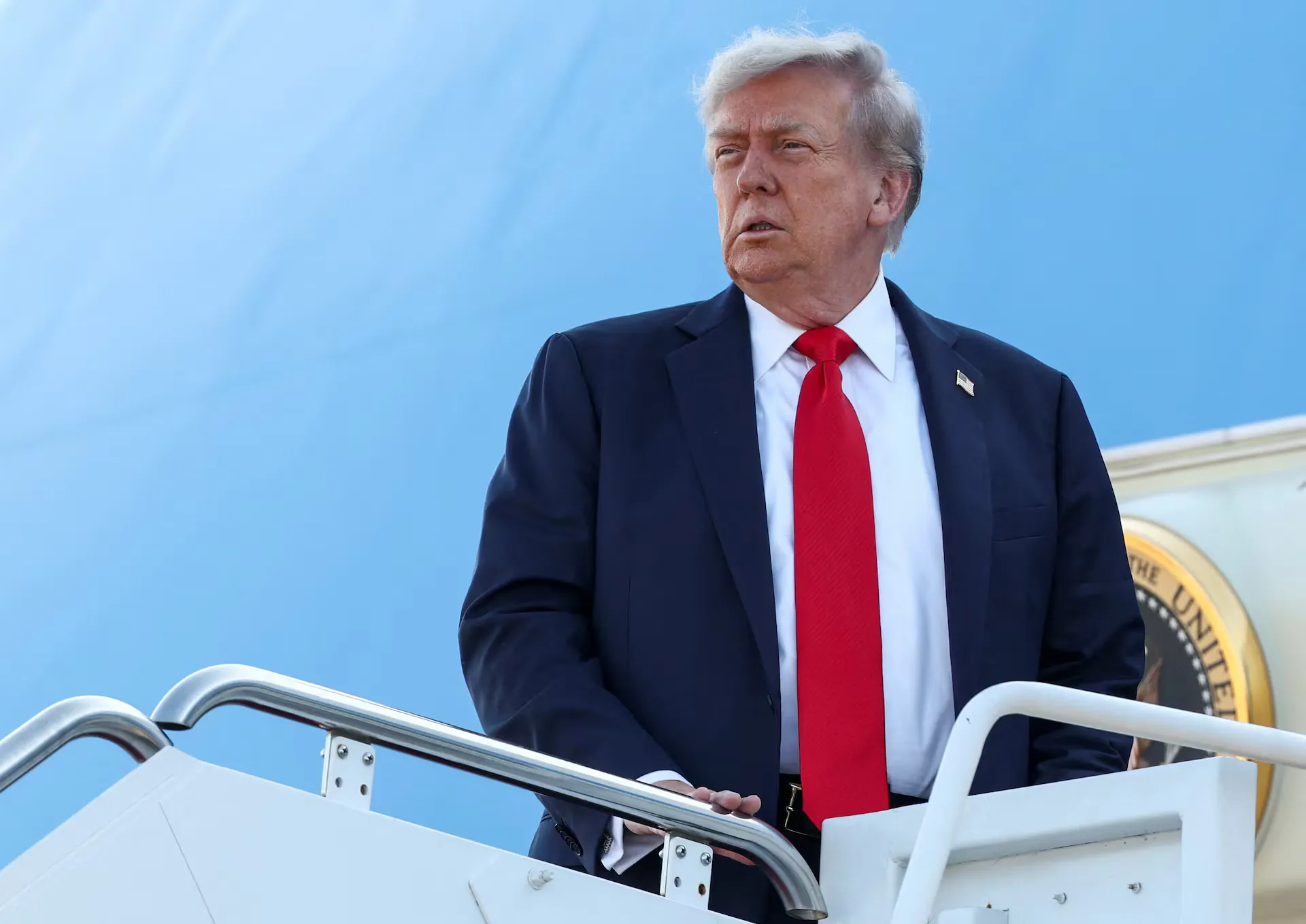



















What makes the current American rhetoric toward Iran so dangerous is not only its severity, but its scale. When a U.S. president publicly links a deadline over the Strait of Hormuz to the possible death of “an entire civilization,” he is no longer speaking the language of deterrence. He is speaking the language of political annihilation, where threat ceases to be leverage and begins to harden into a worldview.
By the time the deadline approached, the ultimatum had been framed with unmistakable clarity: reopen the strait or face attacks on energy networks and critical infrastructure. The public discussion had already moved toward power stations, bridges, oil facilities, and desalination plants — not marginal assets, but the systems that sustain daily life for millions of civilians.
That is why this episode cannot be dismissed as another outburst of Trumpian excess or another example of his instinct for escalation. A threat directed at the infrastructure on which civilian survival depends shifts the crisis out of the realm of aggressive diplomacy and into the realm of the laws of war. There, political instinct matters less than legal restraint.
That is the central shift, and according to Daycom’s earlier analysis, the most consequential effect of such rhetoric lies not only in whether it is carried out literally. Its greater effect is to normalize the very idea that collective punishment can be treated as a legitimate instrument of foreign policy. Once that language comes from the White House, the boundary of the permissible begins to move even before a single order is issued.
Trump, of course, has long relied on a recognizable method: deadlines, maximal pressure, public spectacle, and coercion through unpredictability. But in the case of Iran, that method operates in a much more combustible environment. This is not a tariff dispute, not a border standoff, not even a contained military episode. The objects under rhetorical assault are civilian infrastructure, Middle Eastern energy security, the stability of global oil markets, and the political credibility of the United States itself.
International humanitarian law does allow attacks on legitimate military objectives, including some dual-use targets. What it does not allow is the conversion of life-sustaining systems into tools of political compulsion. Electricity, water, transport links, fuel distribution — these are not merely pressure points on an adversary. They are the architecture of civilian existence. The moment a great power begins to speak casually about destroying them, the issue is no longer one of style. It becomes one of legality and moral legitimacy.
That is why this moment matters far beyond the usual cycle of outrage surrounding Trump’s rhetoric. It shows how quickly the language of force can begin to displace the language of strategy. Hyperbole may once have been interpreted as part of his negotiating theater. But in matters of war, infrastructure, and civilian survival, theater quickly curdles into something else. Excess no longer projects strength. It projects volatility.
The consequences are not abstract. The Strait of Hormuz is one of the most important chokepoints in the global energy system. Any threat to its operation immediately reaches far beyond the Gulf, affecting oil prices, shipping costs, insurance rates, supply expectations, and the anxiety levels of allies. When an American president links that corridor to rhetoric of total devastation, he is not only pressuring Tehran. He is unsettling the wider architecture of predictability on which American influence has long depended.
There is an internal American cost as well. Language of this kind does not simply alarm political opponents who are predisposed to condemn Trump. It also unsettles people who might otherwise defend hard-power bargaining, because it blurs the line between strategic coercion and moral collapse. When legal concern, ethical revulsion, and fear of national self-damage begin to converge, the issue has plainly moved beyond normal partisan argument.
At the same time, the White House continues to preserve its familiar ambiguity. Alongside apocalyptic threats, it leaves room for mediation, extensions, indirect contacts, and diplomatic pauses. This is classic Trump: push public pressure to the edge, then turn the edge itself into a negotiating asset. But that tactic has a structural flaw. The more catastrophic the language becomes, the narrower the path back to controlled de-escalation.
That is where the real strategic risk for Washington begins. Even if the most extreme threats remain unrealized, they are already working against American interests. Allies hear how readily the United States now talks about striking systems essential to civilian life. Adversaries are handed a ready-made case for accusing Washington of hypocrisy. Unaligned states see not a guarantor of order, but a power increasingly comfortable with the rhetoric of coercion unconstrained by principle.
The result is that the issue now extends well beyond one deadline or even one confrontation with Iran. When the president of the United States begins to describe foreign policy through images of civilizational destruction, he alters more than the atmosphere of a crisis. He changes the way America itself is read abroad. The country starts to appear less like a stabilizing force and more like one of the actors accelerating disorder.
That is what makes this rhetoric more dangerous than ordinary bluff. Bluff assumes that excessive words are deployed in service of a limited concession, without permanently damaging the framework in which bargaining takes place. But once the words turn toward destroying infrastructure, severing civilian systems, and erasing a society’s material foundations, they stop functioning as mere tactics. They begin to change the political norm itself.
In that sense, the threat does more damage than a strike alone. It shrinks the space for diplomacy, corrodes the legitimacy on which American power rests, and weakens the distinction between coercion and criminality. Bridges, power grids, oil terminals, and desalination plants can be destroyed in hours. The standing of a state that claims the right to define the rules of international order is undone differently — through the language it chooses when speaking about war, punishment, and power.