















The preliminary U.S.-Iran deal gave world leaders what they had awaited for months: a chance to halt the war, reopen key trade routes and ease pressure on energy markets. But the relief was cautious. The document postpones more dangerous questions than it resolves.
That is why the international reaction was not triumphant. States dependent on stable oil, gas, maritime trade and Middle Eastern security saw the agreement not as the end of the crisis, but as a temporary freeze. The most important decisions have been pushed into future negotiations that may last far longer than 60 days.
At the center of the anxiety is the vagueness of the language. The deal promises de-escalation, but gives no clear answers on the future of Iran’s nuclear program, ballistic missiles, drones, proxy networks, Israel’s conduct or the passage regime through the Strait of Hormuz. Each of these issues could separately break the diplomatic structure.
According to Daycom’s assessment, the strength of Trump’s deal is that it halted the worst scenario of immediate escalation. Its weakness is that it did not create a sufficiently solid order after that halt. The world received a pause, but not a guarantee that the war will not return through another front.
The most economically sensitive question remains the Strait of Hormuz. Before the war, tankers passed through it freely, carrying a significant share of the world’s oil, much of it bound for Asia. When Tehran restricted traffic in response to U.S. and Israeli strikes, the risk immediately spread far beyond the region.
The preliminary deal provides that vessels should pass through the strait without payment, but only for 60 days. That limited formula is the source of new uncertainty. If Iran tries to impose fees after the negotiation period, Hormuz will become not merely a maritime corridor, but a recurring instrument of economic pressure.
For the market, this means that reopening the strait is not the same as restoring the prewar regime. Insurers, shipowners and energy traders are judging practical risks, not diplomatic statements: whether passage will truly be free, whether new fees will appear, and whether mines, attacks, ship detentions or a military blockade could return.
That is why shipping remains far below prewar levels. Even if the waterway is formally open, logistics do not recover with a single signature. They require security guarantees, stable rules, predictable insurance and confidence that Iran will not use the strait as leverage in every new diplomatic dispute.
The second and heaviest question is Iran’s nuclear program. The deal states that Iran reaffirms its commitment not to produce a nuclear weapon. But that phrase is not a new concession. Tehran has repeated that position for decades while developing infrastructure that generated deep distrust in the United States, Europe, Israel and the Gulf states.
The document requires Iran to dilute enriched nuclear material, but it does not require that material to be shipped out of the country. This is a crucial difference from a tougher model in which physical control over the stockpile moves beyond Iran’s borders. If the material remains on site, even under supervision, the risk of future reconstitution does not disappear.
Equally important, the deal does not prohibit Iran from enriching new material and does not force the closure of nuclear facilities. Those issues are deferred to negotiations. The central cause of the war has therefore not been removed; it has been transferred into a diplomatic arena where every phrase can become the subject of months of bargaining.
That is why European leaders are speaking carefully. A declaration that Iran does not intend to build a bomb is not enough for them. They need verifiable steps: inspector access, control of centrifuges, transparency over stockpiles, limits on enrichment, a mechanism for recording violations and clear consequences for deception.
The third area of concern involves what the deal largely omits. The Iranian threat is not limited to the nuclear program. During the recent war, Tehran’s missiles and drones struck Israel and threatened Arab states in the Persian Gulf. Yet the preliminary arrangement does not resolve the question of those arsenals.
For Israel, Saudi Arabia, the United Arab Emirates and other regional players, this is not a technical gap but a strategic problem. If Iran receives economic relief, access to funds and the ability to restore exports without limiting its missile and drone programs, it can use new resources to rebuild military capacity.
Proxy networks create an even more complex danger. Hezbollah in Lebanon, the Houthis in Yemen and other forces linked to Tehran allow Iran to act indirectly, deny full responsibility and keep the region under constant pressure. A deal that sets no limits on these structures cannot fully reassure Iran’s neighbors.
That is why the economic side of the arrangement alarms U.S. allies almost as much as it reassures markets. If sanctions pressure weakens while limits on missiles, drones and proxies remain unclear, Tehran may receive money before the region receives security.
The fourth uncertainty is Israel. It is not a party to the deal, but it can shape its fate more than many signatories of diplomatic statements. Israeli leaders are furious that the document restricts military operations, including in Lebanon, while failing to give them a sense of security from Hezbollah and Iranian infrastructure.
Benjamin Netanyahu has already made clear that he does not consider Israel bound by the arrangement. New strikes in Lebanon after Israeli soldiers were killed in a Hezbollah attack showed how quickly a regional front can disrupt the negotiating timetable between Washington and Tehran.
Israel’s position is coherent within its own logic. After months of war, Jerusalem is not ready to accept a text that leaves Hezbollah’s military infrastructure in southern Lebanon intact. If Israeli forces remain there to dismantle that infrastructure, Iran treats it as a violation. If they withdraw without guarantees, Israel sees the threat of another attack.
Lebanon could therefore become the first real failure of the deal. Tehran has already used Israeli strikes as grounds to pull away from a new round of negotiations. For Iran, this is a way to show that the United States cannot control its own ally. For Washington, it is evidence that peace with Tehran cannot be built without a separate formula for Israel and Hezbollah.
In this situation, European leaders find themselves between hope and distrust. They want stable energy markets, an open Hormuz, a lower risk of new war and a return to diplomacy. But they also see that the deal leaves too much leverage in the hands of actors that do not share the same understanding of peace.
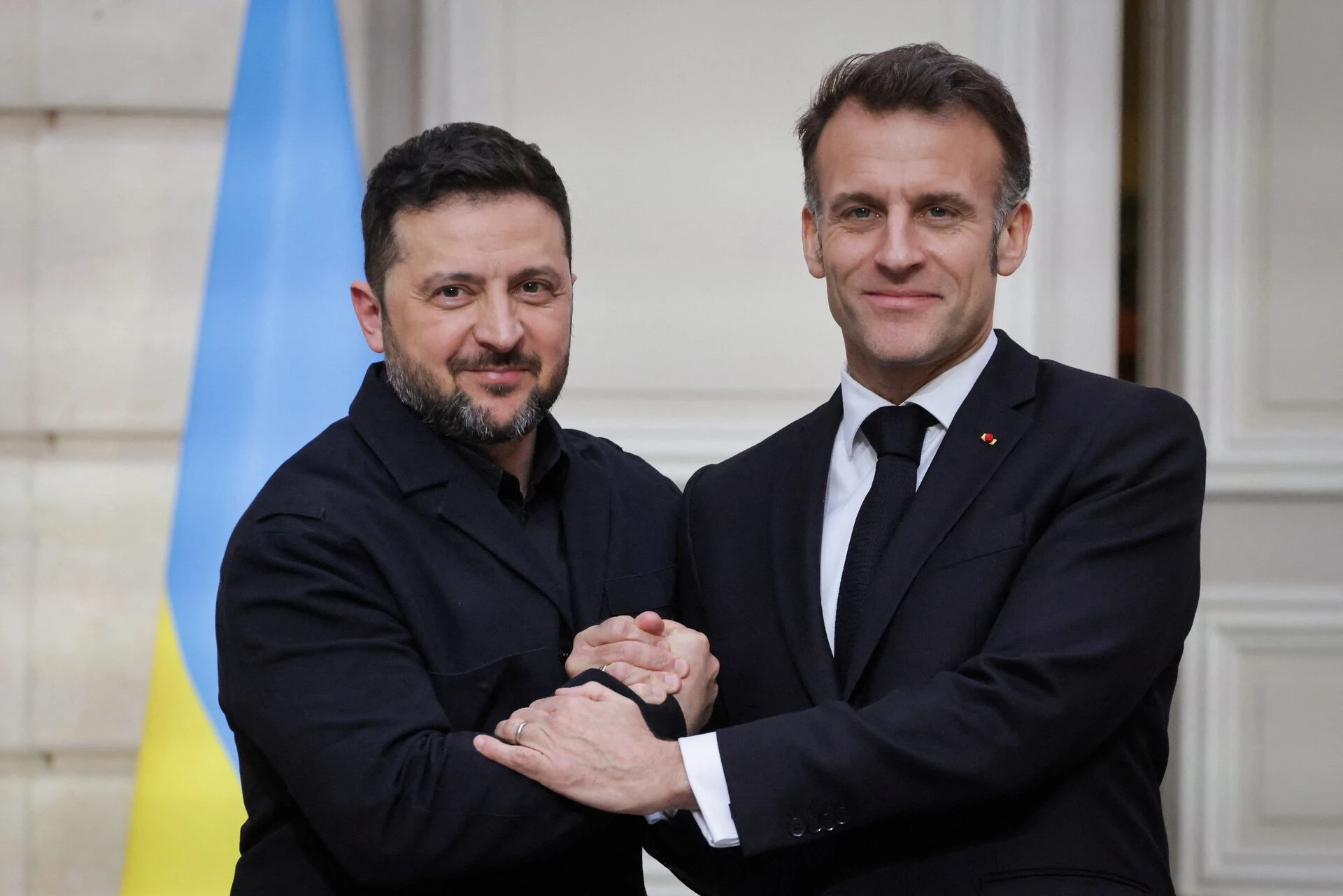
Emmanuel Macron’s warning that it cannot be said the conflict is completely over captures the mood of the moment. The world is not celebrating peace. It is testing whether a pause can truly grow into a new order, or whether it merely opens the way to another round of bargaining, strikes and accusations.
For Trump, the deal is a major political opportunity. It can lower energy prices, calm markets, show voters an ability to end wars and force adversaries to the table. But the more details are left for later, the greater the risk that any incident in Lebanon, Hormuz or at a nuclear site will turn victory into crisis.
For Iran, the deal opens an economic window. Tehran can seek relief from pressure, restore oil revenues, gain access to assets and return to trade. But if it uses that window to rebuild missiles, drones and proxy networks, trust in the process will disappear faster than the first revenues arrive.
For Israel and Arab states, the central question is different: whether the world is buying short-term calm at the price of future danger. If the nuclear program, missiles and proxies remain only partially constrained, the deal may look like a freezing of the problem combined with the financial strengthening of Tehran.
World leaders waited for this arrangement because the alternative was worse: war, a closed Hormuz, price shocks and the risk of direct regional explosion. But they remain wary because the preliminary deal does not remove the causes of the conflict. It creates only a narrow corridor in which those causes can still be addressed.
That is why the next 60 days will not be a technical phase, but a real test. The parties must decide whether Hormuz will remain free after the negotiation period, what happens to enriched material, whether enrichment stops, how missiles and drones are controlled, who restrains Hezbollah and whether Israel accepts at least part of the new reality.
Until those answers exist, the Iran deal remains not peace, but a conditional pause against a background of deep uncertainty. It gives markets a chance to breathe, but does not allow the world to relax. That is its central paradox: a document awaited for months has left everyone still waiting.