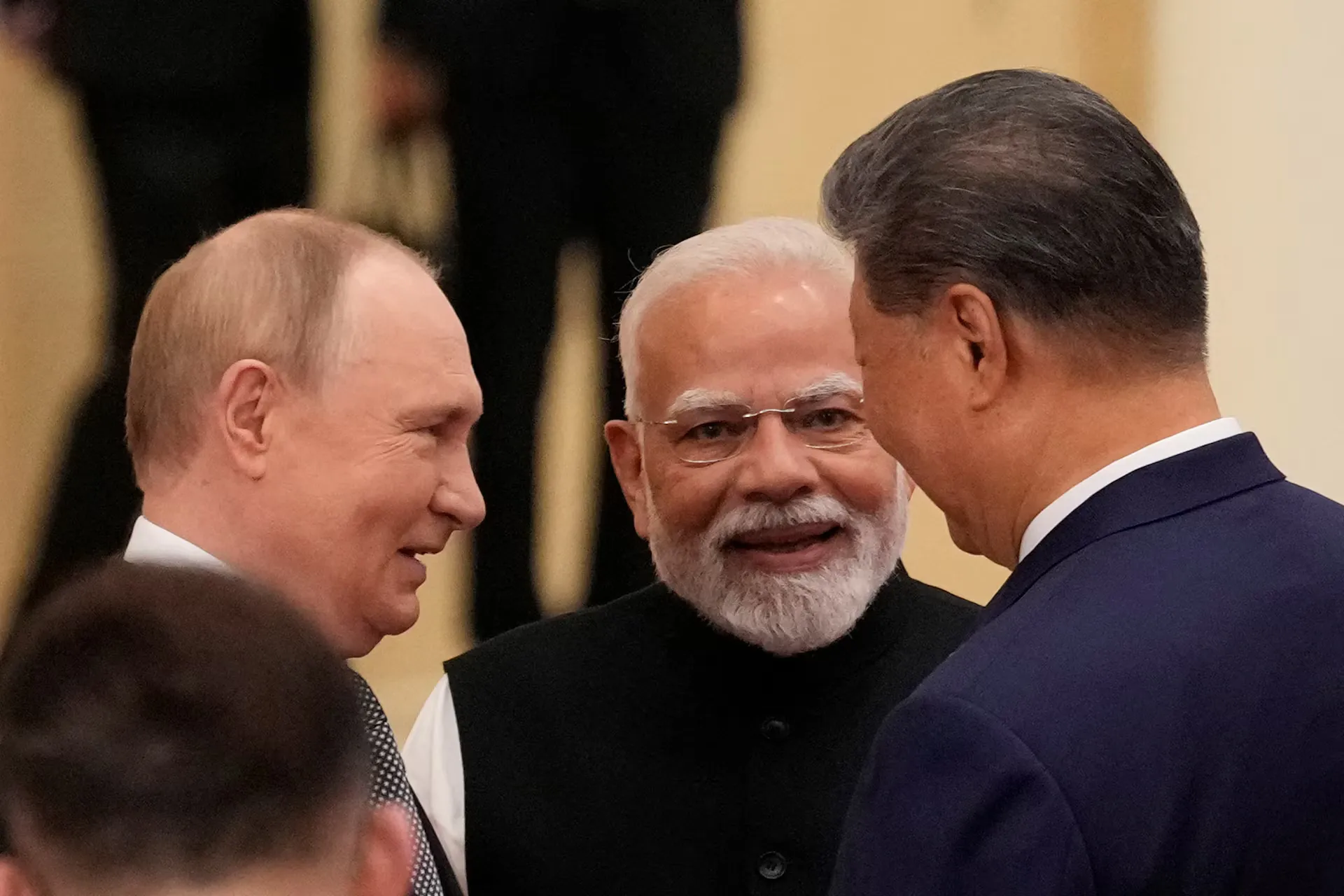

























In Beijing, Vladimir Putin was welcomed with an honor guard, a gun salute and children waving Russian and Chinese flags. This was not merely ceremony for an old partner. Chinese diplomacy knows how to turn protocol into political language, and this time the message was the durability of the bond with Moscow.
The summit between Xi Jinping and Putin came less than a week after Donald Trump’s visit to China. That sequence allowed Beijing to cast itself as the center of gravity: first a conversation with the United States about stability and trade, then a display of enduring strategic partnership with Russia.
According to Daycom’s assessment, China’s main goal is not to choose between Washington and Moscow, but to show that both tracks of its diplomacy can operate at once. Beijing wants to be the power without which the global economy cannot be stabilized, major wars cannot be ended and a new system of global governance cannot be built.
In Beijing, Vladimir Putin was welcomed with an honor guard, a gun salute and children waving Russian and Chinese flags. This was not merely ceremony for an old partner. Chinese diplomacy knows how to turn protocol into political language, and this time the message was the durability of the bond with Moscow.
The summit between Xi Jinping and Putin came less than a week after Donald Trump’s visit to China. That sequence allowed Beijing to cast itself as the center of gravity: first a conversation with the United States about stability and trade, then a display of enduring strategic partnership with Russia.
According to Daycom’s assessment, China’s main goal is not to choose between Washington and Moscow, but to show that both tracks of its diplomacy can operate at once. Beijing wants to be the power without which the global economy cannot be stabilized, major wars cannot be ended and a new system of global governance cannot be built.
Xi spoke of long-term strategy and a “more just” international system. Putin answered with formulas about strategic cooperation in a new era and global stability. Behind that language lies a simple political structure: Russia needs China, and China is using Russia’s need.
For Moscow, the visit carries special weight. Sanctions, the war against Ukraine, strikes on energy infrastructure, budget pressure and the loss of much of its European market have made China Russia’s main economic rear. Putin needs to show that isolation has failed.
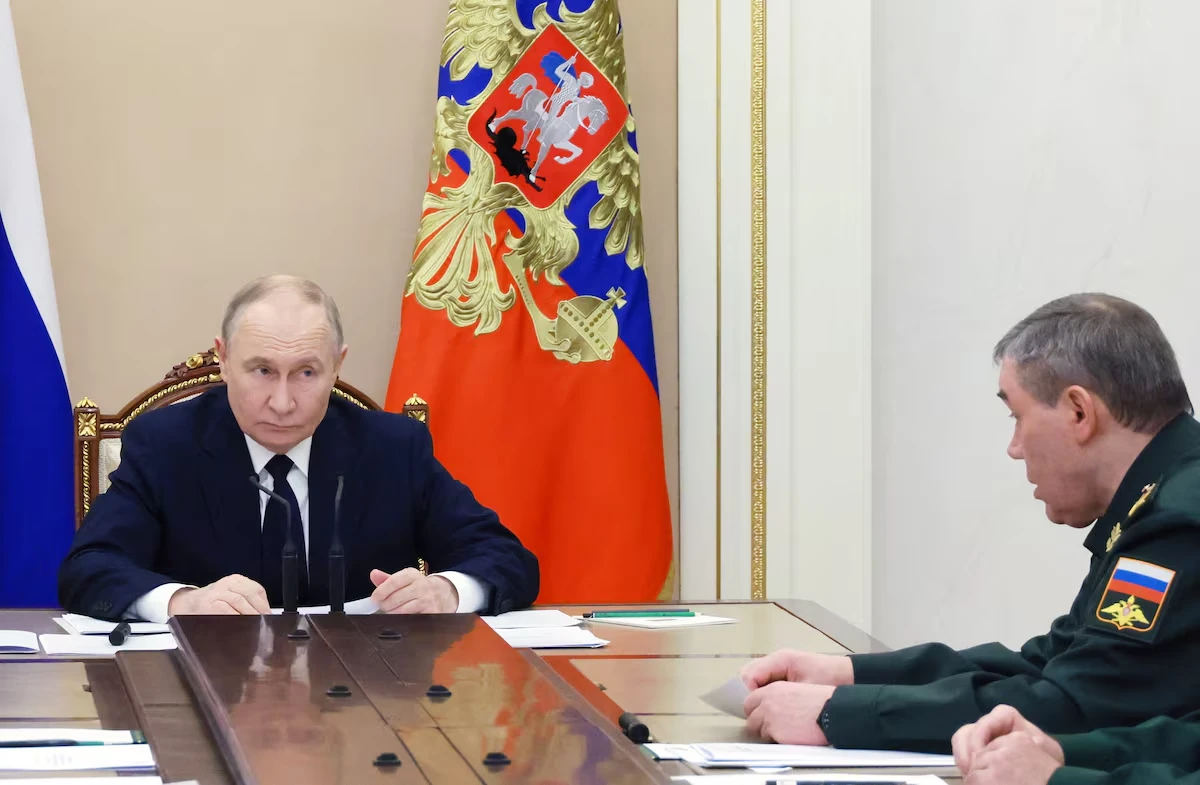
 Президент Росії Володимир Путін разом із міністром закордонних справ Сергієм Лавровим бере участь у двосторонній зустрічі з президентом Китаю Сі Цзіньпіном (на фото не зображений) у Великому залі народу в Пекіні, Китай, 20 травня 2026 року — Максим Шеметов
For China, Putin is not an equal ally in the full sense, but an important strategic asset. Russia gives Beijing energy, raw materials, military-political pressure on the West and a shared anti-American framework. But it is China that increasingly defines the terms of this closeness.
The main economic issue is the Power of Siberia 2 gas pipeline. The project has been discussed for more than a decade, and Moscow is trying to accelerate an agreement. For Russia, it is a chance to compensate for the loss of the European gas market. For China, it is only one option within a broader energy strategy.
Price remains the central obstacle. Russia needs a long-term buyer. China needs energy, but not dependence. Beijing can agree on frameworks, volumes, supply flexibility and seasonality while keeping the price issue open for years if that strengthens its bargaining position.
The energy crisis around Iran gives Moscow an additional argument. When the Persian Gulf looks unstable, overland Russian gas appears more attractive to China as a long-term source. Yet even this does not change the core principle: Beijing does not like depending on a single supplier.
China continues to buy Russian oil, both by pipeline and by sea. Payments are increasingly made in yuan, weakening the role of the dollar for Moscow while strengthening Beijing’s financial weight. Russia is bypassing Western pressure, but the price is deeper dependence on the Chinese market.
 Президент Китаю Сі Цзіньпін у супроводі віце-прем'єра Китаю Дін Сюесяна бере участь у двосторонній зустрічі з президентом Росії Володимиром Путіним (на фото не зображений) у Великому залі народу в Пекіні, Китай, 20 травня 2026 року — Максим Шеметов
This partnership looks solid, but it is not unconditional. China supports Russia only as far as this does not destroy its trade with the West or push it into direct confrontation with Europe or the United States. Beijing helps Moscow survive, but it does not want to become hostage to Russia’s war.
That is why China could confirm the purchase of 200 Boeing aircraft while also staging a warm ceremony for Putin. These are two parts of one strategy: stabilize economic ties with the United States without weakening the Russian track. Beijing does not burn bridges; it distributes weight across them.
Comparisons between the ceremonies for Trump and Putin matter, but they are not decisive. Chinese protocol is always layered: tea, gardens, halls, honor guards, banquets and closed conversations. The real measure of closeness is not décor, but the concessions China is, or is not, prepared to make.
With Russia, Beijing is ready for symbolism, statements, documents and broad coordination. The Kremlin expects dozens of signed agreements and a major joint statement on strengthening the partnership. Even if many of the documents are technical, their scale is meant to create a sense of institutional depth.
For the West, this is an uncomfortable signal. The Russia-China axis is not a temporary reaction to sanctions. It has become part of a longer global regrouping in which Moscow and Beijing seek to limit American influence, weaken Western coalitions and create an alternative language of world order.
But this axis is asymmetric. Russia comes to China with needs. China receives Russia with options. Beijing decides how quickly to move on the gas deal, which technologies to allow, how far to go in political support and where not to cross a line that could cost it access to Western markets.
 Президент Росії Володимир Путін тисне руку президенту Китаю Сі Цзіньпіну під час церемонії зустрічі у Великому залі народу в Пекіні, Китай, 20 травня 2026 року — Олександр Казаков/Sputnik
For Ukraine, the summit has direct significance. The more stable Russia’s Chinese economic rear becomes, the longer the Kremlin can finance the war. Even without an open military alliance, energy purchases, industrial supplies and diplomatic cover all help sustain aggression.
Beijing will continue to call itself a neutral actor and a supporter of negotiations. But neutrality that simultaneously supports the economic endurance of the aggressor is not neutrality in the full sense. It is a managed position in which peace rhetoric coexists with cold geopolitical calculation.
The Beijing summit showed not so much friendship between two leaders as a new hierarchy. Putin may call Xi a dear friend, and China may call Russia an all-weather partner. But at the negotiating table, the stronger side is the one with more options.
China has those options. It bargains with the United States, hosts Russia, buys energy, controls critical supply chains, speaks of global stability and reserves the right not to take the decisive step toward either peace or rupture. That is where its power lies.
Putin came to Beijing to reinforce the partnership and push forward energy deals. Xi received him to show the world that China is not abandoning Russia, but also not allowing Russia to dictate China’s course. In that difference between friendship and dependence lies the real meaning of the Beijing summit.


 Президент Росії Володимир Путін та голова Китаю Сі Цзіньпін п'ють чай після зустрічі у Домі народних зборів у Пекіні, Китай, 20 травня 2026 року — Sputnik
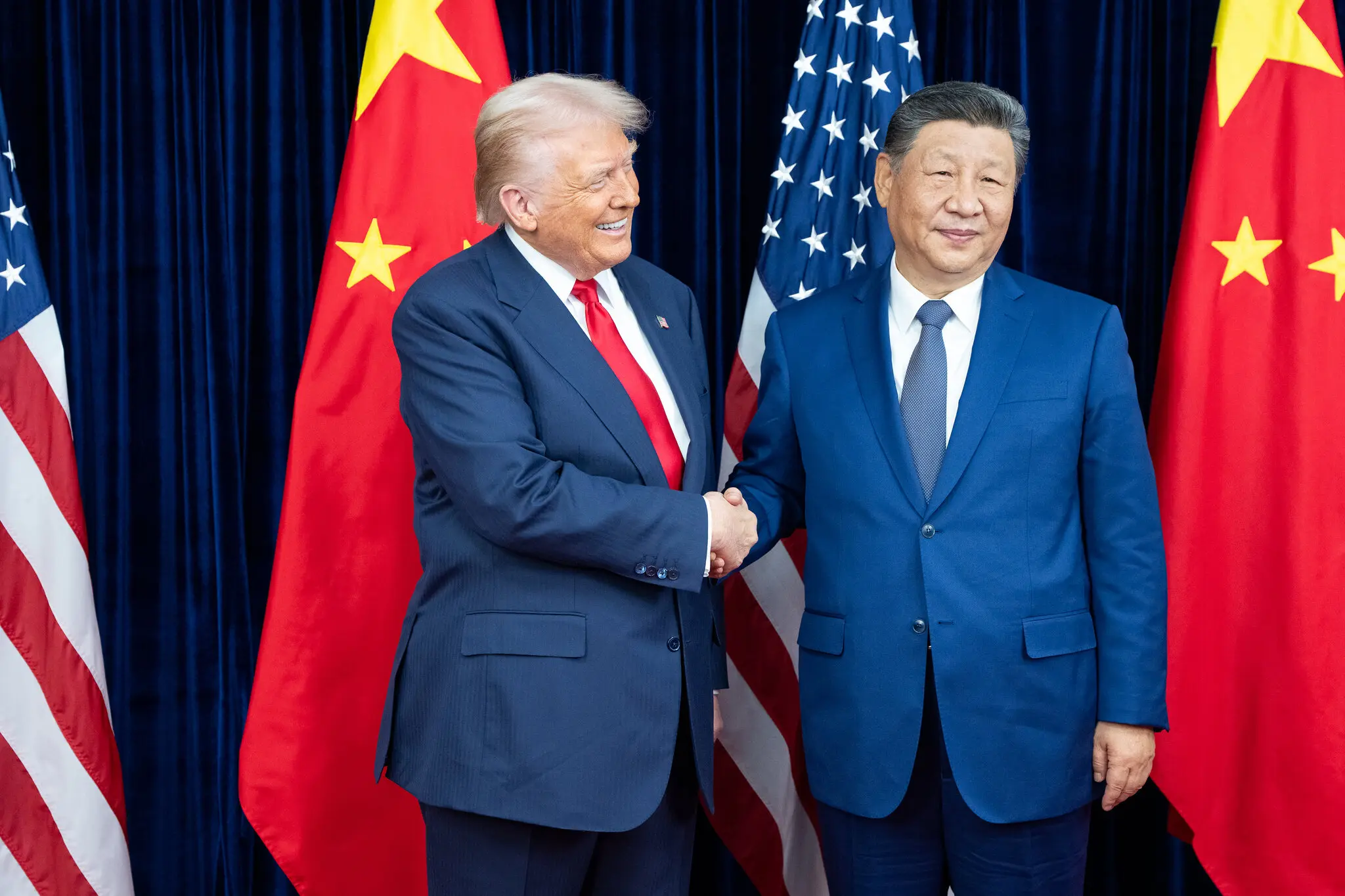
 Президент Китаю Сі Цзіньпін та президент США Дональд Трамп беруть участь у зустрічі в рамках свого візиту до саду Чжуннаньхай у Пекіні, Китай, 15 травня 2026 року — Еван Вуччі
 Трамп і Сі у Великому залі народних зборів у Пекіні, 14 травня 2026 року — Еван Вуччі
 Пан Путін і пан Сі на церемонії привітання у Домі народних зборів у Пекіні в середу. Пан Сі привітав «новий етап більш активної взаємодії та швидшого розвитку» між країнами — Максим Шеметов