




















A new center of political influence is taking shape in the United States, aiming to turn artificial intelligence from a policy issue into a tool of electoral mobilization. Innovation Council Action says it is prepared to spend at least $100 million this year alone.
The emergence of such a structure shows how quickly A.I. has moved beyond expert debate. It is now part of the larger machinery of American politics, where the tech industry, the White House, and campaign operations are becoming increasingly intertwined in a single system of mutual interests.
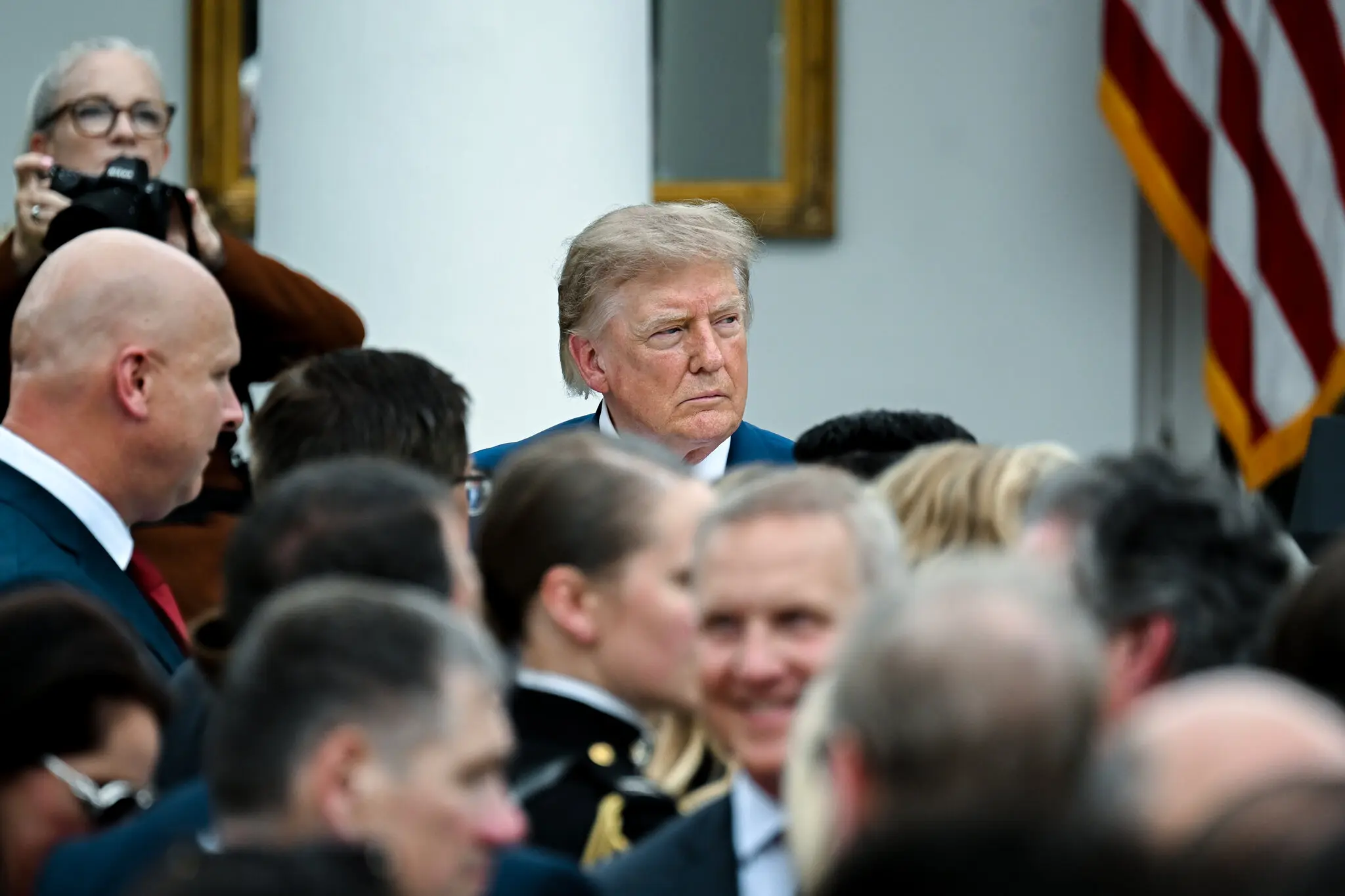
The new project is explicitly pro-Trump. Its goal is not simply to promote a broad language of innovation, but to defend Donald Trump’s specific line on artificial intelligence regulation, data centers, and the role of individual states in shaping A.I. policy.
According to Deykom’s preliminary assessment, Washington is entering a new phase of technology lobbying, one in which artificial intelligence is shifting from the realm of future-oriented policy into the realm of electoral tactics. The issue is no longer only about rules. It is about building a political coalition around an A.I. agenda.
Innovation Council Action has said it will spend no less than $100 million on its activities. Part of that effort will go toward advocating for new White House A.I. policy guidelines unveiled this month, which are designed to block state-level laws regulating artificial intelligence.
That is one of the most important elements of the story. The Trump administration is effectively trying to move the center of decision-making away from individual states and into the federal political core. For major technology companies, that would mean a more predictable environment. For opponents, it would mean weaker local oversight.
The organization is structured as a nonprofit, but according to the available reporting, it is also likely to launch a super PAC. That combination allows it not only to shape messaging, but also to intervene directly in campaigns: backing allies, attacking critics, and building political discipline around Trump’s agenda.
In that sense, Innovation Council Action is not simply an industry platform. It is a potential electoral pressure machine that could turn artificial intelligence policy into a loyalty test for congressional candidates. Those who support the White House line may gain resources. Those who do not may find themselves targeted.
It is especially telling that the group will be led by Taylor Budowich, a longtime Trump political adviser and former White House deputy chief of staff. That decision removes any doubt about the nature of the project. This is not a neutral forum for debate, but part of the president’s political infrastructure.
No less significant is the backing of David Sacks, who remains a central intermediary between Washington and Silicon Valley. His public endorsement suggests that a more open and more operational alliance is taking shape between the Trump administration and parts of the tech industry ahead of the U.S. elections.
In practical terms, Innovation Council emerged from discussions about how the A.I. sector could engage more seriously in politics. That may be the clearest description of this moment. Big technology no longer wants merely to adapt to government decisions. It increasingly wants to shape who gets to make those decisions in the first place.
That approach is already creating tension even within the political right. Some senior conservative officials, according to the reporting, had favored a narrower and more explicitly Republican model, believing that the A.I. sector was already sufficiently sympathetic to Republicans in Washington and to Trump personally.
That means the fight is not only between Democrats and Republicans. It is also unfolding within the conservative camp itself, between those who want a broader partnership with the tech sector and those who want to tie A.I. money flows directly and tightly to the Trump electoral machine.
Against that backdrop, the 2026 midterms could become the first major campaign in which artificial intelligence functions not as an abstract question about the future of work, but as a distinct line of political conflict. Data, computation, data centers, regulation, and investment are all entering the language of campaigning.
The group plans to circulate messaging to lawmakers on issues such as data centers and to use questionnaires to identify politicians who are friendly or hostile to Trump’s A.I. agenda. This is no longer just communication. It is an effort to map loyalty in Congress around artificial intelligence policy.
The question of transparency is especially sensitive. As a dark-money nonprofit, the organization is not required to disclose its donors. That means significant sums can enter the political system without full public visibility, even as the effort is framed as a normal defense of innovation and American technological progress.
This is where the core democratic challenge appears. When A.I. policy begins to be written at the same time by the White House, large pools of capital, and opaque political instruments, public debate risks becoming secondary. Formally, the language is about innovation. In practice, it is about control over the rules of the future.
At the same time, the social mood around such a campaign remains conflicted. Polling shows that many Americans are uneasy about the pace of artificial intelligence development. That means Innovation Council’s task will not only be to fund candidates, but also to recode public anxiety into manageable political support.
Put differently, Trump’s team is trying to redefine the frame of the debate. Not “Should A.I. be restrained?” but “Who has the authority to set the limits?” Not “Are these technologies dangerous?” but “Should states be allowed to slow down a national innovation strategy?” This is no longer just a fight over technology. It is a fight over governing power.
For Trump, the political payoff is obvious. The strategy allows him to present himself not only as a candidate of strength, tariffs, and geopolitics, but also as a politician of the future, one who can command artificial intelligence, Silicon Valley, and electoral architecture at the same time. A.I. becomes part of his political brand.
The market consequences could also be significant. If the federal government does move consistently to block state regulation, major technology companies may gain a more comfortable space for expansion. But smaller players, civil society, and local lawmakers could lose much of their leverage over the rules of the game.
In a broader sense, Innovation Council Action is a sign of how American democracy is changing under the pressure of new technologies. Big money once entered elections through energy, pharmaceuticals, or defense. Now artificial intelligence has definitively joined that list, with its own donors, messages, and political armies.
What matters most, however, is something deeper. The fight over A.I. in the United States no longer looks like a pure debate about ethics or innovation. It increasingly resembles a classic struggle for power, complete with large budgets, opaque funding vehicles, loyal operators, and a very concrete goal: influencing the midterm elections.
If this trajectory hardens, artificial intelligence in the United States will become not only a subject of regulation, but a distinct electoral industry in its own right. Then the central question will no longer be whether A.I. will change politics, but who will be first to convert that change into power, law, and control over the market.