






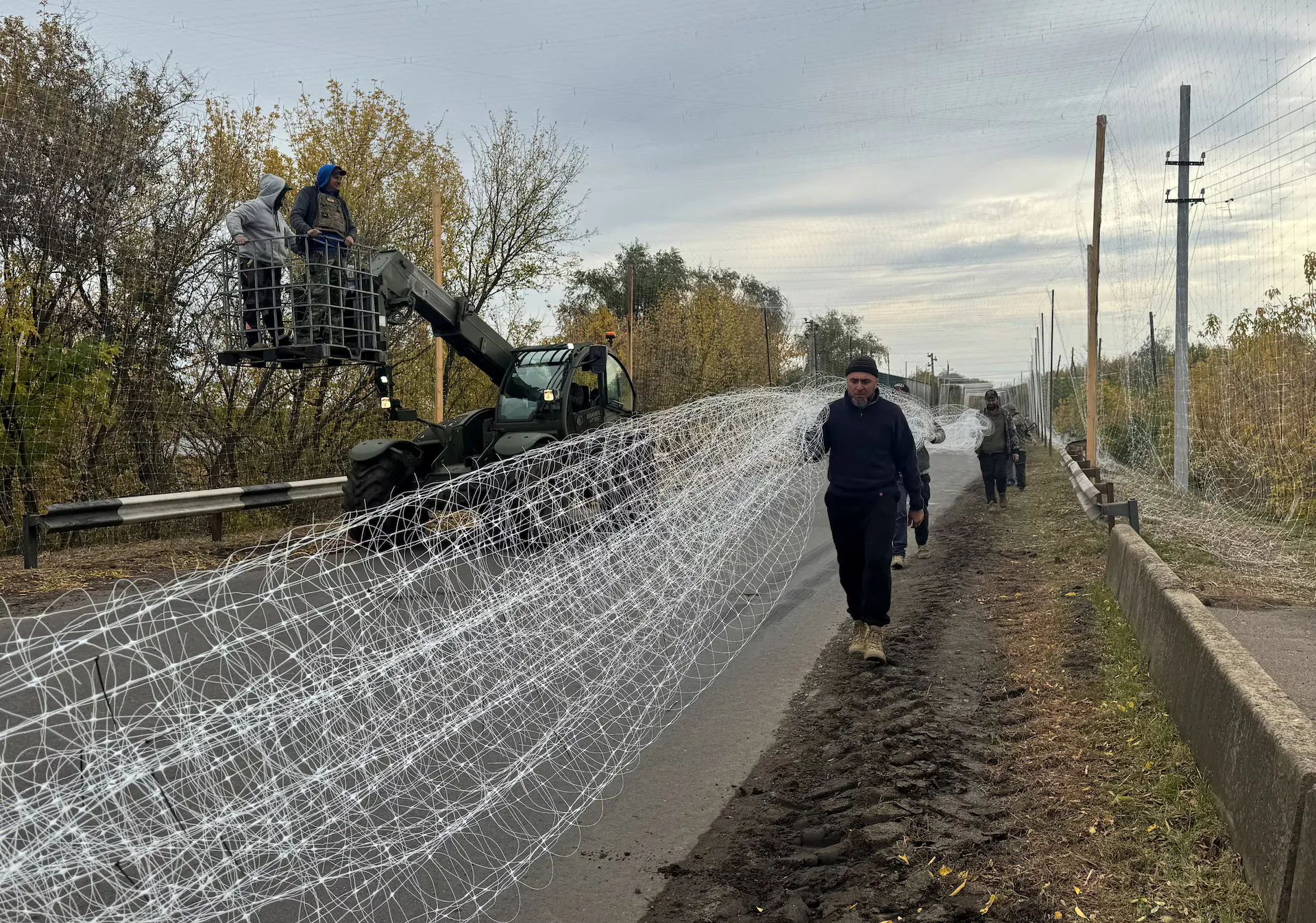











The drone war has again moved beyond the immediate front line. In Russia’s Bryansk region, near the border with Ukraine, a drone strike killed one person and injured another. For Russia’s border regions, such attacks are no longer exceptional. They have become part of the daily reality of the war.
On the same day, Russian air defenses said they had intercepted 185 Ukrainian drones over 12 hours, from 8 a.m. to 8 p.m. Moscow time. The attack covered roughly a dozen regions, many of them no longer directly adjacent to the battlefield, but deeper inside central Russia.
Moscow separately reported a series of drones approaching the capital throughout the day. City authorities repeatedly announced interceptions, while specialists examined debris on the ground. Unofficial Russian agency counts put the number of drones destroyed on the Moscow axis at 27.
According to Daycom’s assessment, the main point of this attack was not only the number of drones, but the geography of pressure. Ukraine is increasingly forcing Russia to distribute air defenses between the border, the capital, industrial zones, energy facilities and military logistics routes.
Bryansk occupies a particular place in this picture. It is Russia’s border rear, connected to military transport, repair infrastructure, depots, energy sites and roads leading toward occupied Ukrainian territory and Russian troop groupings.
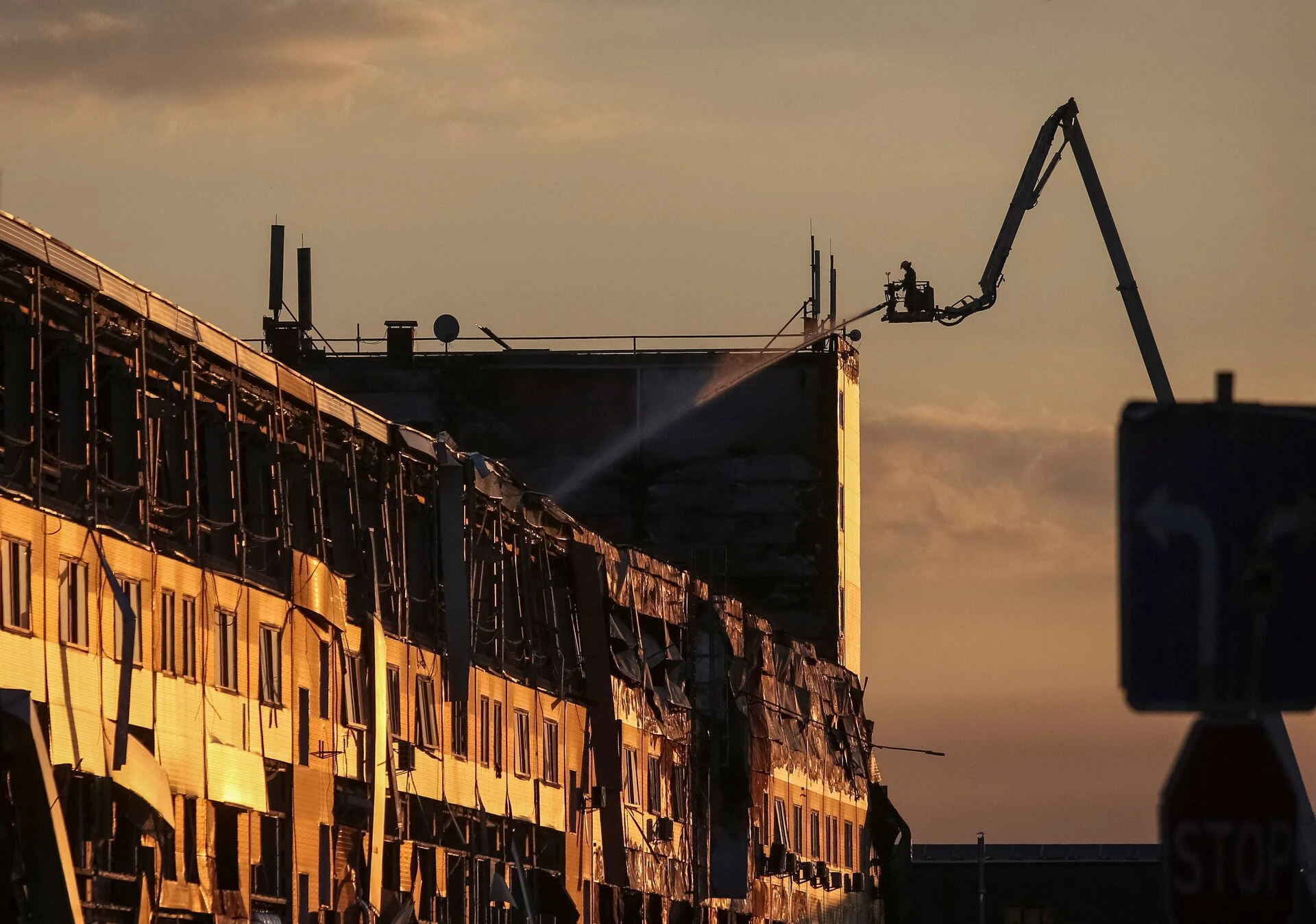
That is why the strike on a village near the border cannot be viewed in isolation. It came against the backdrop of a broader campaign in which Ukrainian drones are increasingly targeting medium- and long-range sites inside Russia, including facilities tied to the oil industry and logistics.
This campaign has a double effect. At the tactical level, it creates fires, delays, repairs and disruptions. At the strategic level, it forces Russia to live in constant anticipation of the next wave, with even its deeper rear no longer guaranteed a sense of safety.
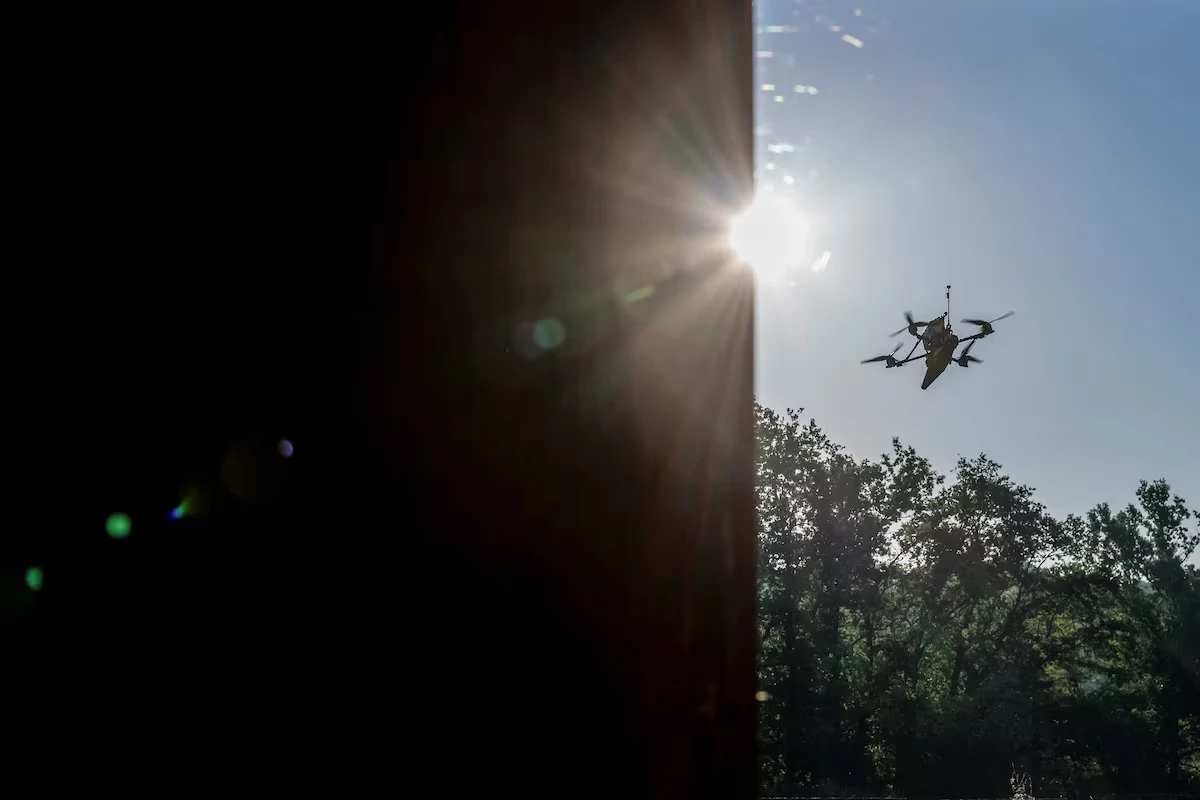
For Russian air defense, this is an especially difficult challenge. Cheaper and more numerous drones do not always carry large warheads, but they exhaust the response system. Each launch requires detection, tracking, decision-making, an interceptor and ground crews responding after debris falls.
When the number of drones rises from dozens to hundreds, an attack becomes a test of the entire defensive architecture. Russia must simultaneously protect Bryansk, Kursk, Belgorod, the approaches to Moscow, oil refining, railway hubs and facilities that cannot be quickly moved or hidden.
That is why Ukrainian drones function not only as strike weapons, but also as tools for stretching Russian resources. The wider the threat zone becomes, the more expensive it is for the Kremlin to preserve the illusion of internal invulnerability and the harder it becomes to concentrate air defenses only near the front.
Moscow remains a separate psychological center of this campaign. Even if most drones are intercepted before reaching the city, the regular reports of threats to the capital change the perception of the war inside Russia. It stops being a televised event safely removed from everyday life.
In this sense, Bryansk and Moscow are part of the same field of pressure. The border region feels the physical danger more often and more acutely; the capital feels the political and symbolic pressure. Together, they show that Ukraine’s strategy is aimed not at a single node, but at the entire system of Russia’s rear.
For Ukraine, this tactic is a way to compensate for imbalances in manpower, artillery and industrial resources. Drones allow Kyiv to hit territory where conventional strike systems are either unavailable or too costly. Mass is not a substitute for precision, but an extension of it.
The risks of this kind of war are obvious. Strikes in border areas can endanger civilians, and falling debris after air-defense interceptions can hit random sites. The wider the drone geography becomes, the sharper the question of target control and consequences.
The same logic also operates in the opposite direction: Russia attacks Ukrainian cities, energy infrastructure, ports, railways and residential areas every day. Against that background, Ukrainian strikes on Russian territory are part of a war of attrition, in which each side seeks to weaken the other’s ability to sustain momentum.
In Ukraine’s case, however, drones serve another function as well: they transfer part of the war’s cost back onto the aggressor state. Russian infrastructure can no longer serve only as a base for attacks on Ukraine; it has itself become a space of constant risk.
The daylong attack involving 185 intercepted drones showed that this phase of the war is unfolding not as isolated episodes, but in waves. A single strike may be local, but a sequence of such strikes changes the behavior of an entire system — from military headquarters to energy companies and city authorities.
For the Kremlin, this points to an uncomfortable prospect: the longer the war continues, the more expensive it becomes not only to attack, but also to protect Russia’s own rear. Ukrainian drones do not replace frontline defense, but they expand the battlefield to a scale in which Russia can no longer feel unreachable.