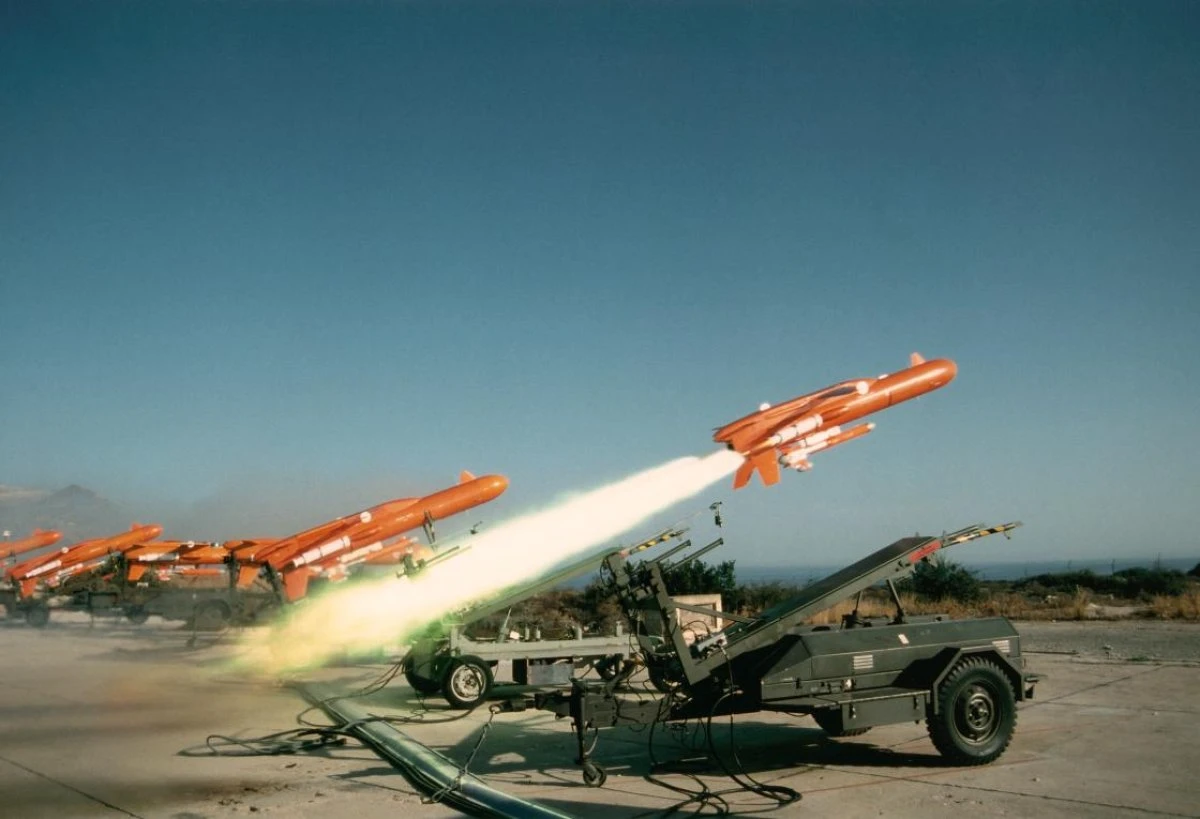























In a drone war, the most devastating moments often occur far from the visible front line. An unmanned aircraft can cross that line in minutes, while the consequences remain in apartment blocks, power grids, hospitals and darkened homes. A war that began as a clash of armies is moving ever deeper into civilian life.
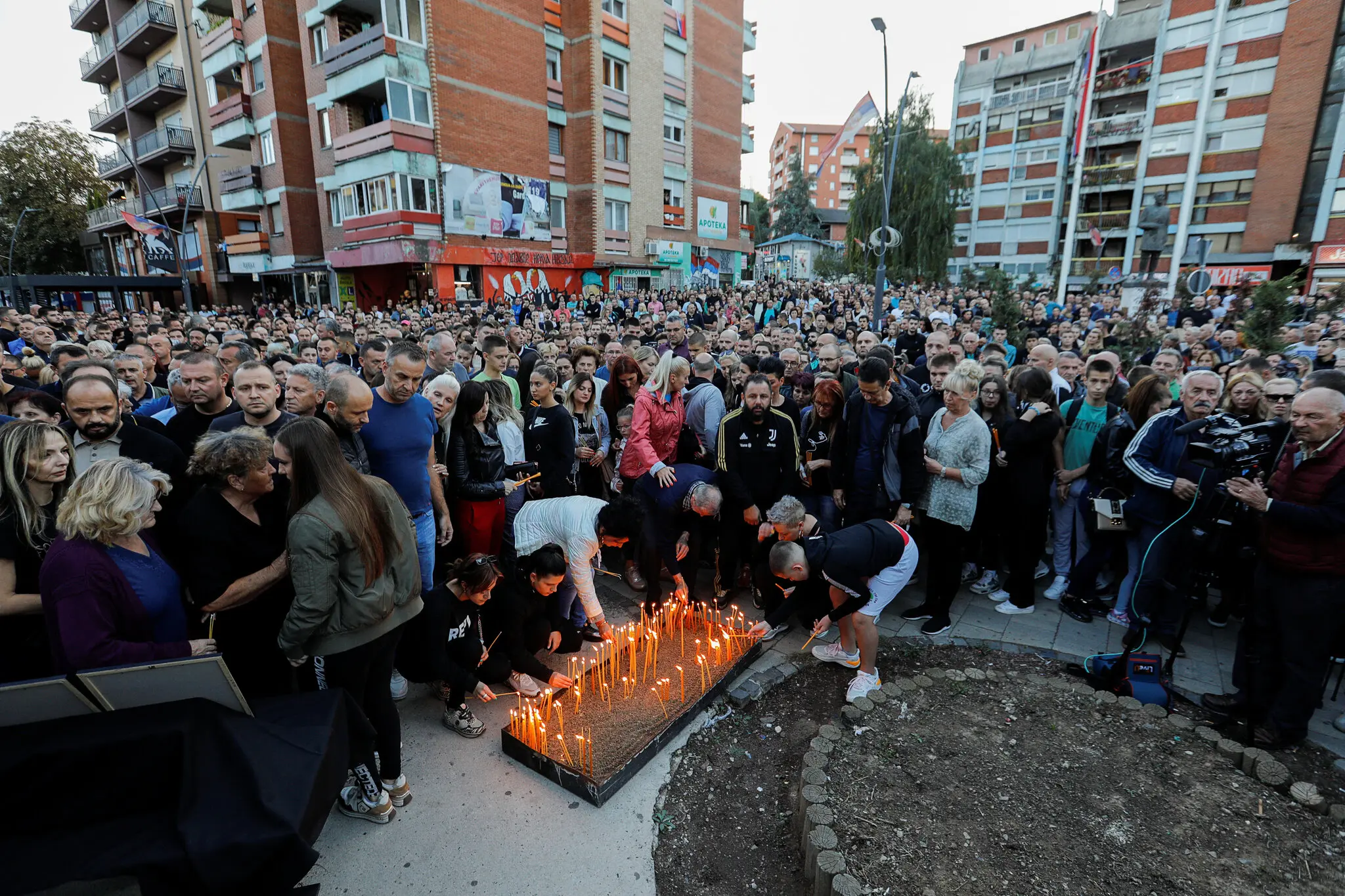
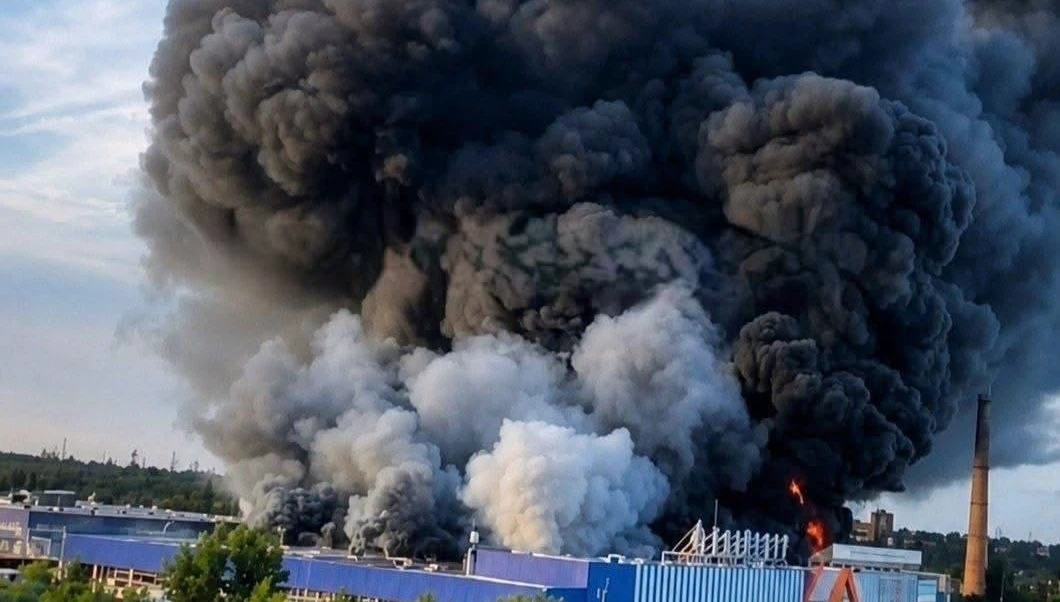
Russian occupation authorities in the seized part of Kherson region said a Ukrainian drone struck an apartment building in Henichesk, a city on the Sea of Azov. In their account, a child was killed and 11 people were injured. Such reports from occupied territory are almost impossible to verify independently, yet the episode has already become part of the wider pattern of reciprocal strikes.
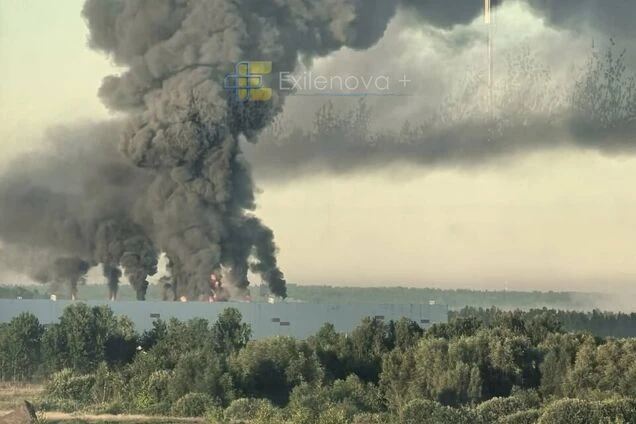
The same day, about 40,000 people in Ukraine were left without electricity after a Russian attack on the Chernihiv region near the Russian border. This is the other side of the same war: attacks on energy infrastructure turn power, heat and communications into instruments of military pressure.
According to Daycom’s earlier analysis, the central shift in this phase of the war is not only the growing range of strikes, but the speed with which they erase the old division between the battlefield and the rear. Henichesk, Chernihiv region, border districts, occupied cities and energy nodes are now part of one expanding chain of risk.
Henichesk carries particular significance for Russia’s occupation system in the south. After Moscow lost control of the western bank of Kherson region, the city became one of the administrative centers for the occupied territory. It lies far from the main line of fighting, but no longer outside the war.
That is what makes the report so serious. If a drone did hit a residential building, it is a tragedy that requires careful judgment, not automatic absorption into the propaganda logic of either side. Civilians must not become shields for military infrastructure or raw material for political mobilization.
At the same time, occupied territory is a space where information passes through the control of the forces holding it. Access for independent journalists, international observers and Ukrainian services is sharply limited. Every report of civilian casualties therefore demands caution: sympathy for victims does not remove the need for accuracy.
For Kherson region, drones have long become an everyday instrument of terror and control. On the Ukrainian-held western bank, Russian drone attacks on civilians have repeatedly shaped daily life, producing casualties among men, women and children. In the region’s new reality, a road, a courtyard or a bus stop can suddenly become the site of an attack.
In northern Ukraine, the drone war takes a different but no less destructive form. Chernihiv region lives under the constant threat of strikes on energy facilities. When tens of thousands of people lose power, the consequences are not limited to household discomfort. Hospitals, communications, transport, water supply and local emergency services all become harder to operate.
Russia has systematically used attacks on energy infrastructure as a method of exhausting Ukraine. These strikes do not always produce an immediate military result, but they place continuous pressure on cities, repair crews, local authorities and the population. In that logic, the energy grid becomes an extension of the front by other means.
Ukraine, for its part, is expanding strikes on Russian military, logistics and energy infrastructure in an effort to undermine Moscow’s ability to sustain a long war. A new reality is taking shape: both sides increasingly attack targets beyond the immediate line of contact, while civilians find themselves near those targets or caught between them.
Such episodes are dangerous politically as well. Every civilian death quickly becomes an argument in the war of narratives. Moscow uses reports from occupied territories to portray Ukraine as striking civilians. Kyiv points to Russian aggression, occupation and daily attacks on Ukrainian cities. Between those positions stand real people whose grief needs no propaganda translation.
Against this backdrop, the diplomatic track looks increasingly fragile. Talks promoted with U.S. involvement have slowed, while international attention has shifted elsewhere. President Volodymyr Zelensky has signaled that Ukraine wants progress toward peace before winter, using what Kyiv sees as an improved strategic position.
The reasoning is clear. Winter in this war is not only a season but a strategic factor. It magnifies the importance of energy, logistics, shelter, fuel and air defense. If negotiations do not advance before the cold, the cost of every strike on a power grid, depot or residential district will rise.
Peace talks, however, do not move in a vacuum. They depend on the battlefield, sanctions, military aid, internal pressure in Russia and the degree to which each side believes it can improve its position by force. That is why drone strikes and diplomacy no longer exist on separate tracks. They now operate inside the same political and military field.
The paradox of the current moment is that a technological war designed to offer precision does not always offer safety to civilians. A drone may be cheaper than a missile, more maneuverable than artillery and more accurate than older fire systems. But in occupied cities, dense residential areas, electronic warfare, air defense zones and military sites near housing, even precise weapons do not guarantee a clean result.
That is why the report from Henichesk cannot be reduced to a single information gesture. If a child was killed, it is a human tragedy regardless of the flag over the city. If a strike on Chernihiv region left tens of thousands without electricity, that too is part of the same erosion of wartime limits, where civilian infrastructure increasingly becomes a field of coercion.
In a long war, the danger lies not only in the number of drones, but in the normalization of their use against places where people live. When societies become accustomed to night attacks as routine, they gradually lose sensitivity to the consequences. That is one of the heaviest defeats war can impose even before the fighting ends.
Henichesk and Chernihiv region are different points on the map, but they point to the same condition. Drone warfare is no longer merely changing military tactics. It is changing the very feeling of safety, making the rear conditional, the night anxious and civilian infrastructure part of military calculation. The longer this logic continues, the harder it will be to restore the boundary between war and life to where it should have been from the beginning.