















The most revealing negotiations often begin not with a statement, but with an absence. In Islamabad, that absence took the form of something deceptively simple: no clear timetable, no confirmed format, no certainty that American and Iranian officials would even sit down together. From a distance, it could look like procedural confusion. In reality, it was the clearest expression of the moment.
When two sides cannot publicly define even the rhythm of their talks, they are signaling that diplomacy has not yet escaped the gravitational pull of war. A formal pause in fighting may exist, but the political environment around it remains too unstable to support the habits of ordinary statecraft. In that sense, the missing schedule is not an administrative detail. It is the first real fact.
JD Vance arrived in Pakistan after nearly seventeen hours of travel in the hope of taking part in what could become the highest-level contact between Washington and Tehran in nearly half a century. Yet even after his landing, the White House offered no precise agenda, no reliable sequence of meetings and no firm indication of how long the American delegation would remain. What that suggested was simple enough: these talks are being held together not by trust in the process, but by fear of the alternative.
As Daycom argued in earlier analysis, that is the real diagnosis of Islamabad. The parties have not come because they are ready for settlement. They have come because the cost of failure has become too high. For Washington, that means renewed military escalation, another energy shock and another test of domestic political endurance. For Tehran, it means deeper isolation, continued military pressure and the risk of entering a longer phase of strategic suffocation. For the wider world, it means the return of regional war as a driver of inflation, shipping disruption and global economic strain.
Iran, for its part, has not approached the talks in the language of openness. Before negotiations properly began, Iranian officials were already threatening to refuse direct meetings unless the United States moved on a series of demands, from unfreezing overseas assets to broadening the ceasefire’s scope to include Lebanon. Islamabad therefore opened not as a site of mutual approach, but as a stage for bargaining over the terms of entry into the conversation itself.
That distinction matters more than it first appears. When sides are arguing not only over the substance of a possible agreement but over who gets to define the initial conditions of diplomacy, negotiation begins to resemble an extension of war by other means. The battlefield recedes, but the logic of coercion survives. Pressure does not disappear. It merely changes instruments.
This is why the separate meetings with Pakistani mediators were, in some ways, more revealing than any eventual direct contact could be. At the start, Washington and Tehran did not speak through confidence. They spoke through a buffer. Pakistan’s role in this setting is not that of a grand architect of peace, but of a container for mistrust. Its task is not to collapse the distance between the two parties too quickly, but to make the very existence of negotiations politically tolerable for both.
That is a subtle but important distinction. When a mediation channel is needed at this level, the crisis has not yet entered a phase of managed diplomacy. It has entered only a phase of managed contact. Islamabad, in that sense, looks less like the site of a breakthrough than like a controlled chamber in which both sides are testing whether they can remain in the same process without blowing it apart in the opening hours.
Pakistan, meanwhile, is not a neutral piece of scenery. For Islamabad, these talks are also an opportunity to elevate its own international standing. The government has framed the moment as decisive, transformed the Serena Hotel into a fortified diplomatic zone and dressed the city in the visual language of geopolitical importance. This is not mere ceremony. It is an attempt to show that Pakistan is not simply hosting history, but briefly helping to shape it.
Yet all of that stagecraft cannot conceal the deeper problem: Washington and Tehran are entering the talks with different assumptions about what they are even trying to stop. For the United States, the immediate priority is to preserve a fragile truce, reopen the Strait of Hormuz and turn a dangerous pause into the beginnings of a longer arrangement. For Iran, the question is broader and darker. Tehran is asking whether Washington is using the ceasefire to stabilize only the part of the conflict that threatens global energy markets, while leaving other forms of pressure intact through allies and parallel fronts.
That is why Lebanon still hangs over Islamabad so heavily. It makes any future arrangement incomplete before it begins. If one side believes the ceasefire should extend, in spirit if not in wording, to the Lebanese theater, while the other tries to keep that theater outside the package, then they are no longer merely disputing clauses. They are operating with different maps of the war itself. And without a shared map, no durable diplomatic architecture can be built.
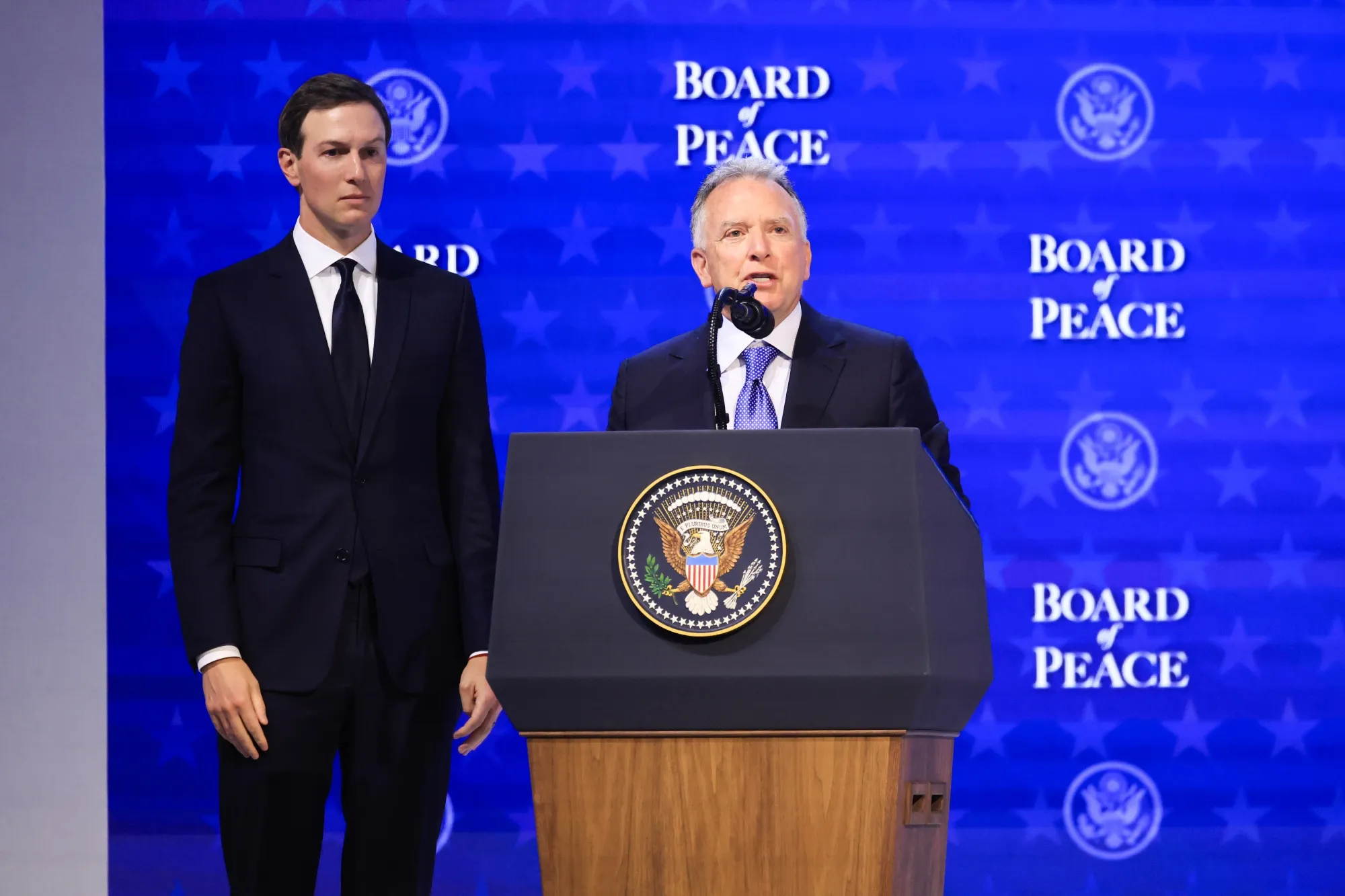
The composition of the American delegation adds another layer to that tension. Vance, who before the war had warned against a regime-change conflict and reportedly viewed such a course as disastrous, now finds himself leading a mission designed to secure a longer peace. Beside him are Steve Witkoff and Jared Kushner, figures whose importance lies not only in diplomacy but in personal trust within Trump’s inner circle. That suggests a White House preference for keeping the process inside a narrow corridor of political loyalty rather than broad institutional control.
Such an arrangement can speed decisions. It can also make them more fragile. The narrower the circle, the less diplomacy resembles a structured state process and the more it depends on mood, improvisation and personal chemistry. In crisis management, that can be an advantage. In building a durable settlement, it can be a liability. Long agreements rarely rest securely on short chains of personal trust when the underlying structure of mistrust remains unchanged.
This is why the silence around timing says more than any formal communiqué could. It tells us that neither side wants to bind itself too early to the expectation of success. The Americans do not want to promise progress they cannot guarantee. The Iranians do not want to appear to be conceding first. The mediator does not want to own the risk of collapse. Under those conditions, opacity itself becomes part of the negotiating method.
That, in the end, is the most accurate portrait of the present moment. Islamabad is not yet a stage of peace. It is a room of calibration. It is testing whether the United States and Iran can move from diplomacy as a form of managed pressure to diplomacy as the beginning of a minimally shared order. For now, the answer remains restrained. The evidence suggests that the parties are not yet constructing peace. They are still determining whether they can speak without immediate rupture.
And that may be the clearest truth of all. Islamabad has not become the place where a new order has begun. It has become the place where the limits of diplomacy are being measured in public. The question is no longer simply whether Washington and Tehran are ready for a major agreement. It is whether they can endure the procedure of negotiation itself. In the current Middle East, even that has become a serious achievement.