






















Public landline phones have reappeared on the streets of Yevpatoria. They are not nostalgic decorations for a resort town, but emergency instruments meant to summon an ambulance or the police when mobile service disappears with the electricity or is deliberately jammed during an air raid.
Their return looks almost anachronistic in a region Moscow spent years presenting as a showcase of modernization. Yet a wired handset on a city street describes Crimea’s new reality more accurately than official assurances: war is steadily dismantling the infrastructure of ordinary life.
The phones are being installed where mobile networks suffer repeated disruption or remain unavailable for long periods. Local authorities are creating backup channels even for the simplest emergency calls—an acknowledgment that the digital environment can no longer be treated as reliable.
In Daycom’s assessment, the return of public telephones is not a minor municipal story but a sign of Crimea’s changing strategic position. The peninsula increasingly resembles not a protected rear area, but an exposed military platform where civilian infrastructure is subordinated to the logic of survival.
Mobile networks have a dual role in modern warfare. They connect civilians, but they can also assist drone navigation, transmit coordinates and generate usable data. Russian authorities therefore restrict or suppress signals in an effort to reduce the effectiveness of Ukrainian strikes.
The cost of those measures quickly spreads beyond military activity. Without mobile service, residents cannot call paramedics, receive alerts, contact relatives, make payments or find out where public transport is running and fuel remains available.
Street phones are intended to close part of that gap. They provide a basic channel that does not depend on a nearby cellular tower. But this protection is also fragile: wired networks still require power, functioning exchanges and personnel capable of maintaining them.
Crimea’s problem is not a single outage but the overlap of several crises. Ukrainian strikes target military sites, energy infrastructure and supply routes. At the same time, Russian electronic-warfare systems suppress communications in an attempt to protect those assets.
As a result, defensive measures themselves degrade daily life. The more frequent the attacks, the longer networks remain unavailable; the wider the jamming, the more heavily cities depend on technologies associated with an earlier century.
This is no longer a temporary inconvenience but a form of digital isolation with social consequences. A modern city depends on connectivity not only for communication, but for banking, delivery services, navigation, public administration, retail and transport coordination.
When communications fail together with electricity, each disruption amplifies the next. Residents cannot charge phones, check schedules, locate a functioning fuel station or report an accident. The city stops behaving like a collection of separate services and begins to fail as a single system.
The effect is especially severe in resort towns. Yevpatoria depends on seasonal commerce, transport, cafés, hotels and sanatoriums. Interruptions to power, water and fuel undermine the very economy that was supposed to demonstrate the stability of Russian rule.
Energy shortages have forced reduced opening hours for businesses and public transport, while children’s summer camps have been canceled. In some areas, residents have faced simultaneous shortages of electricity, water and fuel, with local authorities increasingly reluctant to give precise restoration timelines.
For Moscow, Crimea has long been more than a military asset. It has also been a political symbol. Major infrastructure projects, tourism campaigns and federal subsidies were designed to persuade residents that annexation had delivered security, development and a permanent connection to Russia.
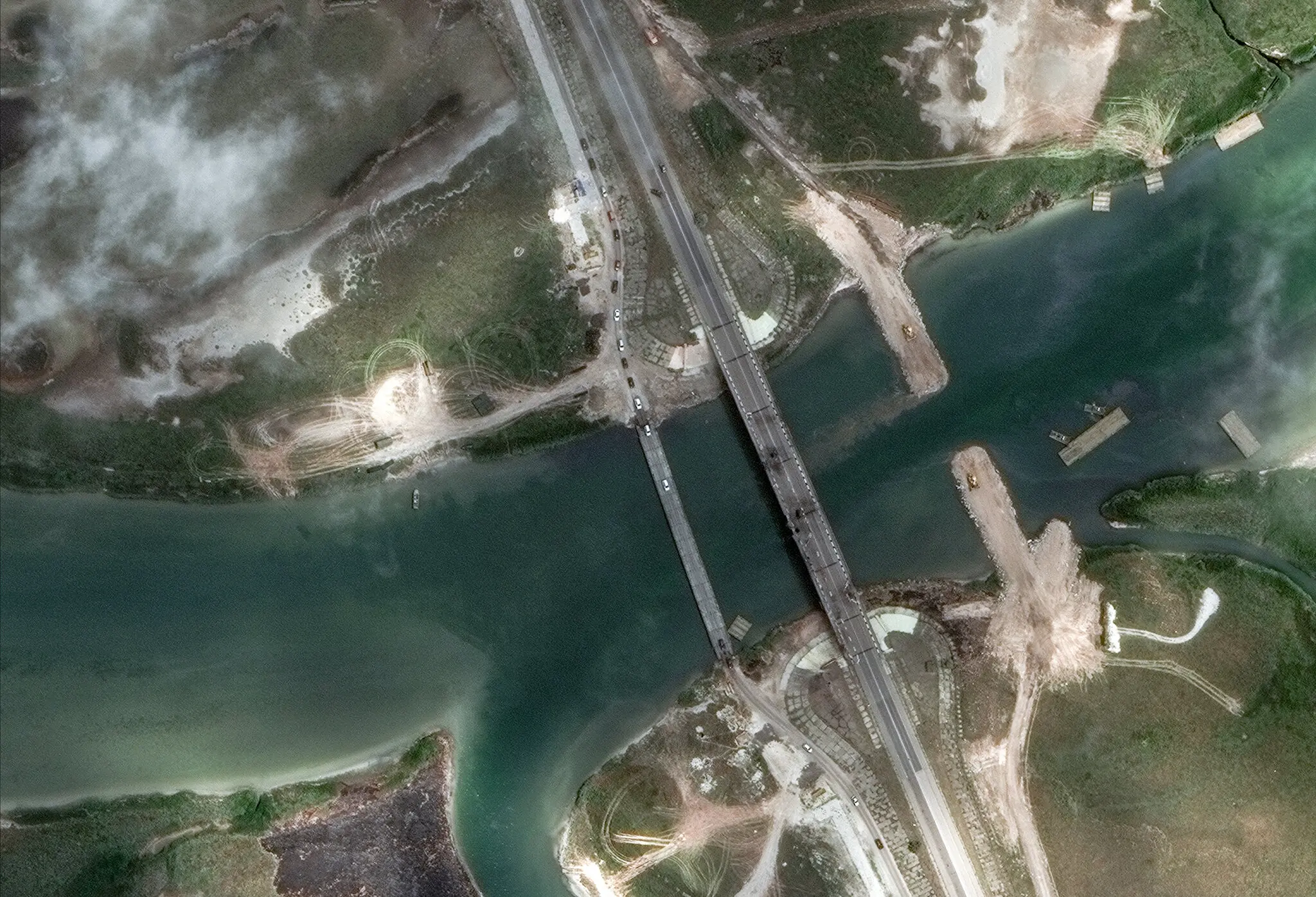
That system now works in reverse. The bridge, ports, railway, power plants and fuel routes meant to cement integration have become points of vulnerability. The more the peninsula depends on a limited number of corridors, the greater the effect when they are repeatedly disrupted.
Ukraine’s strategy extends beyond destroying individual depots or bases. Its broader purpose is to raise the cost of Russia’s military presence, complicate the supply of forces and strip Crimea of its role as a secure rear area for operations in southern Ukraine.
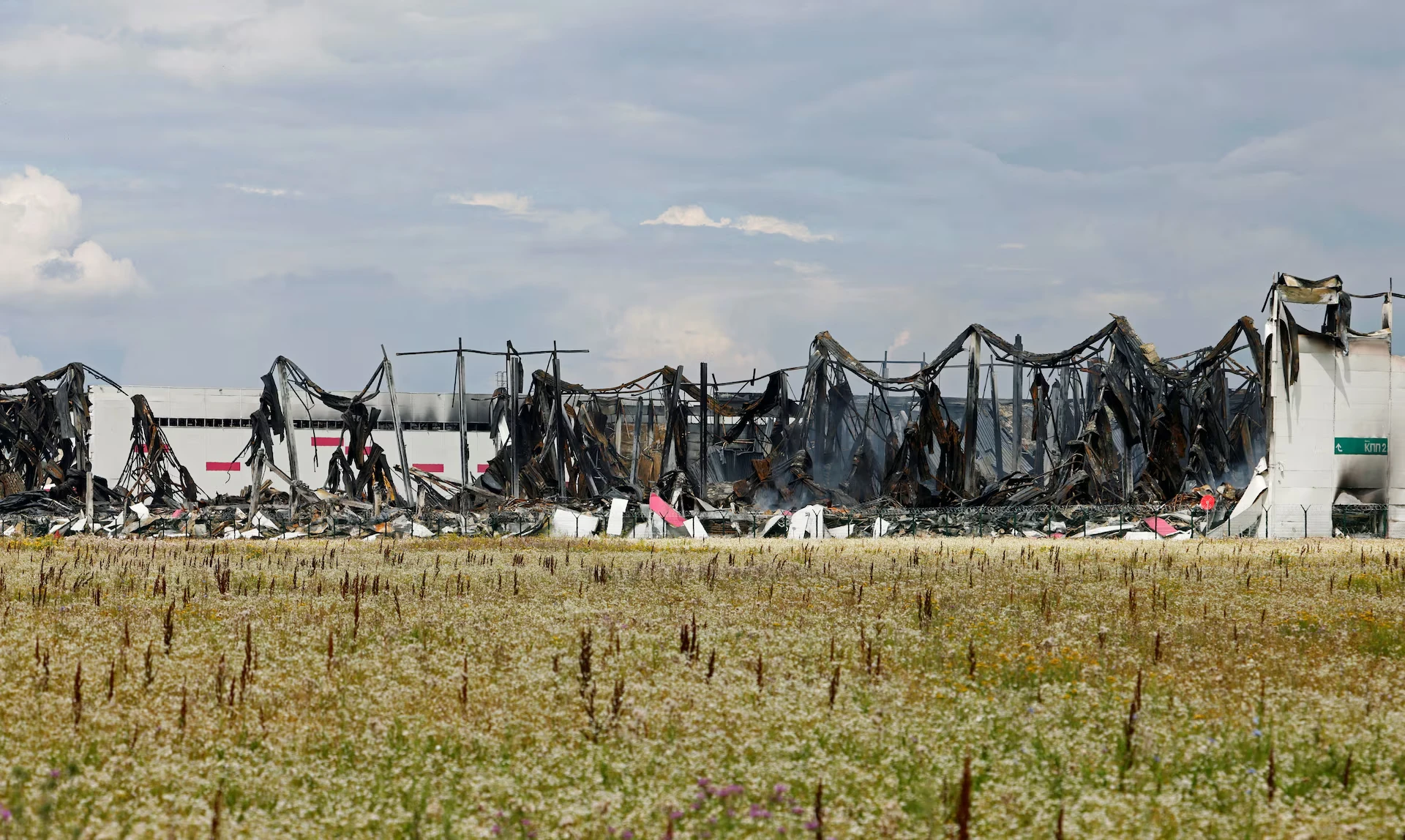
Strikes on refineries, fuel shipments and transport routes have already created shortages that spill into the civilian market. Military logistics increasingly compete with residents for fuel, electricity, vehicles and repair capacity.
Complete physical isolation is not necessary to produce this effect. It is enough to make supply irregular, expensive and dangerous. Every train, truck or tanker then becomes an asset that must be protected, rerouted or replaced.
Public phones also perform a psychological function. Their presence acknowledges that ordinary communication may fail precisely when it is needed most. Authorities are effectively preparing residents not for a rapid return to normality, but for prolonged life amid recurring disruption.
Yet a landline handset offers only the illusion of a universal solution. It may allow someone to call for help, but it cannot ensure that an ambulance arrives if traffic lights are out, fuel is scarce or roads have been closed after an attack. Communication is only the first link in a much longer emergency chain.
Accessibility is another weakness. A handful of street phones cannot replace mobile coverage for elderly residents, people with disabilities or those living in remote neighborhoods. During a major outage, queues may form, turning each phone into a point of pressure and delay.
Russian authorities now face a contradiction that administrative orders cannot resolve. To protect military sites, they restrict digital infrastructure. But the more often they do so, the more visibly the war enters civilian life and the less convincing claims of full control become.
The public telephone therefore becomes a political object, even though formally it is only an emergency device. It shows an occupation system retreating from the image of modernity toward basic backup technologies—not out of nostalgia, but because it can no longer guarantee continuity.
For Ukraine, that effect is part of a broader war of infrastructure attrition. Each strike forces Russia to spend resources not only on repairing military facilities, but on generators, backup networks, logistical security, emergency services and support for the civilian economy.
Greater pressure, however, also increases the risks to residents. Damage to apartment buildings, medical-service failures and prolonged outages can cause casualties regardless of the original target. War erodes the boundary between military infrastructure and the city surrounding it.
The return of wired phones should therefore be read as an early warning. It shows how a technologically advanced war can rapidly drive society back toward basic tools of survival: printed notices, radios, generators and fixed-line communication.
Crimea has not literally returned to the past. Its present-day archaism is instead a product of the most modern forms of warfare—drones, satellite reconnaissance, electronic jamming and precision strikes. The more sophisticated the weapons become, the simpler the backup systems must be.
A telephone handset on a street in Yevpatoria is therefore neither a curiosity nor a decoration. It is a small monument to the loss of predictability—a sign of a territory where communications, electricity and fuel can no longer be assumed to be permanent services.
Russia may install more phones, generators and charging points. But as long as Crimea remains a central base for the war against Ukraine, no backup network can restore its status as a secure rear area. It can only help residents endure the next moment when modern infrastructure falls silent.