





















One of the biggest mistakes in reading attacks like this is to treat them as just another night of bombardment. In reality, something larger is taking shape. Russia is steadily shifting the air war into a model of industrial pressure, where the decisive factor is no longer the isolated breakthrough of a single missile, but the sheer mass of targets pushed into the sky at once.
Over the past day, Ukraine’s air defenses neutralized hundreds of aerial threats. Yet even with that level of interception, some drones and missiles still reached their targets. That is the central signal. A shield does not need to be fully pierced for the attack to be politically and militarily effective. It only needs to be forced to operate at the edge of exhaustion.
The scale of this strike matters even more when set against the rhythm of previous attacks. When one day of pressure in the sky begins to equal several ordinary days from an earlier period, this is no longer a record for its own sake. It is an attempt to redefine what normal war looks like.
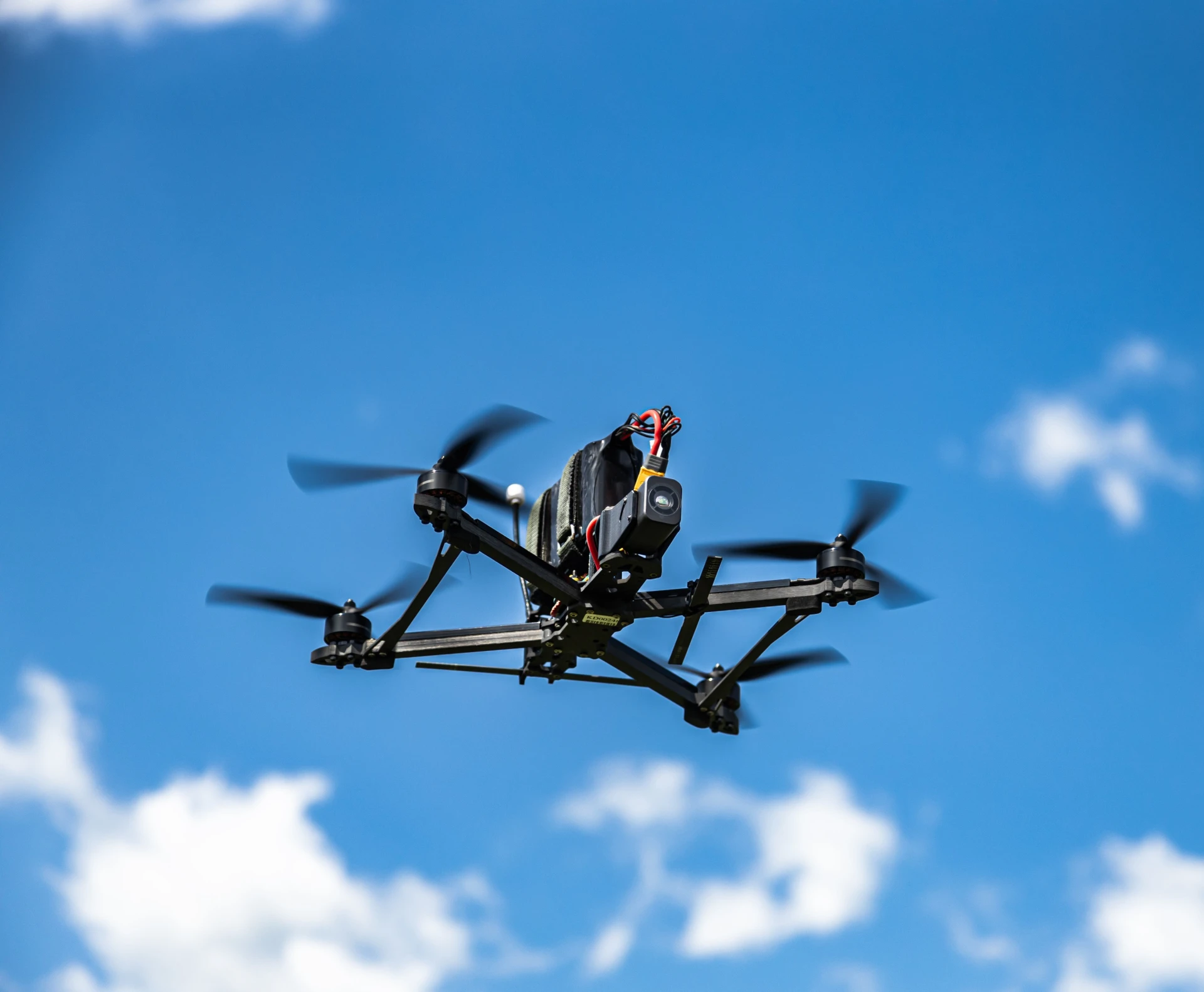
According to Daycom’s earlier analysis, the new Russian approach is not simply about launching more Shaheds or more missiles. It is about changing the meaning of a mass strike itself. Quantity becomes a weapon in its own right. It wears down interceptor stocks, strains combat duty cycles, exhausts crews, burdens logistics and gradually corrodes the psychological stability of the rear.
That is why this assault should not be read as evidence of weakness in Ukrainian air defense. It is better understood as evidence that Russia is increasingly waging war against the architecture of defense itself. Combined waves of ground-launched missiles, air-launched missiles and attack drones are designed not only to inflict destruction, but to stretch the defensive system across time, space and priorities.
When multiple regions and multiple categories of targets are placed under threat at once, the objective is no longer only a power station, an airfield or a residential district. The objective becomes the state’s ability to redistribute attention, interceptors and command capacity quickly enough. The air war is turning into a war over reaction speed.
There is also a political layer to this. Strikes of this scale are not addressed only to Ukraine. They are also directed at foreign capitals where talk once again emerges of negotiations, pauses, compromises or a softer line toward Moscow. The Kremlin answers such expectations in the language it trusts most: by demonstrating that it has no intention of lowering the temperature and still believes in coercion through fear and exhaustion.
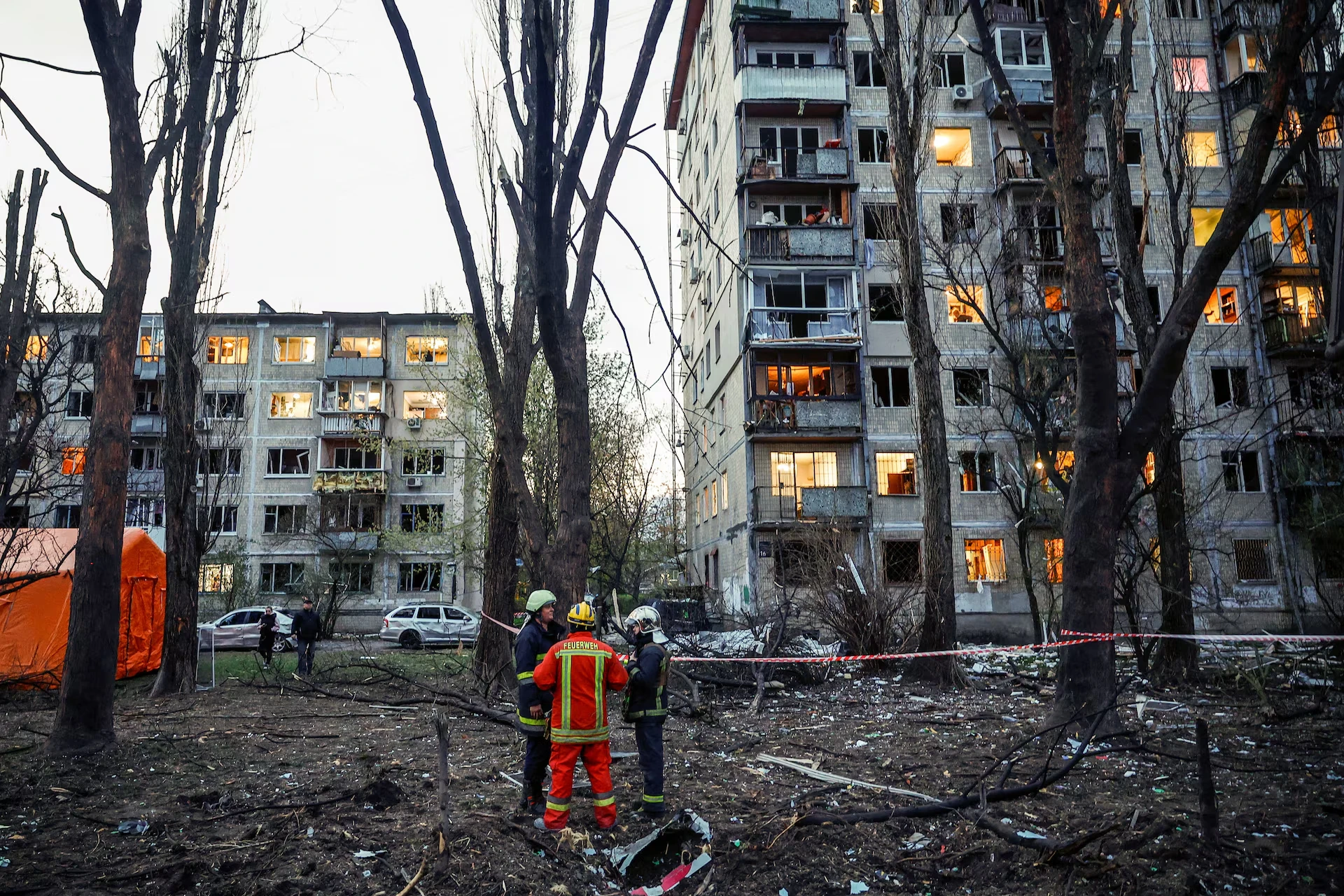 Рятувальники стоять біля пошкоджених житлових будинків на місці російського ракетного удару на тлі нападу Росії на Україну, у Києві, Україна, 16 квітня 2026 року — Аліна Смутко
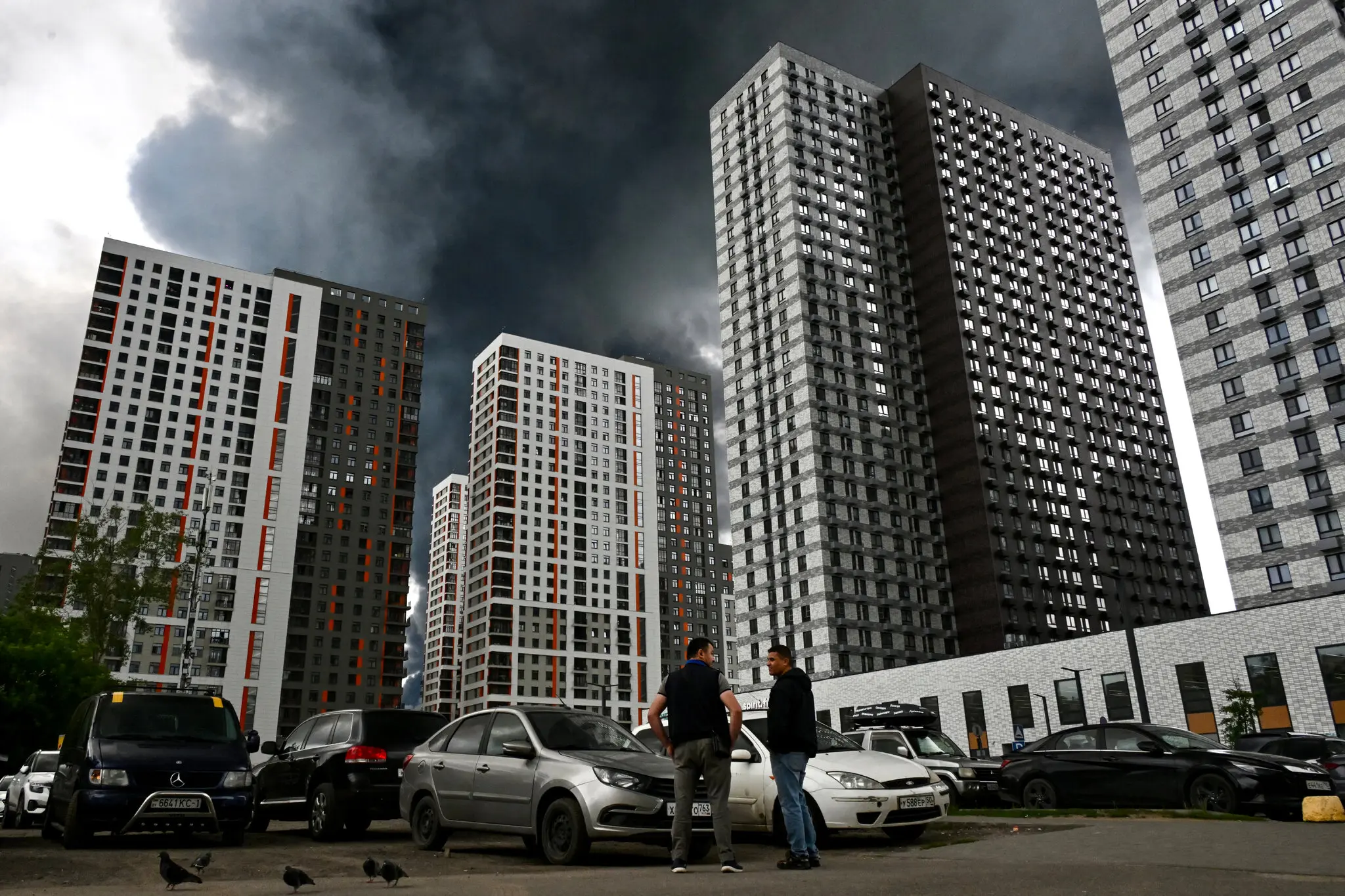
The civilian dimension is no less important. Large-scale raids are not aimed only at military or energy infrastructure. They are aimed at the feeling of normal life itself. The purpose is for war to be experienced not only at the front, but in every city that tries each morning to return to routine after a night of explosions. The more often the rear is forced to live by the logic of sirens and uncertainty, the more blurred the line becomes between battlefield and ordinary urban existence.
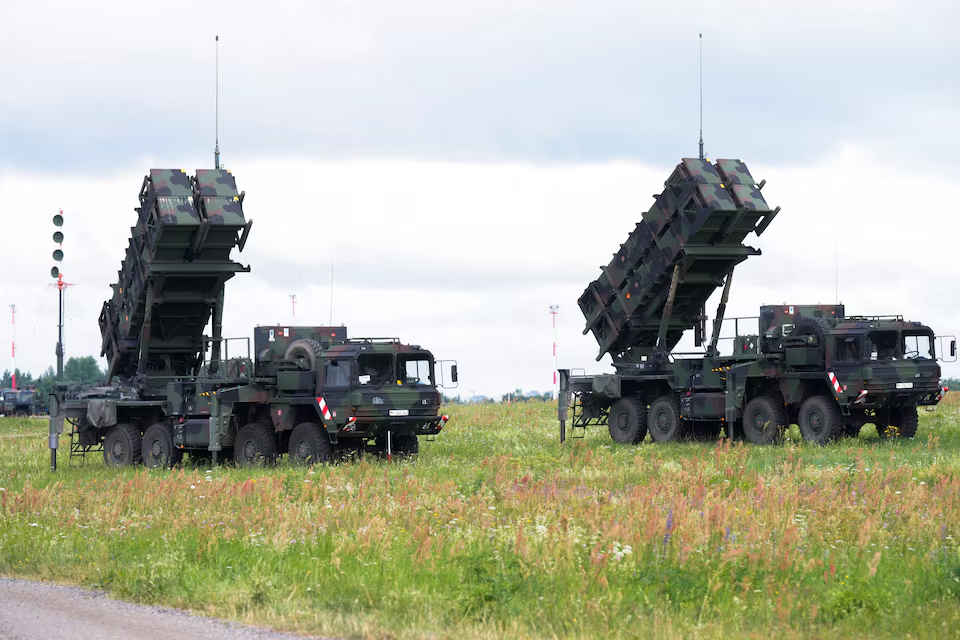
The paradox is that Ukrainian air defense is showing both high effectiveness and its own vulnerability at the same time. It remains capable of shooting down or suppressing an enormous share of incoming targets. But once the intensity of strikes rises sharply, even a strong interception rate no longer automatically translates into strategic comfort. If hundreds of targets appear in the sky at once, the question is no longer only how good the defense is. It becomes a question of how much strain it can absorb.
That points to a broader truth about the character of this war in 2026. It is becoming less a war of exceptional missile barrages and more a war of serially manufactured threat. Moscow is betting that a cheaper mass of drones, reinforced by combined missile waves, will eventually produce not just tactical damage but strategic effect: exhaustion in the Ukrainian rear, pressure on allies and the growing impression that defense can no longer keep pace with the scale of danger.
For Ukraine, this means the key battle is no longer only over interception percentages, but over the speed of adaptation. It is not enough to rely only on expensive systems designed to destroy missiles. Ukraine also needs large-scale, cheaper solutions against drone swarms, domestic interceptor production and a new air-defense economy in which each new wave does not consume resources faster than they can be replaced.
That is the real meaning of this latest assault. Russia is increasingly explicit in testing whether the sky itself can be turned into a mechanism of attrition. When a single air operation begins to equal several average days from the previous period, this is no longer an isolated episode. It is a new wartime norm.
And that new norm is dangerous not only because of how many drones or missiles it contains. It is dangerous because it changes the structure of the war itself. In this phase, success is measured not only by how many targets are shot down, but by whether a country can withstand an endless rhythm of overload without allowing the enemy to turn exhaustion into strategy.