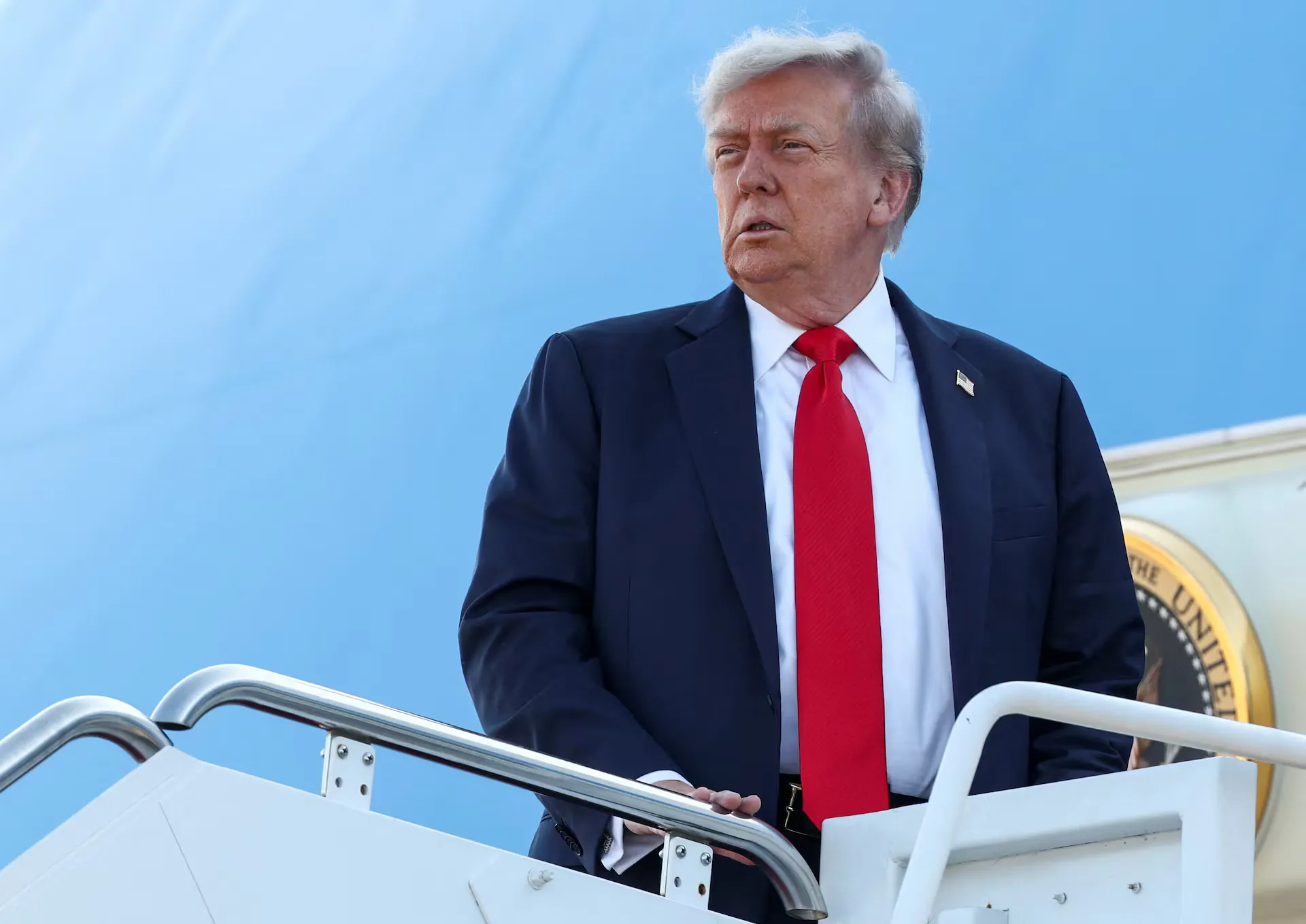






















When a leader speaks in the language of annihilation and then, hours later, announces a pause, the central story is not de-escalation itself. It is the fragility of the decision. The two-week cease-fire Donald Trump unveiled on Tuesday evening looked less like a diplomatic breakthrough than an emergency brake pulled just before a collision.
On paper, the arrangement is simple enough. Two weeks without major fighting. Two weeks in which Iran allows commercial shipping to move through the Strait of Hormuz. Two weeks to test whether a crisis built on ultimatums can be nudged back into negotiation. That formula gives every side something valuable: time without formal surrender, movement without open humiliation, relief without a settled peace.
But the real meaning lies elsewhere. Earlier that same day, Trump had tied the crisis to a deadline and wrapped it in rhetoric about the destruction of “a whole civilization.” By evening, the same confrontation had been recast as an opening for a deal. According to Daycom’s earlier analysis, the decisive question in moments like this is not only who threatens force, but who controls the final step before catastrophe. This time, Washington discovered how dangerous it is to walk right up to that step.
That reversal exposed the weakness inside maximalist pressure. Once a crisis is framed in apocalyptic terms, any retreat begins to resemble necessity rather than triumph. A leader can claim he forced the other side to blink, but the abrupt change in tone tells a different story: the price of carrying out the threat had become too high, strategically, politically and economically.
Pakistan’s role was central to that shift. Islamabad did more than ask for extra time. It offered a structure that allowed each side to preserve its narrative. The United States could pause without admitting overreach. Iran could reopen the waterway temporarily without presenting the move as capitulation. Pakistan, in turn, could elevate itself from peripheral actor to indispensable intermediary in a conflict where direct channels have become unreliable.

That matters because this cease-fire is not the end of the war. It is a narrow breathing space inside one. The current phase of the conflict began at the end of February, when U.S. and Israeli attacks on Iran transformed the Strait of Hormuz from a strategic chokepoint into the center of a wider regional confrontation. Since then, every round of pressure has shrunk the room for trust and made each diplomatic opening more brittle than the last.
For Trump, the pause carries a domestic meaning as well. He stepped back after rhetoric aimed at power plants, bridges and other civilian infrastructure began to sound less like deterrence than like punishment on a civilizational scale. That distinction matters. Once threats appear to target society itself rather than the regime, even political allies struggle to defend them as credible statecraft.
There was also a broader international constraint. Hours before Trump’s deadline, the U.N. Security Council failed to authorize “defensive” action to reopen the Strait of Hormuz, after Russia and China blocked the resolution. That failure deprived Washington and its partners of the one thing they most needed if they intended to escalate further: a minimal aura of collective legitimacy. Without it, any new military step would look more nakedly unilateral and far more politically costly.
The economic pressure was no less important. The Strait of Hormuz is not merely a symbol of regional leverage. It is one of the world’s essential energy arteries. A prolonged disruption there would not only hit oil and gas flows. It would feed through to shipping insurance, freight costs, inflation expectations, importer vulnerability and market instability across continents. The two-week pause is therefore an attempt to contain not just a military crisis, but the risk of a wider economic shock.
For Iran, the arrangement does not read as surrender either. A temporary reopening of the strait in exchange for a pause allows Tehran to argue that it has not abandoned its leverage, only repositioned it. That gives the Iranian leadership room to say it acted within a broader negotiation over security, sanctions, military pressure and the future terms of engagement. In that sense, this is not peace taking shape. It is coercion entering an intermission.


The danger is that every party now has its own version of what happened. Washington can describe the cease-fire as proof that pressure worked. Tehran can present it as evidence that ultimatums failed. Pakistan can cast it as a diplomatic success born of mediation and restraint. But this plurality of narratives is exactly what makes the pause unstable. If the parties cannot agree on the meaning of the truce, they will soon be arguing not over peace, but over who prevailed during the pause.
That is why the next two weeks matter far more than the announcement itself. A cease-fire can freeze violence, but it cannot by itself resolve the strategic contradictions that produced it. The United States still wants freedom of navigation without appearing weak. Iran still wants leverage without inviting overwhelming retaliation. Regional actors still want stability without surrendering their own room for maneuver. None of those objectives has disappeared.
So this moment should be read with caution. The cease-fire is not a settlement. It is a test of whether Washington, Tehran and the intermediaries around them can move from theatrical brinkmanship to structured bargaining. If they fail, this pause will be remembered not as the beginning of resolution, but as a short interval before a more dangerous round of conflict — one in which the cost of miscalculation would be even higher for the Middle East, for the global economy and for a White House that has already seen how quickly the politics of pressure can slide into the language of irreversible ruin.