



















Lindsey Graham died at the moment when his most important Ukraine initiative seemed finally to be nearing a breakthrough. Hours before his death, he believed that a year of pressure on the White House, talks with senators and assurances to Kyiv had produced a result: the Russia sanctions bill had a chance to become law.
Now that chance hangs between memory and procedure. In Washington, lawmakers speak of passing the package “in Lindsey’s honor,” but his death has deprived the effort of the person who sustained its political energy. Graham was not merely the author of the idea. He was its salesman, advocate, negotiator and chief Republican guarantor.
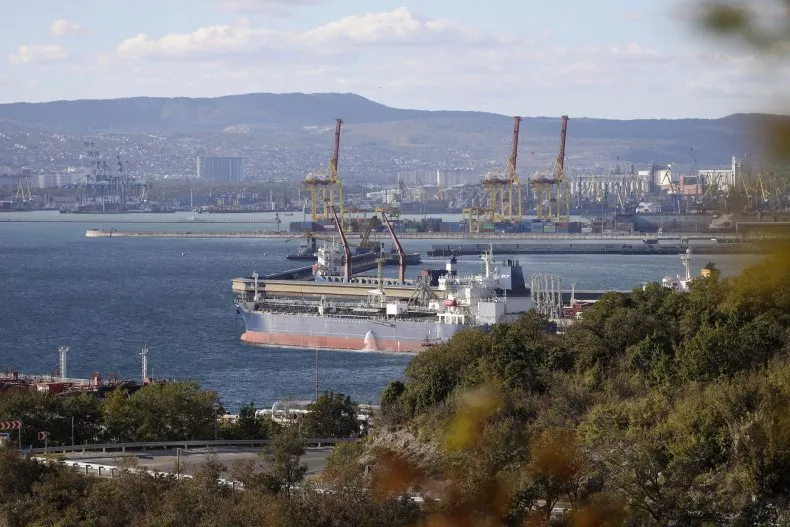
The bill is aimed not only at Russia, but also at those who buy Russian oil and gas. Its logic is simple: if the Kremlin finances the war through energy revenues, punishment must reach not only the seller, but also the buyers who keep the system functioning. This is where sanctions policy moves from symbolism into strategy.
According to Daycom’s assessment, the fate of this bill has become a test not only of American support for Ukraine, but of Washington’s ability to turn political shock into a decision. Graham’s death could give the package added momentum as the senator’s final cause. But it could also open space for delay, revisions and the return of old doubts.
Donald Trump has already signaled that he is ready to support the sanctions package. His remark that it would be “in honor of Lindsey” places the bill in a new moral frame. It is now not only an instrument of pressure on Russia, but also a way to honor an ally who, until his final day, pushed for a harder line against Moscow.
But presidential support in Washington is rarely unconditional. Trump has also spoken of possibly expanding the package to include those doing business with Iran and Hezbollah. That could strengthen the bill, but it could also complicate its passage. The broader a sanctions package becomes, the more interests, caveats, exceptions and reasons for delay it acquires.
More important is another issue: Trump wants to preserve his own authority to suspend the sanctions or decline to impose them. For him, that is a negotiating tool. For Democrats and some supporters of a hard line, it is a risk that the law will become not an automatic mechanism of punishment, but a lever the president can use selectively.
The main battle may unfold around that boundary. If Congress passes tough sanctions but the White House receives broad discretion not to enforce them, Moscow and buyers of Russian oil will see not only a threat, but also an opportunity to bargain. If presidential waivers are narrow, Trump loses some of the flexibility he considers necessary for diplomacy with the Kremlin.
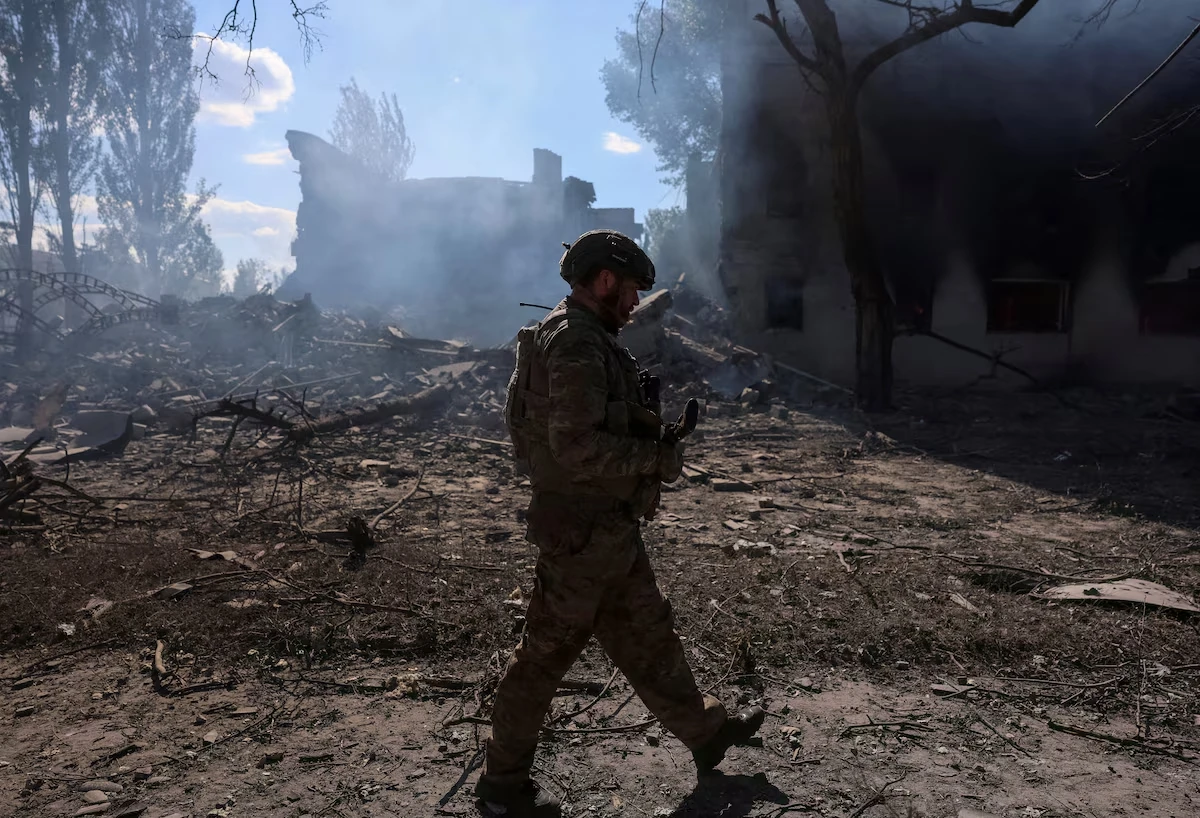
In his final days, Graham seemed to believe he had found the balance. In Kyiv, he announced an agreement with the White House on a version of the sanctions bill that the administration was prepared to support. He said this against the backdrop of destroyed Russian armored vehicles — a setting that explained the meaning of his policy more vividly than any speech could.
For him, sanctions were not an abstract punishment, but part of a formula for ending the war. Ukraine had to become stronger on the battlefield. Countries and companies sustaining Russian revenues had to pay a price. Russia had to be left an exit from the war, but not one that was free, and not one that rewarded aggression.
That formula was hard, but not chaotic. Graham was not calling for a direct U.S. war with Russia. He was trying to use American financial power to change Moscow’s calculation. If Russian oil remains a source of war, then pressure on its buyers becomes a way to strike the war machine without sending American troops.
That is why the bill initially gained the support of more than 85 senators — a rare number in today’s polarized Senate. Such a broad coalition showed that Ukraine could still unite Washington where many other issues had long split the parties. But even that level of support did not guarantee movement as long as the White House resisted or stood aside.
For more than a year, the initiative moved in stops and starts. It stalled, revived, was rewritten, waited for a signal from Trump and then lost momentum again. The president sought to conduct his own diplomatic game with Vladimir Putin and did not want Congress narrowing his room for maneuver. Republicans, dependent on his political weight, were reluctant to confront him.
Graham was almost the ideal intermediary in that situation. He remained close to Trump while also retaining the reputation of a politician who had long and consistently supported a strong Ukraine policy. He could press the White House without looking like the president’s opponent. He could talk to Democrats without losing Republican legitimacy. That role has now disappeared.
His partner on the bill was Democrat Richard Blumenthal. Their alliance carried important symbolism: a Republican hawk and a Democrat from Connecticut advancing pressure on Russia together at a moment when bipartisanship in Washington had become scarce. For Ukraine, that mattered no less than the text of the sanctions. Bipartisanship meant durability.
After Graham’s death, Blumenthal and his colleagues can keep the initiative alive, but they cannot fully replace its author’s political weight inside the Republican camp. In bills like this, the vote count is not the only thing that matters. So does the ability to move text through leaders, committees, the calendar, the White House and a party’s internal reservations.
Senate Republican leader John Thune has spoken of wanting to get the bill done. Senator Katie Britt has already tried to take up the cause and present the sanctions as one of Graham’s highest priorities. That means there is a desire inside the Republican conference not to let the package die with its author.
But desire and legislative reality are different things. The Senate could turn Graham’s death into a moment of unity, move the package quickly and give it memorial meaning. Or it could draw the bill into negotiations over presidential authority, Iran, Hezbollah, tariffs, exceptions, enforcement timelines and diplomatic safeguards. In Washington, even a powerful symbol does not always defeat the calendar.
For Ukraine, the difference between those scenarios has practical weight. Russia’s economy rests not only on internal mobilization, but on external flows. As long as oil and gas bring Moscow foreign currency, the Kremlin has resources for missiles, drones, shells, soldier contracts and the military-industrial base. Secondary sanctions could complicate that system more than another list of individual names.
Such sanctions, however, inevitably affect a wider circle of states. Buyers of Russian energy are not only Moscow’s direct allies, but countries with which the United States has complex economic and geopolitical relationships. Punishing them means risking trade conflicts, higher prices, tensions with partners and a redistribution of global energy flows.
That is why the bill needs some degree of presidential flexibility. The White House does not want a mechanism that automatically pushes it into conflict with states needed for other policy priorities. Congress, by contrast, fears that excessive flexibility would turn sanctions into a toothless threat. This is the classic conflict between the legislative will to punish and the executive need to bargain.
In Russia’s case, that contradiction is especially visible. Strong sanctions work when not only allies believe in them, but also those they are meant to frighten. If buyers of Russian oil conclude that Trump can always postpone punishment for the sake of a deal, the effect will shrink. If they conclude that sanctions are inevitable, Moscow will feel real pressure on its energy base.
The bill’s fate therefore depends on details. Not only on whether it is passed, but on how exactly it is written. Which transactions will be covered. Which exceptions will exist. How much time companies and governments will have to exit Russian contracts. How the president will be able to suspend provisions. What reports Congress will require from the administration.
Graham’s death may simplify the political answer, but it does not simplify the legal architecture. On the contrary, every revision can now be cast either as a betrayal of his legacy or as a necessary step to keep the law workable. That moral frame helps supporters of quick passage, but it may also make it harder to examine weak points soberly.
Still, the moment for advancing the package is unusually favorable. Ukraine continues to hold the front while needing stronger tools to pressure the Russian economy. Congress has Graham’s memory fresh in mind. The White House has not publicly rejected sanctions. Republicans can present the law as the legacy of one of their own senators, while Democrats can present it as proof that support for Ukraine has not become merely partisan.
That bipartisan frame is the most important one for Kyiv. Ukraine cannot depend on one administration, one faction or one political mood. Its defense requires long-term decisions — weapons production, sanctions, credit, technology, intelligence and diplomatic pressure. If Graham’s sanctions package passes, it will signal that Congress can still shape Ukraine policy beyond the short cycle of internal disputes.
For Trump, passing the bill could also be useful. It would allow him to show toughness toward Russia without surrendering his claim to a negotiating role. The president could say he is gaining additional tools to end the war, not new constraints. That is precisely how Graham tried to sell the package to the White House: not as punishment for its own sake, but as leverage for a deal.
The problem is that this leverage could prove either too strong or too weak, depending on the final text. If the sanctions are too diluted, they will not change the behavior of buyers of Russian energy. If they are too harsh, they could create foreign-policy crises for which the administration is not prepared. Graham’s skill lay in searching for a political middle path.
That task now passes to others. Blumenthal can hold the Democratic side of the coalition. Thune can decide whether the package gets Senate time. Britt and other Republican supporters can try to inherit Graham’s symbolic mantle. Trump can either turn the law into his own instrument or allow it to get stuck again.
For Russia, any delay is useful. The Kremlin understands that the death of a politician in Washington can create a wave of emotion, but that emotion fades quickly. If the package is not passed during the moment of maximum attention, it risks returning to the familiar corridor of negotiations, where every side waits for concessions from the other while Moscow continues earning revenue.
For buyers of Russian oil, this is also a moment of observation. They are watching not only the text, but the strength of intent. If Washington quickly passes the law after the death of its principal author, the signal will be hard: American policy does not depend on one person. If the process falls apart, the opposite signal will emerge: Graham’s personal energy mattered more than institutional will.
In that sense, the bill has already become something larger than a sanctions package. It is a test of whether the American system can complete strategic decisions amid polarization, personal loss and presidential ambivalence. Graham was the last person to stand publicly in Kyiv and say that an agreement existed and the law would become reality. Now those who remain must test his words.
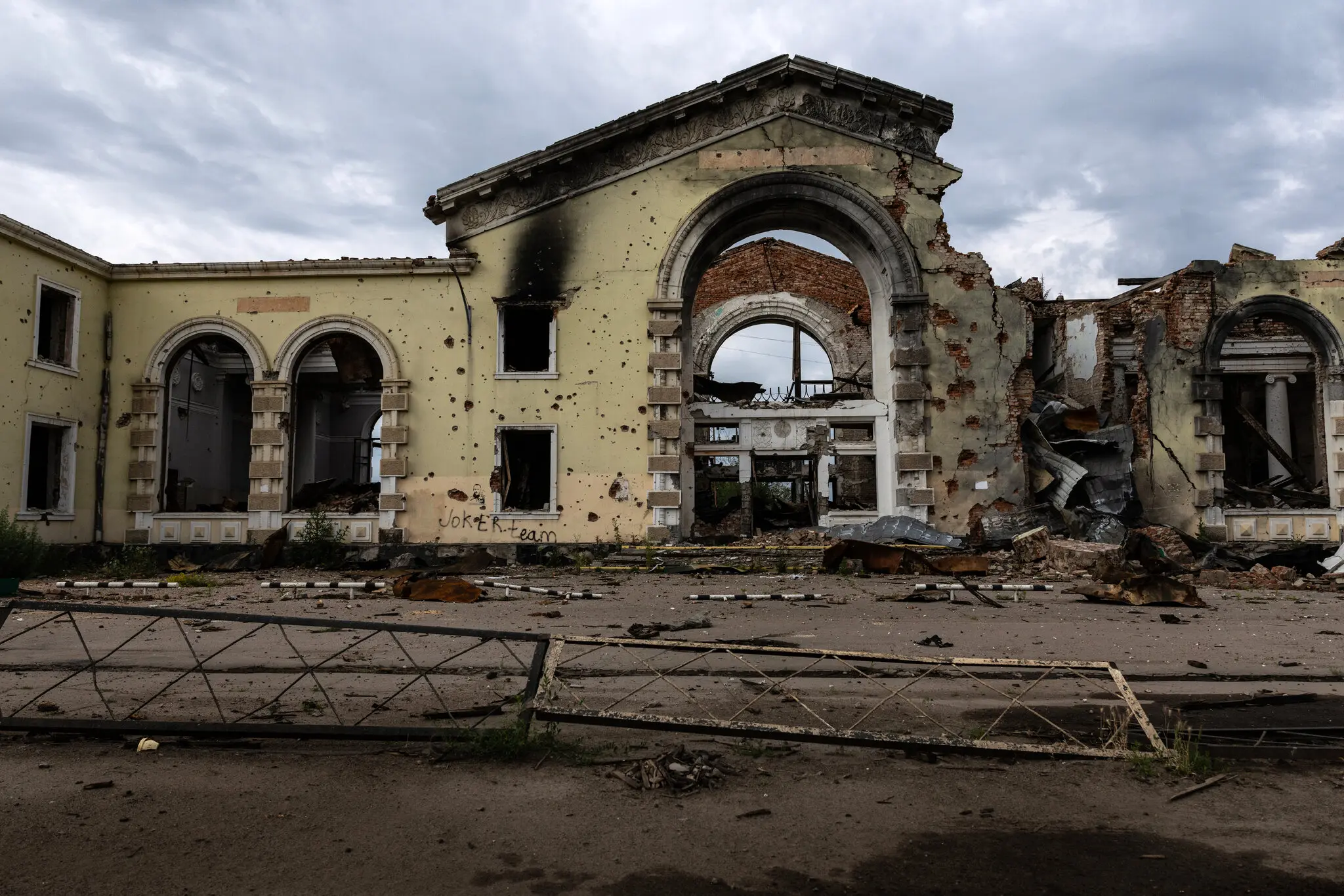
It is symbolic that Graham’s last public act took place in Ukraine. Not in a studio, not at a party rally, not on the Senate floor, but in a Kyiv square beside the traces of Russia’s war. That gave his sanctions package an almost complete dramatic structure: a politician came to the country he had supported for years, announced a breakthrough — and did not live to return to the legislative endgame.
But politics does not live on drama alone. If sanctions are truly to strike Russia’s war machine, they must pass through dry and difficult work: text, amendments, votes, committees, presidential authorities and enforcement mechanisms. Graham’s memory can open the door. It cannot replace walking through it.
The coming weeks will therefore show who Lindsey Graham remains in this story: the author of one last major unfinished initiative, or the politician whose death accelerated the toughest American sanctions strike against Russia’s energy system. For Ukraine, the difference between those outcomes is measured not in symbolism, but in the resources Russia will or will not be able to turn into new attacks.
Washington often knows how to speak about legacy. It is less often quick to turn legacy into law. Graham’s sanctions package now stands precisely on that line. If the Senate passes it, his death will become a political catalyst. If not, it will only underline how dependent America’s Ukraine strategy remained on individual people rather than on the settled will of the state.
That uncertainty is the central nerve of the moment. Graham wanted to leave Trump a tool for ending the war. Ukraine wants a real strike against the aggressor’s finances. The Senate wants to honor a colleague. The White House wants room to maneuver. Russia wants all of it to dissolve into procedural noise. The bill will show whose will proves stronger.